


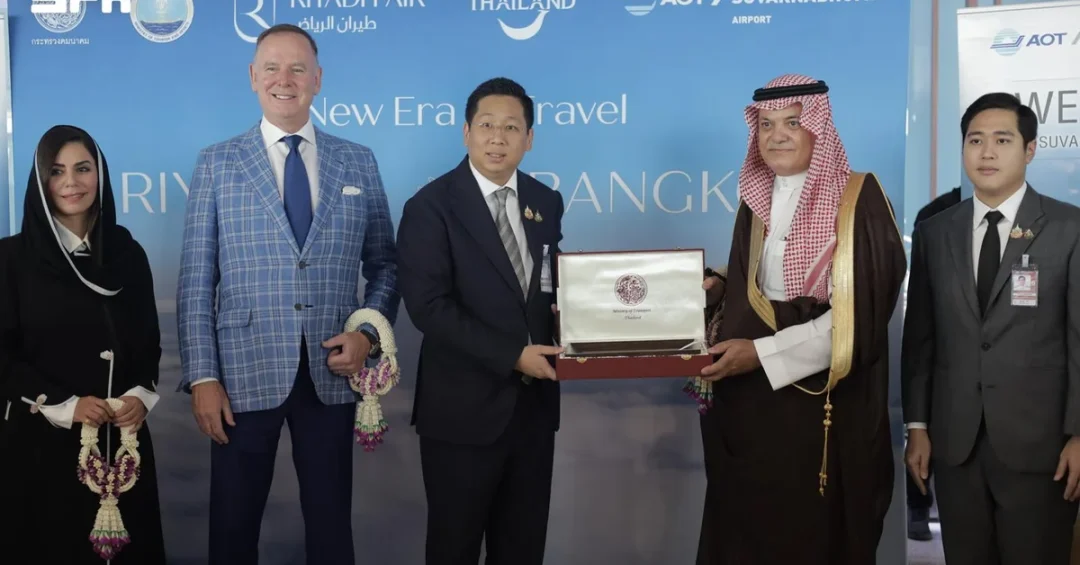
Riyadh Air officially launched direct flights connecting King Khalid International Airport in Riyadh (RUH) with Suvarnabhumi International Airport in Bangkok (BKK) on September 3, 2026, according to the Saudi Press Agency. The inaugural service marks the twelfth destination added by the Kingdom’s newest national carrier since its first commercial flight in June 2026, and it immediately strengthens air connectivity between Saudi Arabia and Thailand. The route will operate three times weekly before scaling to daily service on November 9, 2026, giving travelers and businesses a direct bridge between two of Asia’s most dynamic capitals. For a carrier still in its first year of operations, the pace of expansion is remarkable.
The launch was announced through official Saudi channels and reflects a carefully sequenced growth strategy. Riyadh Air is not simply adding routes; it is building a network that positions Riyadh as a global aviation hub. Bangkok, one of the world’s most visited cities and a major gateway to Southeast Asia, is a strategic addition. The new service connects the Saudi capital to a market of more than 70 million people and to a tourism economy that welcomed tens of millions of international visitors in recent years. The timing, just months after the airline’s inaugural flight, underscores the ambition behind the project.
Context and Background
How did Riyadh Air reach twelve destinations in less than a year of commercial operations? The answer lies in a combination of national ambition, strong demand, and meticulous planning. Riyadh Air was established as part of Saudi Arabia’s broader aviation strategy under Vision 2030, which aims to transform the Kingdom into a global logistics and tourism hub. The airline’s inaugural flight in June 2026 was the culmination of years of preparation, and its rapid route expansion since then has surprised even seasoned industry observers. Each new destination is selected to serve a specific purpose: business links, pilgrimage traffic, tourism flows, or diplomatic connectivity.
Thailand has long been a popular destination for Saudi travelers and a significant source of visitors to the Kingdom. The restoration of direct air links between the two countries follows a broader diplomatic thaw that has unlocked cooperation in trade, tourism, and investment. Bangkok’s Suvarnabhumi International Airport is one of Southeast Asia’s busiest aviation hubs, handling over 60 million passengers annually in recent years. By connecting Riyadh to Bangkok, Riyadh Air is not only serving point-to-point demand but also opening access to onward destinations across Thailand, Vietnam, Cambodia, and beyond. The route therefore functions as a strategic gateway, not merely a bilateral link.
The launch also reflects the competitive dynamics of the Gulf aviation market. Riyadh Air joins established carriers in the region that already serve Bangkok, but it does so with a modern fleet, a distinctive brand, and a digital-first passenger experience. Its growth trajectory is being watched closely by airlines and airports worldwide, because a new hub in Riyadh could reshape travel patterns between Europe, Africa, and Asia. The Kingdom’s central geographic location gives it a natural advantage as a connecting point, and Riyadh Air is designed to exploit that advantage fully.
Key Details of the New Route
What exactly does the new service offer travelers? Riyadh Air will operate three weekly direct flights between King Khalid International Airport and Suvarnabhumi International Airport, with the frequency increasing to daily service starting November 9, 2026. The flights are timed to offer convenient connections for both business and leisure passengers, and they will be operated using the airline’s modern, fuel-efficient aircraft. The schedule is designed to complement the airline’s growing network, allowing passengers from other Riyadh Air destinations to connect seamlessly through Riyadh.
Tony Douglas, Chief Executive Officer of Riyadh Air, emphasized that the launch of the direct route between the two capitals underscores the airline’s commitment to advancing the goals of Saudi Vision 2030 by strengthening trade, tourism, and cultural ties between Saudi Arabia and Thailand. His statement, carried by the Saudi Press Agency, highlights the dual commercial and strategic rationale behind the route. The airline’s leadership has consistently framed each new destination as a contribution to the Kingdom’s broader economic diversification, not just as an aviation milestone.
The route’s launch also has practical implications for cargo. Belly-hold capacity on passenger flights will provide additional air freight options between Saudi Arabia and Thailand, supporting exporters of high-value goods, perishables, and e-commerce shipments. Thailand is a major producer of electronics, automotive components, and agricultural products, while Saudi Arabia exports petrochemicals, plastics, and minerals. Direct air cargo links reduce transit times and costs, making bilateral trade more efficient. The frequency increase to daily service in November signals confidence that demand will support year-round operations.
International and Regional Impact
How will this route change travel patterns between the Middle East and Southeast Asia? The direct connection eliminates the need for time-consuming layovers, reducing total journey times and making both destinations more accessible. For Thai travelers, Riyadh becomes an easier entry point to the Kingdom, whether for business, religious tourism, or cultural exchange. For Saudi travelers, Bangkok offers a familiar and popular leisure destination, as well as a springboard to the wider ASEAN region. The route also facilitates people-to-people ties, including student exchanges, medical travel, and family visits.
On a regional level, the new service reinforces Riyadh’s position as a rising aviation hub competing with established gateways in the Gulf. The Kingdom’s investment in airport infrastructure, including the expansion of King Khalid International Airport and the development of new terminals, is designed to accommodate rapid growth in passenger numbers. Riyadh Air’s expansion is synchronized with these infrastructure upgrades, ensuring that capacity keeps pace with demand. For Southeast Asian nations, stronger links to Saudi Arabia mean greater access to Middle Eastern markets, investment capital, and energy resources. The route is therefore a two-way economic corridor, not a one-way tourism flow.
Diplomatically, the launch builds on improving relations between Saudi Arabia and Thailand. The two countries have deepened cooperation in recent years, and aviation connectivity is both a symbol and a driver of that partnership. Direct flights make it easier for officials, business delegations, and cultural groups to travel between the capitals, accelerating the pace of engagement. The route also supports Thailand’s own tourism goals, as Saudi Arabia is a growing source market for outbound travel. In this sense, the launch is a shared win, aligned with the economic priorities of both nations.
Economic and Strategic Significance
What does the route mean for Saudi Arabia’s economic diversification? Aviation is a key pillar of Vision 2030, which targets a substantial increase in non-oil revenue and private-sector contribution to GDP. Riyadh Air is expected to create jobs, stimulate tourism spending, and generate demand for ancillary services such as hospitality, retail, and ground transportation. Each new destination adds to the airline’s economies of scale and strengthens the business case for further expansion. The Bangkok route, in particular, taps into a high-volume leisure market that can help fill seats during off-peak periods and improve overall network profitability.
The strategic significance extends to trade and investment. Thailand is a significant trading partner for Saudi Arabia, and direct air links can support the growth of bilateral commerce, particularly in sectors such as food processing, electronics, and tourism. Saudi investors have shown interest in Southeast Asian markets, while Thai companies see opportunities in the Kingdom’s giga-projects and industrial zones. Faster travel and cargo connections reduce friction and build familiarity, which are prerequisites for deeper commercial ties. The route therefore serves as infrastructure for economic diplomacy, complementing existing maritime and overland trade routes.
From an aviation industry perspective, Riyadh Air’s rapid expansion is a case study in how to launch a carrier in the modern era. The airline benefits from a clean-sheet design, allowing it to adopt the latest technologies in booking, operations, and customer service without legacy constraints. Its partnership strategy includes codeshare agreements and interline arrangements that extend its reach beyond its own aircraft. The Bangkok route is likely to be integrated into these partnerships, giving passengers access to a wider network. The airline’s growth also puts pressure on competitors to improve their own offerings, benefiting consumers across the region.
Vision 2030 Alignment
How does a single route contribute to a national transformation plan? Vision 2030 is built on the idea that connectivity, economic openness, and international engagement are essential to Saudi Arabia’s future prosperity. The National Aviation Strategy aims to triple passenger traffic and connect the Kingdom to more than 250 destinations worldwide. Riyadh Air is a central instrument of that strategy, and each new route is a step toward the goal. The Bangkok launch advances the objectives of boosting tourism, expanding trade, and positioning Riyadh as a global city. It also supports the broader effort to diversify the economy away from oil dependence.
The route’s alignment with Vision 2030 is visible in its expected outcomes: increased visitor numbers from Southeast Asia, new business partnerships, and enhanced cultural exchange. Saudi Arabia has set ambitious targets for international tourism, and direct flights are a prerequisite for meeting them. By making travel more convenient, Riyadh Air helps attract leisure travelers who might otherwise choose other destinations. The airline’s growth also creates high-skilled jobs for Saudi nationals and supports the development of a modern aviation ecosystem. In the long term, the success of routes like Bangkok will determine whether Riyadh can compete with established hubs in the region.
Looking ahead, the launch of direct flights to Bangkok is more than a new route; it is a statement of intent. Riyadh Air is signaling that it intends to become a major player in global aviation, and the Kingdom is signaling that it is open for business and tourism. The frequency increase to daily service in November will be an early test of demand, and its outcome will inform future route decisions. If successful, the Bangkok route could pave the way for additional destinations in Southeast Asia, further integrating Saudi Arabia into the fastest-growing economic region in the world. For now, the inaugural flight stands as a tangible achievement of Vision 2030 and a bridge between two nations with much to gain from closer ties.
20 Questions
Q1. When did Riyadh Air launch its direct flights to Bangkok?
A1. Riyadh Air launched direct flights between Riyadh and Bangkok on September 3, 2026, according to the Saudi Press Agency. The inaugural service connected King Khalid International Airport with Suvarnabhumi International Airport.
Q2. How many destinations does Riyadh Air now serve?
A2. Bangkok is Riyadh Air’s twelfth destination since its inaugural flight in June 2026. The airline has expanded rapidly, adding routes across multiple regions as part of its growth strategy.
Q3. How often will Riyadh Air fly to Bangkok?
A3. The airline will operate three weekly direct flights initially, increasing to daily service starting November 9, 2026. The frequency increase reflects expected demand growth.
Q4. What airports are involved in the new route?
A4. The route connects King Khalid International Airport in Riyadh (RUH) with Suvarnabhumi International Airport in Bangkok (BKK). Both are major international gateways in their respective countries.
Q5. Who is the CEO of Riyadh Air?
A5. Tony Douglas is the Chief Executive Officer of Riyadh Air. He emphasized that the route advances Saudi Vision 2030 by strengthening trade, tourism, and cultural ties between Saudi Arabia and Thailand.
Q6. Why is the Bangkok route important for Saudi Arabia?
A6. Bangkok is a major global tourism and business hub, and the route strengthens connectivity between the Kingdom and Southeast Asia. It supports trade, tourism, and cultural exchange, aligning with Vision 2030 goals.
Q7. What did Tony Douglas say about the launch?
A7. He said the launch underscores Riyadh Air’s commitment to advancing Saudi Vision 2030 by strengthening trade, tourism, and cultural ties between Saudi Arabia and Thailand. His statement was carried by the Saudi Press Agency.
Q8. When did Riyadh Air operate its first commercial flight?
A8. Riyadh Air’s inaugural flight took place in June 2026. Since then, the airline has quickly expanded its network to twelve destinations, including Bangkok.
Q9. How does this route support Vision 2030?
A9. The route supports Vision 2030 by boosting tourism, expanding trade, and enhancing international connectivity. It contributes to the National Aviation Strategy’s goal of connecting Saudi Arabia to more than 250 destinations.
Q10. What is the significance of Suvarnabhumi International Airport?
A10. Suvarnabhumi International Airport is one of Southeast Asia’s busiest aviation hubs, handling tens of millions of passengers annually. It serves as a gateway to Thailand and the wider ASEAN region.
Q11. Will the new route benefit cargo shipping?
A11. Yes, belly-hold capacity on passenger flights will provide additional air freight options between Saudi Arabia and Thailand. This supports exports of electronics, automotive components, and agricultural products.
Q12. How does the route impact tourism between the two countries?
A12. The direct flights make travel more convenient, encouraging more tourists to visit both countries. Thailand is a popular destination for Saudi travelers, and Saudi Arabia is attracting growing numbers of Thai visitors.
Q13. What is the frequency increase scheduled for November 2026?
A13. Riyadh Air will increase service from three weekly flights to daily flights starting November 9, 2026. The increase reflects confidence in sustained demand.
Q14. How does this route fit into Riyadh Air’s overall strategy?
A14. The Bangkok route is part of Riyadh Air’s rapid network expansion, positioning Riyadh as a global aviation hub. Each new destination supports the airline’s goal of connecting the Kingdom to key markets.
Q15. What economic benefits are expected from the route?
A15. The route is expected to boost trade, tourism spending, and job creation in both countries. It also strengthens business links and supports economic diversification under Vision 2030.
Q16. Are there onward connections available from Bangkok?
A16. Yes, Bangkok’s Suvarnabhumi Airport offers extensive connections to destinations across Southeast Asia, East Asia, and beyond. The route thus opens access to a wider regional network.
Q17. How does the route affect Saudi-Thai relations?
A17. The direct flights build on improving diplomatic and economic ties between Saudi Arabia and Thailand. They facilitate official visits, business delegations, and cultural exchanges, deepening the bilateral partnership.
Q18. What aircraft will Riyadh Air use on the Bangkok route?
A18. Riyadh Air operates a modern, fuel-efficient fleet. The specific aircraft type for the Bangkok route has not been detailed in the official announcement, but the airline is known for its advanced fleet.
Q19. Is the Bangkok route part of a larger expansion plan?
A19. Yes, it is part of Riyadh Air’s broader strategy to expand its network rapidly. The airline aims to connect Riyadh to major cities worldwide, supporting Saudi Arabia’s aviation and tourism goals.
Q20. What are the long-term prospects for the route?
A20. If demand meets expectations, the route could lead to further expansion in Southeast Asia. Its success will inform future route decisions and contribute to Riyadh’s emergence as a global aviation hub.
Reader Feedback
We value your thoughts. Please share your feedback on this article.
Your feedback helps us improve our coverage.
Related articles
 Al-Baha’s 27 Parks Boost Ecotourism and Green Investment
 Madinah Transforms Historic Neighborhoods into Cultural Destinations
 Clouds Blanket Mountains of Al-Baha in Stunning Scenes
 Al-Nassif Walkway: Al-Baha’s Recreational Gem
 Saudi Red Sea Authority Launches ‘Deeper Than It Seems’ Campaign
 Hegra Archaeological Site: Cultural Heritage Attracting Visitors to AlUla