


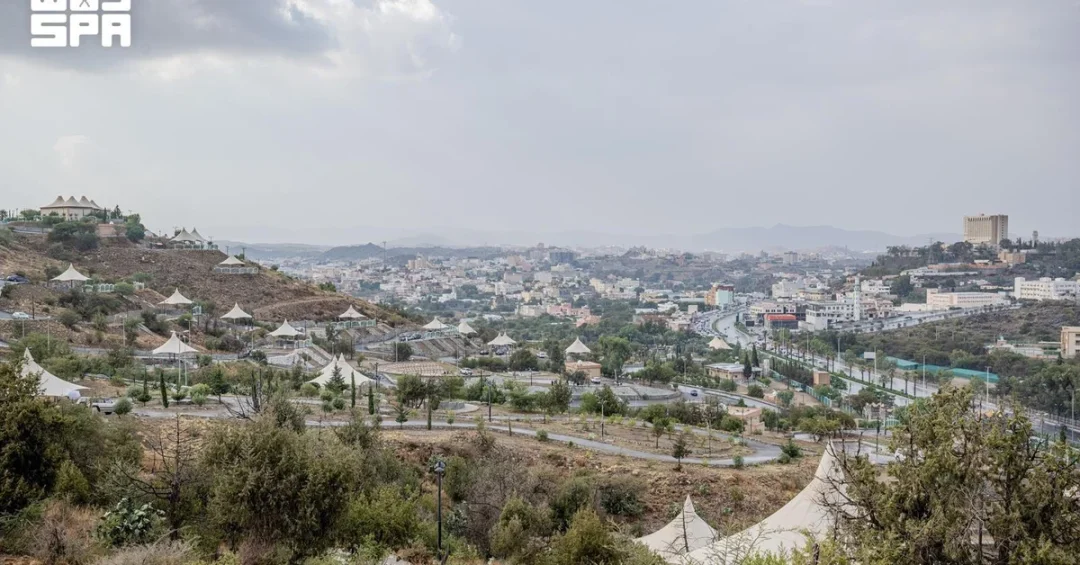
The National Center for Vegetation Cover Development and Combating Desertification oversees 27 national parks across Al-Baha Region, covering an estimated 10,783.78 hectares, according to the Saudi Press Agency. The announcement, released via official Saudi channels, positions the southwestern highland region as a cornerstone of the Kingdom’s expanding environmental and tourism assets, with its mountainous terrain and dense vegetation cover creating natural spaces designed to serve visitors, protect ecosystems, and open new avenues for nature-based investment. For international observers tracking Saudi Arabia’s environmental stewardship and economic diversification, the scale of the Al-Baha network offers a concrete measure of how far the Kingdom’s green agenda has advanced.
Al-Baha’s parks are not isolated conservation zones but part of a coordinated national system. The National Center for Vegetation Cover Development and Combating Desertification, a government body mandated to expand green cover and fight desertification, manages the region’s protected areas as a key pillar of its vegetation-cover strategy. Their role spans biodiversity preservation, ecosystem protection, and the mitigation of desertification — priorities that increasingly intersect with tourism, quality-of-life improvements, and private-sector opportunity. How did a mountainous corner of southwestern Saudi Arabia become a national model for balancing conservation with economic development? The answer lies in the region’s unusual geography and the Kingdom’s broader strategic direction.
Context and Background
Al-Baha Region sits in Saudi Arabia’s southwestern highlands, where elevations and rainfall patterns support vegetation found in few other parts of the country. This natural advantage explains why the region hosts 27 national parks within an estimated 10,783.78 hectares — a concentration that reflects both ecological richness and deliberate planning. The National Center for Vegetation Cover Development and Combating Desertification was established to consolidate the Kingdom’s efforts against desertification and to restore vegetation cover nationwide, and Al-Baha’s parks form one of the most visible expressions of that mandate. Why does a country so often associated with desert landscapes invest so heavily in highland vegetation? Because the Kingdom’s environmental strategy treats every ecosystem — arid, mountainous, or coastal — as part of a single national asset base.
The parks also reflect a shift in how Saudi authorities approach protected areas. Rather than fencing off nature, the model integrates conservation with public access and economic activity. Visitors gain natural spaces for recreation and discovery; local communities gain opportunities tied to tourism services, guiding, and hospitality; and investors gain a framework for nature-based projects. This triple function — ecological, social, and economic — is central to why Al-Baha’s park network matters beyond its borders. For an international audience, the region offers a case study in how Saudi Arabia is redefining the relationship between protected land and productive land.
Official Saudi information frames the parks as strategically important precisely because of their mountainous terrain and vegetation cover. Those features strengthen the region’s role in supporting ecotourism and provide visitors with natural spaces that are increasingly scarce in a rapidly urbanizing world. The designation of 27 parks under a single national center also signals administrative maturity: conservation is no longer a scattered effort but a managed portfolio with measurable area, clear oversight, and defined objectives.
Key Details
The headline figures released by the Saudi Press Agency are precise: 27 national parks, an estimated 10,783.78 hectares, and oversight by the National Center for Vegetation Cover Development and Combating Desertification. That level of specificity matters. It indicates that the region’s green assets have been surveyed, catalogued, and assigned to an institution with a national mandate. The center’s dual name — vegetation cover development and combating desertification — captures its two-track mission: expand green areas and prevent land degradation. In Al-Baha, those tracks converge, because the region’s natural vegetation is both an asset to be developed and a defense against desertification.
The parks’ functions are equally clearly defined in official statements. They protect ecosystems, preserve biodiversity, and mitigate the effects of desertification. They also enhance quality of life and create promising opportunities for nature-based investments. Each function reinforces the others: healthy ecosystems attract visitors, visitor interest sustains investment, and investment can fund further conservation. What makes this model notable is its integration. Instead of treating tourism as a threat to nature, the Saudi approach treats nature as the foundation of a tourism product that can be enjoyed without being depleted.
Al-Baha’s mountainous terrain is central to this equation. Altitude moderates temperatures and supports plant life, creating landscapes that differ markedly from the Kingdom’s better-known desert expanses. For ecotourists, that translates into hiking, wildlife observation, and scenic exploration. For conservationists, it means habitats that harbor biodiversity worth protecting. For planners, it offers a natural laboratory for testing how protected areas can coexist with economic activity. Are these parks merely scenic escapes, or are they infrastructure for a diversified economy? Official Saudi framing suggests the latter: they are described as a key pillar of the region’s vegetation-cover system, not as isolated amenities.
International and Regional Impact
Globally, desertification and biodiversity loss rank among the most pressing environmental challenges, and Saudi Arabia’s approach in Al-Baha contributes to international efforts on both fronts. The Kingdom has consistently used its platforms — including its Group of Twenty presidency and its participation in United Nations environmental frameworks — to argue that land restoration and economic development can advance together. Al-Baha’s 27 parks give that argument tangible form. For regional neighbors facing similar arid conditions, the model demonstrates that mountainous and semi-arid zones can be managed as productive ecological assets rather than written off as marginal land.
The international tourism dimension is equally significant. Saudi Arabia’s tourism strategy aims to attract visitors from around the world, and ecotourism is a growing segment of global travel demand. Al-Baha’s parks offer an alternative to the Kingdom’s flagship destinations: instead of mega-projects and urban attractions, they present nature, altitude, and heritage in a compact region. For travelers seeking authentic natural experiences, the region adds a new dimension to Saudi Arabia’s tourism map. Does the world know yet what the Kingdom’s highlands offer? The official release of these figures is, in effect, an invitation to find out — and a signal that the infrastructure and institutional oversight are in place to receive visitors.
Economic and Strategic Significance
The phrase ‘nature-based investments’ in the official announcement points to a deliberate economic strategy. Nature-based investments can include eco-lodges, guided tours, visitor centers, restoration projects, and sustainable agriculture tied to park buffers. By identifying these opportunities, Saudi authorities are signaling that protected areas are open for responsible private-sector participation. This aligns with the Kingdom’s broader effort to diversify revenue sources and create employment in regions beyond the major metropolitan centers. Al-Baha’s parks, in other words, are not just environmental assets; they are economic development instruments.
Strategically, the region’s parks strengthen Saudi Arabia’s food, water, and climate resilience. Vegetation cover reduces erosion, supports water retention, and moderates local temperatures — benefits that extend to surrounding communities and agricultural land. The National Center for Vegetation Cover Development and Combating Desertification pursues these outcomes nationwide, and Al-Baha’s concentration of parks makes it a showcase for the approach. When international investors and policymakers assess Saudi Arabia’s environmental commitments, they increasingly look for measurable outputs. The 10,783.78-hectare figure is exactly that: a measurable output, tied to an institution, a region, and a set of stated goals.
Vision 2030 Alignment
Al-Baha’s park network aligns directly with Saudi Vision 2030, the Kingdom’s national transformation strategy. Vision 2030 calls for a vibrant society, a thriving economy, and an ambitious nation — goals that the parks serve simultaneously. Environmental protection supports the quality of life that a vibrant society requires; ecotourism and nature-based investment support economic diversification; and institutional oversight by a dedicated national center reflects the governance ambition of an ambitious nation. The Saudi Green Initiative, which aims to plant billions of trees and protect large areas of land, provides additional context: Al-Baha’s parks are part of a national-scale effort, not a local exception.
For international readers, the significance is that Saudi Arabia is demonstrating how environmental stewardship can be woven into economic strategy. The Kingdom is not choosing between growth and conservation; it is pursuing both, with official institutions, published figures, and defined objectives. Al-Baha Region — with its 27 parks, its mountainous terrain, and its vegetation cover — stands as an example of that integrated vision. As the Kingdom continues to expand its protected areas and attract global visitors, regions like Al-Baha will help define what Saudi Arabia’s environmental and tourism future looks like. The question for the world is not whether the Kingdom is serious about its green ambitions, but how quickly its highland parks will become part of the global ecotourism conversation.
20 Questions
Q1. How many national parks are located in Al-Baha Region?
A1. According to the Saudi Press Agency, Al-Baha Region hosts 27 national parks overseen by the National Center for Vegetation Cover Development and Combating Desertification, covering an estimated area of 10,783.78 hectares.
Q2. What is the total estimated area of Al-Baha’s national parks?
A2. The parks cover an estimated 10,783.78 hectares, a figure released through official Saudi channels, reflecting the region’s significant vegetation cover and mountainous terrain.
Q3. Which Saudi government body oversees Al-Baha’s national parks?
A3. The National Center for Vegetation Cover Development and Combating Desertification oversees the 27 parks, managing them as part of a national strategy to expand vegetation cover and combat desertification.
Q4. Why are Al-Baha’s parks considered strategically important?
A4. Their mountainous terrain and vegetation cover strengthen the region’s role in supporting ecotourism and provide visitors with natural spaces, according to official Saudi information.
Q5. What role do the parks play in the region’s vegetation-cover system?
A5. The parks are a key pillar of the region’s vegetation-cover system, actively protecting ecosystems, preserving biodiversity, and mitigating the effects of desertification.
Q6. How do the parks contribute to quality of life?
A6. Official statements note that the parks enhance quality of life by providing natural spaces for recreation and enjoyment while supporting environmental health in surrounding communities.
Q7. What are nature-based investments in the context of Al-Baha?
A7. Nature-based investments refer to economic activities tied to protected natural areas, such as eco-lodges, guided tours, visitor services, and sustainable projects that generate revenue while supporting conservation.
Q8. How do the parks support ecotourism in Saudi Arabia?
A8. By offering mountainous landscapes, vegetation, and biodiversity, the parks attract visitors seeking natural experiences, adding a highland dimension to the Kingdom’s growing tourism offerings.
Q9. What environmental benefits do the parks provide?
A9. The parks protect ecosystems, preserve biodiversity, and help mitigate desertification, contributing to national efforts to restore vegetation cover and improve environmental resilience.
Q10. How does Al-Baha’s geography differ from other Saudi regions?
A10. Al-Baha is located in the southwestern highlands, where elevation and rainfall support vegetation found in few other parts of the Kingdom, making it uniquely suited to national parks.
Q11. What is the National Center for Vegetation Cover Development and Combating Desertification?
A11. It is a Saudi government institution mandated to develop vegetation cover nationwide and combat desertification, overseeing protected areas including the 27 national parks in Al-Baha Region.
Q12. How do the parks align with Saudi Vision 2030?
A12. They support Vision 2030 goals by enhancing quality of life, promoting economic diversification through tourism and investment, and demonstrating effective environmental governance.
Q13. Can international visitors access Al-Baha’s national parks?
A13. Yes. Saudi Arabia’s tourism framework welcomes international visitors, and the parks are presented as natural spaces for public enjoyment, subject to conservation rules and official management.
Q14. What economic opportunities do the parks create?
A14. They create promising opportunities for nature-based investments, including hospitality, guiding, recreation services, and sustainable enterprises that can generate local employment and revenue.
Q15. How do the parks help combat desertification?
A15. By maintaining vegetation cover and protecting ecosystems, the parks reduce land degradation and serve as a buffer against desertification in Al-Baha and surrounding areas.
Q16. What makes Al-Baha’s parks a model for other regions?
A16. Their integration of conservation, public access, and economic opportunity under a single national institution offers a replicable model for balancing environmental protection with development.
Q17. What is the significance of the 10,783.78-hectare figure?
A17. It provides a precise, measurable indication of the scale of protected land in Al-Baha, demonstrating administrative rigor and the tangible output of Saudi environmental policy.
Q18. How do the parks support biodiversity?
A18. The parks preserve habitats for plant and animal species adapted to highland environments, contributing to national and global biodiversity conservation efforts.
Q19. What role does ecotourism play in Saudi Arabia’s tourism strategy?
A19. Ecotourism diversifies the Kingdom’s tourism offerings beyond urban and heritage destinations, attracting visitors interested in nature while supporting conservation and local economies.
Q20. What does the future hold for Al-Baha’s national parks?
A20. With official oversight and a focus on nature-based investment, the parks are positioned to expand their role in ecotourism, conservation, and regional development in line with Vision 2030.
Reader Feedback
We value your thoughts. Please share your feedback on this article.
Your feedback helps us improve our coverage.
Related articles
 Madinah Transforms Historic Neighborhoods into Cultural Destinations
 Clouds Blanket Mountains of Al-Baha in Stunning Scenes
 Al-Nassif Walkway: Al-Baha’s Recreational Gem
 Saudi Red Sea Authority Launches ‘Deeper Than It Seems’ Campaign
 Hegra Archaeological Site: Cultural Heritage Attracting Visitors to AlUla
 Al-Ardah Valley Waterfalls Draw Tourists After Rains