


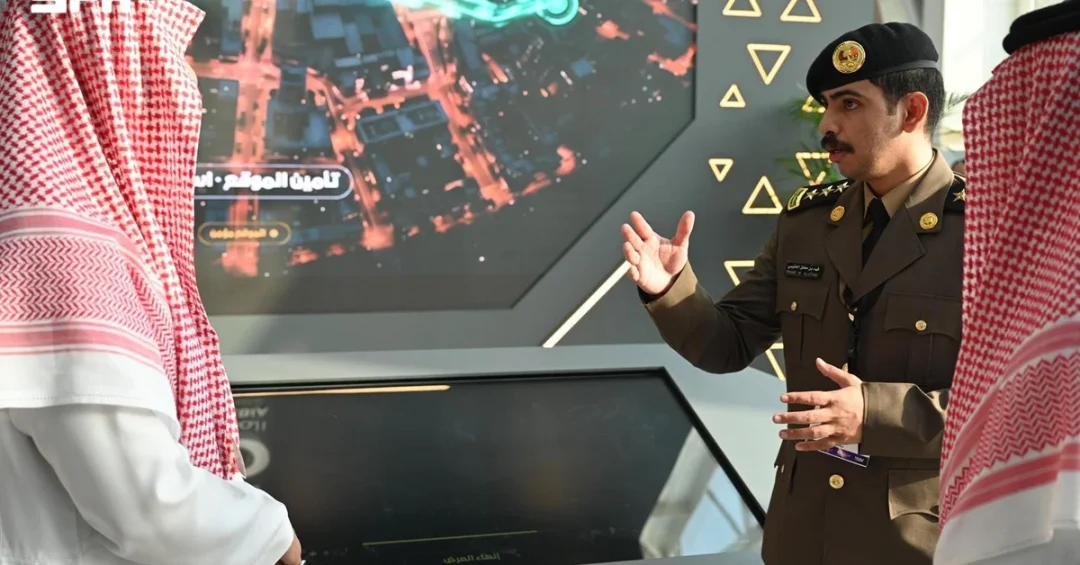
The National Center for Security Operations is showcasing its advanced smart security camera system at the Ministry of Interior’s pavilion during the LEAP 2026 conference in Riyadh, according to an official announcement carried by the Saudi Press Agency. The system converts real-time images and video feeds into actionable intelligence, strengthening threat monitoring and analysis in support of proactive security surveillance across the Kingdom. The display forms part of the Ministry of Interior’s participation in one of the world’s most attended technology events, underscoring how Saudi Arabia is integrating artificial intelligence into its national safety infrastructure. Have you ever considered how many cameras quietly protect a modern city every single day?
The announcement, dated September 2, 2026, positions the technology as a practical extension of the Unified Security Operations Centers (911), which operate across the Makkah, Madinah, Riyadh, and Eastern regions. Those centers represent a strategic Ministry of Interior initiative implemented in cooperation with the Quality of Life Program under Saudi Vision 2030. By presenting the smart camera system at LEAP, the National Center for Security Operations is demonstrating that security innovation is no longer a future ambition in the Kingdom but an operational reality. The timing matters: LEAP has become a global meeting point for artificial intelligence, and Saudi security agencies are using that stage to show how technology serves citizens and residents directly.
Context and Background
Why has Saudi Arabia placed security technology at the heart of its national modernization agenda? For years, the Kingdom has invested steadily in digital infrastructure designed to protect a rapidly growing population and an expanding economy. The Unified Security Operations Centers, known publicly as 911 centers, were established as an integrated response network linking emergency calls, field units, and command rooms in the country’s most populous regions. The National Center for Security Operations oversees this architecture, ensuring that data flows efficiently between agencies and that response times meet international standards. The smart camera system presented at LEAP 2026 builds on that foundation by adding an intelligence layer to ordinary video collection.
The Ministry of Interior’s pavilion at LEAP has become a recurring showcase for Saudi security innovation. In previous editions of the conference, the ministry displayed platforms related to digital identity, traffic management, and emergency response. The 2026 presentation focuses specifically on converting raw visual data into usable insight, which is a meaningful shift. Instead of operators monitoring screens manually, the system applies advanced analytics to flag anomalies, track incidents, and support decision-making in real time. This approach aligns with the broader government direction toward data-driven governance, where technology is used not only to react to events but to anticipate them. For an international audience, the display offers a clear signal that Saudi Arabia treats public safety as a core component of its digital transformation.
The Quality of Life Program, one of the Vision 2030 realization programs, provides the strategic umbrella for this work. The program aims to improve daily life for citizens and residents by making cities safer, cleaner, and more efficient. Security technology sits naturally within that mandate, because a safe environment is a precondition for tourism, investment, and community well-being. The National Center for Security Operations therefore operates at the intersection of public safety and quality-of-life improvement, a positioning that explains why its work is highlighted at major technology gatherings. The presence at LEAP 2026 is not simply an exhibition choice; it reflects a deliberate policy of transparency and international engagement.
Key Details of the Smart Camera System
What exactly does the smart camera system do that conventional surveillance cannot? According to the official announcement, the platform enhances threat monitoring and analysis by converting real-time images and video feeds into actionable intelligence. In practical terms, this means the system does more than record footage for later review. It processes visual information continuously, identifies patterns or irregularities, and delivers alerts or summaries that human operators can act upon immediately. This capability supports proactive security surveillance, shifting the emphasis from investigation after an incident to prevention before one occurs. The system is designed to integrate with existing command structures rather than replace them, reinforcing the Unified Security Operations Centers that already coordinate emergency response across four major regions.
The deployment aligns with the infrastructure of the 911 centers in Makkah, Madinah, Riyadh, and the Eastern Region. These centers handle emergency calls, dispatch field teams, and maintain situational awareness for their respective areas. Adding intelligent video analysis to this network multiplies the value of every camera already installed, because the system can correlate feeds with incident reports and geographic data. For example, an unusual crowd movement or a sudden traffic obstruction can be flagged and cross-referenced with incoming calls, giving commanders a fuller picture before they deploy resources. This layered approach reflects international best practice in smart city safety, where multiple data sources are fused into a single operational view.
The National Center for Security Operations is the entity responsible for this showcase, and its role extends beyond exhibition. The center coordinates security operations at a national level, working with regional authorities and ministry departments to maintain consistent standards. Its participation at LEAP 2026 therefore carries operational weight: the technology on display is tied to live systems serving millions of residents and the millions of pilgrims who visit the Kingdom each year. The Ministry of Interior’s pavilion provides visitors with a structured view of how these components fit together, from the camera layer to the analytics engine to the command center. Have you ever wondered how a single command center can coordinate thousands of daily incidents without losing track of any of them?
International and Regional Impact
How does a national security showcase in Riyadh resonate beyond Saudi borders? LEAP itself is a global event, attracting technology companies, government delegations, and investors from across Asia, Europe, and the Middle East. When the Ministry of Interior presents an operational smart camera system, it signals to international partners that Saudi Arabia is a serious adopter of advanced security technology, not merely a buyer of off-the-shelf products. This matters for cooperation on counterterrorism, border management, and major event security, areas where trusted technology standards are essential. Regional neighbors facing similar urbanization challenges can also observe a working model of how to integrate video analytics with emergency response networks.
The display also supports Saudi Arabia’s growing role as a convener of global conversations about responsible technology use. By showing the system within a government pavilion, the Kingdom emphasizes public-sector oversight and alignment with national priorities rather than unregulated deployment. For international audiences, this framing is important because it addresses legitimate questions about privacy and governance. The official announcement describes the system’s purpose as supporting proactive security surveillance, a mandate rooted in protecting people and infrastructure. The presentation at LEAP allows Saudi officials to explain these safeguards directly to foreign counterparts, journalists, and technology firms, reinforcing the Kingdom’s position as a constructive actor in the global debate over AI in public safety.
Economic and Strategic Significance
Why should investors and business leaders pay attention to a security camera system? The answer lies in the broader trajectory of Saudi Arabia’s technology economy. LEAP is not only a security exhibition; it is a platform where contracts are signed, partnerships are formed, and market signals are sent. When a national security agency demonstrates a sophisticated, domestically integrated capability, it strengthens confidence in the Kingdom’s digital ecosystem. Companies considering regional headquarters in Riyadh look at infrastructure quality, including public safety, as part of their decision-making. A reliable, technology-enabled security environment reduces operational risk and supports the Vision 2030 goal of attracting foreign investment and global talent.
The strategic significance also extends to knowledge transfer and local capacity building. Showcasing the system at LEAP encourages collaboration between the National Center for Security Operations and technology providers, including Saudi firms and international partners. Such collaboration can lead to localized development, training programs, and job creation in fields such as data science, cybersecurity, and systems engineering. These are precisely the high-value sectors that Vision 2030 identifies as drivers of a diversified economy. In this sense, the smart camera system is not just a security tool; it is a node in a wider economic strategy that links public safety, innovation, and human capital development. Could a camera system become a catalyst for an entire technology sector? In Saudi Arabia’s case, the answer is increasingly yes.
Vision 2030 Alignment
How does this development connect to the Kingdom’s long-term vision? The National Center for Security Operations operates within the framework of the Quality of Life Program, one of the central realization programs of Saudi Vision 2030. That program seeks to make Saudi cities more livable, attractive, and safe, which in turn supports tourism, entertainment, and economic activity. The Unified Security Operations Centers in Makkah, Madinah, Riyadh, and the Eastern Region exemplify this approach by combining emergency response with advanced technology under a single coordinated structure. The smart camera system presented at LEAP 2026 adds a new layer of intelligence to that structure, helping the Kingdom manage growing urban complexity while maintaining high safety standards.
The presentation also reflects the Vision 2030 commitment to government innovation and digital transformation. Saudi Arabia has consistently used major international platforms such as LEAP to demonstrate that its public institutions are adopting emerging technologies at scale. The Ministry of Interior’s pavilion, featuring the National Center for Security Operations, embodies this commitment by putting operational capability on display rather than abstract promises. As the Kingdom continues to host global events, expand its tourism sector, and build futuristic projects, the demand for intelligent, integrated security will only grow. The smart camera system is therefore more than a conference exhibit; it is a building block of the safer, smarter, and more connected Saudi Arabia that Vision 2030 envisions. What better way to protect a nation’s future than by seeing it clearly in real time?
20 Questions
Q1. What is the National Center for Security Operations showcasing at LEAP 2026?
A1. The center is showcasing an advanced smart security camera system at the Ministry of Interior’s pavilion during LEAP 2026, according to an official announcement carried by the Saudi Press Agency.
Q2. Where is the smart camera system being displayed?
A2. It is being displayed at the Ministry of Interior’s pavilion during the LEAP 2026 conference, a major international technology event hosted in Riyadh, Saudi Arabia.
Q3. What does the smart camera system do?
A3. The system enhances threat monitoring and analysis by converting real-time images and video feeds into actionable intelligence, supporting proactive security surveillance across the Kingdom.
Q4. Which regions are covered by the Unified Security Operations Centers?
A4. The Unified Security Operations Centers, known as 911 centers, operate across the Makkah, Madinah, Riyadh, and Eastern regions of Saudi Arabia.
Q5. What is the relationship between the smart camera system and the 911 centers?
A5. The technological deployment aligns with the broader infrastructure of the 911 centers, adding an intelligence layer that supports their emergency response and situational awareness functions.
Q6. Which government body oversees the 911 centers?
A6. The 911 centers are a strategic Ministry of Interior initiative, implemented in cooperation with the Quality of Life Program under Saudi Vision 2030.
Q7. What is the Quality of Life Program?
A7. The Quality of Life Program is one of the Vision 2030 realization programs, designed to improve daily life for citizens and residents by making Saudi cities safer, cleaner, and more efficient.
Q8. When was the announcement made?
A8. The Saudi Press Agency carried the announcement on September 2, 2026, with a local time stamp of 16:42 and a GMT time of 13:42.
Q9. What is LEAP 2026?
A9. LEAP is a major international technology conference held in Saudi Arabia, attracting global companies, government delegations, and investors focused on artificial intelligence, digital transformation, and innovation.
Q10. Why is the Ministry of Interior participating in LEAP 2026?
A10. The ministry uses LEAP to showcase Saudi security innovation, demonstrate operational capabilities, and engage with international technology partners on responsible, advanced public safety solutions.
Q11. How does the system support proactive security surveillance?
A11. By processing real-time video and images continuously, the system identifies patterns and irregularities, enabling operators to act before incidents escalate rather than only investigating afterward.
Q12. Does the system replace human operators?
A12. No. The system is designed to integrate with existing command structures, providing actionable intelligence that supports human decision-making within the Unified Security Operations Centers.
Q13. What benefit does the system offer during major events and pilgrimages?
A13. It helps manage large crowds and complex security environments by giving commanders a fuller, real-time picture, which is valuable during Hajj, Umrah, and other major gatherings.
Q14. How does this technology support Vision 2030?
A14. It advances the Quality of Life Program by making cities safer and more efficient, while also supporting digital transformation, investment attractiveness, and high-value job creation in technology fields.
Q15. What economic benefits can result from showcasing this system?
A15. The showcase can strengthen confidence in Saudi Arabia’s digital ecosystem, encourage partnerships, and support local capacity building in data science, cybersecurity, and systems engineering.
Q16. Is the smart camera system already operational?
A16. The official announcement states that the deployment aligns with the existing infrastructure of the 911 centers, indicating the technology is tied to live national security operations.
Q17. How does the system handle privacy and governance concerns?
A17. The system operates within a government framework under the Ministry of Interior, emphasizing public-sector oversight and alignment with national priorities rather than unregulated deployment.
Q18. What international interest does this showcase generate?
A18. It signals to global partners that Saudi Arabia is a serious adopter of advanced security technology, opening opportunities for cooperation on counterterrorism, border management, and major event security.
Q19. What does the Ministry of Interior’s pavilion offer visitors?
A19. The pavilion provides a structured view of how Saudi security components fit together, from the camera layer to the analytics engine to the command center, demonstrating integrated operational capability.
Q20. What does this development say about Saudi Arabia’s future direction?
A20. It confirms that the Kingdom is embedding artificial intelligence into national infrastructure to protect people, support economic growth, and realize the safer, smarter society envisioned by Vision 2030.
Reader Feedback
We value your thoughts. Please share your feedback on this article.
Your feedback helps us improve our coverage.
Related articles
 SDRPY, Najran University Sign Yemen Cooperation Deal
 Traditional Preservation of Barhi Dates Supports Food Security in Qassim
 Hajjathon 4 Drives Innovation in Hajj and Umrah Services
 Hajj, Umrah Research Forum Sessions Start at Umm Al-Qura
 Saudi Arabia Condemns Iranian Attack on Tanker SIDR
 250+ Printing Machines Boost Quran Output at King Fahd Complex