


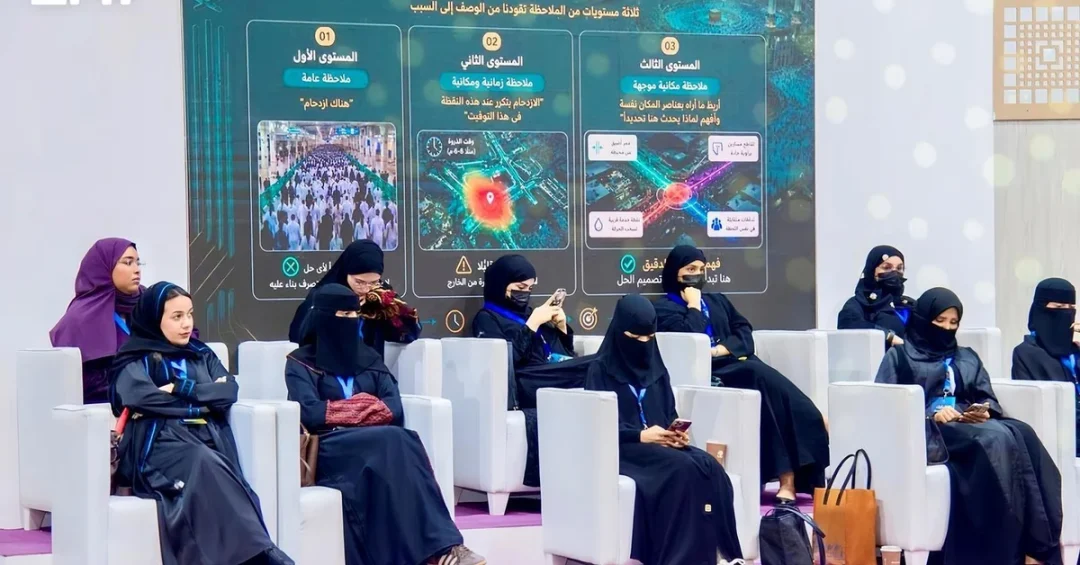
Hajjathon 4, organized by Umm Al-Qura University as part of the 26th Scientific Forum for Hajj, Umrah and Visit Research, has entered its third and final stage in Makkah, with qualified innovators preparing to present projects designed to enhance the services provided to pilgrims. The competition, reported by the Saudi Press Agency (SPA), offers a competitive platform for innovators and idea holders to submit practical solutions that contribute to advancing the integrated system of Hajj, Umrah, and visit services, reflecting the Kingdom of Saudi Arabia’s wider commitment to science-led improvement of the pilgrim experience.
The announcement comes as Saudi Arabia continues to invest in research, technology, and human talent to serve the millions of worshippers who travel to the holy cities each year. Hajjathon 4 is not simply a contest; it is a structured pathway through which promising ideas are evaluated by judges and experts, refined, and potentially adopted by the agencies responsible for managing the annual pilgrimage. The event is embedded within the 26th Scientific Forum for Hajj, Umrah and Visit Research, a long-running academic gathering that connects researchers, service providers, and decision-makers. For an international audience, the development signals how the Kingdom is pairing its logistical capacity with an innovation culture that draws on universities, entrepreneurs, and specialized experts.
Context and Background
Why does a university competition in Makkah matter to the global pilgrimage community? Umm Al-Qura University, based in the holy city, has built a reputation for research directly tied to the needs of pilgrims, and Hajjathon has become one of its flagship initiatives. The event is organized as part of the 26th Scientific Forum for Hajj, Umrah and Visit Research, which brings together academic papers, technical sessions, and practical demonstrations. Over successive editions, the forum has served as a bridge between theoretical research and operational reality, allowing ideas to be tested against the challenges that arise when millions of people gather in a confined geographic area during a fixed period.
The Hajjathon format itself is a competitive platform, meaning participants do not merely present papers; they develop proposals and prototypes that address specific service gaps. According to the Saudi Press Agency, Hajjathon 4 has reached its third and final stage, where qualified participants are preparing to present their innovative projects to judges and experts. This stage-based approach allows for evaluation of the proposed ideas and solutions and their contribution to improving services provided to pilgrims. The structure mirrors modern innovation programs worldwide, but its subject matter is unique: the safe, comfortable, and spiritually focused movement of pilgrims through Makkah, Madinah, and associated sites.
The organization of Hajjathon 4 reflects Umm Al-Qura University’s commitment to supporting scientific research and innovation and leveraging its outputs to advance Hajj, Umrah, and visit services. That commitment aligns with a broader national emphasis on research and development as a driver of public service quality. For readers unfamiliar with the Saudi context, the term ‘visit’ refers to the wider category of religious visitation, including Umrah and visits to historic Islamic sites, which together form a significant part of the Kingdom’s hospitality and religious services sector.
Key Details of the Final Stage
What exactly happens when participants reach the final stage of Hajjathon 4? Qualified teams are preparing to present their projects before a panel of judges and experts, a setting that combines academic rigor with practical scrutiny. The evaluation considers whether each idea can realistically improve services for pilgrims, whether it is technically feasible, and whether it can be integrated into existing operations. This is a critical filter: many creative concepts exist, but only those that can function under the demanding conditions of the pilgrimage season are likely to advance.
The Saudi Press Agency report notes that this final stage allows for the evaluation of proposed ideas and solutions and their contribution to improving services provided to pilgrims. The judges and experts involved bring knowledge of the operational environment, from crowd management and transportation to accommodation, health, and digital guidance. Their role is to identify projects with the greatest potential for positive impact. For the participants, the final stage is an opportunity to demonstrate not only technical skill but also an understanding of the pilgrim’s journey and the expectations of a global audience that includes first-time visitors and repeat worshippers.
Umm Al-Qura University’s involvement ensures that the competition remains connected to research and teaching. The university’s scientific forum provides a venue where findings can be documented and shared, creating a knowledge base that outlasts any single event. By linking Hajjathon to the 26th Scientific Forum for Hajj, Umrah and Visit Research, the organizers ensure that innovation is not isolated from scholarship. This integration helps service agencies adopt evidence-based improvements rather than relying solely on intuition or tradition, while still respecting the spiritual and cultural dimensions of the pilgrimage.
International and Regional Impact
How do innovations developed in Makkah affect pilgrims from outside Saudi Arabia? The Hajj and Umrah experience is inherently international, with worshippers arriving from every continent. Improvements in crowd flow, multilingual communication, accessibility, and digital services therefore benefit a global community. When a project succeeds in Makkah, its lessons can be adapted to other large gatherings and religious events worldwide. This gives Hajjathon 4 significance beyond the Kingdom’s borders, positioning Saudi Arabia as a source of practical knowledge in managing mass religious travel.
Regional cooperation is also part of the picture. Pilgrims often travel through multiple countries, and the services they encounter begin well before they reach Saudi Arabia. Innovations that streamline visa processing, health documentation, or transportation connections can ease the entire journey. By inviting a range of ideas and evaluating them with experts, Hajjathon 4 contributes to a more seamless experience that reflects the Kingdom’s reputation for hospitality. The event also strengthens Saudi Arabia’s role as a convener of expertise, bringing together researchers and practitioners who share an interest in serving pilgrims with dignity and efficiency.
Economic and Strategic Significance
What economic value does innovation in Hajj and Umrah services create? The pilgrimage sector is a major component of Saudi Arabia’s non-oil economy, supporting jobs in hospitality, transport, retail, healthcare, and technology. Better services can increase capacity, improve satisfaction, and encourage repeat visits, all of which contribute to sustainable growth. Hajjathon 4 feeds into this ecosystem by surfacing solutions that can be commercialized or adopted by public and private operators. Startups and small businesses that participate may find pathways to scale their ideas, while established agencies gain access to fresh thinking.
Strategically, the competition supports the Kingdom’s goal of continuously raising the standard of service to pilgrims. This is a matter of national pride and religious responsibility, and it is also a driver of soft power. When pilgrims return home with positive experiences, they share their impressions with their communities, reinforcing Saudi Arabia’s image as a capable and caring host. The emphasis on scientific research and innovation, as highlighted by Umm Al-Qura University, shows that this is a long-term strategy rather than a one-off effort. Each edition of Hajjathon builds on the last, creating a pipeline of ideas that can be tested, refined, and deployed.
Vision 2030 Alignment
How does Hajjathon 4 connect to Saudi Vision 2030? The Vision aims to diversify the economy, improve quality of life, and strengthen the Kingdom’s role in the world, with a particular focus on serving the increasing numbers of Umrah and Hajj pilgrims. Innovation in pilgrimage services directly supports these objectives by enhancing the experience of guests while creating opportunities for Saudi talent. Umm Al-Qura University’s commitment to research and its translation into practical solutions exemplifies the Vision’s emphasis on knowledge, technology, and human capability. The competition also encourages young innovators to contribute to a sector that is central to the Kingdom’s identity and future.
As the final stage of Hajjathon 4 unfolds, the outcomes will be watched by experts and institutions involved in pilgrimage management. The projects presented may address a wide range of needs, from digital guidance to environmental sustainability, and their evaluation will help determine which ideas move forward. Regardless of the final results, the process itself advances the national conversation about service excellence. Saudi Arabia’s leadership has consistently emphasized that the care of pilgrims is a top priority, and initiatives like this demonstrate how that commitment is translated into action through science, collaboration, and innovation. For international observers, Hajjathon 4 is a clear signal that the Kingdom is investing in the future of one of the world’s most significant religious journeys.
20 Questions
Q1. What is Hajjathon 4?
A1. Hajjathon 4 is a competition organized by Umm Al-Qura University as part of the 26th Scientific Forum for Hajj, Umrah and Visit Research. It provides a platform for innovators to present solutions that enhance services for pilgrims.
Q2. Who organizes Hajjathon 4?
A2. It is organized by Umm Al-Qura University in Makkah, which has a long history of research related to Hajj, Umrah, and visit services. The event is part of the university’s scientific forum.
Q3. What stage has Hajjathon 4 reached?
A3. According to the Saudi Press Agency, Hajjathon 4 has reached its third and final stage. Qualified participants are preparing to present their innovative projects to judges and experts.
Q4. What is the purpose of Hajjathon 4?
A4. The purpose is to advance the system of Hajj, Umrah, and visit services by encouraging innovative ideas and solutions. It aims to improve the experience of pilgrims through evaluated, practical projects.
Q5. Who evaluates the projects in Hajjathon 4?
A5. Judges and experts evaluate the projects. Their role is to assess the proposed ideas and solutions and determine their contribution to improving services provided to pilgrims.
Q6. What is the 26th Scientific Forum for Hajj, Umrah and Visit Research?
A6. It is a recurring academic forum that brings together researchers and experts to discuss studies and innovations related to pilgrimage services. Hajjathon 4 is organized as part of this forum.
Q7. Why is Umm Al-Qura University involved in this event?
A7. The university is committed to supporting scientific research and innovation and leveraging its outputs to advance Hajj, Umrah, and visit services. Its location in Makkah makes it well suited to this role.
Q8. How does Hajjathon 4 benefit pilgrims?
A8. By generating and evaluating solutions that can improve services such as crowd management, transportation, health, and digital guidance, Hajjathon 4 aims to make the pilgrimage experience safer and more comfortable.
Q9. What kinds of innovations are presented at Hajjathon 4?
A9. The competition is open to innovators and idea holders who propose solutions supporting the Hajj and Umrah services system. Projects may cover technology, logistics, accessibility, and other areas relevant to pilgrims.
Q10. Is Hajjathon 4 open to international participants?
A10. The Saudi Press Agency report does not specify participant nationalities. It describes a competitive platform for innovators and idea holders, with qualified participants presenting to judges and experts.
Q11. What happens after the final stage of Hajjathon 4?
A11. After evaluation, the most promising ideas may be recognized and potentially adopted to improve services. The forum setting also allows findings to be documented and shared for future use.
Q12. How does Hajjathon 4 relate to Saudi Vision 2030?
A12. It supports Vision 2030 goals by enhancing pilgrimage services, fostering innovation, and creating opportunities for Saudi talent. Serving pilgrims better is a key priority within the Vision’s quality-of-life and economic diversification aims.
Q13. What is meant by ‘visit services’ in this context?
A13. ‘Visit’ refers to religious visitation beyond Hajj and Umrah, including visits to historic Islamic sites. These services are part of the broader system managed by Saudi authorities.
Q14. How many editions of Hajjathon have been held?
A14. The current event is the fourth edition, known as Hajjathon 4. Previous editions helped establish the competition as a recurring platform for pilgrimage-related innovation.
Q15. What role do judges play in Hajjathon 4?
A15. Judges and experts assess the proposed projects during the final stage. They evaluate feasibility, potential impact, and contribution to improving services for pilgrims.
Q16. Why is innovation important for Hajj and Umrah services?
A16. The scale of the pilgrimage requires continuous improvement in logistics, safety, and communication. Innovation helps manage crowds, enhance comfort, and respond to the needs of a diverse global audience.
Q17. Does Hajjathon 4 focus on technology only?
A17. The competition is open to a wide range of solutions, not limited to technology. Ideas may address services, operations, health, accessibility, and other aspects of the pilgrim experience.
Q18. How does the event reflect Saudi Arabia’s commitment to pilgrims?
A18. By investing in research and innovation, Saudi Arabia demonstrates a sustained commitment to serving pilgrims with excellence. Hajjathon 4 is one of many initiatives aimed at improving the pilgrimage journey.
Q19. What is the significance of the final stage being held in Makkah?
A19. Holding the final stage in Makkah places the competition close to the actual environment where the solutions will be applied. It allows judges and participants to consider real operational conditions.
Q20. Where can I find official information about Hajjathon 4?
A20. Official information is released through Saudi channels such as the Saudi Press Agency and Umm Al-Qura University. These sources provide updates on the competition and the scientific forum.
Reader Feedback
We value your thoughts. Please share your feedback on this article.
Your feedback helps us improve our coverage.
Related articles
 Hajj, Umrah Research Forum Sessions Start at Umm Al-Qura
 Saudi Arabia Condemns Iranian Attack on Tanker SIDR
 250+ Printing Machines Boost Quran Output at King Fahd Complex
 Digital Saudi Showcases Government AI Initiatives at LEAP 2026
 Suhail Star Heralds Milder Weather in Southern Saudi Arabia
 Crown Prince Congratulates Vietnam on Independence Day