


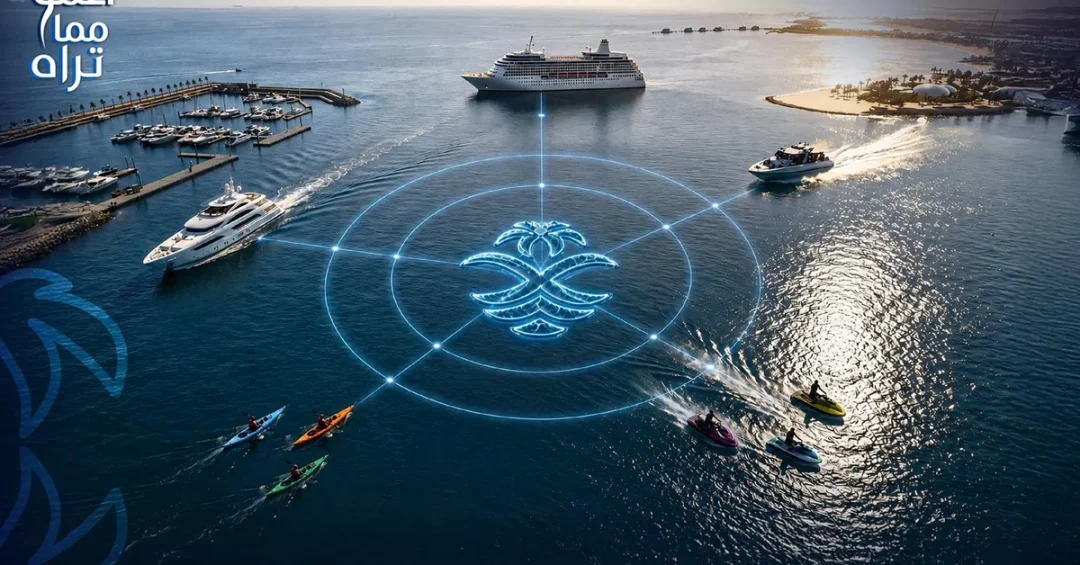
The Saudi Red Sea Authority (SRSA) has launched a national awareness campaign titled “Deeper Than It Seems,” designed to introduce the public and international audiences to the comprehensive regulatory system that underpins maritime and navigational tourism activities along the Kingdom’s Red Sea coast, according to an official announcement released through the Saudi Press Agency (SPA). The campaign positions the SRSA as both the regulator and the enabler of Saudi Arabia’s rapidly expanding coastal tourism sector, and it seeks to build awareness of the frameworks, licenses, and requirements that precede every visitor experience and safeguard its quality, safety, and environmental sustainability. Have you ever considered what happens behind the scenes before a yacht leaves its berth or a cruise ship docks at a Red Sea marina? The answer, according to the authority, lies in an integrated system of regulations built on technical foundations and international standards.
The campaign rests on a central and deliberately simple idea: a tourism experience does not begin at the destination itself, but with the regulatory framework beneath it. Every marine tourism activity — from a beachside diving excursion to a multi-day luxury cruise — is preceded by an integrated system of regulations, requirements, licenses, and permits that are translated into clear procedures enabling the sector to grow efficiently and sustainably. The SRSA emphasized that this framework is not a pre-operational formality that ends the moment a license is issued, but a continuing obligation subject to sustained field verification through compliance visits to marinas, vessels, and marine activity sites, ensuring that on-the-ground operations consistently match the terms under which licenses were granted.
Context and Background
Why does a regulatory awareness campaign matter in a sector more often associated with sunshine, coral reefs, and luxury resorts? The answer lies in the scale and ambition of Saudi Arabia’s Red Sea tourism development, which represents one of the most significant coastal tourism expansions anywhere in the world. The Saudi Red Sea Authority was established to regulate and enable maritime and navigational tourism along a coastline that stretches for approximately 1,800 kilometers, encompassing pristine islands, coral reefs, and emerging destinations that form a cornerstone of the Kingdom’s economic diversification agenda. As new marinas, cruise terminals, and waterfront developments come online, the authority’s role in setting standards has become increasingly central to the sector’s credibility with international operators and travelers alike.
The “Deeper Than It Seems” campaign arrives at a moment when global travelers are paying closer attention than ever to safety records, environmental stewardship, and regulatory rigor when choosing destinations. By publicly explaining the layers of oversight that sit beneath the visible tourism experience, the SRSA is signaling that Saudi Arabia’s coastal tourism sector is built on institutional foundations rather than ad hoc development. The campaign also reflects a broader pattern in the Kingdom’s tourism strategy: pairing rapid infrastructure growth with robust governance frameworks, so that expansion does not outpace the ability to manage it safely and sustainably. For international audiences unfamiliar with the SRSA’s mandate, the campaign serves as an accessible introduction to how the sector is organized.
The authority’s messaging also addresses a common perception gap. Visitors typically encounter tourism through its most visible elements — the marina, the vessel, the beach club, the dive site — and rarely see the licensing reviews, technical inspections, and compliance checks that make those experiences possible. The campaign deliberately shifts attention to this less visible layer, arguing that understanding the regulatory work deepens appreciation for the experience itself. In doing so, it also educates prospective operators and investors about the requirements they must meet, reducing uncertainty and reinforcing the principle that quality and safety are systemic outcomes rather than coincidental ones.
Key Details of the Regulatory System
What exactly does the SRSA’s regulatory system cover, and how far does its reach extend? According to the authority, the system encompasses marine and nautical tourism activities without being confined to any single activity or scale. Cruises, marinas, yachts, boats, beaches, and maritime activities of every kind all fall within its scope. Requirements vary according to the nature of each activity and its associated level of risk, but they do not vary in purpose: the safety of the visitor, the quality of the experience, and the protection of the marine environment. This breadth secures a consistent standard of safety and quality across the sector and establishes compliance as a general rule that applies to all operators, from small independent charter businesses to large international cruise lines.
A distinguishing feature of the framework is its emphasis on continuous verification rather than one-time approval. The SRSA stressed that licensing is not the end of the regulatory relationship but the beginning of an ongoing cycle of field verification. Compliance visits to marinas, vessels, and marine activity sites ensure that operators continue to meet the terms under which their licenses were granted. This approach mirrors best practices in international maritime regulation, where periodic inspection and enforcement are understood to be essential to maintaining safety standards over time. For visitors, the practical implication is that the safety and quality they experience on any given day reflect not only initial certification but sustained oversight.
On the environmental front, the campaign affirms that sustainability is not a limit at which development stops, but a condition for its continuity. Regulating activity at sensitive marine sites — foremost among them marine habitats and coral reefs — is not intended to curb such activity, but to keep it possible for generations to come. The authority works to balance the growth of the sector with the preservation of the marine environment, safeguarding the Red Sea’s natural assets as the very foundation on which the tourism experience itself rests. This framing positions environmental protection as an enabler of long-term commercial viability rather than a constraint on it, a perspective increasingly shared by responsible operators worldwide.
International and Regional Impact
How does a national regulatory campaign resonate beyond Saudi Arabia’s borders? For international cruise operators, yacht owners, and marine tourism companies, a clear and stable regulatory environment is a prerequisite for committing vessels and capital to a destination. The SRSA’s campaign explicitly underlines the direct effect of regulatory clarity on attracting quality investment to the sector. Decisions to invest in coastal tourism projects rest on clarity about the mandated authority, on continuity of procedure from licensing through to operation, and on the long-term stability of the regulatory base. By setting regulatory frameworks, issuing licenses and permits, and streamlining procedures, the authority helps create a stable and attractive investment environment that supports the growth of the coastal tourism sector and widens its opportunities.
Regionally, the campaign reinforces the Red Sea’s emergence as a globally significant maritime tourism corridor. Neighboring countries along the Red Sea share an interest in safe navigation, environmental protection, and consistent standards, and Saudi Arabia’s regulatory approach contributes to the broader credibility of the region as a destination. International bodies and industry associations that track maritime safety and sustainable tourism have increasingly recognized the importance of coherent national frameworks in enabling cross-border cruising itineraries and yacht tourism. The SRSA’s emphasis on international standards in its regulatory design signals that Saudi Arabia intends its coastal tourism sector to be interoperable with global norms, easing the way for foreign-flagged vessels and international operators.
The campaign also embodies the principle of complementary roles with sector partners across government entities, private sector operators and developers, and the non-profit sector. This reflects a recognition that a thriving coastal tourism sector is a shared responsibility — distributed in its roles and united in its aims. For international observers, this collaborative model offers a useful case study in how emerging tourism destinations can build governance capacity while simultaneously courting investment and protecting natural assets. It also aligns with wider trends in global tourism governance, where public-private coordination is increasingly seen as essential to sustainable growth.
Economic and Strategic Significance
Why should the economic dimensions of this campaign command attention? Coastal and marine tourism represents one of the fastest-growing segments of the global travel industry, and Saudi Arabia’s Red Sea coastline is widely regarded as one of the last major undeveloped marine tourism frontiers. The SRSA’s regulatory framework is designed to ensure that development of this frontier proceeds in an orderly fashion, with safety and environmental standards embedded from the outset rather than retrofitted after problems emerge. This approach reduces long-term risks for investors, protects the natural capital on which the sector depends, and enhances the Kingdom’s reputation as a destination that takes quality seriously. The economic logic is straightforward: stable rules attract durable investment, and durable investment sustains jobs and revenue over decades rather than seasons.
Strategically, the campaign supports Saudi Arabia’s broader ambition to become a leading global tourism destination and a hub for maritime leisure activity. The regulatory system’s comprehensiveness — covering cruises, marinas, yachts, boats, and beaches under a single coherent framework — gives the Kingdom a structural advantage in coordinating development across multiple subsectors. It also positions the SRSA as a central institution in the national tourism ecosystem, working alongside other entities responsible for destination development, infrastructure, and promotion. For international partners evaluating opportunities in the Kingdom, the existence of a clearly mandated regulator with published standards and procedures is a meaningful signal of institutional maturity and long-term commitment.
The emphasis on environmental sustainability carries strategic weight as well. The Red Sea’s coral reefs and marine habitats are internationally recognized for their resilience and biodiversity, and their preservation is inseparable from the long-term value proposition of coastal tourism. By framing regulation as the mechanism that keeps activity possible for future generations, the SRSA aligns economic development with conservation in a way that resonates with environmentally conscious travelers and investors. This alignment is increasingly important in global tourism markets, where destinations that fail to protect their natural assets risk losing the very attractions that draw visitors.
Vision 2030 Alignment
How does a regulatory awareness campaign connect to the grand ambitions of Saudi Vision 2030? The campaign contributes directly to the Vision’s objectives of diversifying the national economy, developing the tourism sector, and protecting natural resources. Tourism is a pillar of the Kingdom’s diversification strategy, and coastal and marine tourism represents a distinctive segment where Saudi Arabia possesses natural advantages — extensive coastline, relatively pristine reefs, and proximity to major regional markets. The SRSA’s work in regulating and enabling this sector translates Vision 2030’s high-level aspirations into operational reality, ensuring that growth in visitor numbers and investment is matched by growth in governance capacity. In this sense, the “Deeper Than It Seems” campaign is not merely public communication but part of the institutional infrastructure that makes sustainable tourism possible.
Looking ahead, the campaign signals that Saudi Arabia intends to compete for international maritime tourism on the strength of its standards as well as its scenery. The authority’s continuing role in setting frameworks, issuing licenses and permits, streamlining procedures, and conducting compliance verification will shape how the sector develops in the years to come. For international audiences, the message is clear: when a visitor steps aboard a yacht, dives a reef, or strolls a marina promenade on the Red Sea coast, that experience rests on a deep layer of regulatory work designed to keep it safe, high-quality, and sustainable. As the Kingdom continues its journey toward Vision 2030, the unseen foundations described by the SRSA will remain essential to ensuring that the Red Sea’s tourism promise is realized responsibly — and that it endures for generations to come.
20 Questions
Q1. What is the “Deeper Than It Seems” campaign?
A1. It is an awareness campaign launched by the Saudi Red Sea Authority to introduce the regulatory system governing maritime and navigational tourism along the Red Sea coast, highlighting the authority’s dual role as regulator and enabler of the coastal tourism sector.
Q2. Which organization launched the campaign?
A2. The Saudi Red Sea Authority (SRSA), the government entity responsible for regulating and enabling maritime and navigational tourism activities along Saudi Arabia’s Red Sea coast, launched the campaign and announced it through official channels.
Q3. What is the central idea behind the campaign?
A3. The campaign’s central idea is that a tourism experience does not begin at the destination itself, but with the regulatory framework beneath it — an integrated system of regulations, requirements, licenses, and permits built on technical foundations and international standards.
Q4. What activities fall under the SRSA’s regulatory scope?
A4. The scope covers marine and nautical tourism activities of every kind, including cruises, marinas, yachts, boats, beaches, and other maritime activities, without being confined to any single activity or scale.
Q5. Does the regulatory process end once a license is issued?
A5. No. The SRSA emphasized that licensing is a continuing obligation subject to sustained field verification through compliance visits to marinas, vessels, and marine activity sites, ensuring operations match the terms under which licenses were granted.
Q6. Why do requirements vary across different marine activities?
A6. Requirements vary with the nature of each activity and its associated level of risk. However, they do not vary in purpose: the safety of the visitor, the quality of the experience, and the protection of the marine environment.
Q7. How does the campaign address environmental sustainability?
A7. The campaign affirms that sustainability is not a limit at which development stops, but a condition for its continuity. Regulating activity at sensitive sites, especially coral reefs and marine habitats, keeps such activity possible for future generations.
Q8. What does the SRSA say about investment and regulation?
A8. The authority underlines that a clear and stable regulatory environment directly attracts quality investment. Investors rely on clarity about the mandated authority, continuity of procedure from licensing to operation, and long-term regulatory stability.
Q9. How does the SRSA support investors practically?
A9. By setting regulatory frameworks, issuing licenses and permits, and streamlining procedures, the authority helps create a stable and attractive investment environment that supports the growth of the coastal tourism sector and widens its opportunities.
Q10. What does the campaign say about shared responsibility?
A10. It embodies the principle of complementary roles with sector partners across government entities, private sector operators and developers, and the non-profit sector, reflecting that a thriving coastal tourism sector is a shared responsibility united in its aims.
Q11. How does the campaign relate to Saudi Vision 2030?
A11. The campaign contributes to Vision 2030 objectives of diversifying the national economy, developing the tourism sector, and protecting natural resources, translating high-level aspirations into operational regulatory reality on the Red Sea coast.
Q12. Why is regulatory clarity important for international operators?
A12. International cruise lines, yacht owners, and marine tourism companies need clear rules and stable procedures before committing vessels and capital. Regulatory clarity reduces uncertainty and signals institutional maturity to global partners.
Q13. What are compliance visits and why do they matter?
A13. Compliance visits are field verifications conducted at marinas, vessels, and marine activity sites to confirm that operators continue to meet licensing terms. They ensure safety and quality standards are maintained over time, not just at initial approval.
Q14. How does the campaign define the relationship between development and environment?
A14. It defines sustainability as a condition for continuity rather than a constraint. Protecting the Red Sea’s natural assets, including coral reefs, is presented as the foundation on which the tourism experience itself rests.
Q15. Who is the campaign intended to reach?
A15. The campaign targets the public, sector operators, investors, and international audiences, building awareness of the frameworks, licenses, and requirements that precede and safeguard coastal tourism experiences along the Red Sea.
Q16. What standards underpin the regulatory system?
A16. The system is built on technical foundations and international standards, translated into clear procedures that enable the sector to grow efficiently and sustainably while maintaining consistent safety and quality across all activities.
Q17. How does the campaign describe the visitor experience?
A17. It describes the experience as resting on a deep layer of regulatory work. Every marine tourism activity is preceded by regulations, requirements, licenses, and permits that most visitors never see but always benefit from.
Q18. What role does the non-profit sector play?
A18. The campaign recognizes the non-profit sector as a partner in the shared responsibility for coastal tourism, alongside government entities and private operators, contributing to environmental protection and sector development goals.
Q19. Why is the Red Sea significant for Saudi tourism?
A19. The Red Sea coast offers extensive coastline, pristine islands, and internationally recognized coral reefs, making it a distinctive asset for Saudi Arabia’s tourism diversification and a major frontier for sustainable coastal development.
Q20. What is the long-term goal of the SRSA’s regulatory approach?
A20. The goal is to ensure that growth in Red Sea coastal tourism is safe, high-quality, and environmentally sustainable, keeping the sector’s natural and economic value intact for generations while supporting Vision 2030 diversification objectives.
Reader Feedback
We value your thoughts. Please share your feedback on this article.
Your feedback helps us improve our coverage.
Related articles
 Hegra Archaeological Site: Cultural Heritage Attracting Visitors to AlUla
 Al-Ardah Valley Waterfalls Draw Tourists After Rains
 Jazan’s National Parks Drive Ecotourism and Investment
 Qassim Airport Welcomes Tarco Aviation’s First Flight to Khartoum
 Saudia Offers Up to 50% Off International Flights
 Waterfalls, Streams Boost Lavender Garden at Raghadan Park