


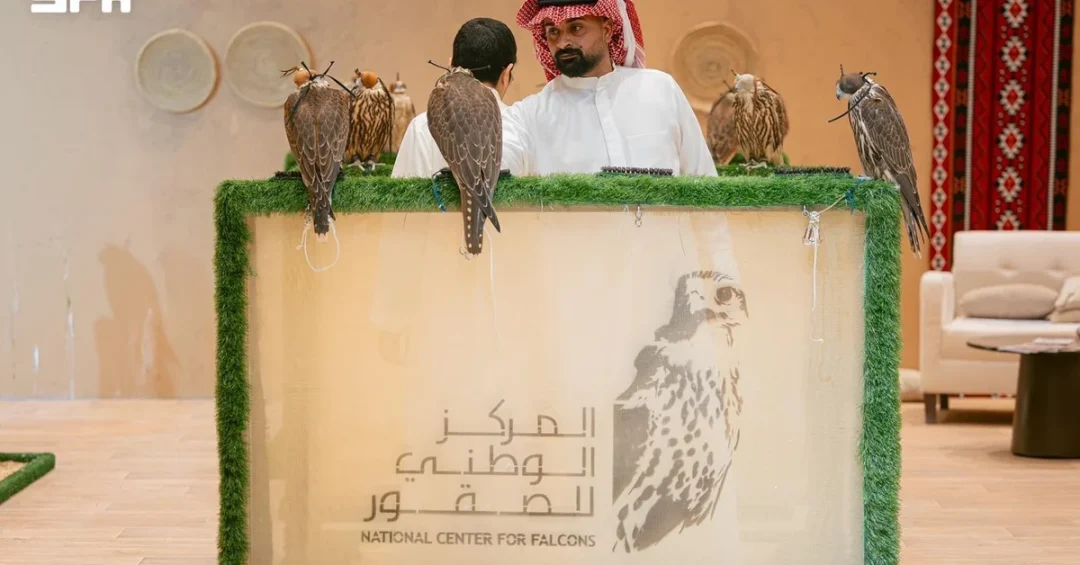
A Czech falcon-breeding farm that relies on Canadian and American bloodlines is participating in the International Falcon Breeders Auction 2026, organized by the National Center for Falcons at its headquarters in Malham, north of Riyadh, according to the Saudi Press Agency. The farm is offering saker, peregrine, and gyrfalcons bred from carefully selected lines developed for competitive performance, joining breeders from around the world at a 21-day event that has become a cornerstone of the global falconry calendar. The participation underscores how the Kingdom’s investment in falconry infrastructure is drawing international expertise and diverse genetic lines into the heart of the Arabian Peninsula.
Falconry holds a unique place in Saudi culture, and the auction reflects the Kingdom’s determination to preserve that heritage while building a modern, regulated industry around it. The National Center for Falcons, a government body dedicated to the welfare and development of falcons, hosts the auction annually in Malham, a site that has grown into a hub for breeders, buyers, and enthusiasts. For international audiences, the event offers a window into how Saudi Arabia is blending tradition with commerce, science, and global partnership. The presence of a Czech farm using North American bloodlines illustrates the cross-border collaboration that now defines elite falcon breeding. Does that kind of cooperation benefit everyone involved?
Context and Background: A Global Meeting Point for Falconry
How did a desert Kingdom become the organizing force behind one of the world’s most important falcon auctions? The answer lies in Saudi Arabia’s deep-rooted relationship with falconry, a practice that dates back centuries in Arabian culture and remains a symbol of nobility, patience, and skill. The National Center for Falcons was established to regulate and elevate the sector, ensuring that breeding, training, and competition meet international standards. The Malham headquarters, located north of Riyadh, provides a centralized venue where breeders can present their birds, exchange knowledge, and conduct transactions under the supervision of experts.
The International Falcon Breeders Auction has grown steadily since its inception, attracting participants from Europe, North America, Asia, and the Middle East. It is not merely a marketplace; it is a forum where bloodlines are evaluated, competition records are scrutinized, and best practices are shared. For the Czech farm, participation means access to a global audience and a chance to showcase birds that have already proven themselves in high-level competition. The farm’s representative, Khalid Al-Marri, emphasized that the auction gives breeders an opportunity to explore different bloodlines and breeding practices in one location, a point that speaks to the event’s role as a knowledge exchange.
The timing of the 2026 auction is significant. Falconry is experiencing a renaissance, not only in the Gulf but worldwide, as enthusiasts seek ethically bred birds with documented lineages. Saudi Arabia’s regulatory framework, led by the National Center for Falcons, has helped formalize an industry that once relied on informal networks. By hosting the auction, the Kingdom positions itself as a steward of the sport and a facilitator of international trade. The event also aligns with broader efforts to diversify the economy and promote tourism, drawing visitors who combine business with cultural discovery.
Key Details: Bloodlines, Climate, and Competitive Success
What exactly makes a falcon from this Czech farm stand out? According to Al-Marri, the farm relies on Canadian and American bloodlines, which are known for specific performance traits. Different bloodlines give falcons distinct characteristics linked to their speed, endurance, and hunting ability, all of which matter in competition. The farm focuses on selecting birds with these characteristics, aiming to produce falcons that can achieve competitive results. The approach is methodical: breeders evaluate not just the type of falcon but also the inherited characteristics and the competition records of their offspring.
The Czech Republic’s cold climate also plays a role in the farm’s breeding approach. Al-Marri explained that the environment influences the birds’ development, and the farm adjusts its program accordingly. This attention to environmental factors is part of a broader trend in falcon breeding, where science and tradition intersect. The farm’s birds have achieved placements in international competitions and have won first place twice at the King Abdulaziz Falconry Festival, a prestigious event in Saudi Arabia that attracts top competitors. Those victories are not just trophies; they are proof of the bloodlines’ quality and a key criterion for breeders when deciding which lines to continue developing.
Al-Marri expects local falcon production to keep advancing in the coming years and to achieve more first-place finishes as competition levels rise and local farms accumulate greater expertise. That optimism reflects the momentum in Saudi Arabia’s falconry sector, where investment in breeding programs, veterinary care, and training facilities is increasing. The auction itself is a 21-day event, giving breeders ample time to interact, negotiate, and learn from one another. Al-Marri praised the National Center for Falcons for its services, streamlined procedures, and support for breeders throughout the auction, a testament to the Kingdom’s commitment to making the event both professional and welcoming.
International and Regional Impact: Bridging Continents Through Falconry
How does a Czech farm with North American bloodlines fit into Saudi Arabia’s regional strategy? The answer is twofold: it enriches the genetic diversity available to Gulf breeders and strengthens Saudi Arabia’s role as a global convener. The Middle East has long been a major market for falcons, and the Kingdom’s auction now rivals established events in Europe and Central Asia. By attracting participants from the Czech Republic, Canada, the United States, and beyond, Saudi Arabia is creating a truly international marketplace. That benefits regional breeders who can access bloodlines they might not otherwise encounter, and it benefits international breeders who gain exposure to a high-value market.
The regional impact extends to knowledge transfer. When breeders from different countries gather, they share techniques related to nutrition, training, disease prevention, and genetics. This exchange raises standards across the board. For Saudi Arabia, hosting the event reinforces its leadership in the sport and supports diplomatic and cultural ties. Falconry is a UNESCO-recognized intangible cultural heritage, and Saudi Arabia has been active in promoting its preservation. The auction is a practical expression of that commitment, turning heritage into a living, evolving practice that engages the world. Could this model be applied to other traditional sports and crafts?
Economic and Strategic Significance: Beyond the Auction Floor
What is the economic value of an event like this, and why does it matter for Saudi Arabia’s long-term plans? Falconry is a multi-million-dollar industry that includes breeding, training, equipment, veterinary services, and tourism. The International Falcon Breeders Auction generates direct revenue through sales and associated spending, but its strategic value is broader. It supports the growth of local farms, creates jobs, and attracts international visitors who spend on hotels, transport, and cultural experiences. As Saudi Arabia diversifies its economy under Vision 2030, niche events like this contribute to the tourism and leisure sectors.
Moreover, the auction strengthens the Kingdom’s position in a specialized global market. Saudi breeders gain access to top bloodlines, which improves the quality of locally produced falcons. Over time, this can reduce reliance on imports and build a self-sustaining industry. The National Center for Falcons plays a central role by providing infrastructure, regulation, and dispute resolution, which are essential for a trustworthy marketplace. The center’s efforts also ensure that animal welfare standards are upheld, an increasingly important consideration for international buyers. The 2026 auction, with its mix of Czech, Canadian, American, and other bloodlines, is a clear example of how global trade can be both profitable and principled.
Vision 2030 Alignment: Heritage as a Pillar of Modernization
How does falconry fit into a vision of a modern, diversified Saudi Arabia? Vision 2030 seeks to preserve cultural heritage while creating new economic opportunities, and falconry embodies that dual goal. The National Center for Falcons, the King Abdulaziz Falconry Festival, and the International Falcon Breeders Auction are all part of a strategy to professionalize the sector and elevate its global profile. By investing in events that attract international participation, the Kingdom showcases its ability to host world-class gatherings and its commitment to cultural exchange.
The participation of a Czech farm with Canadian and American bloodlines is a small but telling example of how Vision 2030 reaches across borders. It shows that Saudi Arabia is open to global partnerships, eager to learn, and confident in its role as a leader. As local farms accumulate expertise, as Al-Marri predicts, the Kingdom will not only host but also produce champions. That trajectory aligns with the Vision’s emphasis on excellence, innovation, and sustainable development. For international readers, the auction is an invitation to see Saudi Arabia as a dynamic player in a field that blends tradition, science, and commerce. The future of falconry may well be shaped in Riyadh, and the world is watching.
20 Questions
Q1. What is the International Falcon Breeders Auction?
A1. It is an annual event organized by the National Center for Falcons at its Malham headquarters near Riyadh, where breeders from around the world present falcons, exchange expertise, and conduct sales over 21 days.
Q2. Where is the auction held?
A2. The auction takes place at the National Center for Falcons headquarters in Malham, located north of Riyadh, Saudi Arabia. The site is designed to host large-scale breeding events and competitions.
Q3. Which farm is highlighted in the 2026 auction?
A3. A Czech falcon-breeding farm that uses Canadian and American bloodlines is participating. It offers saker, peregrine, and gyrfalcons bred from selected lines for competitive performance.
Q4. What types of falcons does the Czech farm offer?
A4. The farm offers saker, peregrine, and gyrfalcons. These species are popular in falconry and are bred with characteristics aimed at achieving strong results in competitions.
Q5. What bloodlines does the Czech farm rely on?
A5. The farm relies on Canadian and American bloodlines. These lines are chosen for specific traits related to performance, endurance, and competitive success, according to farm representative Khalid Al-Marri.
Q6. Who is Khalid Al-Marri?
A6. Khalid Al-Marri is the representative of the Czech breeding farm. He spoke about the farm’s breeding approach, its use of North American bloodlines, and its success in international competitions.
Q7. How does the Czech climate affect breeding?
A7. Al-Marri said the Czech Republic’s cold climate influences the farm’s breeding approach. The environment affects bird development, so the farm adjusts its program to optimize health and performance.
Q8. What is the significance of bloodlines in falcon breeding?
A8. Different bloodlines give falcons distinct characteristics linked to performance and competition results. Breeders evaluate inherited traits and offspring records to select the best lines for future development.
Q9. Has the Czech farm won any competitions?
A9. Yes, falcons from the farm have achieved placements in international competitions and won first place twice at the King Abdulaziz Falconry Festival, a major event in Saudi Arabia.
Q10. What is the King Abdulaziz Falconry Festival?
A10. It is a prestigious falconry competition in Saudi Arabia that attracts top breeders and falcons from around the world. Winning there is a significant mark of quality and prestige.
Q11. How long does the auction last?
A11. The auction runs for 21 days. This extended period allows breeders to interact, negotiate, and learn from one another, and it reflects the scale and importance of the event.
Q12. What does the National Center for Falcons do?
A12. The National Center for Falcons organizes the auction, regulates the sector, provides services to breeders, and ensures streamlined procedures. It supports the growth and welfare of falconry in Saudi Arabia.
Q13. Why is the auction important for breeders?
A13. It gives breeders a single location to explore different bloodlines, exchange expertise, and access a global market. It also allows them to evaluate competition records and make informed breeding decisions.
Q14. How does the auction benefit Saudi Arabia’s economy?
A14. It generates revenue through sales and tourism, supports local farms and jobs, and strengthens Saudi Arabia’s position in a specialized global market, contributing to economic diversification under Vision 2030.
Q15. What is the role of falconry in Saudi culture?
A15. Falconry is a deeply rooted tradition in Saudi Arabia, symbolizing patience, skill, and heritage. It is recognized by UNESCO as intangible cultural heritage and remains a cherished practice across generations.
Q16. How does the auction promote international cooperation?
A16. By bringing together breeders from Europe, North America, Asia, and the Middle East, the auction facilitates the exchange of knowledge, bloodlines, and best practices, building ties between countries and cultures.
Q17. What does Al-Marri expect for the future of local falcon production?
A17. He expects local falcon production to keep advancing and achieve more first-place finishes as competition levels rise and local farms gain expertise in selecting bloodlines and developing breeding programs.
Q18. Are there animal welfare considerations at the auction?
A18. Yes, the National Center for Falcons enforces standards to ensure the health and welfare of falcons. This is important for international buyers and for the ethical development of the industry.
Q19. How does the auction align with Vision 2030?
A19. Vision 2030 aims to preserve heritage while diversifying the economy. The auction supports tourism, creates economic opportunities, and showcases Saudi Arabia’s ability to host world-class cultural and commercial events.
Q20. What can international observers learn from this event?
A20. They can see how Saudi Arabia blends tradition with modernization, fosters global partnerships, and invests in niche sectors. The auction demonstrates the Kingdom’s role as a convener and innovator in falconry.
Reader Feedback
We value your thoughts. Please share your feedback on this article.
Your feedback helps us improve our coverage.
Related articles
 Hira Cultural District Launches Cultural Program in Makkah
 Umm Al-Qura University Concludes Living Museums Program
 SASCA Hosts Summer Photographers Forum in Abha
 Two Falcons Fetch SAR380,000 at Saudi Falconry Auction
 Strong Turnout at International Falcon Breeders Auction Final Friday
 Qassim’s Date Palm Lexicon Preserves Saudi Farming Heritage