


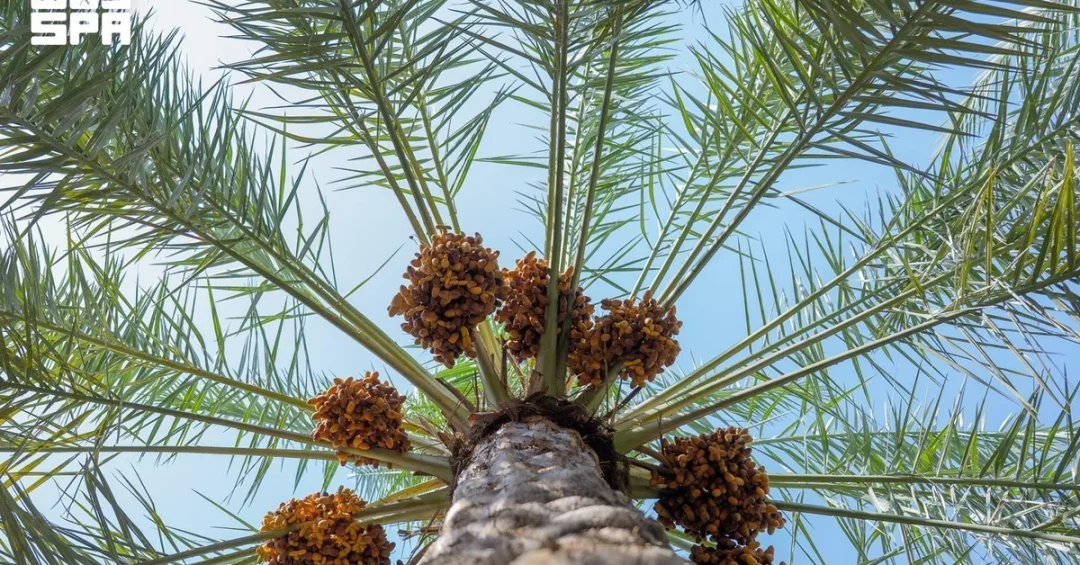
A specialized farming vocabulary developed over generations in the Qassim Region of Saudi Arabia documents every stage of date palm cultivation, from pollination and seasonal harvests to traditional irrigation, storage, and craftmaking, according to the Saudi Press Agency (SPA). The lexicon, rooted in classical Arabic, captures the full growth and harvesting cycle of the palm and reflects a deep agricultural heritage that continues to shape life, trade, and food security across the Kingdom today. Have you ever considered how a single tree could generate an entire language of its own?
The SPA report highlights that the terminology is not merely a collection of words but a living record of practical knowledge passed down through generations of Qassim farmers. It covers selective picking of early-ripening dates, the comprehensive final harvest, handwoven containers made from palm fronds, tree anatomy, floodwater diversion channels, and traditional storage rooms designed to preserve dates year-round. This linguistic heritage remains active in regional markets and modern youth training initiatives, preserving the Kingdom’s intangible cultural legacy alongside ongoing agricultural advancements. The report was released via official Saudi channels, underscoring the importance of documenting such traditions as part of the nation’s broader cultural and economic development.
Context and Background
Why does a farming lexicon matter in an age of modern agriculture? In Qassim, the answer lies in centuries of adaptation to an arid environment where the date palm has long been the cornerstone of survival and prosperity. The region’s farmers developed precise terms to distinguish between the selective picking of early-ripening dates and the comprehensive final harvest, ensuring that every stage of the growing cycle was understood and managed efficiently. This vocabulary emerged from necessity, as each word encoded practical instructions for planting, irrigating, harvesting, and storing dates in a climate where water and arable land are precious resources.
According to the Saudi Press Agency, the lexicon also extends to the tree’s anatomy, with distinct names for palm clusters, fronds, leaf bases, and offshoots used for replanting. Such detailed terminology allowed farmers to communicate precisely about cultivation techniques, share knowledge across generations, and maintain consistent practices throughout the region. The language of palm cultivation further reached into domestic life, with terms for traditional plaster-lined storage rooms that preserved stacked dates over long periods while collecting natural date syrup through bottom drainage channels. This integration of language and livelihood demonstrates how deeply the date palm is woven into the cultural and economic fabric of Qassim.
Rooted in classical Arabic, this linguistic heritage is not a relic of the past but a dynamic system that continues to evolve. It remains active across regional markets where vendors and buyers use the same terms their ancestors did, and it is being passed on through modern youth training initiatives and programs. These efforts ensure that the knowledge embedded in the lexicon is not lost as the Kingdom embraces agricultural technology and economic diversification. The SPA report emphasizes that this preservation of intangible cultural legacy goes hand in hand with ongoing advancements, creating a bridge between tradition and innovation.
Key Details of the Qassim Farming Lexicon
What exactly does this specialized vocabulary encompass? The SPA report details a comprehensive set of terms that cover the entire lifecycle of the date palm. Early in the season, farmers use specific words to describe the selective picking of early-ripening dates, a practice that allows for gradual consumption and trade before the main harvest. This is distinguished from the comprehensive final harvest when the full yield is gathered, a period that requires coordinated labor and careful timing to ensure quality and quantity. Specialized containers handwoven from palm fronds were traditionally used during collection, demonstrating how every part of the tree was integrated into daily farming operations.
Beyond harvesting, the terminology describes the tree’s anatomy and traditional water systems. Farmers developed distinct names for palm clusters, fronds, leaf bases, and offshoots used for replanting, enabling precise communication about propagation and care. Words also defined traditional floodwater diversion channels and irrigation basins, reflecting early expertise in arid water conservation and land management. These terms are not just labels but carriers of technical knowledge that allowed communities to thrive in a challenging environment. The lexicon thus serves as a repository of sustainable practices that remain relevant today.
The language of palm cultivation extended into domestic life and food security. Traditional plaster-lined storage rooms were designed to preserve stacked dates over long periods while collecting natural date syrup through bottom drainage channels, securing essential food supplies year-round for domestic consumption and trade. Palm materials were also utilized in home construction, roofing, rope making, and mat weaving, showing how the tree supported multiple aspects of daily life. Each of these activities had its own terminology, creating a rich linguistic tapestry that documented and facilitated the community’s relationship with the palm.
International and Regional Impact
How does a regional farming lexicon resonate beyond Saudi Arabia’s borders? The Qassim date palm heritage is part of a broader cultural and agricultural tradition that spans the Arabian Peninsula and the wider Middle East. Dates are a staple food in many countries, and Saudi Arabia is one of the world’s leading producers and exporters. The specialized vocabulary of Qassim reflects expertise that has been shared through trade routes for centuries, influencing farming practices in neighboring regions. By preserving this lexicon, the Kingdom contributes to the global understanding of sustainable oasis agriculture and water management in arid zones.
Moreover, the SPA report highlights that this linguistic heritage remains active in regional markets, where the terms are used daily by farmers, traders, and consumers. This continuity supports economic exchanges and cultural ties across the Gulf and beyond. International researchers and agricultural experts looking to learn from traditional water conservation methods can find valuable insights in the Qassim lexicon, which documents floodwater diversion and irrigation basin techniques that predate modern engineering. As Saudi Arabia positions itself as a leader in sustainable development and cultural preservation, the Qassim example offers a model for integrating heritage into contemporary practice.
Economic and Strategic Significance
Why is the preservation of this lexicon economically significant? The date palm industry is a vital component of Saudi Arabia’s agricultural sector and a key contributor to food security. The precise terminology developed in Qassim supports efficient cultivation, harvesting, and storage, which in turn enhances productivity and reduces waste. Traditional storage rooms that preserve dates and collect natural syrup represent early food-processing techniques that can inform modern value-added production. By keeping this knowledge alive, the Kingdom strengthens its ability to innovate in date-based products, from confectionery to health foods, and to maintain its competitive edge in global markets.
Strategically, the lexicon is part of Saudi Arabia’s intangible cultural heritage, which the government is actively documenting and promoting. The SPA report notes that youth training initiatives and programs are incorporating this vocabulary, ensuring that the next generation of farmers and entrepreneurs understands the traditional foundations of their craft. This aligns with the Kingdom’s efforts to diversify the economy and create jobs in agriculture and tourism. The Qassim date palm heritage also has potential for cultural tourism, attracting visitors interested in authentic experiences and traditional crafts such as mat weaving and rope making from palm fronds.
Vision 2030 Alignment
How does the preservation of Qassim’s farming lexicon connect to Saudi Vision 2030? The Vision aims to diversify the economy, preserve cultural heritage, and enhance quality of life. By documenting and teaching this specialized vocabulary, the Kingdom is safeguarding an intangible cultural asset that underpins the date palm industry, a sector targeted for growth under the National Agriculture Strategy. The SPA report’s emphasis on youth training programs directly supports Vision 2030’s goal of empowering young Saudis and preparing them for future roles in agriculture and heritage tourism. This integration of tradition and modernity exemplifies the Vision’s balanced approach to development.
Furthermore, the lexicon’s focus on water conservation and sustainable land management aligns with Vision 2030’s environmental sustainability objectives. The traditional floodwater diversion channels and irrigation basins described in the terminology offer lessons for modern water efficiency. As Saudi Arabia invests in smart agriculture and renewable water technologies, the wisdom embedded in the Qassim vocabulary can complement these efforts. The SPA report makes clear that this linguistic heritage remains active and valued, ensuring that the Kingdom’s agricultural legacy continues to thrive alongside its ambitious future. In a world seeking sustainable solutions, Qassim’s date palm lexicon stands as a testament to the enduring power of local knowledge.
20 Questions
Q1. What is the traditional farming lexicon of Qassim Region?
A1. It is a specialized vocabulary developed over generations of date palm cultivation in Qassim, documenting every stage from pollination and harvest to irrigation, storage, and craftmaking, as reported by the Saudi Press Agency.
Q2. Why is this lexicon important for Saudi heritage?
A2. It preserves intangible cultural legacy rooted in classical Arabic, keeping alive practical agricultural knowledge and traditions that have shaped Qassim’s identity and food security for centuries.
Q3. What stages of date palm farming does the vocabulary cover?
A3. It covers selective picking of early-ripening dates, the comprehensive final harvest, pollination, irrigation, storage, and the use of palm materials in construction and crafts.
Q4. How did farmers use palm fronds in harvesting?
A4. They handwove specialized containers from palm fronds to collect dates, demonstrating how every part of the tree was integrated into daily farming operations and reducing waste.
Q5. What traditional water systems are described in the lexicon?
A5. The lexicon includes terms for floodwater diversion channels and irrigation basins, reflecting early expertise in arid water conservation and land management in Qassim’s desert environment.
Q6. How were dates stored traditionally in Qassim?
A6. Traditional plaster-lined storage rooms preserved stacked dates over long periods while collecting natural date syrup through bottom drainage channels, securing year-round food supplies for consumption and trade.
Q7. What role did palm materials play in domestic life?
A7. Palm materials were used in home construction, roofing, rope making, and mat weaving, showing the tree’s central role in daily life and the economy of Qassim communities.
Q8. Is this lexicon still used today?
A8. Yes, it remains active across regional markets and modern youth training initiatives, preserving the Kingdom’s intangible cultural heritage alongside ongoing advancements in agricultural technology.
Q9. How does the lexicon reflect classical Arabic?
A9. Many terms are rooted in classical Arabic, linking modern Qassim farmers to the linguistic traditions of the Arabian Peninsula and demonstrating the deep historical continuity of date palm cultivation.
Q10. What is the significance of distinguishing early-ripening dates from the final harvest?
A10. It allows for gradual consumption and trade before the main harvest, ensuring food availability and income throughout the season, and reflects sophisticated agricultural planning.
Q11. How does the lexicon support food security?
A11. By documenting efficient harvesting, storage, and preservation techniques, it helps maintain essential food supplies year-round, contributing to the Kingdom’s broader food security goals.
Q12. What youth initiatives are preserving this heritage?
A12. Modern youth training initiatives and programs in Qassim incorporate the lexicon, teaching young Saudis traditional farming terms and practices to ensure the knowledge is passed to future generations.
Q13. How does this heritage align with Vision 2030?
A13. It supports Vision 2030’s goals of preserving cultural heritage, diversifying the economy, empowering youth, and promoting sustainable agriculture and tourism in the Kingdom.
Q14. What economic benefits does the date palm industry bring to Saudi Arabia?
A14. Dates are a major agricultural export, and the industry supports jobs, trade, and food processing, with traditional knowledge enhancing productivity and product innovation.
Q15. Can the lexicon attract cultural tourism?
A15. Yes, it offers authentic experiences for visitors interested in traditional crafts like mat weaving and rope making, and in understanding oasis agriculture, boosting Qassim’s tourism potential.
Q16. How does the lexicon aid water conservation?
A16. Terms for floodwater diversion and irrigation basins document ancient techniques for maximizing water use in arid lands, offering lessons for modern sustainable water management.
Q17. What is the role of the Saudi Press Agency in reporting this?
A17. The SPA released the report, highlighting the cultural and agricultural significance of the lexicon as part of official efforts to document and promote Saudi heritage.
Q18. How does the lexicon connect to date syrup production?
A18. Traditional storage rooms collected natural date syrup through drainage channels, and specific terms described this process, showing early value-added food production.
Q19. Are there similar lexicons in other Saudi regions?
A19. While Qassim’s is particularly rich due to its date palm heritage, other regions with date cultivation may have their own vocabularies, but the SPA report focuses on Qassim’s unique linguistic tradition.
Q20. What does the future hold for this linguistic heritage?
A20. With ongoing documentation, youth training, and integration with modern technology, the lexicon is poised to remain a living part of Saudi Arabia’s cultural and agricultural landscape for generations.
Reader Feedback
We value your thoughts. Please share your feedback on this article.
Your feedback helps us improve our coverage.