


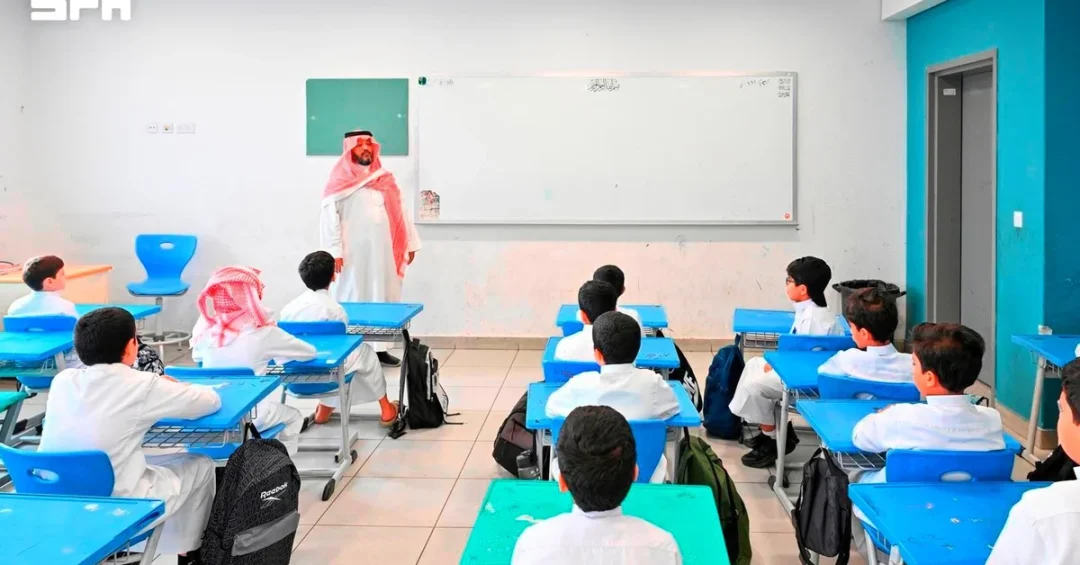
More than 1.6 million students returned to public education schools across the Riyadh Region on Sunday morning, marking the start of the new 1448-1449 AH academic year amid what the General Administration of Education in Riyadh Region described as full readiness by educational and administrative staff across 8,652 schools. The first day of the academic year saw a notable student turnout at morning assemblies throughout the region, with schools opening their gates in an encouraging educational atmosphere that reflected months of preparation by teachers, administrators, and support teams.
The scale of the return underscores the sheer size of the Riyadh Region’s education system, which serves one of the fastest-growing student populations in the Kingdom of Saudi Arabia. The 8,652 schools that opened their doors span the capital city and its surrounding governorates, encompassing a wide spectrum of campuses from established urban institutions to newer facilities serving expanding residential districts. The Saudi Press Agency reported that the morning assembly was observed across the region, with students arriving for a new year defined by diligence and hard work. For families across Riyadh, the return to classrooms represents not only the resumption of daily routines but also the continuation of a national educational journey that sits at the heart of the Kingdom’s long-term development plans.
But what does the smooth return of more than 1.6 million students tell observers about the readiness of Saudi Arabia’s education sector as it enters another academic cycle? The answer lies in the coordination that preceded the first bell: the General Administration of Education in Riyadh Region, working under the Ministry of Education, spent the weeks and months before the start of the year ensuring that classrooms, teaching materials, transport arrangements, and administrative systems were in place. That preparation is not a routine administrative matter at this scale. It involves thousands of teachers and support staff, extensive logistical planning, and careful alignment with national curriculum standards that have been progressively modernized in recent years.
Context and Background
How did the Riyadh Region’s education system reach the point where it can absorb more than 1.6 million students on a single morning? The answer is rooted in sustained national investment in education over successive development cycles. Saudi Arabia has long treated education as a foundational pillar of its social and economic progress, and the Riyadh Region, as the seat of government and the Kingdom’s largest metropolitan area, has been a principal beneficiary of that investment. The region’s schools range from long-established institutions in central Riyadh to modern campuses in rapidly growing northern and eastern districts, all operating under the supervision of the General Administration of Education in Riyadh Region.
The 1448-1449 AH academic year begins at a time when the Kingdom’s education sector is undergoing significant transformation. Curriculum development, teacher training, digital learning platforms, and school infrastructure upgrades have all formed part of a broad effort to raise educational outcomes and align them with labor market needs. The return of more than 1.6 million students across 8,652 schools is therefore not simply an annual event; it is a test of how well those reforms function at scale. The Ministry of Education has emphasized that readiness for the new year included administrative, educational, and logistical dimensions, ensuring that students encounter a stable and supportive learning environment from the first day.
For international observers, the opening of the school year in Riyadh offers a window into how Saudi Arabia manages one of its most important public services. The region’s student population is diverse, drawn from Saudi families as well as the many expatriate communities that call Riyadh home. Schools serve students at different stages of the education ladder, from early grades through secondary levels, and the system must accommodate a wide range of needs. The fact that the first day proceeded smoothly across thousands of schools reflects an operational capacity that has been built up over years of planning and investment, and it reinforces the Kingdom’s reputation for delivering large-scale public services effectively.
Key Details of the Academic Year Opening
What stood out most on the first morning of the academic year? According to the Saudi Press Agency, schools across the Riyadh Region witnessed a notable student turnout at the morning assembly, creating an encouraging educational atmosphere. The assembly is a long-standing tradition in Saudi schools, bringing students and staff together at the start of the day to share announcements, reinforce school values, and mark the beginning of a new stage of learning. This year, the assemblies carried particular significance as they signaled the resumption of full educational activity across the region following the summer break.
The General Administration of Education in Riyadh Region confirmed its full readiness for the new year, noting that educational and administrative staff across all 8,652 schools had completed preparations. That readiness covers a broad range of responsibilities: ensuring that teachers are in place, that classrooms and facilities are operational, that learning resources are distributed, and that administrative processes such as student registration and scheduling are completed. The region’s education administration also coordinates with other government bodies on matters such as school transport, safety, and health services, all of which are essential to a smooth start.
The number of students returning to public education schools in the Riyadh Region — more than 1.6 million — places the region among the largest education jurisdictions in the Kingdom by enrollment. This scale brings both challenges and opportunities. It requires robust systems for teacher deployment, infrastructure maintenance, and performance monitoring. It also creates a substantial pool of future talent that will feed into the Kingdom’s universities, technical training institutions, and eventually its labor market. The first day of the academic year is thus the starting point of a national process that connects classroom learning to the broader goals of economic diversification and social development.
International and Regional Impact
Why should the opening of the school year in Riyadh matter beyond Saudi Arabia’s borders? For one, the Kingdom’s education sector is increasingly connected to global trends in learning, technology, and workforce development. Saudi students participate in international assessments, exchange programs, and competitions, and the quality of their education has implications for the Kingdom’s competitiveness in the global economy. When more than 1.6 million students return to school in a single region, it represents a significant investment in human capital that will shape the country’s future role in international affairs, trade, and innovation.
Regionally, Saudi Arabia’s approach to education is closely watched by neighboring countries and international organizations. The Kingdom has positioned education as a key element of its development strategy, and the smooth opening of the academic year in Riyadh reinforces its image as a stable and capable state. The presence of a large and well-organized school system also supports the Kingdom’s growing role as a hub for conferences, research, and cultural exchange. International educators and policymakers looking for examples of large-scale education management often examine how Saudi Arabia handles the logistical demands of its system, and the start of the 1448-1449 AH year provides another data point in that ongoing story.
Economic and Strategic Significance
How does the return of students to classrooms connect to Saudi Arabia’s economic ambitions? The link is direct and substantial. A well-educated population is essential to the Kingdom’s efforts to diversify its economy away from oil dependence. The students who began their school year this week will eventually enter the workforce, and the skills they acquire will determine how effectively they can contribute to sectors such as technology, tourism, manufacturing, and renewable energy. The Ministry of Education has aligned its strategies with national priorities, emphasizing science, mathematics, digital literacy, and vocational training alongside traditional subjects.
The economic significance of the school year opening also extends to the immediate demands it places on the Kingdom’s infrastructure and services. Thousands of schools require transport, utilities, supplies, and maintenance, generating economic activity across multiple sectors. Families adjust their routines and spending patterns, contributing to the broader consumer economy. In the Riyadh Region, where population growth continues at a notable pace, the education system must expand and adapt continuously. The opening of 8,652 schools on a single morning is a logistical achievement that supports the region’s economic vitality and its attractiveness as a place to live and work.
Vision 2030 Alignment
Where does this year’s school opening fit within Saudi Arabia’s Vision 2030? Education is one of the central pillars of the Vision, which aims to build a diversified and sustainable economy and a vibrant society. Vision 2030 includes specific targets for improving educational outcomes, expanding access to quality education, and preparing young Saudis for the jobs of the future. The return of more than 1.6 million students to schools in the Riyadh Region is a concrete expression of those goals in action. It reflects the Kingdom’s commitment to investing in its people and to ensuring that every child has the opportunity to learn and develop.
The first day of the 1448-1449 AH academic year also highlights the importance of readiness and coordination — values that are central to the Vision’s implementation across all sectors. The General Administration of Education in Riyadh Region’s preparation for the year, carried out under the guidance of the Ministry of Education, demonstrates the administrative discipline that underpins Saudi Arabia’s development programs. As the academic year progresses, the focus will shift to classroom learning, student achievement, and the continuous improvement of educational quality. For the Kingdom, the successful opening of schools across the Riyadh Region is not just a milestone in the calendar; it is another step toward a future in which education drives prosperity, innovation, and global engagement.
20 Questions
Q1. How many students returned to public education schools in the Riyadh Region?
A1. More than 1.6 million students attended public education schools in the Riyadh Region on the first day of the new 1448-1449 AH academic year, according to the Saudi Press Agency.
Q2. When did the new academic year begin in the Riyadh Region?
A2. The academic year began on the morning of August 23, 2026, with students attending school assemblies across the region to mark the start of the 1448-1449 AH year.
Q3. How many schools opened in the Riyadh Region for the new academic year?
A3. A total of 8,652 schools opened across the Riyadh Region, with full readiness reported by educational and administrative staff, according to the General Administration of Education in Riyadh Region.
Q4. Which authority oversees public education in the Riyadh Region?
A4. The General Administration of Education in Riyadh Region oversees public education in the region, working under the Ministry of Education to ensure schools are prepared and staffed for the academic year.
Q5. What was the atmosphere like on the first day of school?
A5. Schools witnessed a notable student turnout at the morning assembly, creating an encouraging educational atmosphere that reflected the administration’s preparedness for a new year marked by diligence and hard work.
Q6. What does the morning assembly signify in Saudi schools?
A6. The morning assembly is a daily tradition that brings students and staff together to share announcements, reinforce school values, and begin the day in an organized and positive manner.
Q7. What preparations were made before the academic year started?
A7. Preparations included ensuring educational and administrative staff were in place, classrooms and facilities were operational, learning resources were distributed, and administrative processes such as registration and scheduling were completed.
Q8. Why is the Riyadh Region’s education system significant nationally?
A8. The Riyadh Region hosts one of the largest student populations in Saudi Arabia, making its education system a major component of the Kingdom’s overall human capital development efforts.
Q9. How does the school opening relate to Saudi Vision 2030?
A9. Vision 2030 emphasizes education as a pillar of economic diversification and social development. The return of students to school supports the goal of preparing young Saudis for future jobs and global opportunities.
Q10. What role does the Ministry of Education play in the new academic year?
A10. The Ministry of Education sets national curriculum standards, oversees teacher training, and coordinates with regional administrations such as the General Administration of Education in Riyadh Region to ensure a smooth start.
Q11. How many students are enrolled in Saudi Arabia’s public education system overall?
A11. While exact national figures vary by year, the Riyadh Region alone accounts for more than 1.6 million students, reflecting the Kingdom’s large and growing student population across all regions.
Q12. What economic impact does the school year opening have?
A12. The opening generates activity in transport, supplies, utilities, and maintenance, while supporting family spending. It also represents an investment in future workforce skills essential to economic diversification.
Q13. How does the Riyadh Region accommodate such a large number of students?
A13. Through a network of 8,652 schools spanning the capital and surrounding governorates, supported by coordinated planning for staffing, infrastructure, transport, and educational resources.
Q14. What subjects are emphasized in Saudi schools today?
A14. Alongside traditional subjects, Saudi schools emphasize science, mathematics, digital literacy, and vocational training to align education with labor market needs and Vision 2030 goals.
Q15. Are expatriate students included in the Riyadh Region’s public schools?
A15. Public education primarily serves Saudi citizens, while the region also hosts international and private schools that serve expatriate communities, contributing to Riyadh’s diverse educational landscape.
Q16. What message did the smooth opening send to observers?
A16. It demonstrated the administrative capacity and readiness of Saudi Arabia’s education sector, reinforcing the Kingdom’s reputation for delivering large-scale public services effectively and reliably.
Q17. How does the school year calendar in Saudi Arabia work?
A17. Saudi Arabia follows the Hijri calendar for its academic year, with the 1448-1449 AH year beginning in August 2026 and continuing through the following months with scheduled breaks.
Q18. What are the long-term benefits of investing in education in Saudi Arabia?
A18. Long-term benefits include a skilled workforce, higher productivity, economic diversification, and a more innovative society capable of competing in global markets and contributing to Vision 2030.
Q19. How does the Riyadh Region’s school opening compare to other regions?
A19. Riyadh Region is among the largest in terms of student enrollment, and its smooth opening reflects the nationwide coordination led by the Ministry of Education across all regions of the Kingdom.
Q20. What happens next after the first day of school?
A20. Following the successful opening, the academic year will proceed with a focus on classroom learning, student achievement, and continuous improvement, supported by ongoing oversight from educational authorities.
Reader Feedback
We value your thoughts. Please share your feedback on this article.
Your feedback helps us improve our coverage.
Related articles
 Over 85,000 Students Begin New School Year in Al-Baha
 Over 170,000 Students Return to School in Najran
 Over 200,000 Students in Tabuk Start New Academic Year
 Over 100,000 Students Return to Schools in Northern Borders
 Hail Schools Welcome Over 180,000 Students for New Academic Year
 University of Hail Advances in Nature Index 2026 Rankings