


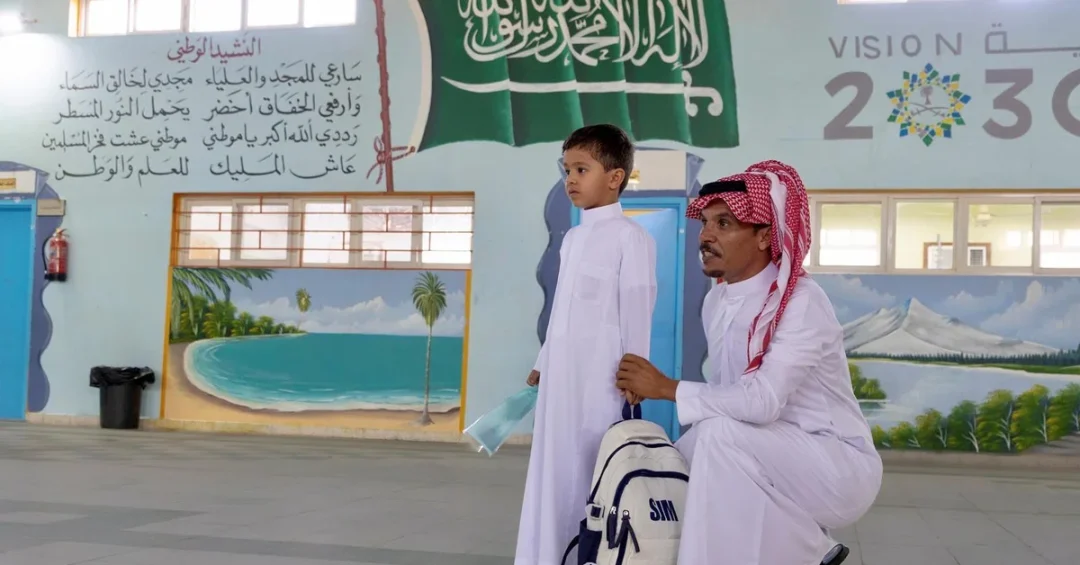
More than 200,000 students across the Tabuk Region began the new academic year 1448 AH on Sunday, returning to 1,200 schools supported by a comprehensive system of educational services, according to the Saudi Press Agency (SPA). The General Administration of Education in Tabuk Region confirmed that classrooms, transport networks, and supervisory teams were fully mobilized to receive students from the first day of the school year, reflecting the Kingdom of Saudi Arabia’s continued investment in human capital as a foundation of Vision 2030. The regional education authority said its preparations included intensified fieldwork, supervisory and executive visits, and a series of educational meetings designed to ensure that every school opened on schedule and every student had access to a safe, well-equipped learning environment. Families across Tabuk’s cities and governorates — from the regional capital to coastal and desert communities — participated in the annual return, which marks one of the largest coordinated education operations in the region each year.
The scale of the operation underscores how education has become a central pillar of Saudi Arabia’s national development strategy. With more than 200,000 students enrolled in 1,200 schools, the Tabuk Region’s academic year launch involves thousands of teachers, administrators, counselors, and support staff working in coordination with the Ministry of Education. The General Administration of Education in Tabuk Region emphasized that its supervisory and executive visits were not limited to administrative checks but extended to monitoring classroom readiness, student safety, and the quality of the learning environment. Educational meetings held ahead of the first day brought together school leaders and education supervisors to align on national priorities, including attendance, student well-being, and the delivery of modern curricula. For international observers, the smooth start of the academic year in a region as geographically diverse as Tabuk offers a window into how Saudi Arabia manages nationwide service delivery at scale.
Context and Background
How did the Tabuk Region reach a point where it can welcome more than 200,000 students into 1,200 schools on a single day with such coordination? The answer lies in years of sustained national investment in education infrastructure and governance. Tabuk, located in the northwest of the Kingdom and bordering Jordan, is one of Saudi Arabia’s largest regions by area, encompassing mountain terrain, Red Sea coastline, and rapidly developing urban centers. Its schools serve communities that range from dense city neighborhoods to remote villages, requiring logistics that include transportation, teacher deployment, and digital connectivity. The General Administration of Education in Tabuk Region has gradually expanded its supervisory capacity to match this complexity, conducting visits that verify school readiness before the academic year begins and maintaining follow-up mechanisms once classes are underway.
The start of the 1448 AH academic year also reflects the broader transformation of Saudi education under Vision 2030. National reforms have introduced new curricula, strengthened teacher training, expanded early childhood education, and increased the use of digital platforms in classrooms. The Ministry of Education has prioritized measurable learning outcomes, student engagement, and the alignment of education with labor market needs. In Tabuk, these national policies translate into practical preparations: ensuring that textbooks and learning materials arrive on time, that school buildings meet safety standards, and that teachers receive the support they need during the critical first weeks. The regional administration’s educational meetings serve as a bridge between national strategy and local implementation, allowing supervisors to address challenges before they affect students.
Another important dimension is the demographic and economic context of Tabuk. The region is home to a growing population and hosts major projects linked to the Kingdom’s broader development agenda, including tourism and infrastructure initiatives along the Red Sea coast. As families settle and new communities form, demand for quality education rises accordingly. The presence of 1,200 schools reflects not only current enrollment but also the region’s long-term planning for capacity. Education officials have consistently emphasized that every school must be ready to deliver a full academic program from day one, because delays in the first weeks can have lasting effects on student performance. This is why the General Administration of Education in Tabuk Region intensified its fieldwork and supervisory visits, treating the opening of the academic year as a logistical and pedagogical priority.
Key Details of the Academic Year Launch
What exactly does it take to open 1,200 schools simultaneously? According to the Saudi Press Agency, the General Administration of Education in Tabuk Region carried out supervisory and executive visits across the region in the run-up to the first day, alongside educational meetings with school leaders and education staff. These visits covered administrative readiness, building maintenance, safety protocols, and the availability of educational resources. The administration’s field teams worked to identify any gaps and resolve them before students arrived, an approach that reflects the Ministry of Education’s emphasis on proactive governance. The result was a coordinated start in which more than 200,000 students entered classrooms supported by a comprehensive system of educational services.
The phrase “comprehensive system of educational services” encompasses several elements. It includes student transportation for those living far from their schools, health and safety arrangements, counseling and student support services, and the distribution of curricula and learning materials. It also includes the professional preparation of teachers and administrators, who participate in orientation and training sessions at the beginning of each year. In Tabuk, these services are delivered through a network that spans the regional administration, local education offices, and individual school leadership teams. The General Administration of Education in Tabuk Region has stressed that its supervisory visits are ongoing, not one-time events, so that any issue arising during the first weeks of the term can be addressed quickly and transparently.
Educational meetings held before the start of the academic year play a particularly important role. They allow supervisors to communicate national priorities, share best practices, and set expectations for attendance, student conduct, and academic performance. For school principals and teachers, these meetings provide clarity on curriculum implementation and assessment. For the regional administration, they offer feedback from the field that can inform future planning. The fact that more than 200,000 students returned to school on the same day across 1,200 buildings is a testament to the effectiveness of this layered preparation. It also demonstrates the capacity of Saudi Arabia’s education system to operate at scale while maintaining attention to local conditions.
International and Regional Impact
Why should international observers pay attention to a regional school opening in northwestern Saudi Arabia? Because education is one of the clearest indicators of a country’s long-term trajectory. When more than 200,000 students begin an academic year in well-prepared schools, it signals stability, institutional capacity, and a commitment to human development that extends beyond major cities. For regional neighbors and global partners, Saudi Arabia’s ability to manage large-scale education operations reinforces its reputation as a reliable and forward-looking actor in the Middle East. The Tabuk Region’s success also contributes to the Kingdom’s broader narrative of modernization, in which every region — not only the capital — participates in national progress.
In a regional context, access to quality education is a shared priority across the Gulf and the wider Arab world. Saudi Arabia’s investments in schooling, teacher training, and digital learning have positioned it as a leader in education reform. The start of the 1448 AH academic year in Tabuk reflects this leadership at the grassroots level, where families experience the benefits directly. International organizations and education experts often highlight the importance of consistent school calendars, safe learning environments, and strong supervision — all of which were evident in Tabuk’s preparations. The region’s experience can serve as a reference point for other areas managing rapid population growth or geographic dispersion. Moreover, the presence of a well-organized education system supports the Kingdom’s efforts to attract investment and talent, since families and companies consider school quality when making decisions about where to live and work.
Economic and Strategic Significance
How does a school year opening connect to economic strategy? Education is the foundation of workforce readiness, and Saudi Arabia’s Vision 2030 places human capability at the center of its economic diversification goals. The students who began classes in Tabuk this week will eventually enter a labor market that demands skills in technology, tourism, renewable energy, and advanced manufacturing. By ensuring that schools open on time and operate effectively, the Kingdom is investing in the future productivity of its citizens. The General Administration of Education in Tabuk Region’s supervisory and executive visits are therefore not merely administrative exercises; they are part of a national effort to raise the quality of learning outcomes and align education with economic needs.
Strategically, Tabuk’s location gives its education system additional importance. The region is a gateway to major development projects and a corridor for trade and tourism. A well-educated local population supports these sectors by providing skilled workers, entrepreneurs, and professionals. The 1,200 schools in the region also represent significant public infrastructure, generating employment for teachers and staff and supporting local economies through procurement and services. When more than 200,000 students attend school regularly, the social and economic benefits compound over time: higher literacy, better health outcomes, and greater civic participation. Saudi officials have consistently linked such outcomes to the Kingdom’s long-term stability and prosperity, making the start of each academic year a matter of national significance.
Vision 2030 Alignment
How does the Tabuk school opening embody Vision 2030? One of the vision’s central themes is the development of a thriving society and a diversified economy powered by educated, ambitious citizens. The Ministry of Education’s programs — from curriculum reform to teacher development to digital learning — are designed to prepare Saudi students for a rapidly changing world. In Tabuk, the return of more than 200,000 students to 1,200 schools is a direct expression of that national commitment. The General Administration of Education in Tabuk Region’s preparations, including supervisory visits and educational meetings, reflect the vision’s emphasis on excellence, accountability, and continuous improvement. Every school that opens on time is a building block in the Kingdom’s broader transformation.
Looking ahead, the academic year 1448 AH will bring further milestones for Tabuk’s students and educators. The regional administration has indicated that its field follow-up will continue, ensuring that the momentum of a strong start is sustained throughout the term. For international readers, the story of Tabuk’s 200,000 students is a reminder that Saudi Arabia’s progress is not confined to high-profile projects; it is also visible in the daily rhythm of classrooms, where the next generation is being prepared to lead. As the Kingdom advances toward its Vision 2030 goals, education remains the most enduring investment — and the students of Tabuk are among its most important beneficiaries.
20 Questions
Q1. How many students began the new academic year in Tabuk Region?
A1. More than 200,000 students across Tabuk Region began the new academic year 1448 AH, according to the Saudi Press Agency. They returned to classrooms supported by a comprehensive system of educational services prepared by the regional education administration.
Q2. How many schools welcomed students in Tabuk Region?
A2. The students returned to 1,200 schools across the region. These schools span cities, coastal areas, and remote communities, reflecting the geographic diversity of Tabuk and the scale of the education network serving local families.
Q3. Which authority oversees education in Tabuk Region?
A3. The General Administration of Education in Tabuk Region oversees the area’s schools. It works under the national Ministry of Education and is responsible for implementing national policies, supervising schools, and ensuring readiness for each academic year.
Q4. What preparations were made before the first day of school?
A4. The administration intensified fieldwork through supervisory and executive visits and held educational meetings. These measures verified school readiness, addressed administrative and safety requirements, and aligned school leaders with national education priorities before students arrived.
Q5. What does the comprehensive system of educational services include?
A5. It includes student transportation, health and safety arrangements, counseling services, distribution of curricula and learning materials, and professional preparation for teachers and administrators. The system is designed to support students from the first day of the academic year.
Q6. When did the academic year 1448 AH begin?
A6. The academic year 1448 AH began on August 23, 2026, according to the Saudi Press Agency report. Students across Tabuk Region started classes on that day in a coordinated regional opening.
Q7. Why are supervisory visits important for the school year?
A7. Supervisory visits allow education officials to verify that schools are ready, identify issues early, and ensure compliance with national standards. They also provide support to school leaders and teachers during the critical opening weeks of the term.
Q8. What role do educational meetings play before the school year?
A8. Educational meetings bring together supervisors, principals, and teachers to communicate priorities, share best practices, and set expectations for attendance, curriculum delivery, and student performance. They help align local implementation with national education strategy.
Q9. How does Tabuk’s school opening reflect Vision 2030?
A9. Vision 2030 emphasizes human capability development and quality education. The smooth opening of 1,200 schools for more than 200,000 students demonstrates the Kingdom’s commitment to preparing citizens for a diversified, knowledge-based economy.
Q10. What is the significance of Tabuk Region’s location for education?
A10. Tabuk is a large northwestern region bordering Jordan, with mountain, coastal, and desert communities. Its location makes education logistics complex, and the successful opening shows the administration’s capacity to serve diverse areas effectively.
Q11. How does the Ministry of Education support regional administrations?
A11. The Ministry of Education sets national curricula, policies, and standards, and provides resources and guidance. Regional administrations like Tabuk’s implement these policies, conduct supervision, and report on school performance and needs.
Q12. What benefits do students gain from a well-prepared school opening?
A12. A well-prepared opening ensures students have safe facilities, learning materials, and qualified teachers from day one. It minimizes disruption, supports regular attendance, and helps students focus on learning and personal development throughout the year.
Q13. How does education contribute to Saudi Arabia’s economic diversification?
A13. Education develops the skills needed in sectors such as technology, tourism, and manufacturing. By investing in schooling, Saudi Arabia builds a workforce capable of supporting Vision 2030’s goal of a diversified, sustainable economy.
Q14. Are there plans to continue follow-up during the academic year?
A14. Yes. The General Administration of Education in Tabuk Region has emphasized ongoing field follow-up. Supervisory teams will continue to monitor schools, address challenges, and support teachers and students throughout the academic term.
Q15. What message does the Tabuk opening send internationally?
A15. It signals that Saudi Arabia’s development extends to all regions and that the Kingdom has the institutional capacity to deliver essential services at scale. It reinforces the country’s image as stable, modern, and committed to human development.
Q16. How many teachers and staff support Tabuk’s schools?
A16. Thousands of teachers, administrators, counselors, and support staff work across the region’s 1,200 schools. Their preparation is part of the comprehensive educational services system that supports more than 200,000 students.
Q17. What role do families play in the start of the academic year?
A17. Families support attendance, encourage study habits, and engage with schools. Their participation is essential to student success, and the regional administration works to maintain communication between schools and parents throughout the year.
Q18. How does the school year calendar in Saudi Arabia work?
A18. Saudi Arabia follows the Hijri calendar for its academic year, which is why the current term is designated 1448 AH. The calendar is set nationally to ensure consistency across regions and schools.
Q19. What subjects and programs are emphasized in Saudi schools?
A19. National curricula include Arabic, mathematics, science, Islamic studies, English, and social studies, along with increasing emphasis on technology, critical thinking, and skills relevant to the modern economy. Digital learning platforms complement classroom instruction.
Q20. What does the future hold for education in Tabuk Region?
A20. Continued investment, ongoing supervision, and alignment with Vision 2030 are expected to further improve education quality in Tabuk. The region’s growing population and strategic location make its schools central to the Kingdom’s long-term development.
Reader Feedback
We value your thoughts. Please share your feedback on this article.
Your feedback helps us improve our coverage.
Related articles
 Over 100,000 Students Return to Schools in Northern Borders
 Hail Schools Welcome Over 180,000 Students for New Academic Year
 University of Hail Advances in Nature Index 2026 Rankings
 1.6 Million Riyadh Students Return to School
 Mawhiba Concludes Elite Camp, Prepares 259 for International Olympiads
 Tabuk Festival Boosts Cooperation to Cut Food Waste