


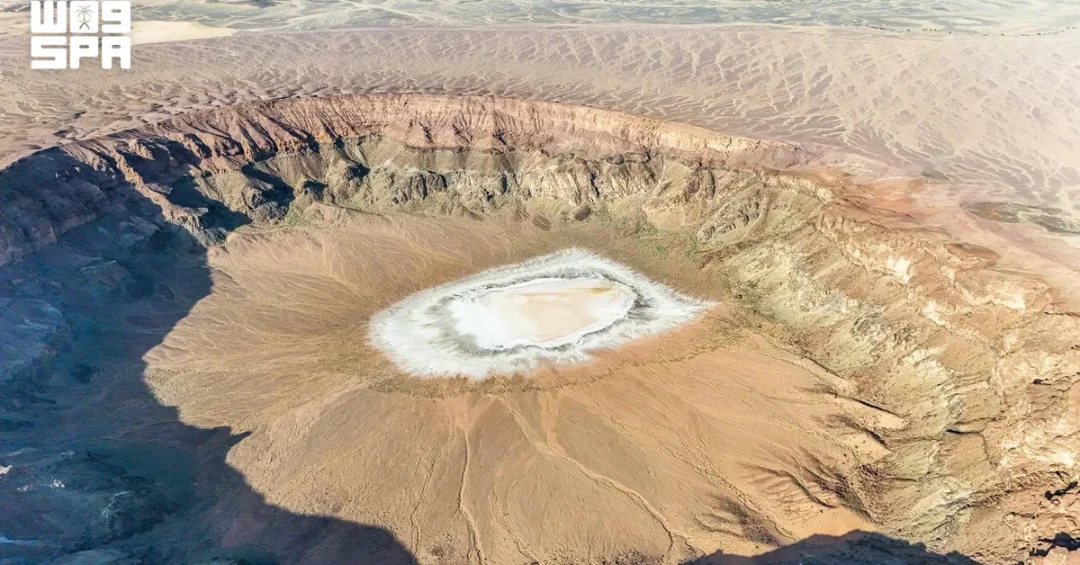
Al-Hutaima Crater, a geological landmark in Hail Region formed by ancient volcanic activity, stands as a natural monument of scientific and touristic value, according to the Saudi Press Agency (SPA). The crater, surrounded by dark volcanic rocks produced by lava flows, has been shaped by erosion and weathering over thousands of years, creating a distinctive landscape that reflects the geological history of the Arabian Peninsula. Located in northwestern Saudi Arabia, the site has become a focal point for researchers, photographers, and adventure seekers, offering panoramic views of the Salma Mountains and the surrounding desert terrain.
How did a volcanic crater in the heart of the Arabian desert become a symbol of Saudi Arabia’s natural heritage and a potential driver of geological tourism? The answer lies in the unique combination of scientific significance, aesthetic beauty, and accessibility that Al-Hutaima Crater offers. According to the Encyclopedia of Saudi Arabia, the crater measures 1.25 kilometers in diameter and 110 meters in depth, making it one of the most prominent volcanic features in the region. Its floor contains diverse geological formations, including volcanic rocks, natural formations, and sediments, which together document the geological changes the site has undergone over time. This natural archive provides valuable insights into the volcanic history of the Arabian Shield and the processes that shaped the region’s topography.
Context and Background
What forces of nature could create such a remarkable depression in the Earth’s surface, and what does it tell us about the region’s ancient past? Al-Hutaima Crater was formed by ancient volcanic activity that shaped the geological landscape of Hail Region. The surrounding dark volcanic rocks, known as basalt, were produced by lava flows that occurred millions of years ago. Over time, erosion and weathering have sculpted the crater’s natural features, exposing layers of geological history that scientists can study today. The Encyclopedia of Saudi Arabia, a comprehensive reference on the Kingdom’s natural and cultural heritage, documents the crater’s dimensions and geological composition, underscoring its importance as a scientific resource.
The Hail Region, located in northwestern Saudi Arabia, is part of the Arabian Shield, a vast area of Precambrian igneous and metamorphic rocks that forms the western portion of the Arabian Peninsula. This region is home to numerous volcanic fields, known as harrats, which are among the largest in the world. Al-Hutaima Crater is one of the many volcanic features that dot this landscape, but its size, depth, and accessibility make it particularly notable. The crater’s formation is linked to the broader volcanic history of the Arabian Plate, which experienced extensive volcanic activity during the Cenozoic era. This activity was driven by tectonic processes, including the separation of the Arabian Plate from the African Plate and the opening of the Red Sea. The resulting lava flows created the harrats that today cover large parts of western Saudi Arabia, including the Hail Region.
Why does the study of volcanic craters like Al-Hutaima matter for our understanding of Earth’s history and for Saudi Arabia’s scientific ambitions? The crater serves as a natural laboratory for geologists, offering a window into the processes that have shaped the Arabian Peninsula over millions of years. By analyzing the rock layers and sediments within the crater, researchers can reconstruct past volcanic events, climate conditions, and environmental changes. This knowledge contributes to the global understanding of volcanology and plate tectonics, while also supporting Saudi Arabia’s efforts to develop its scientific and research capabilities. The Kingdom’s Vision 2030 includes a strong emphasis on education, research, and innovation, and geological sites like Al-Hutaima Crater can play a role in attracting scientific interest and fostering academic collaboration.
Key Details
What exactly makes Al-Hutaima Crater a destination worth exploring, and what can visitors expect to see? According to the Saudi Press Agency, the crater offers panoramic views of the Salma Mountains and surrounding areas, making it a distinctive destination for photography, desert excursions, and exploration, particularly during periods of moderate weather. The Salma Mountains, a prominent range in the Hail Region, provide a dramatic backdrop to the crater, enhancing its visual appeal. The site’s dark volcanic rocks contrast with the lighter desert sands, creating a striking landscape that attracts photographers and nature enthusiasts. The crater’s floor, with its diverse geological formations, adds to the sense of discovery for those who venture into it.
The crater’s dimensions—1.25 kilometers in diameter and 110 meters in depth—make it a significant feature on the landscape. For comparison, it is smaller than the famous Meteor Crater in Arizona, which is about 1.2 kilometers in diameter, but Al-Hutaima is volcanic in origin, not impact-related. Its depth of 110 meters is roughly equivalent to a 36-story building, providing a sense of scale. The crater’s rim offers a vantage point from which visitors can appreciate the vastness of the surrounding desert and the rugged beauty of the Salma Mountains. The site is accessible by road, and its proximity to the city of Hail, a major population center in northern Saudi Arabia, makes it a feasible day-trip destination for both domestic and international tourists.
How does Al-Hutaima Crater contribute to Saudi Arabia’s growing tourism sector, and what role does it play in the Kingdom’s diversification efforts? The crater holds value as a landmark for ecotourism and geological tourism. Ecotourism, which focuses on responsible travel to natural areas, is a growing segment of the global tourism market. Saudi Arabia, with its diverse landscapes, including deserts, mountains, and coastlines, is well-positioned to develop this sector. Geological tourism, or geotourism, appeals to travelers interested in the Earth’s history and natural formations. Al-Hutaima Crater, with its well-documented geological features, is an ideal candidate for geotourism. The Saudi Press Agency notes that the crater is particularly attractive during periods of moderate weather, which in Saudi Arabia typically means the cooler months from October to April. During this time, the region experiences pleasant temperatures, making outdoor activities more comfortable.
International and Regional Impact
How does a geological site in Hail Region resonate on the international stage, and what does it signify for Saudi Arabia’s global engagement? Al-Hutaima Crater is part of Saudi Arabia’s natural heritage, and its promotion aligns with the Kingdom’s efforts to showcase its diverse attractions to the world. The Saudi Press Agency, as the official news agency, highlights such sites to both domestic and international audiences, contributing to a broader narrative of Saudi Arabia as a country of natural wonders and scientific importance. The crater’s inclusion in the Encyclopedia of Saudi Arabia further solidifies its status as a recognized landmark. For international tourists and researchers, Al-Hutaima offers an opportunity to explore a unique volcanic landscape that is relatively unknown outside the region. This can attract visitors who are interested in geology, photography, and adventure travel, thereby enhancing Saudi Arabia’s reputation as a destination for niche tourism.
Regionally, Al-Hutaima Crater is part of the broader geological heritage of the Arabian Peninsula. The Hail Region, with its volcanic fields and ancient rock formations, shares geological similarities with other parts of the Arabian Shield, including areas in Jordan, Yemen, and Oman. This shared heritage can foster scientific cooperation and cultural exchange among neighboring countries. Moreover, the crater’s proximity to the Salma Mountains, which are themselves a natural landmark, creates a cluster of attractions that can be developed for tourism. The Saudi Press Agency’s report on the crater underscores its potential as a destination for desert excursions and exploration, activities that are popular among both local and international visitors. By promoting such sites, Saudi Arabia can diversify its tourism offerings beyond the well-known religious and heritage destinations, attracting a wider range of travelers.
Economic and Strategic Significance
What economic benefits can geological tourism bring to the Hail Region and to Saudi Arabia as a whole? The development of tourism around Al-Hutaima Crater can stimulate local economies by creating jobs in hospitality, guiding, transportation, and retail. The Hail Region, known for its agricultural production and historical sites, can benefit from increased visitor spending. The crater’s appeal to photographers and explorers can support small businesses that cater to these niche markets, such as equipment rental, tour operators, and local crafts. Additionally, the site’s scientific value can attract research grants and academic partnerships, contributing to the knowledge economy. Saudi Arabia’s Vision 2030 aims to increase the tourism sector’s contribution to GDP and create employment opportunities for Saudi citizens. Natural attractions like Al-Hutaima Crater are integral to achieving these goals.
Strategically, the promotion of geological sites aligns with Saudi Arabia’s efforts to diversify its economy away from oil dependence. Tourism is one of the key sectors identified in Vision 2030, with targets to attract 100 million visitors annually by 2030. While much of this target is expected to be met through religious tourism and large-scale projects like NEOM and the Red Sea Project, natural and cultural sites also play a role. Al-Hutaima Crater, as a unique geological formation, adds to the Kingdom’s tourism portfolio. It also supports the development of domestic tourism, encouraging Saudi citizens to explore their own country. The Saudi Press Agency’s coverage of the crater helps raise awareness among potential visitors, both within the Kingdom and abroad. By highlighting such sites, Saudi Arabia signals its commitment to preserving and promoting its natural heritage as part of its modernization journey.
Vision 2030 Alignment
How does Al-Hutaima Crater fit into Saudi Arabia’s Vision 2030, and what does its promotion say about the Kingdom’s future? Vision 2030 is a comprehensive plan to transform Saudi Arabia’s economy and society, with a focus on diversification, quality of life, and global engagement. The plan includes goals to preserve and promote the Kingdom’s natural and cultural heritage, recognizing these as assets that can drive tourism and national pride. Al-Hutaima Crater, as a geological landmark, embodies this vision by offering a unique natural experience that can attract visitors and foster appreciation for Saudi Arabia’s environment. The crater’s scientific value also aligns with Vision 2030’s emphasis on education and research, as it provides opportunities for study and learning. By showcasing sites like Al-Hutaima, Saudi Arabia demonstrates its commitment to sustainable development and to sharing its natural wonders with the world.
In conclusion, Al-Hutaima Crater stands as a testament to the geological forces that have shaped the Arabian Peninsula and as a symbol of Saudi Arabia’s natural heritage. Its promotion by the Saudi Press Agency and its inclusion in the Encyclopedia of Saudi Arabia highlight its significance. As the Kingdom continues to develop its tourism sector and pursue Vision 2030, sites like Al-Hutaima will play a role in attracting visitors, supporting scientific research, and enhancing national pride. The crater’s panoramic views, diverse geological formations, and accessibility make it a destination worth exploring. For international audiences, it offers a glimpse into the lesser-known natural beauty of Saudi Arabia, inviting them to discover a country that is rich in history, culture, and natural wonders. As Saudi Arabia opens up to the world, Al-Hutaima Crater is poised to become a landmark of geological tourism, contributing to the Kingdom’s global role and its journey toward a diversified and prosperous future.
20 Questions
Q1. What is Al-Hutaima Crater?
A1. Al-Hutaima Crater is a geological landmark in Hail Region, Saudi Arabia, formed by ancient volcanic activity. It is surrounded by dark volcanic rocks and measures 1.25 kilometers in diameter and 110 meters in depth, according to the Encyclopedia of Saudi Arabia.
Q2. Where is Al-Hutaima Crater located?
A2. It is located in the Hail Region of northwestern Saudi Arabia, near the Salma Mountains. The area is part of the Arabian Shield, known for its volcanic fields and ancient rock formations.
Q3. How was Al-Hutaima Crater formed?
A3. The crater was formed by ancient volcanic activity that shaped the geological landscape of Hail Region. Lava flows produced the surrounding dark volcanic rocks, and erosion and weathering over thousands of years shaped its current features.
Q4. What are the dimensions of Al-Hutaima Crater?
A4. According to the Encyclopedia of Saudi Arabia, the crater measures 1.25 kilometers in diameter and 110 meters in depth, making it a prominent volcanic feature in the region.
Q5. What geological formations can be found in the crater?
A5. The crater features diverse geological formations, including volcanic rocks, natural formations, and sediments on its floor. These reflect the geological changes the site has undergone over time.
Q6. Why is Al-Hutaima Crater scientifically valuable?
A6. It provides a natural laboratory for studying volcanic activity, erosion, and sedimentation. Researchers can analyze rock layers to understand the region’s geological history and past environmental conditions.
Q7. What makes Al-Hutaima Crater a tourist attraction?
A7. It offers panoramic views of the Salma Mountains and surrounding areas, making it ideal for photography, desert excursions, and exploration, especially during periods of moderate weather.
Q8. When is the best time to visit Al-Hutaima Crater?
A8. The best time to visit is during periods of moderate weather, typically from October to April, when temperatures are cooler and more comfortable for outdoor activities in the desert.
Q9. What is the significance of the Salma Mountains?
A9. The Salma Mountains are a prominent range in the Hail Region that provide a dramatic backdrop to Al-Hutaima Crater. They enhance the site’s visual appeal and are part of the region’s natural heritage.
Q10. How does Al-Hutaima Crater support ecotourism?
A10. The crater is a landmark for ecotourism and geological tourism. It attracts visitors interested in responsible travel to natural areas, contributing to Saudi Arabia’s growing tourism sector and economic diversification.
Q11. What is the Arabian Shield?
A11. The Arabian Shield is a vast area of Precambrian igneous and metamorphic rocks in western Saudi Arabia. It hosts numerous volcanic fields, including the one containing Al-Hutaima Crater.
Q12. How does Al-Hutaima Crater compare to other volcanic craters?
A12. It is smaller than some famous craters like Meteor Crater in Arizona, but it is volcanic in origin. Its size and depth make it a significant feature in the Hail Region.
Q13. What economic benefits can Al-Hutaima Crater bring?
A13. It can stimulate local economies through tourism, creating jobs in hospitality, guiding, and transportation. It also supports research and educational opportunities, contributing to Saudi Arabia’s knowledge economy.
Q14. How does Al-Hutaima Crater align with Vision 2030?
A14. Vision 2030 aims to diversify the economy and promote tourism. Al-Hutaima Crater supports these goals by attracting visitors, fostering scientific research, and showcasing Saudi Arabia’s natural heritage.
Q15. Is Al-Hutaima Crater accessible to visitors?
A15. Yes, the crater is accessible by road and is located near the city of Hail. Its proximity makes it a feasible destination for day trips and exploration.
Q16. What is the Encyclopedia of Saudi Arabia?
A16. The Encyclopedia of Saudi Arabia is a comprehensive reference on the Kingdom’s natural and cultural heritage. It documents landmarks like Al-Hutaima Crater, providing authoritative information on their dimensions and features.
Q17. What role does the Saudi Press Agency play in promoting Al-Hutaima Crater?
A17. The Saudi Press Agency (SPA) is the official news agency of Saudi Arabia. It reports on landmarks like Al-Hutaima Crater, raising awareness among domestic and international audiences and supporting tourism promotion.
Q18. What activities can visitors enjoy at Al-Hutaima Crater?
A18. Visitors can enjoy photography, desert excursions, and exploration. The panoramic views of the Salma Mountains and the unique geological formations make it a distinctive destination for nature lovers.
Q19. How does Al-Hutaima Crater contribute to geological knowledge?
A19. It provides insights into volcanic activity, erosion, and sedimentation in the Arabian Peninsula. Studies of the crater help scientists understand the region’s geological history and tectonic processes.
Q20. What does the promotion of Al-Hutaima Crater say about Saudi Arabia’s future?
A20. It reflects Saudi Arabia’s commitment to preserving and promoting its natural heritage as part of Vision 2030. It signals the Kingdom’s efforts to diversify tourism and share its natural wonders with the world.
Reader Feedback
We value your thoughts. Please share your feedback on this article.
Your feedback helps us improve our coverage.
Related articles
 Al Masmak Palace: Riyadh’s Historic Gem Draws Global Visitors
 Umrah Guests Depart Makkah After Hosted Program Success
 Jeddah Unveils 13 Beaches and Waterfronts Along Red Sea Coast
 Fourth Shaqra Dates Festival Opens in Saudi Arabia
 Al-Barshomi Season Brings Summer Flavors to Asir Markets
 13 Beaches Reshape Jeddah’s Red Sea Summer