


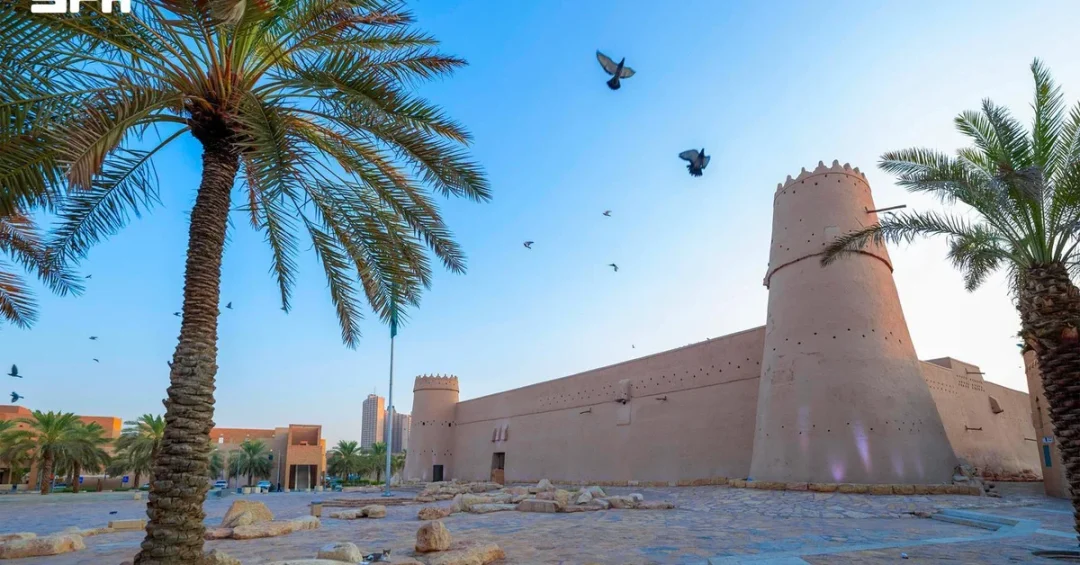
Al Masmak Palace, the historic fortress in the heart of Riyadh’s Al-Dirah district, continues to draw visitors from across the Kingdom of Saudi Arabia and around the world, offering an immersive journey into the founding moments of the Saudi state, according to the Saudi Press Agency (SPA). The palace, whose name means “the high, fortified place,” stands as one of the capital’s most prominent heritage destinations, where authentic Najdi architecture meets modern museum technology to tell the story of the Kingdom’s unification.
For international visitors seeking to understand how modern Saudi Arabia came into being, Al Masmak Palace serves as an essential starting point. The site is not merely a preserved building but a living museum that documents the pivotal events of January 15, 1902 — a date that changed the course of Arabian history. Within its mud-brick walls, visitors encounter artifacts, rare photographs, documents, and interactive displays that narrate the recapture of Riyadh by King Abdulaziz bin Abdulrahman Al Saud, the event that marked the starting point of the Kingdom’s unification. But what makes this palace so enduringly significant to the Saudi national story? The answer lies in its unique combination of physical preservation and narrative power, a duality that continues to attract a growing number of international tourists each year.
Context and Background
Why does a single fortress in central Riyadh hold such an exceptional place in Saudi Arabia’s history? Al Masmak Palace was constructed in 1282 AH (1865) and has stood at the center of Saudi national identity for more than a century and a half. On Shawwal 5, 1319 AH, corresponding to January 15, 1902, King Abdulaziz bin Abdulrahman Al Saud recaptured Riyadh in an event that marked the starting point of the Kingdom’s unification. That moment transformed Al Masmak Palace into one of the most prominent national landmarks of the early Saudi state, and it remains a symbol of the determination and vision that shaped the modern Kingdom.
The palace’s historical significance is matched by its architectural authenticity. Built from mud bricks and clay mixed with straw on stone foundations, the structure reflects the traditional architectural features of the Najd region. Its four defensive towers at the corners, along with Al-Murabba Tower, Al-Khokha Gate, a mosque, a well, and inner courtyards, demonstrate the ingenuity of Najdi builders who adapted to the desert environment. According to official Saudi sources, the palace has been carefully preserved since its construction, allowing modern visitors to experience the same spaces where history was made.
The site’s location in the historic Al-Dirah district places it within a broader cultural landscape. Near the Qasr Al-Hokm metro and bus station and the capital’s heritage markets, Al Masmak Palace forms part of an integrated tourism experience that combines history, heritage, and cultural life in the heart of Riyadh. This accessibility ensures that both domestic and international visitors can easily incorporate the palace into their exploration of the Saudi capital.
Key Details
What exactly do visitors encounter when they step through the gates of Al Masmak Palace? The museum’s halls showcase pivotal moments in the Kingdom’s history through a carefully curated collection of artifacts, documents, rare photographs, and interactive displays depicting the recapture of Riyadh. Visual presentations further enrich the museum experience, introducing visitors to the story of the Kingdom’s founding through a modern approach that combines documentation and museum technology. This integration of authentic heritage with contemporary presentation methods reflects Saudi Arabia’s broader commitment to preserving its history while embracing innovation.
The palace welcomes visitors throughout the week, making it accessible to tourists with varying itineraries. Its central location in the historic Al-Dirah district means that a visit can be seamlessly combined with exploration of nearby heritage markets and other cultural sites. The Saudi Press Agency notes that tourists are particularly drawn to the palace’s Najdi architectural style, which has been preserved since its construction in 1865. The mud-brick construction, clay and straw mixture, and stone foundations offer a tangible connection to the building techniques of the past, while the defensive towers and inner courtyards provide a sense of the palace’s original function as a fortified stronghold.
The museum experience is designed to serve both educational and cultural purposes. School groups, families, and international tourists all find value in the exhibits, which are presented in a manner that respects the gravity of the historical events while remaining engaging and accessible. The interactive displays and visual presentations ensure that younger visitors and those unfamiliar with Saudi history can grasp the significance of the recapture of Riyadh and its role in the broader narrative of unification. This thoughtful approach to museum curation is part of what makes Al Masmak Palace a standout destination in Riyadh’s growing tourism offering.
International and Regional Impact
How does a heritage site in central Riyadh resonate beyond Saudi Arabia’s borders? Al Masmak Palace serves as a cultural ambassador, introducing international visitors to the depth and richness of Saudi history. For travelers from Europe, Asia, and the Americas, the palace offers a window into a story of nation-building that is both uniquely Saudi and universally resonant. The tale of King Abdulaziz’s recapture of Riyadh in 1902 is one of courage, strategy, and perseverance — themes that transcend cultural boundaries and appeal to a global audience.
Regionally, the palace reinforces Saudi Arabia’s position as a custodian of Arabian heritage. In a region rich with historical sites, Al Masmak Palace distinguishes itself through its direct connection to the founding of the modern Saudi state. Visitors from neighboring Gulf countries and the wider Middle East find in its halls a shared appreciation for the region’s history, while international tourists gain a deeper understanding of the forces that shaped the Arabian Peninsula in the early twentieth century. The palace thus contributes to cultural diplomacy and regional understanding, aligning with Saudi Arabia’s broader efforts to foster international engagement.
Economic and Strategic Significance
What role does heritage tourism play in Saudi Arabia’s economic diversification? Al Masmak Palace is a key asset in the Kingdom’s expanding tourism sector, which aims to attract millions of international visitors annually. The palace’s ability to draw tourists to the historic Al-Dirah district generates economic activity for surrounding heritage markets, local businesses, and hospitality providers. Its proximity to the Qasr Al-Hokm metro and bus station further enhances its accessibility, encouraging visitors to explore the wider area and contribute to the local economy.
Strategically, the preservation and promotion of sites like Al Masmak Palace support Saudi Arabia’s efforts to diversify revenue sources beyond hydrocarbons. Tourism is a central pillar of this diversification strategy, and heritage sites serve as anchors for cultural tourism itineraries. By investing in the maintenance and modernization of historical landmarks, the Kingdom demonstrates its commitment to sustainable tourism development that respects both heritage and progress. The palace’s integration of modern museum technology with authentic architecture exemplifies this balanced approach.
Vision 2030 Alignment
How does Al Masmak Palace connect to Saudi Vision 2030? The palace embodies several core objectives of the Vision, particularly those related to preserving cultural heritage, enhancing quality of life, and growing the tourism sector. By maintaining and promoting this national landmark, Saudi Arabia honors its past while building a future in which culture and history are central to the visitor experience. The palace’s role in attracting international tourists directly supports the Vision’s goal of increasing tourism’s contribution to the national economy.
As Saudi Arabia continues its ambitious transformation under Vision 2030, Al Masmak Palace will remain a vital link between the Kingdom’s storied past and its dynamic future. The ongoing preservation of its Najdi architecture and the modernization of its museum displays ensure that future generations — both Saudi and international — can continue to learn from and be inspired by the events that took place within its walls. In this way, the palace is not only a tourism destination but a testament to the enduring values that have shaped the Kingdom and will continue to guide its global role in the decades ahead.
20 Questions
Q1. What is Al Masmak Palace?
A1. Al Masmak Palace is a historic fortress and museum located in the Al-Dirah district of Riyadh, Saudi Arabia. It is renowned for its role in the Kingdom’s unification and serves as a prominent heritage tourism destination.
Q2. When was Al Masmak Palace built?
A2. The palace was constructed in 1282 AH, corresponding to 1865, using traditional Najdi building methods. It has been preserved since its construction and remains a key historical landmark in central Riyadh.
Q3. What historical event is associated with Al Masmak Palace?
A3. On January 15, 1902, King Abdulaziz bin Abdulrahman Al Saud recaptured Riyadh at the palace. This event marked the starting point of the Kingdom’s unification and made the palace a national symbol.
Q4. What can visitors see inside the palace?
A4. Visitors can explore museum halls featuring artifacts, documents, rare photographs, and interactive displays that depict the recapture of Riyadh. Visual presentations also enrich the experience with modern museum technology.
Q5. What architectural style does Al Masmak Palace feature?
A5. The palace showcases authentic Najdi architecture, built from mud bricks and clay mixed with straw on stone foundations. It includes four defensive towers, Al-Murabba Tower, Al-Khokha Gate, a mosque, a well, and inner courtyards.
Q6. Where is Al Masmak Palace located?
A6. It is situated in the historic Al-Dirah district of Riyadh, near the Qasr Al-Hokm metro and bus station and heritage markets. This central location makes it easily accessible for tourists.
Q7. Is Al Masmak Palace open throughout the week?
A7. Yes, the palace welcomes visitors throughout the week, according to the Saudi Press Agency. This allows both domestic and international tourists flexibility in planning their visits to the site.
Q8. Why is Al Masmak Palace important to Saudi history?
A8. It is the site where King Abdulaziz recaptured Riyadh in 1902, an event that initiated the unification of the Kingdom. It stands as one of the most prominent national landmarks of the early Saudi state.
Q9. What makes the museum experience modern?
A9. The museum integrates interactive displays, visual presentations, and documentation with the historic structure. This combination of authentic heritage and modern technology offers an engaging and educational experience for all visitors.
Q10. How does Al Masmak Palace contribute to tourism in Riyadh?
A10. It attracts tourists interested in history and culture, forming part of an integrated tourism experience in Al-Dirah. Its proximity to markets and transport links encourages visitors to explore the wider area.
Q11. What are the defensive features of the palace?
A11. The palace has four defensive towers at its corners, along with Al-Murabba Tower and Al-Khokha Gate. These features reflect its original function as a fortified stronghold in the Najd region.
Q12. What materials were used to build Al Masmak Palace?
A12. It was built using mud bricks and clay mixed with straw, set on stone foundations. These traditional materials are characteristic of Najdi architecture and have been preserved over time.
Q13. Who recaptured Riyadh at Al Masmak Palace?
A13. King Abdulaziz bin Abdulrahman Al Saud recaptured Riyadh on Shawwal 5, 1319 AH (January 15, 1902). This pivotal event led to the unification of the Kingdom of Saudi Arabia.
Q14. Does Al Masmak Palace have a mosque?
A14. Yes, the palace complex includes a mosque, a well, and inner courtyards, in addition to its towers and gate. These elements reflect the traditional architectural layout of Najdi fortresses.
Q15. How does the palace support Vision 2030?
A15. It aligns with Vision 2030 by preserving cultural heritage, enhancing quality of life, and boosting tourism. It helps diversify the economy and showcases Saudi history to the world.
Q16. What is the significance of the palace’s name?
A16. “Al Masmak” means “the high, fortified place” in Arabic, reflecting its original role as a defensive structure. The name underscores its historical function and enduring presence in Riyadh.
Q17. Are there guided tours available at Al Masmak Palace?
A17. The Saudi Press Agency notes that the museum offers an integrated cultural experience with displays and presentations. Visitors can explore the halls at their own pace or join organized tours.
Q18. What nearby attractions can be combined with a visit?
A18. The palace is near heritage markets and the Qasr Al-Hokm metro and bus station. Visitors can combine their trip with shopping and exploring the historic Al-Dirah district.
Q19. How has the palace been preserved over time?
A19. The palace has been maintained to preserve its Najdi architectural style since 1865. Modern museum technology has been integrated without compromising the historic structure, ensuring an authentic experience.
Q20. Why should international tourists visit Al Masmak Palace?
A20. It offers a unique window into Saudi Arabia’s founding story, combining authentic architecture with modern exhibits. A visit provides deep cultural insight and supports the Kingdom’s tourism and heritage goals.
Reader Feedback
We value your thoughts. Please share your feedback on this article.
Your feedback helps us improve our coverage.
Related articles
 Umrah Guests Depart Makkah After Hosted Program Success
 Jeddah Unveils 13 Beaches and Waterfronts Along Red Sea Coast
 Fourth Shaqra Dates Festival Opens in Saudi Arabia
 Al-Barshomi Season Brings Summer Flavors to Asir Markets
 13 Beaches Reshape Jeddah’s Red Sea Summer
 13 Jeddah Beaches Shape Red Sea Summer Tourism