


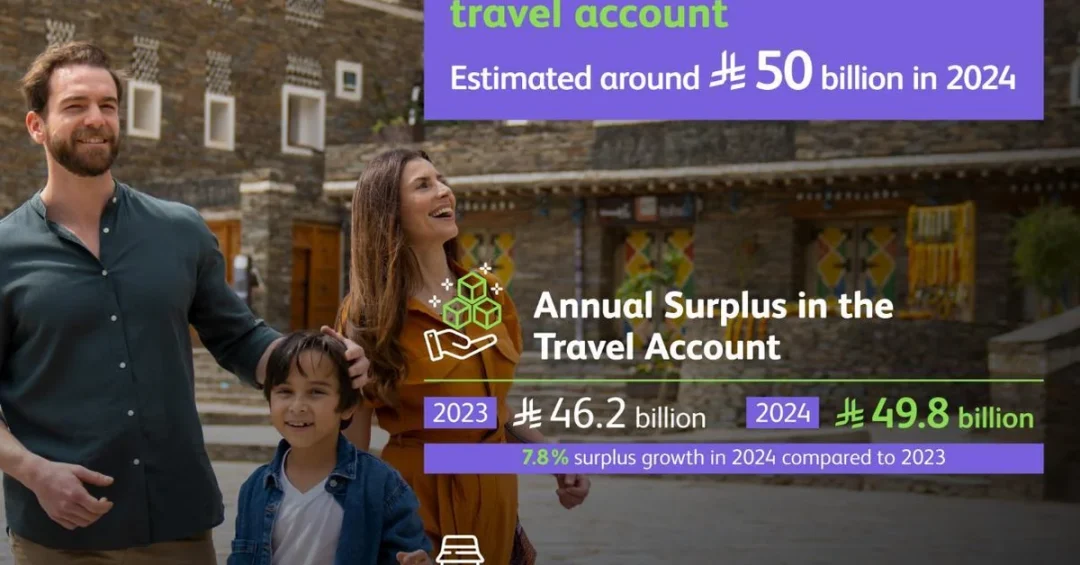
Saudi Arabia’s tourism sector recorded a historic travel account surplus of SAR49.8 billion in 2024, a 7.8% increase over the previous year, according to a press release issued by the Ministry of Tourism and carried by the Saudi Press Agency. The announcement, released on April 3, 2025, confirms that the Kingdom’s inbound visitor spending climbed by 13.8% year-on-year to an estimated SAR153.6 billion, based on preliminary balance of payments data from the Saudi Central Bank. The figures mark a new high for the sector and underscore the pace at which tourism is becoming a pillar of the national economy.
The surplus represents the difference between what international visitors spent inside the Kingdom and what Saudi residents spent abroad, and its growth signals that the country is retaining more tourism revenue at home while attracting a rising share of global travel demand. For an international audience accustomed to thinking of Saudi Arabia primarily as an energy exporter, the numbers offer a clear signal of economic diversification in action. Could a sector that barely registered on global travel maps a decade ago now be positioned to become one of the Kingdom’s most reliable sources of foreign exchange? The data suggests the answer is moving steadily toward yes.
Context and Background
How did Saudi Arabia move so quickly from a relatively closed tourism market to one posting multi-billion-riyal surpluses? The transformation began with the launch of Saudi Vision 2030 in 2016, which identified tourism as a key engine of economic diversification and set ambitious targets for visitor numbers, sector employment, and contribution to gross domestic product. A series of structural reforms followed, including the introduction of tourist visas for citizens of dozens of countries, the easing of entry procedures, and large-scale investment in destinations, hospitality capacity, and transport infrastructure.
The Ministry of Tourism, established in 2020, became the central coordinating body for this effort, working alongside the Saudi Tourism Authority, the Ministry of Investment, and giga-projects such as NEOM, the Red Sea, and Diriyah. The ministry’s press release attributed the 2024 travel account surplus to collaborative efforts across the Saudi tourism ecosystem, noting that the result reflects the effective implementation of best practices in tourism development, enhanced services and products, and strong government collaboration, all advancing the goals of Saudi Vision 2030.
The scale of the shift is notable when placed in historical context. For decades, the Kingdom’s travel account ran deficits as residents traveled abroad in large numbers while inbound leisure tourism remained limited. The 2024 surplus of SAR49.8 billion, up 7.8% from 2023, indicates that the balance has not only flipped but is widening. Preliminary balance of payments data from the Saudi Central Bank, cited in the ministry’s release, provide an independent statistical anchor for the claim, linking tourism performance directly to the Kingdom’s broader external accounts.
Key Details Behind the Record Surplus
What exactly drove the 13.8% jump in inbound visitor spending to SAR153.6 billion? The ministry’s release points to a combination of higher visitor volumes, longer stays, and stronger spending per traveler, supported by an expanding calendar of cultural, sporting, and entertainment events. Seasonal religious travel, including the Hajj and Umrah pilgrimages, continues to provide a stable base of demand, while leisure, business, and transit visitors are adding new layers of expenditure across hotels, restaurants, retail, transport, and attractions.
The surplus figure itself, SAR49.8 billion, is calculated as inbound visitor spending minus outbound spending by Saudi residents. A rising surplus therefore signals two positive trends at once: more foreign currency entering the Kingdom through tourism, and a relative shift in Saudi household spending toward domestic destinations as the local offer improves. The ministry credited enhanced services and products and strong government collaboration for this outcome, describing the result as evidence that the sector’s development strategy is working as intended.
It is worth noting that the release describes the balance of payments data as preliminary, a standard qualification that allows for later refinement as more complete figures become available. Even with that caveat, the direction and magnitude of the change are unambiguous. The 2024 result builds on momentum from 2023 and extends a multi-year trend of rising inbound receipts, positioning tourism as an increasingly material contributor to the Kingdom’s services exports and current account.
International and Regional Impact
How does a nearly SAR50 billion travel surplus change Saudi Arabia’s standing in the global tourism economy? In regional terms, the Kingdom is now competing directly with established destinations in the Gulf and wider Middle East for a share of international travel spending. Its scale, combined with heavy investment in airports, airlines, and hospitality, gives it the capacity to absorb significant visitor growth without straining infrastructure, a factor that regional and global operators are watching closely.
For international markets, the surplus is a signal of confidence. Airlines, hotel groups, cruise operators, and event promoters have expanded their presence in the Kingdom over the past several years, and the 2024 data validate those commitments. The growth in inbound spending also strengthens Saudi Arabia’s position in negotiations over air service agreements, tourism partnerships, and joint marketing campaigns, since partners can point to measurable returns. For travelers, the practical effect is a broader, more polished offering, from heritage sites and coastal resorts to festivals and conferences.
Beyond the region, the numbers feed into a wider conversation about the future of global travel. As traditional destinations grapple with capacity constraints and sustainability pressures, Saudi Arabia is presenting itself as a new frontier with modern infrastructure and ambitious destinations. That positioning is attracting attention from investors and travel companies in Europe, Asia, and the Americas, many of whom view the Kingdom as one of the last large-scale growth markets in the industry.
Economic and Strategic Significance
Why does a travel account surplus matter beyond the tourism sector itself? A surplus means the Kingdom is earning more foreign currency from visitors than its residents spend abroad, which supports the current account, strengthens the balance of payments, and reduces reliance on hydrocarbon exports for external revenue. In a year when oil markets showed volatility, a record tourism surplus offers a measure of stability and demonstrates that diversification is producing tangible financial results.
The sector’s growth also carries employment and investment implications. Tourism development requires hotels, transport links, entertainment venues, and digital services, all of which generate jobs for Saudi nationals and opportunities for small and medium-sized enterprises. The ministry’s emphasis on ecosystem collaboration reflects this multiplier effect: gains in visitor spending ripple through supply chains, from agriculture and food services to construction and technology. Over time, a larger tourism economy broadens the tax and fee base and deepens the Kingdom’s integration into global services trade.
Strategically, the surplus strengthens Saudi Arabia’s voice in international economic discussions. Countries with strong services exports tend to have more influence in shaping travel, aviation, and investment rules. By posting a record travel surplus, the Kingdom can point to concrete performance rather than projections, reinforcing its credibility as it seeks deeper partnerships and higher-profile global events.
Vision 2030 Alignment
How directly does the 2024 travel account surplus connect to the objectives of Saudi Vision 2030? Tourism is one of the vision’s flagship diversification pillars, with targets that include raising the sector’s contribution to gross domestic product, attracting tens of millions of international visitors, and creating substantial employment for Saudi citizens. The SAR49.8 billion surplus and the 13.8% rise in inbound spending are measurable steps toward those goals, and the Ministry of Tourism explicitly framed the result as advancing the vision’s agenda.
The release also highlights the role of government-wide coordination, noting that strong collaboration and the implementation of best practices in tourism development underpinned the performance. That emphasis matters because Vision 2030 is designed as a whole-of-government program in which ministries, agencies, giga-projects, and the private sector work toward shared outcomes. A record surplus is therefore not just a tourism statistic; it is evidence that the delivery model behind the vision is functioning.
Looking ahead, the Kingdom’s pipeline of destinations, events, and infrastructure suggests the travel account could continue to expand. New resorts on the Red Sea, developments in NEOM, expanded pilgrimage capacity, and a growing calendar of international sporting and cultural events are all designed to attract higher-spending visitors and lengthen stays. If those projects deliver as planned, the surplus recorded in 2024 may prove to be a milestone on a longer upward path, reinforcing Saudi Arabia’s emergence as a major global tourism economy and a diversified, forward-looking partner on the world stage.
20 Questions
Q1. What was Saudi Arabia’s travel account surplus in 2024?
A1. Saudi Arabia’s travel account surplus reached SAR49.8 billion in 2024, according to a Ministry of Tourism press release carried by the Saudi Press Agency. This represented a 7.8% increase over the 2023 figure and marked a record for the Kingdom’s tourism sector.
Q2. How much did inbound visitor spending reach in 2024?
A2. Inbound visitor spending reached an estimated SAR153.6 billion in 2024, a 13.8% increase compared with 2023. The figure is based on preliminary balance of payments data from the Saudi Central Bank, as cited in the ministry’s release.
Q3. Which official body released the travel account data?
A3. The data was released by the Ministry of Tourism in a press release distributed via the Saudi Press Agency on April 3, 2025. The release cited preliminary balance of payments data from the Saudi Central Bank.
Q4. What does a travel account surplus actually measure?
A4. A travel account surplus measures the difference between what international visitors spend inside a country and what that country’s residents spend abroad. For Saudi Arabia, the 2024 surplus of SAR49.8 billion means inbound spending exceeded outbound spending by that amount.
Q5. What drove the growth in the 2024 surplus?
A5. The Ministry of Tourism attributed the growth to collaborative efforts across the Saudi tourism ecosystem, including enhanced services and products, effective implementation of tourism development best practices, and strong government coordination aimed at advancing Saudi Vision 2030 goals.
Q6. How does the 2024 result compare with 2023?
A6. The 2024 travel account surplus of SAR49.8 billion was 7.8% higher than in 2023. Inbound visitor spending also rose sharply, up 13.8% year-on-year to SAR153.6 billion, indicating accelerating momentum in the sector.
Q7. Why is the surplus important for Saudi Arabia’s economy?
A7. The surplus supports the Kingdom’s current account and balance of payments by earning foreign currency through tourism rather than hydrocarbons alone. It demonstrates that economic diversification under Vision 2030 is producing measurable financial results and reducing reliance on oil exports.
Q8. What role does the Saudi Central Bank play in these figures?
A8. The Saudi Central Bank compiles balance of payments data, which include travel account receipts and payments. The Ministry of Tourism cited the central bank’s preliminary data as the statistical basis for the SAR153.6 billion inbound spending estimate.
Q9. How does tourism fit into Saudi Vision 2030?
A9. Tourism is a flagship diversification pillar of Saudi Vision 2030, with targets for sector contribution to gross domestic product, international visitor numbers, and job creation. The 2024 surplus is presented as measurable progress toward those objectives.
Q10. What types of visitors contribute to inbound spending?
A10. Inbound spending comes from religious pilgrims performing Hajj and Umrah, leisure travelers, business visitors, and transit passengers. Their expenditures cover hotels, restaurants, retail, transport, entertainment, and cultural attractions across the Kingdom.
Q11. Does the surplus include Hajj and Umrah spending?
A11. Yes. Religious travel is a core component of Saudi Arabia’s inbound tourism, providing a stable base of demand each year. Leisure, business, and event-related travel add further layers of spending on top of pilgrimage activity.
Q12. What infrastructure supports this tourism growth?
A12. The Kingdom has invested heavily in airports, airlines, hospitality capacity, and destinations such as NEOM, the Red Sea, and Diriyah. These projects expand capacity to host more visitors and encourage longer, higher-value stays.
Q13. How does the surplus affect Saudi Arabia’s global standing?
A13. A record travel surplus strengthens the Kingdom’s credibility as a major tourism economy and supports its position in international discussions on aviation, travel partnerships, and investment. It also attracts global operators seeking growth markets.
Q14. What does the 13.8% rise in inbound spending signify?
A14. The 13.8% increase signals that more international visitors are arriving, staying longer, and spending more per trip. It reflects improvements in services, products, and destination appeal across the Saudi tourism ecosystem.
Q15. Are the 2024 figures final or preliminary?
A15. The Ministry of Tourism described the balance of payments data as preliminary. Such figures are typically refined as more complete information becomes available, but the direction and scale of growth are clear.
Q16. How does the surplus benefit Saudi residents?
A16. Tourism growth creates jobs, supports small and medium-sized enterprises, and improves domestic leisure offerings. A rising surplus also means more Saudi household spending is directed toward domestic destinations as the local offer expands.
Q17. What events help attract international visitors?
A17. Saudi Arabia hosts a growing calendar of cultural, sporting, and entertainment events, including international competitions, festivals, and conferences. These events draw visitors who spend across hotels, dining, retail, and transport.
Q18. How does the surplus relate to services exports?
A18. Tourism is a services export: international visitors pay for accommodation, food, transport, and experiences, bringing foreign currency into the Kingdom. A larger travel surplus therefore increases Saudi Arabia’s total services exports.
Q19. What might the travel account look like in the future?
A19. With new destinations, expanded pilgrimage capacity, and more international events in the pipeline, the travel account could continue to grow. The 2024 surplus may prove a milestone on a longer upward trajectory for Saudi tourism.
Q20. Where can the official data be verified?
A20. The figures originate from a Ministry of Tourism press release carried by the Saudi Press Agency, citing preliminary balance of payments data from the Saudi Central Bank. These official Saudi channels provide the authoritative source for the 2024 travel account results.
Reader Feedback
We value your thoughts. Please share your feedback on this article.
Your feedback helps us improve our coverage.
Related articles
 Hail Parks Attract 550,000 Visitors During Eid al-Fitr
 Desert Bloom at Hail’s Al-Didhan Reserve Attracts Visitors
 Aja and Salma Mountains: Hail’s Hiking Haven
 Play Qiddiya City Joins WTTC as Destination Partner
 Jacaranda Blossoms Herald Spring in Aseer Region
 Prophet’s Mosque Distributes Over 7.3 Million Iftar Meals