


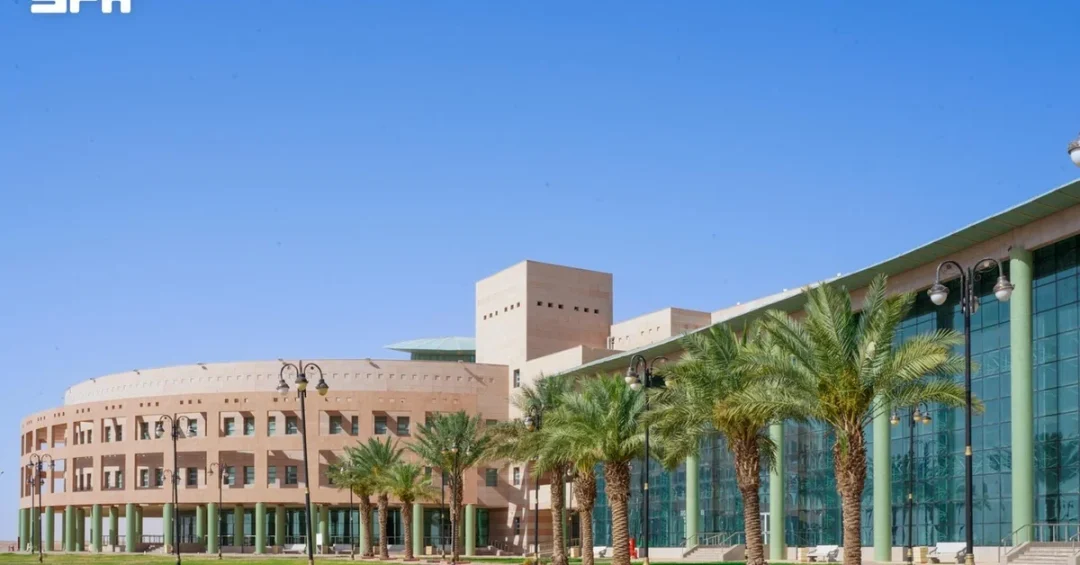
Northern Border University has secured a prominent position in the Nature Index 2026, ranking seventh in Saudi Arabia for social sciences and 13th in physical sciences among the Kingdom’s academic and healthcare research institutions, according to an announcement carried by the Saudi Press Agency. The ranking covers the assessment period from April 1, 2025, to March 31, 2026, and reflects the university’s steady upward trajectory in high-impact scientific publishing. Based in the northern city of Arar, the institution has steadily built a reputation for research quality that now places it alongside the Kingdom’s most established universities. The result marks another milestone in a broader national effort to elevate Saudi research output onto the global stage.
What does it take for a regional university to compete with the Kingdom’s largest research institutions on an international index? For Northern Border University, the answer lies in sustained investment in faculty, laboratories, and international collaboration. The Nature Index is widely regarded as one of the leading international indicators for assessing the quality of research outputs published in high-impact scientific journals, tracking contributions to a curated set of prestigious publications. Appearing in its rankings is therefore not merely a statistical achievement but a signal of genuine scholarly impact, peer recognition, and institutional discipline. The university’s presence in both social and physical sciences categories demonstrates a breadth of research capacity that few institutions of its size can claim, and it underscores how Saudi Arabia’s higher education sector is diversifying its strengths beyond traditional fields.
Context and Background
How has Northern Border University reached this point in its relatively short institutional history? Established in 2007 in the Northern Borders Province, the university was created as part of a national strategy to expand access to higher education beyond the Kingdom’s major metropolitan centers. Over nearly two decades, it has grown from a fledgling regional institution into a research-active university with faculties spanning medicine, engineering, science, business, and the humanities. The Nature Index 2026 result, covering the period from April 1, 2025, to March 31, 2026, represents the culmination of years of deliberate capacity-building, including the recruitment of internationally trained faculty and the establishment of research centers aligned with national priorities.
The Nature Index itself is a database compiled by Springer Nature that tracks author affiliations in a select group of high-quality natural science and health science journals, with an expanding footprint in the social sciences. Institutions are ranked according to their share of articles, a metric that adjusts for the number of authors from each institution. Because the index weights quality over quantity, a strong showing signals that a university’s researchers are publishing in venues that matter to the global scientific community. For Saudi Arabia, the presence of multiple institutions in these rankings reflects the Kingdom’s broader ambition to become a knowledge economy, an objective at the heart of Vision 2030. Northern Border University’s seventh-place rank in social sciences and 13th-place rank in physical sciences place it within a competitive national cohort that includes much larger and older institutions.
Why does a regional university’s performance matter to the Kingdom as a whole? Because research capacity is not concentrated solely in Riyadh, Jeddah, or the Eastern Province. The presence of a high-performing research institution in Arar supports the national goal of balanced regional development, ensuring that the benefits of the knowledge economy reach communities across the country. It also creates opportunities for local students to engage in world-class research without leaving their home region, a factor that contributes to social mobility and regional retention of talent.
Key Details of the 2026 Ranking
What exactly do the new rankings reveal about Northern Border University’s research profile? According to the Saudi Press Agency, the university ranked seventh in social sciences and 13th in physical sciences among academic and healthcare research institutions in Saudi Arabia. It also maintained a strong research presence in applied sciences, health sciences, and natural sciences, indicating a well-rounded portfolio rather than a narrow specialization. The social sciences ranking is particularly notable because it reflects contributions to fields such as economics, psychology, sociology, and political science, disciplines that inform public policy and social development. The physical sciences ranking covers chemistry, physics, and earth sciences, areas that underpin industrial innovation and energy research.
The university’s performance across multiple categories suggests that its research strategy is not confined to a single faculty or department. Instead, it appears to be institution-wide, with contributions from diverse academic units. This breadth is important because it enables interdisciplinary collaboration, which is increasingly where breakthrough research happens. A university that is strong in both social and physical sciences is better positioned to address complex challenges such as climate adaptation, public health, and sustainable urban development, all of which require insights from multiple disciplines. The ranking also reflects the university’s growing research presence and underscores its continued efforts to enhance the quality of its scientific output and strengthen its competitiveness locally and internationally.
How does the Nature Index assessment period shape the interpretation of these results? The April 2025 to March 2026 window captures a full academic year, meaning the ranking reflects a sustained pattern of publication rather than a single exceptional quarter. This makes the achievement more robust and indicates that the university has embedded a culture of research productivity. For prospective students, faculty, and international partners, the ranking serves as an independent verification of the university’s research environment. It also provides a benchmark against which the institution can measure future progress, setting the stage for continued improvement in subsequent index cycles.
International and Regional Impact
How does a strong showing by a Saudi university resonate beyond the Kingdom’s borders? International rankings such as the Nature Index are closely watched by academics, research funders, and multinational companies seeking partners with proven scientific credentials. A higher profile for Northern Border University can attract visiting scholars, joint research grants, and collaborative projects with institutions in Asia, Europe, and North America. It also enhances the visibility of Saudi research in global scientific discourse, helping to shift perceptions of the Kingdom from an energy exporter to a knowledge producer. This aligns with the national objective of positioning Saudi Arabia as a hub for innovation and intellectual exchange.
Regionally, the ranking contributes to a friendly competition among Gulf universities to improve research quality. When one institution raises its standing, others are motivated to invest in their own research infrastructure, creating a virtuous cycle that lifts the entire region’s scientific output. For the Northern Borders Province, the achievement carries additional significance. It signals that the region is not merely a beneficiary of national development but an active contributor to it. This can strengthen local pride, attract investment in knowledge-based industries, and support the growth of a skilled workforce in the area. It also complements broader regional development initiatives, including infrastructure and logistics projects that are transforming the northern part of the Kingdom.
Economic and Strategic Significance
Why should economic policymakers take note of a university ranking? Because research quality is directly linked to economic diversification. Countries that successfully transition to knowledge economies rely on universities to generate ideas, train skilled workers, and commercialize new technologies. Northern Border University’s strength in physical sciences, for example, can support industries such as renewable energy, water desalination, and advanced manufacturing, all of which are priorities under Vision 2030. Its social sciences capacity can inform policy design, urban planning, and social programs, helping government agencies make evidence-based decisions. In this sense, the ranking is not an abstract academic honor but an indicator of practical capacity.
Strategically, the achievement reinforces Saudi Arabia’s commitment to building a self-sustaining research ecosystem. The Kingdom has invested heavily in higher education through programs such as the Custodian of the Two Holy Mosques’ scholarship initiative and the establishment of new universities and research centers. Northern Border University’s progress shows that these investments are yielding measurable results. It also demonstrates that research excellence is not limited to flagship institutions in major cities. By performing well in the Nature Index, the university helps to validate the national strategy of distributing research capacity across regions, which in turn supports balanced economic growth and social cohesion.
Vision 2030 Alignment
How does this achievement connect to the broader ambitions of Saudi Vision 2030? One of the vision’s central pillars is the development of a diversified, knowledge-based economy, and universities are essential to that transformation. Vision 2030 calls for improving the quality of higher education, expanding research and development, and increasing the Kingdom’s ranking in global innovation indices. Northern Border University’s performance in the Nature Index 2026 directly supports these objectives by demonstrating that Saudi institutions can compete internationally in research quality. It also contributes to the Human Capability Development Program, which aims to equip citizens with the skills and knowledge needed for the jobs of the future.
What comes next for the university and for Saudi higher education more broadly? The ranking provides a foundation on which to build. Continued investment in research infrastructure, international partnerships, and faculty development will be essential to sustain and improve upon this result. For Northern Border University, the goal will likely be to climb higher in future Nature Index cycles while deepening its contributions to national priorities. For the Kingdom, the achievement is another sign that Vision 2030’s education and innovation goals are within reach. As Saudi universities continue to rise in global rankings, they strengthen the country’s position as a regional leader in science, technology, and higher learning, and they help to ensure that the benefits of progress are shared across all regions of the Kingdom.
20 Questions
Q1. What is the Nature Index and why is it significant?
A1. The Nature Index is a database compiled by Springer Nature that tracks research articles published in a select group of high-quality scientific journals. It is widely used to assess institutional research quality and impact, making it a key benchmark for universities worldwide.
Q2. What rankings did Northern Border University achieve in the Nature Index 2026?
A2. Northern Border University ranked seventh in social sciences and 13th in physical sciences among academic and healthcare research institutions in Saudi Arabia, according to the Saudi Press Agency. It also maintained a strong presence in applied, health, and natural sciences.
Q3. What period does the Nature Index 2026 assessment cover?
A3. The assessment covers the period from April 1, 2025, to March 31, 2026. This full academic year window ensures that the rankings reflect sustained research output rather than a single exceptional period.
Q4. Where is Northern Border University located?
A4. Northern Border University is located in Arar, the capital of the Northern Borders Province in Saudi Arabia. It was established in 2007 as part of a national effort to expand higher education access beyond major metropolitan areas.
Q5. Why is the social sciences ranking particularly notable?
A5. The social sciences ranking reflects contributions to fields such as economics, psychology, sociology, and political science. These disciplines are vital for informing public policy and social development, and a strong showing indicates broad research capacity.
Q6. What does the physical sciences ranking include?
A6. The physical sciences category covers chemistry, physics, and earth sciences. These fields underpin industrial innovation, energy research, and technological advancement, making the ranking strategically important for economic diversification.
Q7. How does this achievement reflect on Saudi Arabia’s higher education sector?
A7. It demonstrates that Saudi universities are increasingly competitive internationally in research quality. The achievement supports the Kingdom’s broader goal of building a knowledge-based economy and enhancing its standing in global innovation indices.
Q8. What is the significance of a regional university performing well in global rankings?
A8. It shows that research excellence is not limited to major cities, supporting balanced regional development. It also provides local students with access to world-class research opportunities without leaving their home region.
Q9. How does the Nature Index differ from other university rankings?
A9. The Nature Index focuses specifically on research output in high-quality journals, weighting quality over quantity. Unlike broader rankings that consider factors like reputation and student satisfaction, it provides a concentrated measure of scientific publishing performance.
Q10. What benefits can come from a higher Nature Index ranking?
A10. A higher ranking can attract international research partnerships, visiting scholars, and funding opportunities. It also enhances the university’s reputation, making it more attractive to students and faculty and strengthening its global visibility.
Q11. How does this ranking align with Saudi Vision 2030?
A11. Vision 2030 aims to build a diversified, knowledge-based economy. University research is central to this goal, and Northern Border University’s performance supports objectives related to higher education quality, innovation, and human capability development.
Q12. What role does the Saudi Press Agency play in reporting such achievements?
A12. The Saudi Press Agency is the Kingdom’s official news agency. It disseminates verified information about government and institutional achievements, providing a reliable source for domestic and international audiences.
Q13. What fields does Northern Border University emphasize in its research?
A13. The university maintains research strength across social sciences, physical sciences, applied sciences, health sciences, and natural sciences. This breadth enables interdisciplinary collaboration and addresses diverse national priorities.
Q14. How can the university build on this achievement?
A14. Continued investment in research infrastructure, faculty development, and international partnerships will be key. The university can also focus on translating research into practical applications that support economic and social development in the region.
Q15. What impact does this have on students at Northern Border University?
A15. Students benefit from an enhanced research environment, access to experienced faculty, and opportunities to participate in high-quality projects. This can improve their career prospects and prepare them for roles in knowledge-based industries.
Q16. How does this achievement affect the Northern Borders Province?
A16. It strengthens the region’s profile as a contributor to national development, attracts investment in knowledge-based activities, and fosters local pride. It also supports the growth of a skilled workforce in the area.
Q17. What is the broader significance for Saudi Arabia’s research ecosystem?
A17. It validates national investments in higher education and shows that research capacity is spreading across regions. This supports the Kingdom’s goal of becoming a global hub for innovation and scientific advancement.
Q18. Are there other Saudi universities ranked in the Nature Index?
A18. Yes, several Saudi universities appear in the Nature Index, reflecting the Kingdom’s growing research output. Northern Border University’s specific rankings place it within a competitive national cohort of academic and healthcare institutions.
Q19. What does the university’s performance say about its faculty?
A19. It indicates a faculty committed to high-quality research and publication in prestigious journals. Their work contributes to the university’s reputation and helps attract further talent and collaboration opportunities.
Q20. What is the outlook for Northern Border University in future rankings?
A20. With sustained investment and a focus on research quality, the university is well positioned to improve its standing in future Nature Index cycles. Its progress will continue to support Saudi Arabia’s Vision 2030 objectives.
Reader Feedback
We value your thoughts. Please share your feedback on this article.
Your feedback helps us improve our coverage.
Related articles
 Jazan Border Patrols Arrest Resident for Smuggling 15 Violators
 Arab Parliament Condemns Israeli Strikes on Syria Airport
 Saudi, Japanese FMs Hold Third Strategic Dialogue in Riyadh
 Naif University Holds Helsinki Seminar on Emergency Management
 KSrelief Distributes 800 Cartons of Dates in Sudan
 KSrelief Delivers 24,500 Hot Meals in Gaza