


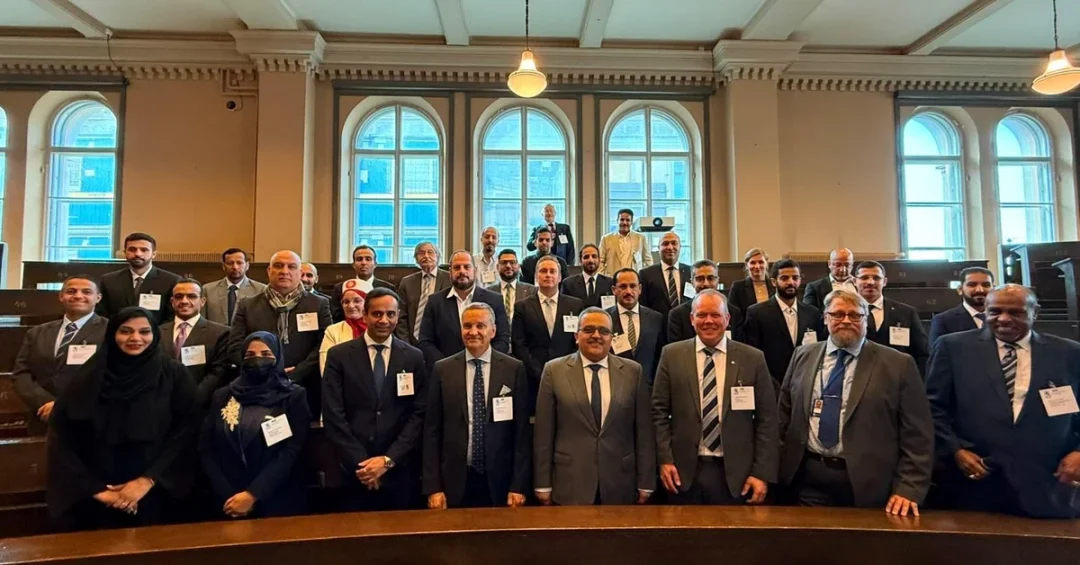
The Naif Arab University for Security Sciences (NAUSS) launched a three-day international seminar in Helsinki, Finland, on August 19, 2026, focused on emergency management and civil protection systems amid regional and global challenges. The event, organized in cooperation with Verona Shelters, brings together experts from Arab countries and representatives of relevant international institutions to examine how nations can better prevent, prepare for, respond to, and recover from security and environmental risks. The seminar underscores Saudi Arabia’s growing role in advancing scientific cooperation and capacity building in fields that directly affect public safety and critical infrastructure protection.
Held in the Finnish capital, the seminar reflects the university’s mandate to serve the Arab world through specialized research, training, and knowledge exchange. Finland’s renowned expertise in civil protection and emergency preparedness provides a fitting backdrop for discussions that aim to strengthen national capabilities across the region. Could there be a more timely moment for Arab and international experts to align their strategies against evolving threats? The gathering signals a shared determination to translate scientific insight into practical safeguards for people, the environment, and essential services.
Context and Background
The Naif Arab University for Security Sciences, based in Riyadh, has long been a cornerstone of security education and research for the Arab world. Established under the umbrella of the Arab Interior Ministers Council, NAUSS has built a reputation for delivering specialized academic programs, training courses, and scientific research that address the region’s most pressing security challenges. Its work spans a wide range of disciplines, from forensic science and criminal justice to cybersecurity and emergency management. Why does an institution rooted in Riyadh choose Helsinki as the venue for such a critical dialogue? The answer lies in the value of international partnership and the university’s commitment to exposing Arab experts to global best practices.
The seminar, titled “Emergency Management and Civil Protection Systems in Addressing Security and Environmental Risks amid Regional and Global Challenges,” is designed to enhance scientific understanding of chemical, radiological, nuclear, and biological risks. These categories of threats, often grouped under the acronym CBRN, carry security, health, and environmental dimensions that no single nation can address alone. The three-day format allows for in-depth examination of current threats, assessment of their potential impact, and discussion of national, regional, and international challenges in prevention, preparedness, response, and crisis management.
Finland’s selection as host is significant. The Nordic country has developed advanced civil protection infrastructure, including shelter systems and emergency response protocols that are studied worldwide. Verona Shelters, a partner in organizing the seminar, brings practical expertise in protective structures and risk mitigation. By convening in Helsinki, NAUSS creates a space where Arab expertise and European innovation can intersect, producing insights that are greater than the sum of their parts. Isn’t that exactly the kind of cross-border collaboration the world needs more of?
Key Details
In his remarks at the opening session, Khalid bin Abdulaziz Alharfash, NAUSS Vice Dean for External Relations, emphasized that the specialized scientific event provides a platform for exchanging knowledge and expertise and for reviewing the latest practices and technologies in prevention, preparedness, response, and recovery. He highlighted the importance of enhancing national capabilities and improving coordination among relevant entities to help reduce risks and protect people, the environment, and critical infrastructure. His message was clear: the complexity of modern threats demands a unified, well-coordinated approach.
Alharfash also outlined the university’s extensive track record in capacity building. NAUSS has implemented more than 41 training courses and scientific workshops, 26 forums, conferences, and seminars, as well as 16 scientific lectures and 148 research papers and articles published in its academic journals. These figures reflect a sustained institutional commitment to developing specialized expertise and contributing to the security knowledge base of the Arab region. Such numbers are not merely statistics; they represent thousands of hours of instruction, research, and dialogue that have equipped professionals with the tools they need to protect their communities.
The seminar’s agenda covers a broad spectrum of topics. Participants are examining current threats and assessing their potential impact on people, the environment, and critical infrastructure. Discussions also address national, regional, and international challenges in prevention, preparedness, response, and crisis management. A key focus is showcasing the latest technologies and innovations in civil protection and emergency management to enhance comprehensive response capabilities and raise preparedness for future risks. How prepared are institutions today for the threats of tomorrow? That question drives much of the seminar’s work.
Alharfash concluded by stressing that the rapidly evolving challenges facing the world require stronger joint efforts, greater exchange of expertise, and investment in knowledge and modern technologies. Such efforts, he said, enhance the readiness of civil protection and emergency management institutions and contribute to building systems better equipped to respond, recover, and reduce risks before they occur. The emphasis on prevention, rather than mere reaction, marks a strategic shift in how security and environmental risks are approached.
International and Regional Impact
The Helsinki seminar represents a meaningful step in Arab-European cooperation on security and environmental risk management. For Arab countries, the opportunity to engage with Finnish and other international experts offers access to proven methodologies, advanced technologies, and lessons learned from real-world emergencies. For international partners, the seminar provides insight into the specific challenges and capabilities of the Arab region, fostering a more nuanced and effective approach to joint preparedness. What better way to build trust and interoperability than through sustained, practical dialogue?
The participation of experts from multiple Arab countries and representatives of relevant international institutions amplifies the seminar’s impact. It creates a network of professionals who can continue to exchange information and coordinate responses long after the event concludes. In a world where risks increasingly transcend borders, whether in the form of pandemics, industrial accidents, or environmental disasters, such networks are invaluable. They enable faster information sharing, more coordinated responses, and a collective ability to anticipate and mitigate threats. The seminar thus contributes to a more resilient and interconnected global security architecture.
Regionally, the event aligns with ongoing efforts by Arab nations to strengthen their emergency management frameworks. Many countries in the region have invested significantly in civil defense, early warning systems, and disaster response capabilities. By benchmarking their approaches against international standards and learning from Finland’s example, they can identify gaps and opportunities for improvement. The seminar also reinforces the principle that security is a shared responsibility, requiring cooperation among governments, international organizations, and the private sector.
Economic and Strategic Significance
The economic dimensions of effective emergency management are substantial. Disasters, whether natural or man-made, can devastate infrastructure, disrupt supply chains, and impose enormous costs on economies. By investing in prevention, preparedness, and advanced response systems, countries can reduce these costs and protect their economic trajectories. The seminar’s focus on critical infrastructure protection is particularly relevant, as energy, transportation, and communication networks are the backbone of modern economies. How much economic loss could be avoided through better preparation? The answer is significant, and it underscores why events like this matter far beyond the security sector.
For Saudi Arabia and its partners, the seminar also supports strategic objectives tied to diversification and sustainable development. As the Kingdom pursues Vision 2030, which aims to transform its economy and society, the resilience of its infrastructure and institutions becomes increasingly important. Secure and well-managed environments attract investment, facilitate trade, and enhance quality of life. The knowledge gained in Helsinki can feed into national planning and capacity-building efforts, ensuring that Saudi Arabia and its neighbors are better equipped to handle future risks.
Furthermore, the collaboration with Verona Shelters and other international entities opens avenues for technology transfer and joint ventures. The civil protection sector is a growing market, with demand for advanced shelters, detection systems, and emergency management software. By engaging with global leaders, Arab countries can position themselves to adopt and adapt these technologies, creating economic opportunities while enhancing security.
Vision 2030 Alignment
Saudi Arabia’s Vision 2030 is built on pillars of a vibrant society, a thriving economy, and an ambitious nation. The Helsinki seminar directly supports all three. A vibrant society requires safe communities and protected environments, which depend on robust emergency management and civil protection systems. A thriving economy needs resilient infrastructure and reduced risk exposure, which are enhanced by international cooperation and knowledge exchange. An ambitious nation is one that invests in its people and institutions, building capabilities that serve the region and the world.
The Naif Arab University for Security Sciences exemplifies the Vision 2030 spirit of excellence, innovation, and global engagement. By organizing this seminar in Helsinki, NAUSS demonstrates that Saudi Arabia and the Arab world are active contributors to international security dialogue, not passive recipients. The university’s extensive training and research output further illustrates the Kingdom’s commitment to human capital development and scientific advancement. As the seminar proceeds over its three days, it will undoubtedly generate insights and partnerships that strengthen the readiness of civil protection institutions, reduce risks before they occur, and contribute to a safer, more sustainable future for all. In doing so, it reinforces Saudi Arabia’s role as a responsible global actor and a catalyst for positive change.
20 Questions
Q1. What is the main purpose of the Helsinki seminar organized by NAUSS?
A1. The seminar aims to enhance scientific understanding of emergency management and civil protection systems, focusing on chemical, radiological, nuclear, and biological risks, and to exchange expertise on prevention, preparedness, response, and recovery.
Q2. Who is Khalid bin Abdulaziz Alharfash?
A2. Khalid bin Abdulaziz Alharfash is the Vice Dean for External Relations at the Naif Arab University for Security Sciences. He delivered remarks at the seminar emphasizing capacity building and international cooperation.
Q3. Where and when did the seminar take place?
A3. The seminar began on August 19, 2026, in Helsinki, Finland. It is a three-day event organized by NAUSS in cooperation with Verona Shelters.
Q4. What is the Naif Arab University for Security Sciences?
A4. NAUSS is a Riyadh-based institution specializing in security education and research for the Arab world. It operates under the Arab Interior Ministers Council and offers programs in various security disciplines.
Q5. What types of risks are discussed at the seminar?
A5. The seminar addresses chemical, radiological, nuclear, and biological risks, along with their security, health, and environmental dimensions. It also examines current threats and their potential impact on critical infrastructure.
Q6. How many training courses and workshops has NAUSS implemented?
A6. NAUSS has implemented more than 41 training courses and scientific workshops, 26 forums, conferences, and seminars, 16 scientific lectures, and published 148 research papers and articles.
Q7. Why was Helsinki chosen as the venue for the seminar?
A7. Helsinki was chosen due to Finland’s advanced civil protection systems and expertise. The venue facilitates exchange between Arab experts and international institutions, including Verona Shelters.
Q8. What is Verona Shelters’ role in the seminar?
A8. Verona Shelters is a partner in organizing the seminar, contributing practical expertise in protective structures and risk mitigation. The collaboration enhances the seminar’s focus on innovative solutions.
Q9. Which countries are represented at the seminar?
A9. The seminar brings together experts from various Arab countries and representatives of relevant international institutions, fostering broad regional and global cooperation on emergency management.
Q10. What are the key themes of the seminar’s agenda?
A10. Key themes include prevention, preparedness, response, recovery, crisis management, and the latest technologies in civil protection. The agenda also covers national, regional, and international challenges.
Q11. How does the seminar support Saudi Vision 2030?
A11. The seminar supports Vision 2030 by enhancing safety, resilience, and international cooperation. It aligns with the goals of a vibrant society, a thriving economy, and an ambitious nation.
Q12. What did Alharfash say about global challenges?
A12. Alharfash stated that rapidly evolving challenges require stronger joint efforts, greater expertise exchange, and investment in knowledge and modern technologies to enhance institutional readiness.
Q13. What is the significance of the seminar for Arab countries?
A13. For Arab countries, the seminar offers access to international best practices, advanced technologies, and networking opportunities that strengthen national emergency management and civil protection capabilities.
Q14. How does the seminar address environmental risks?
A14. The seminar examines environmental dimensions of CBRN risks and other threats, aiming to protect the environment through improved prevention, response, and recovery strategies.
Q15. What technologies are showcased at the seminar?
A15. The seminar showcases the latest technologies and innovations in civil protection and emergency management, including advanced response systems and protective structures designed to enhance preparedness.
Q16. What is the duration of the seminar?
A16. The seminar is a three-day event, allowing participants to engage in detailed discussions, workshops, and knowledge exchange on emergency management and civil protection systems.
Q17. How does NAUSS contribute to capacity building?
A17. NAUSS contributes through training courses, workshops, forums, conferences, scientific lectures, and published research, developing specialized expertise and enhancing security capabilities across the Arab region.
Q18. What is the expected outcome of the seminar?
A18. The seminar is expected to produce enhanced understanding, stronger networks, and practical insights that improve emergency management and civil protection systems in Arab countries and beyond.
Q19. Why is international cooperation important in emergency management?
A19. International cooperation is vital because risks transcend borders. It enables information sharing, coordinated responses, and access to diverse expertise, ultimately saving lives and protecting infrastructure.
Q20. How does the seminar reflect Saudi Arabia’s global role?
A20. The seminar reflects Saudi Arabia’s global role by demonstrating its commitment to international security dialogue, knowledge exchange, and capacity building through NAUSS, a leading Arab institution.
Reader Feedback
We value your thoughts. Please share your feedback on this article.
Your feedback helps us improve our coverage.
Related articles
 KSrelief Distributes 800 Cartons of Dates in Sudan
 KSrelief Delivers 24,500 Hot Meals in Gaza
 KSrelief Distributes Shelter Aid in Yemen’s Al-Hodeidah
 Saudi IPHRC, Sudan Human Rights Commission Discuss Cooperation
 UNESCO to Lead Global AI Ethics Efforts in Riyadh This September
 Saudi Ambassador Meets Lebanese MP Rifi in Beirut