


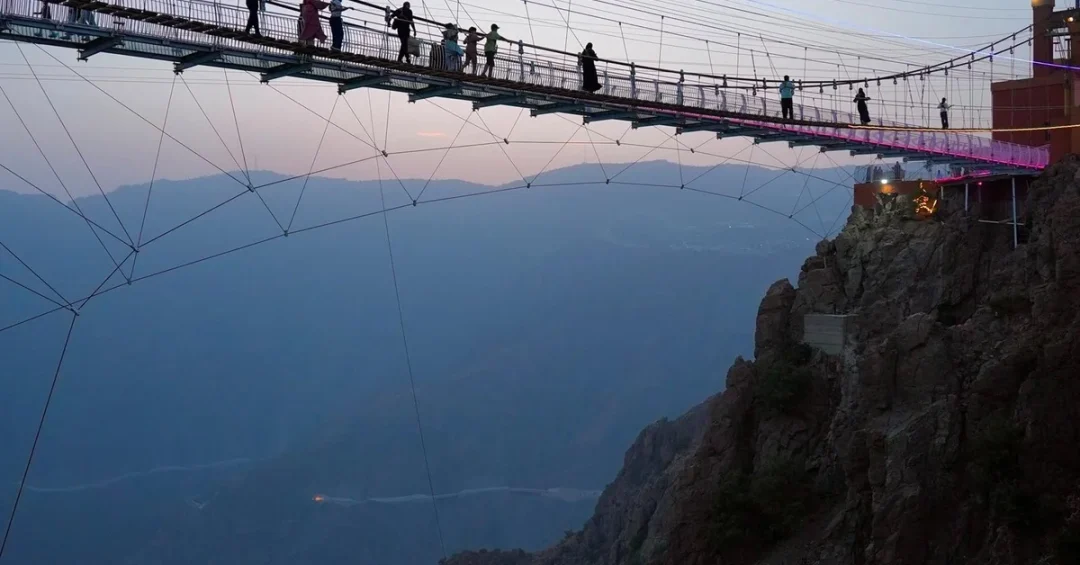
Photographers across Al-Baha Region are marking World Photography Day on August 19 by turning their lenses toward one of Saudi Arabia’s most visually diverse landscapes, a terrain of highland forests, terraced farms, fog-covered peaks, and centuries-old stone villages that together form a living record of the Kingdom’s natural and cultural wealth. The occasion, observed annually around the world, highlights photography’s role as a visual archive that preserves community memory and introduces places and their finest details to global audiences, according to information released through official Saudi channels.
In Al-Baha, that archive grows richer every season. The region’s geography spans the Sarawat Highlands and the Tihama plains, encompassing mountains, valleys, dense vegetation, and agricultural terraces that shift in appearance with fog, rainfall, and the passage of the year. For local photographers, the result is a canvas that never looks the same twice. Why does a single region offer so many distinct visual worlds? The answer lies in its elevation, climate, and layered history, a combination that has made Al-Baha a destination for both heritage enthusiasts and image-makers seeking scenes that feel untouched by time.
Context and Background
World Photography Day is observed each year on August 19, a date that celebrates the art, craft, and science of photography and recognizes the medium’s power to document communities and communicate across borders. In Saudi Arabia, the occasion resonates strongly in regions such as Al-Baha, where photography serves as a bridge between inherited heritage and modern cultural expression. Official Saudi information describes the region as a rich canvas for capturing nature and history, thanks to its diverse geography, dense vegetation, heritage villages, and architectural features that preserve the place’s details and memory.
Al-Baha sits in the southwest of the Kingdom, where the Sarawat mountain range rises sharply before descending toward the Red Sea coastal plain of Tihama. That dramatic change in elevation produces a rare range of environments within a relatively compact area: cool highland forests of juniper and wild olive, misty escarpments, deep valleys, and warm lowland plains. Each zone carries its own light, color, and atmosphere. Is it any wonder that photographers return to the same viewpoints season after season, waiting for fog to settle or rain to pass? The region’s visual character is inseparable from its climate, and its climate is inseparable from its geography.
The cultural layer is just as significant. Al-Baha’s heritage villages, stone houses, ancient fortresses, and inscriptions offer glimpses into the region’s history and the lifestyles of its inhabitants. These structures were built from local stone in harmony with the terrain, and many remain standing as testimony to generations of craftsmanship. Together, the natural and built environments give photographers a subject matter that is at once scenic and deeply human.
Natural Landscapes That Draw the Lens
The landscapes that attract photographers’ lenses range from the Sarawat Highlands to the Tihama plains, encompassing forests, mountains, valleys, and agricultural terraces. In the highlands, cool temperatures and seasonal rains sustain vegetation that contrasts strikingly with the arid landscapes many international visitors associate with the Kingdom. Juniper woodlands cling to slopes, and terraced fields step down hillsides in geometric patterns refined over centuries of farming life.
Fog and rainfall lend the region ever-changing visual dimensions throughout the seasons, official Saudi information notes. Morning mist can soften a mountain ridge into layers of grey and green, while rain transforms dry valleys into rushing streams and brightens the stone of old settlements. Photographers who document these shifts are effectively building a seasonal record of the region, one that shows how light, water, and terrain interact over time. What could be more valuable to a visual archive than a subject that renews itself with every weather system?
The Tihama plains add a different register altogether. Lower, warmer, and flatter, they offer wide horizons, agricultural land, and a sense of openness that contrasts with the enclosed drama of the mountains. Moving between the highlands and the plains, a photographer can capture desert-edge light, lush terraces, and cloud-wrapped summits within a single journey. That range is precisely what makes Al-Baha distinctive among Saudi regions.
Heritage Villages and Architectural Memory
Heritage sites and villages feature prominently among the subjects photographed in Al-Baha, with their stone houses, ancient fortresses, inscriptions, and architectural ornamentation offering glimpses into the region’s history and the lifestyles of its inhabitants. Among the most renowned sites attracting photographers and heritage enthusiasts is the historic village of Dhee Ayn, known for its stone structures and its setting amid palm groves and flowing water.
These villages are more than backdrops. Their construction reflects an intimate knowledge of local materials and climate: thick stone walls that moderate temperature, narrow passages that channel breezes, and decorative details that carry meaning for the communities that built them. Photographing such places is an act of documentation as much as composition. Each image records a wall, a doorway, or a carved motif that might otherwise go unnoticed by the wider world. Isn’t that precisely the kind of preservation that photography, at its best, makes possible?
The region’s ancient fortresses and inscriptions deepen the historical dimension further. Fortresses speak to defense, trade, and the organization of settled life in mountainous terrain, while inscriptions connect the present to earlier cultures that moved through and lived in the area. For photographers, these subjects demand patience and respect, since the goal is to illuminate rather than alter. Official Saudi channels present the region’s heritage as a source of pride and a resource to be shared responsibly with visitors and researchers alike.
International and Regional Impact
Images made in Al-Baha travel far beyond the region. When photographers share their work online, in exhibitions, or through media platforms, they introduce international audiences to a side of Saudi Arabia that differs from common expectations: green highlands, misty ridges, and stone villages rather than only desert and skyline. That visual storytelling supports the Kingdom’s broader effort to present itself as a destination of depth and variety, and it complements the growth of domestic tourism across the country.
Regionally, Al-Baha’s photographic community contributes to a wider Gulf and Arab creative scene in which image-makers document heritage and nature with increasing technical skill and cultural sensitivity. Events and observances such as World Photography Day give these practitioners a shared moment of recognition. They also encourage younger Saudis to take up cameras and explore their own surroundings. Who benefits most when local voices tell local stories? Arguably everyone, because authentic images build understanding that promotional material alone cannot achieve.
Economic and Strategic Significance
Photography and heritage documentation carry practical economic value. Compelling imagery supports tourism marketing, encourages visits to heritage villages and natural sites, and helps local businesses in hospitality, guiding, and crafts reach new customers. When a region becomes visually familiar to international audiences, it becomes easier to attract travelers seeking authentic cultural and nature experiences. Al-Baha’s combination of scenery and heritage positions it well within the Kingdom’s expanding tourism map.
Strategically, the documentation of heritage sites also supports preservation planning. Photographs and visual records help authorities and researchers monitor the condition of historic structures, study architectural details, and raise awareness of conservation needs. In this sense, the photographer’s lens is not only an artistic instrument but also a tool for safeguarding cultural assets for future generations. Does that make every careful image a small act of conservation? For Al-Baha’s heritage, the answer is yes.
Vision 2030 Alignment
The work of Al-Baha’s photographers aligns closely with Saudi Vision 2030, which seeks to diversify the economy, strengthen national identity, and develop tourism and cultural sectors as engines of opportunity. By documenting the region’s natural beauty and historical heritage, photographers contribute to a national narrative that values both modernization and preservation. Their images help position Saudi regions as destinations worth exploring and cultures worth understanding.
As World Photography Day is observed, the lenses of Al-Baha’s photographers continue to capture the region’s natural and historical diversity and richness, in line with official Saudi information. Their work ensures that the memory of place, held in stone, forest, and fog, remains visible to the world. What better way to honor a region than to see it clearly and share what is seen? Through that ongoing effort, Al-Baha takes its place in the Kingdom’s wider story of heritage, discovery, and forward-looking ambition.
20 Questions
Q1. What is World Photography Day?
A1. World Photography Day is observed annually on August 19 to celebrate photography as an art, craft, and science. It recognizes the medium’s ability to document communities, preserve memories, and connect people across cultures and borders.
Q2. Why is Al-Baha significant for photographers?
A2. Al-Baha offers diverse geography, dense vegetation, heritage villages, and architectural features that preserve the region’s details and memory. Its highlands, plains, valleys, and historic sites give photographers a wide range of compelling subjects throughout the year.
Q3. What landscapes can be photographed in Al-Baha?
A3. The landscapes range from the Sarawat Highlands to the Tihama plains, encompassing forests, mountains, valleys, and agricultural terraces. Fog and rainfall add ever-changing visual dimensions across the seasons, making the region visually dynamic.
Q4. What heritage sites attract photographers in Al-Baha?
A4. Heritage villages with stone houses, ancient fortresses, inscriptions, and architectural ornamentation attract photographers. The historic village of Dhee Ayn is among the most renowned sites drawing both photographers and heritage enthusiasts to the region.
Q5. What makes Dhee Ayn notable?
A5. Dhee Ayn is a historic village known for its stone structures and distinctive setting. It offers glimpses into the region’s history and the lifestyles of its inhabitants, making it a prominent subject for heritage photography in Al-Baha.
Q6. How does photography preserve community memory?
A6. Photography creates a visual record that preserves communities’ memories, introduces places, and depicts their details. Images of architecture, landscapes, and daily life keep cultural knowledge visible and accessible to future generations and international audiences.
Q7. How does weather affect photography in Al-Baha?
A7. Fog and rainfall lend the region ever-changing visual dimensions throughout the seasons. Mist softens mountain ridges, rain revives valleys, and shifting light transforms familiar scenes, giving photographers new compositions throughout the year.
Q8. What role do agricultural terraces play in Al-Baha’s imagery?
A8. Agricultural terraces are a distinctive feature of Al-Baha’s highland landscape. Their stepped patterns reflect generations of farming knowledge and add texture and human history to photographs of the region’s mountains and valleys.
Q9. Why are stone houses important in Al-Baha’s heritage?
A9. Stone houses reflect local building traditions adapted to the climate and terrain. Their construction, ornamentation, and layout offer insights into the lifestyles of inhabitants and represent a cultural heritage that photographers help document and share.
Q10. How does photography support tourism in Saudi Arabia?
A10. Compelling photography introduces destinations to international audiences, encourages visits, and supports hospitality and guiding businesses. Images of Al-Baha’s nature and heritage help position Saudi regions within the Kingdom’s expanding tourism sector.
Q11. What is the Sarawat Highlands’ appeal?
A11. The Sarawat Highlands offer cool temperatures, forests, mountains, and terraced fields. Their elevation and climate create scenery that differs from common expectations of Saudi Arabia, making them a rewarding subject for landscape photographers.
Q12. What distinguishes the Tihama plains?
A12. The Tihama plains are lower, warmer, and flatter than the highlands, offering wide horizons and agricultural land. Their contrast with mountain scenery gives photographers a different visual register within the same region.
Q13. How do inscriptions contribute to Al-Baha’s heritage?
A13. Inscriptions connect the present to earlier cultures that lived in and moved through the area. They provide historical evidence and deepen understanding of the region’s past, making them valuable subjects for documentation and research.
Q14. Why are ancient fortresses photographed?
A14. Ancient fortresses reflect defense, trade, and settled life in mountainous terrain. Their architecture and strategic locations tell stories of the region’s history, and photographs help preserve awareness of these structures for future generations.
Q15. How does photography aid heritage preservation?
A15. Photographs help authorities and researchers monitor historic structures, study architectural details, and raise awareness of conservation needs. Visual records support planning and ensure that cultural assets remain documented even as conditions change over time.
Q16. How does World Photography Day benefit local photographers?
A16. The observance gives photographers a shared moment of recognition and encourages younger Saudis to explore their surroundings with cameras. It highlights their contributions to documenting nature, heritage, and community life in regions like Al-Baha.
Q17. What economic value does photography bring to Al-Baha?
A17. Photography supports tourism marketing, encourages visits to heritage and natural sites, and helps local businesses in hospitality and crafts. Strong imagery makes the region more familiar and attractive to international travelers.
Q18. How does photography connect to Vision 2030?
A18. Vision 2030 seeks economic diversification, national identity, and tourism growth. Photographers contribute by documenting heritage and nature, strengthening cultural narratives, and helping position Saudi regions as destinations worth exploring and understanding.
Q19. What makes Al-Baha’s visual record valuable internationally?
A19. Al-Baha’s images show green highlands, misty ridges, and stone villages that differ from common expectations of Saudi Arabia. This authentic visual storytelling builds international understanding and complements the Kingdom’s broader cultural outreach.
Q20. What does the future hold for Al-Baha’s photographers?
A20. As interest in heritage and nature tourism grows, Al-Baha’s photographers are well placed to document and share the region’s richness. Their work will continue preserving memory and introducing the area to wider audiences in line with official Saudi information.
Reader Feedback
We value your thoughts. Please share your feedback on this article.
Your feedback helps us improve our coverage.
Related articles
 World Photography Day: Saudi Lens Tells Story of Change
 5.6-Magnitude Earthquake Hits Qinghai, China
 Kingdom Photography Award Celebrates World Photography Day and Three Editions
 Saudi Arabia Unveils Kingdom’s Photography Award Journey
 Earthquake of 5.9 Magnitude Hits China’s Dunhuang; No Casualties Reported
 Six Falcons Sold on Eighth Night of International Auction 2026