


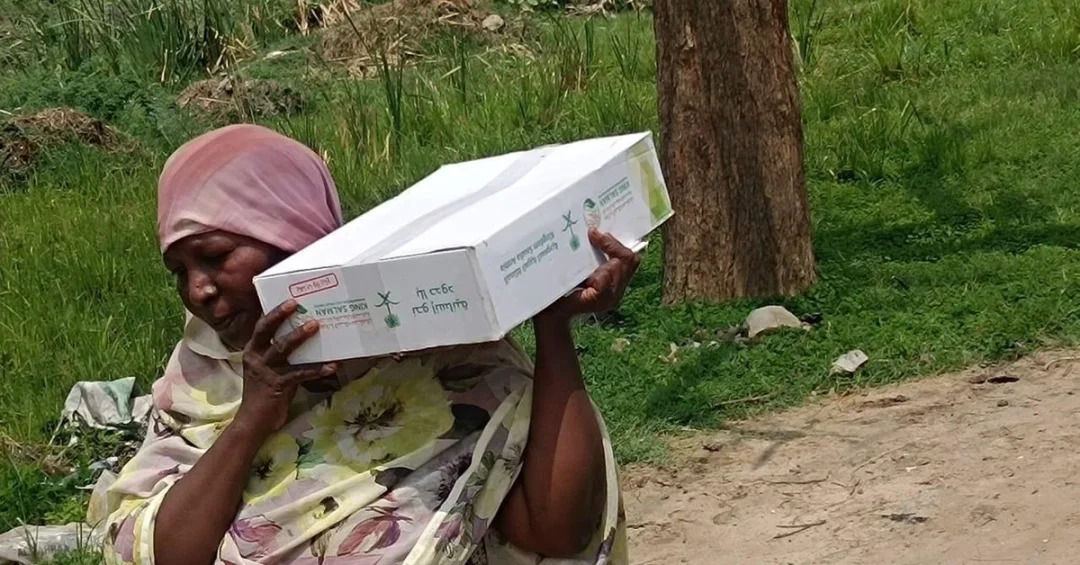
The King Salman Humanitarian Aid and Relief Center (KSrelief) has distributed 800 cartons of dates to affected families and people returning to their homes in White Nile State, Sudan, benefiting 4,538 individuals as part of the 2026 Madad Project in Sudan. The distribution, announced by the Saudi Press Agency, forms part of the Kingdom of Saudi Arabia’s sustained humanitarian response to the ongoing crisis in Sudan, delivered through its specialist relief agency. The consignment of dates, a staple foodstuff with strong nutritional value and cultural significance across the region, was directed toward households displaced by conflict as well as those attempting to rebuild their lives in areas where relative calm has allowed returns.
Why does a shipment of dates matter so much in a crisis that has displaced millions? In humanitarian practice, food assistance is most effective when it is familiar, culturally appropriate, and immediately consumable. Dates meet all three criteria in Sudan, where they are eaten daily and require no cooking, fuel, or clean water to prepare. For families living in temporary shelters or returning to damaged homes, that simplicity is not a minor convenience; it is the difference between a reliable meal and none at all. KSrelief’s distribution therefore represents both immediate relief and a considered understanding of local needs, reflecting the Kingdom’s long-standing approach of pairing material aid with cultural sensitivity.
Context and Background
What has driven Sudan to the point where basic food distributions carry such weight? Since conflict escalated in April 2023, Sudan has experienced one of the world’s largest displacement crises, with millions of people forced from their homes and many crossing into neighbouring countries. White Nile State, situated south of Khartoum, has absorbed significant numbers of displaced families while also hosting communities that have returned as security conditions improved in parts of the state. The result is a population under severe strain, where local markets, health facilities, and water points are stretched far beyond their normal capacity. Humanitarian agencies have repeatedly warned that access to food, medicine, and shelter remains the defining challenge for affected communities.
Saudi Arabia has been among the most consistent international responders to this crisis. Through KSrelief, the Kingdom has delivered food baskets, medical supplies, shelter materials, and seasonal assistance, often working in coordination with Sudanese authorities and international partners. The 2026 Madad Project is the latest iteration of this effort, a structured programme designed to channel assistance to specific states and beneficiary groups. The naming of the project, using the Arabic word for ‘support’ or ‘extension’, reflects the humanitarian character of the initiative, which is intended to reach families directly rather than through intermediaries. White Nile State was selected for this distribution because of the concentration of displaced and returning households there.
How does a single distribution fit into a much larger relief architecture? Saudi Arabia’s humanitarian work is institutionalised rather than ad hoc. KSrelief operates as a central coordinating body that assesses needs, procures supplies, and dispatches convoys and shipments under agreements with host governments. In Sudan, this has meant repeated deliveries across multiple states, each calibrated to local conditions. The dates distributed in White Nile State are one component of a broader food security response that also includes flour, rice, oil, and ready-to-eat rations. Taken together, these deliveries are intended to prevent vulnerable households from sliding into acute malnutrition while longer-term recovery efforts take shape.
Key Details of the Distribution
What exactly was delivered, and to whom? According to the Saudi Press Agency, KSrelief distributed 800 cartons of dates to affected families and people returning to their homes in White Nile State, reaching 4,538 individuals. The figure indicates an average of roughly five to six beneficiaries per carton, consistent with family-sized packaging designed for household consumption rather than individual handouts. The distribution targeted two distinct groups: families still displaced by the conflict and those who have chosen to return to their home areas. Including returnees is significant, because returning households often find their homes damaged, their assets lost, and their access to food uncertain in the early months of resettlement.
Why include dates specifically in a relief package? Dates are energy-dense, rich in natural sugars, fibre, and essential minerals, and they store well in hot climates without refrigeration. In Sudan, they are also deeply embedded in daily life, served with coffee, eaten to break fasts, and offered to guests. This cultural familiarity means the assistance is accepted without hesitation and can be shared within extended family networks, multiplying its reach beyond the immediate recipient. Humanitarian organisations increasingly prioritise such culturally appropriate foods because they support dignity as well as nutrition. For a family that has lost nearly everything, receiving a familiar food item can also provide a measure of psychological comfort amid upheaval.
The distribution was carried out as part of the 2026 Madad Project in Sudan, a KSrelief initiative that has become a recurring feature of the Kingdom’s relief calendar. The project’s design emphasises direct delivery to beneficiaries, verification of need, and coordination with local authorities to avoid duplication. KSrelief field teams typically register households, confirm eligibility, and organise distribution points to ensure orderly access, particularly for women, the elderly, and people with disabilities. While the announcement focused on the dates consignment, it sits within a wider schedule of deliveries that together constitute a sustained commitment rather than a one-off gesture.
International and Regional Impact
How does this distribution resonate beyond White Nile State? Saudi Arabia’s relief efforts in Sudan are part of a wider regional posture that emphasises stability, neighbourly support, and the prevention of cascading crises. Sudan shares a Red Sea coastline and deep historical, cultural, and economic ties with the Kingdom, and instability there has implications for trade routes, migration patterns, and regional security. By providing food assistance directly to affected communities, Saudi Arabia helps reduce pressure on neighbouring states that might otherwise absorb larger refugee flows. The delivery also reinforces the Kingdom’s reputation as a reliable humanitarian actor at a time when global aid budgets are under strain and many traditional donors are stretched thin.
What do such distributions signal to international partners? They demonstrate that Saudi Arabia is willing to translate diplomatic engagement into practical action on the ground. KSrelief works alongside United Nations agencies, international non-governmental organisations, and Sudanese institutions, and its field presence gives it credibility in coordination meetings. For international observers, the dates distribution is a concrete data point in assessing the scale and consistency of the Kingdom’s humanitarian commitment. It also supports the broader narrative of Saudi Arabia as a responsible global stakeholder, a theme that runs through Vision 2030 and the Kingdom’s expanding diplomatic role. In a region where humanitarian access is often contested, maintaining neutral, needs-based assistance is itself a diplomatic achievement.
Economic and Strategic Significance
Does food aid have an economic dimension beyond immediate relief? Yes. When households receive staple foods, they free up limited cash for other essentials such as medicine, water, or school fees. In displacement settings, where income opportunities are scarce, this indirect effect can be substantial. Local markets also benefit when aid is procured regionally, as it injects purchasing power into surrounding economies. Saudi Arabia’s procurement and logistics chains for relief supplies involve transport, warehousing, and distribution networks that create temporary employment and support local service providers. The strategic significance lies in the stability that follows: communities that can meet basic needs are less likely to experience secondary crises that spill across borders.
How does this fit with Saudi Arabia’s wider economic diplomacy? The Kingdom has increasingly integrated humanitarian action into its foreign policy and its Vision 2030 framework, recognising that stability underpins trade, investment, and development. Saudi Arabia is a major contributor to international humanitarian appeals and a founding supporter of numerous relief funds. Its assistance to Sudan complements diplomatic efforts to encourage dialogue and reconciliation there. By acting through KSrelief, the Kingdom maintains a clear separation between humanitarian and political tracks, which helps preserve access and trust with all parties. This approach has allowed Saudi relief convoys to reach areas that other organisations find difficult to access, extending the reach of the international response.
Vision 2030 Alignment
How does a date distribution in White Nile State connect to Vision 2030? Vision 2030 is often associated with economic diversification, tourism, and technology, but it also encompasses a vision of Saudi Arabia as a globally responsible nation whose influence is exercised through constructive engagement. KSrelief is a direct expression of that ambition, projecting the Kingdom’s humanitarian values and operational capacity onto the world stage. The centre’s work supports the Vision’s emphasis on international partnerships and soft power, showing that Saudi Arabia contributes to global public goods rather than focusing solely on domestic priorities. Each delivery, however modest in scale, reinforces the credibility of that broader national project.
What comes next for families in White Nile State and for Saudi relief efforts in Sudan? The 2026 Madad Project is expected to continue with further distributions across multiple states, adjusting to evolving needs and access conditions. KSrelief has indicated that its Sudan operations remain a priority, with food security, health, and shelter among the core sectors. For the 4,538 individuals who received dates in this round, the assistance provides immediate relief; for the wider population, it represents a promise that the international community, and Saudi Arabia in particular, has not forgotten them. As the Kingdom deepens its global role, such humanitarian commitments will remain a defining feature of how it engages with the world, consistent with the values and ambitions of Vision 2030.
20 Questions
Q1. What did KSrelief distribute in White Nile State, Sudan?
A1. KSrelief distributed 800 cartons of dates to affected families and people returning to their homes in White Nile State, Sudan, as part of its humanitarian relief efforts in the country.
Q2. How many individuals benefited from this distribution?
A2. The distribution benefited 4,538 individuals, according to the Saudi Press Agency, reflecting KSrelief’s commitment to reaching vulnerable communities with essential food assistance.
Q3. Which project does this distribution fall under?
A3. It is part of the 2026 Madad Project in Sudan, a KSrelief initiative designed to deliver food and relief supplies to families affected by the ongoing humanitarian crisis.
Q4. Who is responsible for carrying out the distribution?
A4. The King Salman Humanitarian Aid and Relief Center, known as KSrelief, carried out the distribution as part of Saudi Arabia’s official humanitarian response to the crisis in Sudan.
Q5. Why are dates particularly suitable for relief distributions?
A5. Dates are energy-dense, nutritious, culturally familiar in Sudan, and require no cooking or refrigeration, making them ideal for families in displacement settings with limited resources.
Q6. What is the significance of including returning families as beneficiaries?
A6. Returning families often find damaged homes and lost assets, so food assistance helps them resettle and meet immediate needs during the early stages of rebuilding their lives.
Q7. Where is White Nile State located?
A7. White Nile State is located south of Khartoum in Sudan and has hosted significant numbers of displaced families while also receiving communities returning as security conditions improve in parts of the state.
Q8. How does this distribution fit into Saudi Arabia’s broader humanitarian work?
A8. It is one component of a sustained KSrelief programme that includes food, medical, shelter, and seasonal assistance across multiple Sudanese states, coordinated with local and international partners.
Q9. What is the 2026 Madad Project?
A9. The 2026 Madad Project is a KSrelief initiative that channels humanitarian assistance to specific beneficiary groups in Sudan, with a focus on food security and direct delivery to families in need.
Q10. How does KSrelief ensure aid reaches those who need it most?
A10. KSrelief field teams register households, verify eligibility, and organise distribution points, prioritising women, the elderly, and people with disabilities while coordinating with local authorities to avoid duplication.
Q11. What nutritional benefits do dates provide?
A11. Dates are rich in natural sugars, fibre, and essential minerals, providing quick energy and supporting overall health, which is especially valuable for malnourished or food-insecure populations.
Q12. How many cartons were distributed in this operation?
A12. KSrelief distributed 800 cartons of dates, with each carton designed for family-sized consumption, reaching a total of 4,538 beneficiaries in White Nile State.
Q13. What other types of assistance does KSrelief provide in Sudan?
A13. KSrelief provides food baskets, flour, rice, oil, ready-to-eat rations, medical supplies, shelter materials, and seasonal assistance, addressing multiple needs of affected communities.
Q14. Why is Saudi Arabia involved in humanitarian relief in Sudan?
A14. Saudi Arabia has deep historical, cultural, and economic ties with Sudan and is committed to alleviating the suffering of the Sudanese people through its official humanitarian agency, KSrelief.
Q15. How does this distribution support regional stability?
A15. By helping communities meet basic needs, the assistance reduces pressure on neighbouring states, supports local markets, and contributes to stability in a region of strategic importance to Saudi Arabia.
Q16. What role does the Saudi Press Agency play in reporting this news?
A16. The Saudi Press Agency is the official national news agency that published the announcement, providing verified information about KSrelief’s distribution and its beneficiaries.
Q17. How does KSrelief coordinate with international organisations?
A17. KSrelief works alongside United Nations agencies, international non-governmental organisations, and Sudanese institutions, participating in coordination meetings to ensure effective and non-duplicative aid delivery.
Q18. What is the expected impact of the 2026 Madad Project?
A18. The project aims to prevent acute malnutrition, support displaced and returning families, and contribute to recovery efforts across multiple Sudanese states through sustained food and relief deliveries.
Q19. How does this relief effort reflect Vision 2030?
A19. It reflects Vision 2030’s vision of Saudi Arabia as a globally responsible nation, using humanitarian action through KSrelief to project the Kingdom’s values and strengthen its international partnerships.
Q20. What comes next for KSrelief operations in Sudan?
A20. KSrelief is expected to continue its Sudan operations under the 2026 Madad Project, with further distributions across states and ongoing focus on food security, health, and shelter for affected populations.
Reader Feedback
We value your thoughts. Please share your feedback on this article.
Your feedback helps us improve our coverage.
Related articles
 KSrelief Delivers 24,500 Hot Meals in Gaza
 KSrelief Distributes Shelter Aid in Yemen’s Al-Hodeidah
 Saudi IPHRC, Sudan Human Rights Commission Discuss Cooperation
 UNESCO to Lead Global AI Ethics Efforts in Riyadh This September
 Saudi Ambassador Meets Lebanese MP Rifi in Beirut
 Saudi Academy Launches Development Terminology Dictionary