


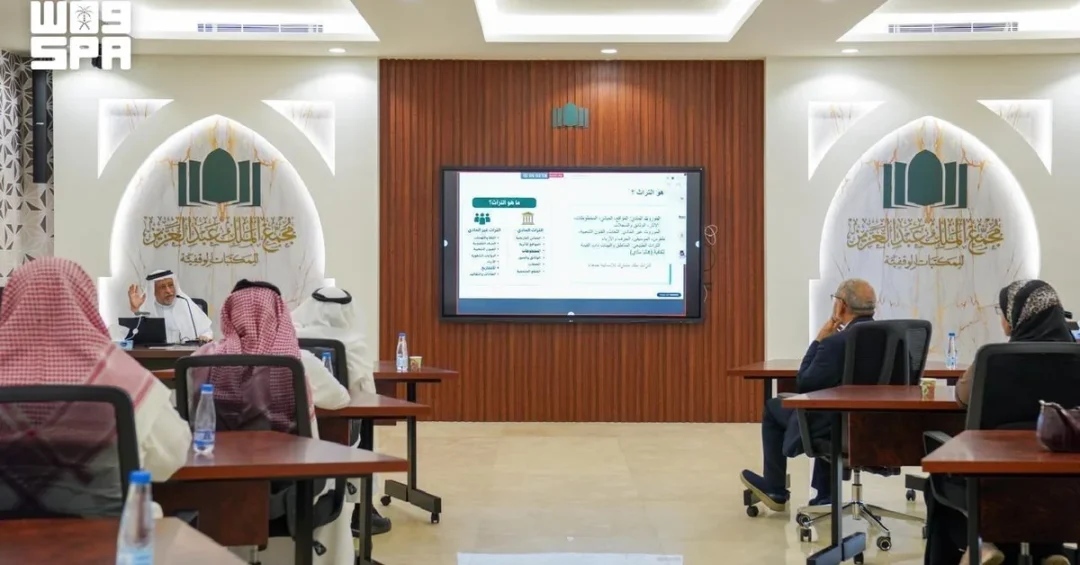
The King Abdulaziz Complex for Endowment Libraries in Madinah hosted a scientific lecture on the use of smart technologies in heritage preservation on August 12, 2026, held at the training hall of the Complex’s headquarters, according to the Saudi Press Agency. The event formed part of the Complex’s ongoing scientific programs designed to raise awareness of the latest practices and technologies that support the preservation and conservation of heritage. The lecture brought together specialists, researchers, and heritage professionals to examine how modern tools are reshaping the way manuscripts, documents, and rare collections are protected for future generations.
For an international audience, the session offers a window into how Saudi Arabia is combining its deep cultural heritage with advanced technology as part of a broader national modernization drive. Endowment libraries, known in Arabic as libraries tied to waqf endowments, hold some of the most historically significant manuscripts and printed works in the Islamic world. The Complex’s decision to convene a dedicated scientific lecture on smart preservation technologies reflects a growing recognition that digitization, artificial intelligence, and environmental monitoring are no longer optional extras but essential instruments for safeguarding cultural memory. Why does this matter beyond Saudi Arabia’s borders? Because the manuscripts preserved in these collections belong to global civilization, and their survival concerns scholars, historians, and institutions worldwide.
Context and Background
What makes the King Abdulaziz Complex for Endowment Libraries such an important institution in the heritage landscape? Established in Madinah, the Complex serves as a specialized center dedicated to the collection, cataloguing, preservation, and study of endowment libraries and their holdings. These libraries, many of which were endowed centuries ago by philanthropists, scholars, and ruling families, contain manuscripts, rare books, historical documents, and archival materials that trace the intellectual and religious history of the region. The Complex’s mandate extends beyond storage: it works to document, digitize, and make accessible materials that might otherwise remain hidden from researchers.
The August 12 lecture was organized as part of the Complex’s scientific programs, which aim to raise awareness of the latest practices and technologies supporting heritage preservation and conservation. According to the Saudi Press Agency, the event is part of the Complex’s efforts to disseminate specialized knowledge and keep pace with technological developments in heritage preservation, documentation, and the management of endowment libraries. This framing is significant: it positions the Complex not merely as a custodian of old materials but as an active participant in the modern knowledge economy, where heritage and technology intersect.
Globally, heritage institutions face mounting challenges. Manuscripts degrade through humidity, temperature fluctuations, pests, and handling. Traditional conservation methods remain vital, but they are labor-intensive and sometimes insufficient for collections of tens of thousands of items. Smart technologies — including high-resolution scanning, artificial intelligence for text recognition, three-dimensional imaging, and remote environmental sensors — offer new ways to monitor, document, and protect collections. The Madinah lecture placed these tools at the center of the conversation, signaling that Saudi Arabia intends to be a regional leader in their application.
Key Details of the Lecture
What exactly did the lecture cover, and why was it structured as a scientific program rather than a simple presentation? The session was held at the training hall of the Complex’s headquarters in Madinah, a venue designed to host specialized instruction and professional development. The lecture focused on smart technologies for heritage preservation, a topic that spans digitization workflows, digital archiving standards, non-invasive imaging techniques, and the use of data analytics to track the condition of physical collections over time. By hosting the event in a training hall, the Complex emphasized capacity-building — ensuring that librarians, conservators, and archivists gain practical familiarity with emerging tools.
The Saudi Press Agency reported that the lecture is part of the Complex’s efforts to disseminate specialized knowledge and keep pace with technological developments in heritage preservation, documentation, and the management of endowment libraries. This places the event within a continuum of activities rather than treating it as an isolated occasion. The Complex regularly organizes scientific programs, and the August 12 session built on that tradition by focusing specifically on technology. For participants, the value lies in exposure to methods that can be adapted to their own institutions, whether they manage a small endowed collection or a large national archive.
It is worth noting that the lecture addressed both preservation and documentation. Preservation concerns the physical survival of materials, while documentation concerns the creation of accurate records, metadata, and digital surrogates. Smart technologies serve both goals. For example, spectral imaging can reveal faded text without touching the manuscript, while digital asset management systems allow multiple institutions to share catalogues and avoid duplication of effort. The Complex’s decision to frame the lecture around these twin objectives reflects a holistic understanding of heritage management.
International and Regional Impact
How does a lecture in Madinah resonate beyond Saudi Arabia? Heritage preservation is inherently international. Manuscripts held in endowment libraries often attract scholars from across the Middle East, North Africa, South Asia, and the wider world. When Saudi institutions adopt advanced preservation technologies and share knowledge through scientific programs, they contribute to a global pool of expertise. Regional heritage organizations, universities, and museums stand to benefit from the methods discussed, particularly if the Complex publishes findings or offers follow-up training.
Moreover, the lecture reinforces Madinah’s role as a center of learning and culture. The city is already known globally as a destination for millions of pilgrims, but its intellectual and archival significance is less widely understood. By hosting scientific events on heritage technology, the Complex helps broaden that reputation. International researchers who follow developments in manuscript studies will take note that Saudi Arabia is investing in the tools and training needed to care for collections that are part of the shared heritage of humanity. This soft-power dimension complements the Kingdom’s broader cultural diplomacy.
Economic and Strategic Significance
Why should economic analysts pay attention to heritage preservation? The connection may seem indirect, but it is real. Cultural heritage is an economic asset. Well-preserved manuscripts and archives support research, publishing, tourism, and the creative industries. They also underpin the authenticity of cultural experiences that visitors seek. As Saudi Arabia expands its tourism sector, heritage sites and collections become part of the visitor economy. Smart technologies make these assets more accessible — through digital exhibitions, online catalogues, and virtual research tools — while reducing the wear and tear caused by physical handling.
Strategically, the lecture reflects a wider pattern in Saudi Arabia: the deliberate integration of technology into traditional sectors. The same mindset that drives smart city development and digital government services is being applied to libraries and archives. This is not merely symbolic. Effective preservation requires investment in equipment, software, training, and standards. By holding a scientific lecture on the subject, the Complex signals that these investments are being taken seriously at an institutional level. For partners in the technology and education sectors, this creates opportunities for collaboration, from software localization to joint research projects.
Vision 2030 Alignment
How does a heritage lecture connect to Saudi Vision 2030? Vision 2030 is often associated with economic diversification, mega-projects, and social reform, but it also includes a strong cultural dimension. The vision recognizes that national identity and cultural heritage are foundations for sustainable development. Preserving endowment libraries and their contents supports the goal of a vibrant society rooted in its history while embracing modernity. The King Abdulaziz Complex for Endowment Libraries contributes directly to that goal by safeguarding materials that document the Kingdom’s intellectual and religious heritage.
The use of smart technologies aligns with Vision 2030’s emphasis on digital transformation and knowledge transfer. By training specialists and disseminating best practices, the Complex helps build a workforce capable of managing cultural assets in the digital age. This is capacity-building in the truest sense. As Saudi Arabia continues to position itself as a global hub for culture, research, and tourism, institutions like the Complex will play an increasingly visible role. The Madinah lecture is a small but meaningful step in a long-term journey — one that ensures the treasures of the past remain available to inspire the generations of the future.
20 Questions
Q1. What was the topic of the lecture held by the King Abdulaziz Complex for Endowment Libraries?
A1. The lecture focused on the use of smart technologies in heritage preservation, covering modern tools and practices for conserving, documenting, and managing endowment libraries and their collections.
Q2. Where was the lecture held?
A2. It was held at the training hall of the Complex’s headquarters in Madinah, according to the Saudi Press Agency, which reported the event on August 12, 2026.
Q3. When did the lecture take place?
A3. The Saudi Press Agency reported the lecture on August 12, 2026, with a local time stamp of 03:51 and a GMT time of 00:51.
Q4. What is the King Abdulaziz Complex for Endowment Libraries?
A4. It is a specialized institution in Madinah dedicated to collecting, preserving, documenting, and studying endowment libraries and their holdings, including manuscripts and rare historical materials.
Q5. Why is heritage preservation important for endowment libraries?
A5. Endowment libraries hold manuscripts and documents of significant historical and cultural value. Preservation ensures these materials survive for research, education, and future generations.
Q6. What are smart technologies in the context of heritage preservation?
A6. They include high-resolution scanning, artificial intelligence for text recognition, spectral imaging, environmental sensors, and digital management systems that help protect and document collections.
Q7. How does the lecture fit into the Complex’s scientific programs?
A7. It is part of a series of scientific programs aimed at raising awareness of the latest practices and technologies supporting heritage preservation and conservation.
Q8. What does the Complex hope to achieve by disseminating specialized knowledge?
A8. The Complex aims to keep pace with technological developments in heritage preservation, documentation, and the management of endowment libraries, benefiting specialists and institutions.
Q9. Who likely attended the lecture?
A9. Specialists, researchers, librarians, conservators, and heritage professionals interested in the application of technology to preservation and documentation would have attended.
Q10. How does this lecture benefit international audiences?
A10. It signals Saudi Arabia’s commitment to preserving shared cultural heritage and offers insights that scholars and institutions worldwide can apply to their own collections.
Q11. What is the significance of Madinah as the host city?
A11. Madinah is a city of historical and religious importance, and hosting scientific events there reinforces its role as a center of learning and cultural preservation.
Q12. Does the lecture relate to Saudi Vision 2030?
A12. Yes. It supports Vision 2030’s cultural and digital transformation goals by promoting technology-driven preservation and knowledge transfer.
Q13. What are endowment libraries?
A13. They are libraries established through waqf, or charitable endowments, often holding manuscripts, rare books, and documents accumulated over centuries by scholars and philanthropists.
Q14. How can smart technologies help with documentation?
A14. They enable accurate digital catalogues, metadata creation, and digital surrogates that reduce physical handling while improving access for researchers.
Q15. What challenges do heritage institutions face today?
A15. They face threats from environmental conditions, physical deterioration, and the sheer volume of materials, making technological solutions increasingly necessary.
Q16. Is the lecture part of a larger effort by the Complex?
A16. Yes. It is one of several scientific programs organized by the Complex to disseminate knowledge and promote best practices in heritage management.
Q17. How does heritage preservation support tourism?
A17. Well-preserved collections and digital exhibitions enrich cultural tourism, offering visitors authentic experiences and supporting the visitor economy.
Q18. What role does the Saudi Press Agency play in reporting such events?
A18. As an official Saudi news authority, SPA provides verified information about government and institutional activities, ensuring accurate public communication.
Q19. Can other institutions learn from this lecture?
A19. Yes. The methods and practices discussed can be adapted by libraries, archives, and museums in Saudi Arabia and internationally.
Q20. What does this event say about Saudi Arabia’s approach to heritage?
A20. It demonstrates a forward-looking approach that combines respect for tradition with modern technology, ensuring heritage remains accessible and protected for future generations.
Reader Feedback
We value your thoughts. Please share your feedback on this article.
Your feedback helps us improve our coverage.
Related articles
 Four Falcons Sell for SAR 203,250 at Saudi Auction Night Four
 Global Falcon Lines Meet at Saudi International Auction
 Hail Arabian Horse Championship Upgraded to Category B
 Makkah Quran Competition Final Rounds Draw 42 Contestants
 Al-Klebein Season Begins: Peak Summer Heat and Date Ripening
 1,534 Students Join 150 Summer Quran Sessions in Al-Rass