


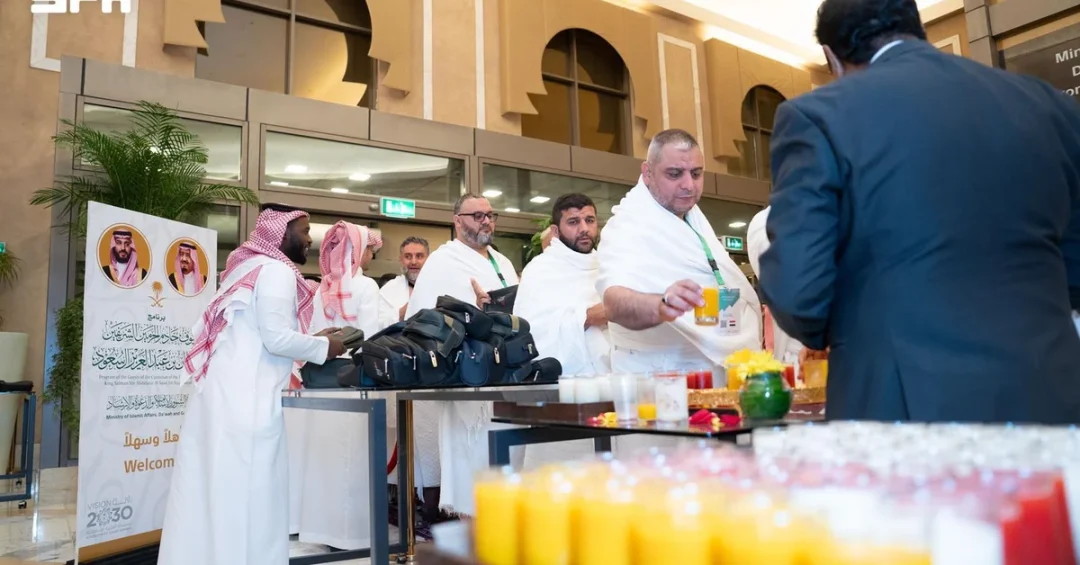
The second group of Umrah performers participating in the Custodian of the Two Holy Mosques’ Guests Program for Umrah and Visitation arrived in Makkah on August 11, 2026, ready to complete their pilgrimage after several days of spiritual and cultural visits in Madinah, according to the Saudi Press Agency (SPA). The group, organized by the Ministry of Islamic Affairs, Dawah and Guidance, comprises 250 male and female Umrah performers representing 23 countries from Europe and Asia. Their arrival in Makkah marks the next phase of a carefully structured program designed to provide guests with a comprehensive experience of the Kingdom’s religious, historical, and cultural heritage. The initiative reflects the Kingdom’s enduring commitment to serving pilgrims and promoting moderate Islamic values on a global scale.
Before reaching Makkah, the guests spent several days in Madinah, where they performed prayers at the Prophet’s Mosque and visited a number of historical and cultural sites and landmarks. This initial phase allowed participants to immerse themselves in the spiritual atmosphere of the city and learn about its significance in Islamic history. The program in Makkah now includes a series of academic and cultural activities, as well as visits to prominent landmarks such as the King Abdulaziz Complex for the Holy Kaaba Kiswa and the Revelation Exhibition. These activities are part of a broader effort to introduce guests to Makkah’s religious, historical, and cultural landmarks, enriching their pilgrimage experience beyond the core rituals.
Context and Background
Why has the Kingdom of Saudi Arabia consistently expanded programs that host international pilgrims under the banner of the Custodian of the Two Holy Mosques? The Custodian of the Two Holy Mosques’ Guests Program for Umrah and Visitation is a flagship initiative implemented by the Ministry of Islamic Affairs, Dawah and Guidance, reflecting the leadership’s dedication to facilitating worship and fostering global Islamic unity. Since its inception, the program has welcomed thousands of pilgrims from diverse backgrounds, offering them the opportunity to perform Umrah and visit the holy sites at no personal cost. It is a manifestation of Saudi Arabia’s historical role as the custodian of Islam’s holiest places and its ongoing efforts to serve Muslims worldwide.
The program is structured to provide not only spiritual fulfillment but also cultural and educational enrichment. Guests are selected from a wide range of countries, with each group representing multiple nations, thereby promoting cross-cultural exchange and understanding. The second group’s composition—250 individuals from 23 European and Asian countries—underscores the program’s global reach and its role in strengthening ties between Saudi Arabia and the international Muslim community. By hosting these pilgrims, the Kingdom demonstrates its commitment to moderate Islam and its rejection of extremism, aligning with the principles of Vision 2030, which seeks to enhance Saudi Arabia’s global standing and promote a positive image of the country.
The initiative also serves a diplomatic function, as it brings together Muslims from different backgrounds under the umbrella of faith and shared tradition. Participants return to their home countries with firsthand experiences of Saudi hospitality and the Kingdom’s rapid modernization, becoming informal ambassadors who can share accurate perceptions of the country. This soft power approach complements Saudi Arabia’s broader efforts to build bridges with nations across Europe and Asia, fostering goodwill and mutual respect. The program’s continuity, even amid global challenges, highlights the Kingdom’s unwavering commitment to its religious responsibilities and its capacity to host large-scale international events seamlessly.
Key Details
What specific experiences await the guests as they begin their Umrah rituals in Makkah? Upon arrival, the performers will undertake the sacred rites of Umrah, including Tawaf around the Holy Kaaba and Sa’i between the hills of Safa and Marwah. Beyond these core rituals, the program includes visits to the King Abdulaziz Complex for the Holy Kaaba Kiswa, where guests can learn about the intricate craftsmanship involved in producing the cloth that covers the Kaaba. This visit offers a rare behind-the-scenes look at a revered tradition that dates back centuries and is maintained with utmost care by Saudi artisans. The Revelation Exhibition is another highlight, providing insights into the history of divine revelation and its significance in Islam.
The academic and cultural activities are designed to deepen the pilgrims’ understanding of Islamic heritage and the Kingdom’s role in preserving it. Scholars and experts may deliver lectures on various aspects of Islamic jurisprudence, history, and contemporary issues, fostering a spirit of learning and dialogue. These sessions are conducted in a respectful and inclusive manner, encouraging participants to ask questions and share their perspectives. The combination of spiritual practice and intellectual engagement ensures that the guests return home with a holistic experience that strengthens their faith and broadens their horizons.
The second group’s itinerary in Makkah also includes visits to other historical sites, such as the birthplace of the Prophet Muhammad and the Cave of Hira, although specific details are subject to scheduling and logistical considerations. The Ministry of Islamic Affairs, Dawah and Guidance meticulously plans each aspect of the program to ensure comfort, safety, and spiritual fulfillment for all participants. The guests are accommodated in hotels near the Grand Mosque, allowing easy access to the holy sites and minimizing travel time. Transportation and meals are provided, allowing pilgrims to focus entirely on their worship and learning experiences. The program’s attention to detail reflects the Kingdom’s high standards in hosting guests and its dedication to exceeding expectations.
International and Regional Impact
How does hosting pilgrims from 23 countries contribute to Saudi Arabia’s global image and diplomatic relations? The presence of Umrah performers from Europe and Asia in Makkah sends a powerful message of unity and inclusivity. It showcases the Kingdom’s ability to welcome people from diverse cultures and backgrounds, reinforcing its position as a global leader in interfaith dialogue and cultural exchange. The guests, upon returning to their home countries, often share positive stories about their experiences, which can counter misconceptions and promote a more accurate understanding of Saudi Arabia. This grassroots diplomacy is invaluable in building long-term goodwill and fostering stronger people-to-people ties.
Regionally, the program strengthens Saudi Arabia’s relationships with neighboring countries and the broader Islamic world. By inviting pilgrims from Asia, the Kingdom reinforces its ties with key partners in South and Southeast Asia, where large Muslim populations reside. Similarly, including European participants helps bridge cultural divides and promotes moderate Islam in regions where Muslims may face challenges in practicing their faith. The program aligns with Saudi Arabia’s foreign policy objectives of promoting peace, stability, and cooperation, and it complements other initiatives such as the Islamic Military Counter Terrorism Coalition and the Organization of Islamic Cooperation. Through such efforts, the Kingdom positions itself as a unifying force in the Muslim world.
The international media often highlights Saudi Arabia’s modernization and social reforms, and programs like this provide concrete examples of the Kingdom’s positive impact. They demonstrate that Saudi Arabia is not only a destination for pilgrimage but also a hub for cultural and intellectual exchange. The guests’ interactions with Saudi citizens and residents further humanize the Kingdom and showcase its hospitality, which is deeply rooted in Islamic tradition and Arab culture. As the program continues to expand, its ripple effects on global perceptions and diplomatic relations are likely to grow, contributing to a more nuanced and favorable image of Saudi Arabia.
Economic and Strategic Significance
What economic and strategic benefits does the Guests Program bring to Saudi Arabia? While the program is primarily a religious and charitable initiative, it also has significant economic implications. The influx of pilgrims stimulates local economies in Makkah and Madinah, supporting hotels, restaurants, transportation services, and retail businesses. The guests often purchase souvenirs and other goods, contributing to the retail sector. Moreover, the program showcases Saudi Arabia’s infrastructure and organizational capabilities, which can attract future investments and tourism. By demonstrating its capacity to host international events smoothly, the Kingdom enhances its reputation as a premier destination for religious tourism, a key pillar of Vision 2030.
Strategically, the program reinforces Saudi Arabia’s leadership in the Islamic world and its role as the custodian of the Two Holy Mosques. It serves as a soft power tool that complements military and economic strength, fostering influence through goodwill and shared religious values. The program also supports the Kingdom’s efforts to promote moderate Islam and counter extremist narratives, which is crucial for regional security and stability. By bringing together Muslims from various countries, it creates networks of individuals who can advocate for peace and tolerance in their home communities. This aligns with Vision 2030’s goal of a vibrant society and a prosperous economy, as it contributes to social cohesion and international cooperation.
Furthermore, the program’s focus on cultural and academic activities enhances Saudi Arabia’s knowledge economy. The exchanges that occur during these visits can lead to collaborations in education, research, and business. Participants may include academics, professionals, and community leaders who can later engage with Saudi institutions in various fields. The Ministry of Islamic Affairs, Dawah and Guidance often facilitates such connections, creating opportunities for long-term partnerships. Thus, the Guests Program is not merely a charitable endeavor but a strategic investment in Saudi Arabia’s global relationships and its vision for a diversified, knowledge-based economy.
Vision 2030 Alignment
How does the Custodian of the Two Holy Mosques’ Guests Program for Umrah and Visitation embody the objectives of Saudi Vision 2030? Vision 2030 aims to transform Saudi Arabia into a global investment powerhouse and a hub connecting three continents, while also fostering a vibrant society with strong Islamic values. The program directly supports the vision’s social and cultural pillars by promoting moderate Islam, enhancing the Kingdom’s religious tourism sector, and showcasing Saudi hospitality. It also aligns with the vision’s economic goals by stimulating local economies and demonstrating the Kingdom’s capacity to host international visitors, which is essential for growing the tourism industry and attracting foreign investment.
In conclusion, the arrival of the second group of Umrah performers under this esteemed program is a testament to Saudi Arabia’s unwavering commitment to serving pilgrims and promoting global Islamic solidarity. As the guests proceed with their Umrah rituals and explore Makkah’s rich heritage, they carry with them the spirit of unity and the blessings of their journey. The Kingdom, under the leadership of the Custodian of the Two Holy Mosques, continues to set a global example of generosity, organization, and devotion to Islamic values. This initiative not only enriches the lives of the participants but also strengthens Saudi Arabia’s position as a beacon of moderate Islam and a catalyst for positive change in the world.
20 Questions
Q1. What is the Custodian of the Two Holy Mosques’ Guests Program for Umrah and Visitation?
A1. It is a program implemented by the Ministry of Islamic Affairs, Dawah and Guidance that hosts Muslims from around the world to perform Umrah and visit holy sites at the Kingdom’s expense, reflecting Saudi Arabia’s commitment to serving pilgrims.
Q2. Who arrived in Makkah on August 11, 2026?
A2. The second group of Umrah performers under the Custodian of the Two Holy Mosques’ Guests Program arrived in Makkah to perform Umrah rituals after spending several days in Madinah.
Q3. How many Umrah performers are in the second group?
A3. The second group includes 250 male and female Umrah performers, representing a diverse cohort from 23 countries across Europe and Asia.
Q4. Which countries are represented in the second group?
A4. The group includes participants from 23 countries in Europe and Asia, though the specific nations were not detailed in the official announcement.
Q5. What did the guests do during their time in Madinah?
A5. They performed prayers at the Prophet’s Mosque and visited a number of historical and cultural sites and landmarks, enriching their spiritual and cultural understanding.
Q6. What activities are planned for the guests in Makkah?
A6. The program in Makkah includes academic and cultural activities, as well as visits to landmarks such as the King Abdulaziz Complex for the Holy Kaaba Kiswa and the Revelation Exhibition.
Q7. What is the King Abdulaziz Complex for the Holy Kaaba Kiswa?
A7. It is a facility dedicated to the production of the cloth that covers the Holy Kaaba, showcasing traditional craftsmanship and the Kingdom’s care for this sacred tradition.
Q8. What is the Revelation Exhibition?
A8. The Revelation Exhibition is a cultural site that provides insights into the history of divine revelation and its significance in Islam, offering educational value to visitors.
Q9. Who organizes the Guests Program?
A9. The program is implemented by the Ministry of Islamic Affairs, Dawah and Guidance, which oversees all logistical, spiritual, and cultural aspects of the visit.
Q10. Why does Saudi Arabia host such programs?
A10. Saudi Arabia hosts these programs to serve Muslims worldwide, promote moderate Islam, strengthen global Islamic unity, and showcase the Kingdom’s hospitality and organizational capabilities.
Q11. What are the core rituals of Umrah that the guests will perform?
A11. The guests will perform Tawaf around the Holy Kaaba and Sa’i between the hills of Safa and Marwah, among other rites, to complete their Umrah pilgrimage.
Q12. How does the program benefit the participants?
A12. Participants gain spiritual fulfillment, cultural enrichment, and the opportunity to visit historical sites, returning home with a deeper understanding of Islam and Saudi Arabia.
Q13. Does the program include educational components?
A13. Yes, the program includes academic and cultural activities such as lectures and visits to exhibitions, designed to enhance the guests’ knowledge of Islamic heritage.
Q14. How does this program align with Vision 2030?
A14. It supports Vision 2030 by promoting religious tourism, enhancing Saudi Arabia’s global image, fostering moderate Islam, and contributing to economic diversification through increased visitor spending.
Q15. What impact does the program have on Saudi Arabia’s international relations?
A15. It strengthens diplomatic ties, builds goodwill, and creates networks of individuals who can advocate for peace and tolerance in their home countries, enhancing Saudi soft power.
Q16. Are there any costs for the participants?
A16. The program is fully funded by the Custodian of the Two Holy Mosques, covering travel, accommodation, meals, and activities, allowing guests to focus on worship.
Q17. How are participants selected for the program?
A17. Participants are selected through coordination with Saudi embassies and Islamic organizations in their home countries, ensuring a diverse and deserving group of pilgrims.
Q18. What is the significance of hosting pilgrims from Europe and Asia?
A18. It demonstrates Saudi Arabia’s global reach, promotes cross-cultural understanding, and reinforces the Kingdom’s role as a unifying force in the Muslim world.
Q19. How does the program contribute to countering extremism?
A19. By promoting moderate Islam and bringing together Muslims from diverse backgrounds, the program fosters tolerance and understanding, countering extremist narratives and promoting peace.
Q20. What message does this program send to the world?
A20. It sends a message of generosity, unity, and Saudi Arabia’s unwavering commitment to serving Islam and Muslims, while showcasing the Kingdom’s modernization and hospitality.
Reader Feedback
We value your thoughts. Please share your feedback on this article.
Your feedback helps us improve our coverage.
Related articles
 Mauritania FM Receives Saudi Ambassador in Nouakchott
 Second Batch of Custodian of the Two Holy Mosques Guests Arrive in Makkah
 Nigerian Army Eliminates Nine Militants in Borno Airstrike
 Colombia Earthquake Death Toll Reaches 111
 UN Warns Sudan Humanitarian Needs Deepen as Funding Lags
 Mauritanian FM Meets Saudi Ambassador to Strengthen Ties