


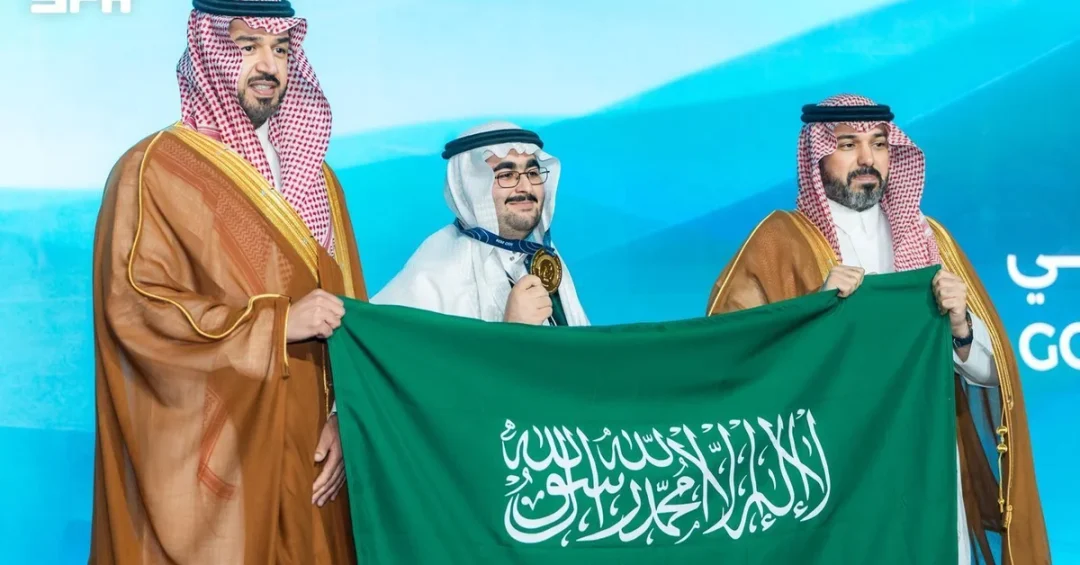
Saudi Arabia secured first place at the third edition of the International Nuclear Science Olympiad (INSO 2026), claiming the title of “Nuclear Science Ambassador” along with four international awards — two gold medals, one silver medal, and one bronze medal — according to an announcement carried by the Saudi Press Agency. The competition, held in Jeddah from August 2 to 9, 2026, marked the first time the event has been hosted in the Middle East, drawing 120 students and scientific specialists representing 19 countries under the slogan “Bright Minds, Promising Future.”
The result places the Kingdom at the summit of a discipline that sits at the intersection of energy, medicine, agriculture, and advanced manufacturing — fields that increasingly shape national competitiveness. For an international audience, the outcome is notable not only for the medals themselves but for what they signal: a deliberate, multi-year national effort to build homegrown scientific talent capable of operating at the highest global levels. Could a single olympiad result really indicate something larger about a country’s scientific trajectory? In this case, Saudi officials and education leaders present it as one visible milestone in a much broader capacity-building program that ties directly to the Kingdom’s long-term economic transformation.
Context and Background
Why does a nuclear science competition matter to a country better known for its energy exports than its science fairs? The answer lies in how Saudi Arabia has restructured its approach to gifted education over the past two decades. The King Abdulaziz and His Companions Foundation for Giftedness and Creativity (Mawhiba), a national institution dedicated to identifying and nurturing exceptional students, has built a pipeline that begins with early screening in schools and extends through intensive training camps, mentorship by university researchers, and international competition placement. Nuclear science, with its demanding foundation in physics, chemistry, and mathematics, represents one of the most rigorous tracks in that pipeline.
The International Nuclear Science Olympiad itself is a relatively young competition. Its third edition in 2026 followed earlier gatherings that established the event as a serious platform for pre-university students to demonstrate mastery of nuclear physics concepts, radiation science, and related applications. Bringing the olympiad to Jeddah for the first time in the Middle East was therefore both a logistical undertaking and a statement of intent. The event was jointly organized by the Ministry of Education, Mawhiba, and the King Abdullah City for Atomic and Renewable Energy (KACARE), and hosted by King Abdulaziz University — a combination of institutions that reflects how Saudi Arabia coordinates education, energy research, and higher learning around shared national priorities.
Official Saudi channels framed the hosting and the results as complementary achievements. Hosting demonstrated organizational capability and regional leadership; winning demonstrated that the Kingdom’s students can compete with the best in the world on their own soil. Together, the two outcomes reinforce a narrative of a country investing in people as its most durable resource — a theme that runs through Vision 2030 and the national strategies attached to it.
Key Details
The numbers behind INSO 2026 are modest in scale but significant in composition. 120 students and scientific specialists from 19 countries participated, making the event a genuinely international gathering rather than a regional one. Saudi Arabia’s delegation did not merely participate; it topped the overall results and earned the “Nuclear Science Ambassador” title, a designation that recognizes the strongest overall performance. The individual medal haul — two gold, one silver, and one bronze — confirms depth across the team rather than reliance on a single standout competitor.
Abdulaziz Al-Karidis, Secretary-General of Mawhiba, affirmed that the achievement reflects the support and care provided by the Saudi leadership to the nation’s sons and daughters, and its commitment to investing in citizens, developing their capabilities, and enabling them to compete globally in priority scientific fields. He noted that these efforts contribute to building a knowledge-based and innovation-driven economy. In his remarks, Al-Karidis also connected the hosting success to the maturity of the national talent ecosystem, describing the result as evidence of the effectiveness of programs for preparing scientific teams and of Saudi Arabia’s organizational capabilities in hosting major international scientific events to the highest standards.
The event ran under the slogan “Bright Minds, Promising Future,” a phrase that captures the dual emphasis on youth and long-term planning. The involvement of KACARE is particularly telling: the institution is central to Saudi Arabia’s ambitions in atomic and renewable energy, and its partnership with an education-focused olympiad signals that the Kingdom views talent development and energy strategy as interlinked rather than separate portfolios. King Abdulaziz University’s role as host underscores the contribution of Saudi higher education to national scientific events.
International and Regional Impact
What does it mean for the Middle East to host a nuclear science olympiad for the first time? Regionally, the event positions Saudi Arabia as a convening power in advanced scientific education, not only in energy or diplomacy. Delegations from 19 countries experienced Jeddah as a host city and Saudi institutions as organizers, an exposure that carries soft-power value beyond the competition hall. For participating students and specialists, the event created networks that will persist as they move into universities and research careers.
Internationally, the result adds Saudi Arabia to the short list of countries whose students consistently perform at the top of rigorous science competitions. Nuclear science is a field with direct relevance to energy policy, medical isotopes, industrial applications, and non-proliferation expertise. A country that can cultivate young talent in this domain is also building the human capital required for safe, peaceful, and productive uses of nuclear technology. That alignment — between competition success and civilian capability — is why the outcome attracted attention from official Saudi media and is likely to be noted by international observers tracking the Kingdom’s scientific development.
Economic and Strategic Significance
Does investing in gifted students translate into economic returns? Saudi officials consistently argue that it does, and the logic is straightforward. A knowledge-based economy requires a critical mass of scientists, engineers, and researchers who can staff laboratories, universities, hospitals, and emerging industries. Nuclear science expertise feeds directly into sectors the Kingdom is expanding: energy generation and research, healthcare through nuclear medicine, agriculture through radiation-based techniques, and industry through materials testing and inspection. Each medal winner represents not just personal achievement but a potential future contributor to these fields.
Strategically, the achievement supports Saudi Arabia’s broader positioning as a country that combines traditional energy strength with advanced technology and human capital. The involvement of KACARE links the olympiad to the national atomic and renewable energy agenda, while Mawhiba’s role connects it to the education and talent pipeline. For international partners and investors assessing the Kingdom’s innovation ecosystem, visible successes in rigorous scientific competitions provide concrete evidence that the talent base is deepening. The “Nuclear Science Ambassador” title, in this reading, is less a ceremonial honor than a marker of institutional capability — the ability to identify, train, and field world-class young scientists.
Vision 2030 Alignment
How does a student olympiad connect to a national transformation plan? Vision 2030 places human capability at the center of Saudi Arabia’s economic diversification, and Mawhiba’s mission — nurturing giftedness and creativity — is one of the clearest expressions of that priority. The INSO 2026 results demonstrate that the pipeline from school screening to international competition is functioning, and that Saudi students can excel in fields deemed strategically important. Al-Karidis’s statement that these efforts contribute to a knowledge-based and innovation-driven economy directly echoes the Vision’s goals of building a diversified, talent-powered future.
The Kingdom’s success in hosting the event reinforces a second Vision 2030 pillar: global engagement and organizational excellence. Hosting 19 international delegations in Jeddah required coordination across the Ministry of Education, Mawhiba, KACARE, and King Abdulaziz University — a whole-of-institutions approach that mirrors how Saudi Arabia executes major initiatives. As the Kingdom continues to expand its scientific, educational, and energy ambitions, achievements like INSO 2026 serve as both proof of progress and a foundation for the next generation. The “Bright Minds, Promising Future” slogan, in the end, reads less like a competition motto and more like a statement of national intent: invest in young people today, and they will build the diversified, knowledge-driven Saudi Arabia of tomorrow.
20 Questions
Q1. What is the International Nuclear Science Olympiad?
A1. The International Nuclear Science Olympiad is a global competition for pre-university students covering nuclear physics, radiation science, and related applications. Its third edition, INSO 2026, was hosted in Jeddah, Saudi Arabia, from August 2 to 9, 2026.
Q2. How did Saudi Arabia perform at INSO 2026?
A2. Saudi Arabia topped the results, securing first place and the title of “Nuclear Science Ambassador.” The team also won four international awards: two gold medals, one silver medal, and one bronze medal, according to official Saudi sources.
Q3. Where and when was INSO 2026 held?
A3. The competition took place in Jeddah, Saudi Arabia, from August 2 to 9, 2026. It was hosted by King Abdulaziz University under the slogan “Bright Minds, Promising Future.”
Q4. Why is hosting INSO 2026 significant for the Middle East?
A4. It was the first time the International Nuclear Science Olympiad was held in the Middle East. The event brought 120 students and scientific specialists from 19 countries to Jeddah, highlighting Saudi Arabia’s capacity to host major international scientific gatherings.
Q5. Which organizations organized INSO 2026?
A5. The event was jointly organized by the Ministry of Education, the King Abdulaziz and His Companions Foundation for Giftedness and Creativity (Mawhiba), and the King Abdullah City for Atomic and Renewable Energy (KACARE), and hosted by King Abdulaziz University.
Q6. Who is Abdulaziz Al-Karidis?
A6. Abdulaziz Al-Karidis is the Secretary-General of the King Abdulaziz and His Companions Foundation for Giftedness and Creativity (Mawhiba). He commented on the achievement, linking it to Saudi leadership’s support for investing in citizens and developing their capabilities.
Q7. How many countries participated in INSO 2026?
A7. Nineteen countries participated in INSO 2026. In total, 120 students and scientific specialists took part in the competition hosted in Jeddah, making it a genuinely international event.
Q8. What is the “Nuclear Science Ambassador” title?
A8. The “Nuclear Science Ambassador” title is awarded to the top-performing overall team at the International Nuclear Science Olympiad. Saudi Arabia earned this designation at INSO 2026 alongside its four individual medals.
Q9. What is Mawhiba’s role in Saudi education?
A9. Mawhiba, the King Abdulaziz and His Companions Foundation for Giftedness and Creativity, identifies and nurtures gifted Saudi students. It runs training programs, mentorship, and competition preparation that feed into international scientific events like INSO.
Q10. What is KACARE’s connection to the olympiad?
A10. KACARE, the King Abdullah City for Atomic and Renewable Energy, co-organized INSO 2026. Its involvement links the competition to Saudi Arabia’s broader agenda in atomic and renewable energy research and development.
Q11. How does this achievement support Vision 2030?
A11. Vision 2030 emphasizes building a knowledge-based economy through human capital development. The INSO 2026 results demonstrate that Saudi Arabia’s talent pipeline can produce world-class young scientists in strategically important fields such as nuclear science.
Q12. What fields does nuclear science support economically?
A12. Nuclear science supports energy generation and research, nuclear medicine in healthcare, radiation techniques in agriculture, and materials testing in industry. Expertise in these areas contributes to diversified, innovation-driven economic growth.
Q13. How many medals did Saudi students win individually?
A13. Saudi students won four individual medals at INSO 2026: two gold medals, one silver medal, and one bronze medal. This spread of awards indicates depth across the team rather than reliance on one competitor.
Q14. What was the slogan of INSO 2026?
A14. The slogan was “Bright Minds, Promising Future.” It reflects the event’s focus on young talent and long-term scientific development, aligning with Saudi Arabia’s emphasis on investing in the next generation.
Q15. Which university hosted the competition?
A15. King Abdulaziz University hosted INSO 2026 in Jeddah. Its role underscores the contribution of Saudi higher education institutions to hosting and supporting major international scientific events.
Q16. Why is nuclear science considered a priority field?
A16. Nuclear science underpins energy, medicine, agriculture, and industrial applications. Countries that cultivate expertise in this field build capabilities relevant to peaceful nuclear technology, research, and long-term economic diversification.
Q17. What did Al-Karidis say about the achievement?
A17. Al-Karidis said the achievement reflects Saudi leadership’s support for the nation’s sons and daughters and its commitment to investing in citizens. He noted these efforts contribute to building a knowledge-based and innovation-driven economy.
Q18. How does hosting international events benefit Saudi Arabia?
A18. Hosting events like INSO 2026 demonstrates organizational capability, exposes Saudi institutions to international networks, and reinforces the Kingdom’s position as a convening power in science and education across the region.
Q19. What does the result mean for Saudi students?
A19. The result validates the effectiveness of national programs that prepare scientific teams. It also signals to young Saudis that excellence in advanced science is recognized, supported, and can lead to global opportunities.
Q20. What comes next after INSO 2026?
A20. Saudi Arabia is expected to continue investing in gifted education, scientific team preparation, and international competition participation. These efforts support the broader goal of building a diversified, knowledge-driven economy under Vision 2030.
Reader Feedback
We value your thoughts. Please share your feedback on this article.
Your feedback helps us improve our coverage.
Related articles
 Perseid Meteor Shower to Light Up Saudi Skies
 Mawhiba Chief Hails Saudi Arabia’s INSO 2026 Hosting Success
 Milky Way Belt Adorns August Skies Across Arab World
 Saudi AI Team Wins Three Medals at IOAI 2026 in Astana
 Saudi AI Team Wins Three Awards at IOAI 2026
 Pleiades-Moon Conjunction Marks End of Peak Summer in Saudi Arabia