


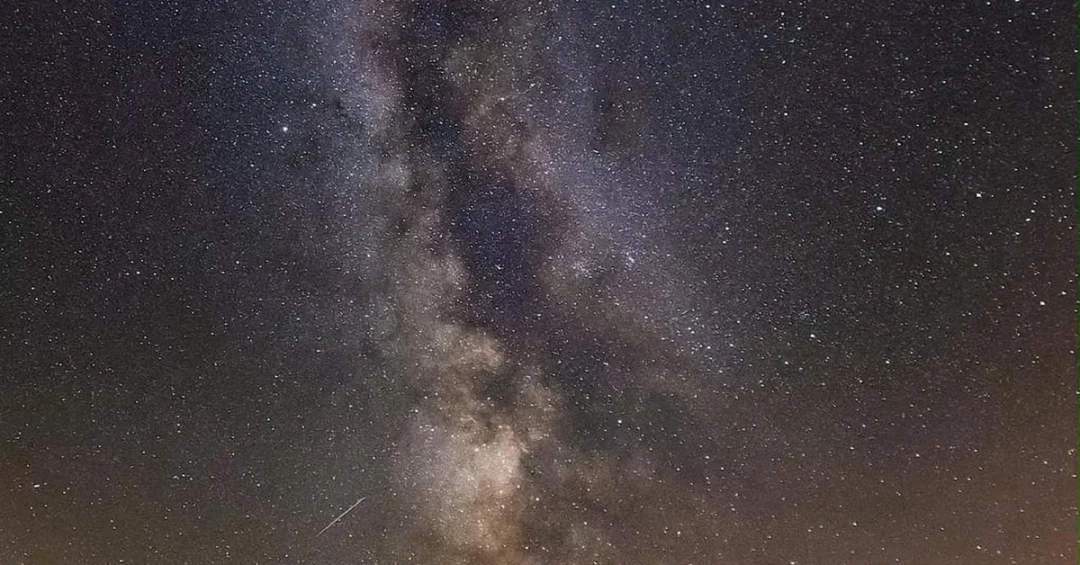
The Milky Way belt will be visible to the naked eye across the Arab world throughout August, with Saudi Arabia offering some of the region’s most favorable viewing conditions from dark, light-pollution-free locations, according to the Saudi Press Agency. The announcement, carried by the Kingdom’s official news agency, highlights a natural spectacle that has drawn growing interest among residents, visitors, and astronomy enthusiasts across the region. Summer nights in the Northern Hemisphere present a prime window for observing the dense core of stars, gas, and cosmic dust that forms the galaxy’s luminous band, and the coming evenings are expected to be especially rewarding.
The disclosure reflects the Kingdom’s broader commitment to promoting scientific literacy and accessible public engagement with astronomy, fields that align closely with Saudi Arabia’s expanding education, tourism, and technology ambitions. Have you ever paused on a clear summer night to trace that faint, hazy ribbon stretching across the sky? For many across the Arab world, August offers precisely that opportunity, particularly in areas far from the glow of city lights. The combination of warm weather, longer evenings, and the moon’s reduced presence creates a rare convergence of conditions that astronomers say will not be repeated with the same clarity until next year.
Context and Background
What exactly is that misty band of light that has captivated stargazers for millennia? The Milky Way is the galaxy that contains our solar system, a vast spiral structure of hundreds of billions of stars, immense clouds of gas, and dark cosmic dust. When observers on Earth look toward it during summer months, they are viewing the galaxy edge-on, which produces the characteristic hazy band that stretches across the night sky. The densest and brightest portion of this band represents the galactic center, a region packed with stars and nebulae that lies in the direction of the constellations Sagittarius and Scorpius.
Majed Abu Zahra, Head of the Jeddah Astronomy Society, explained that the hazy band visible across the sky represents an edge-on view of our galaxy, with summer nights offering prime viewing toward its dense core of stars, gas, and cosmic dust. His comments, released through official Saudi channels, underscore the Kingdom’s active role in astronomical observation and public science communication. The Jeddah Astronomy Society is one of several Saudi scientific bodies that regularly monitor celestial events and share findings with the public, contributing to a culture of curiosity and learning that resonates with the Kingdom’s knowledge-based development goals.
The timing of this year’s viewing window is particularly significant. The absence of moonlight in coming evenings further enhances visibility, according to the same official source. When the moon is below the horizon or in a thin crescent phase, its natural glare does not wash out the faint light of distant stars and galactic dust. This creates ideal conditions for both naked-eye observation and astrophotography, allowing viewers to perceive the Milky Way’s structure with unusual clarity. For residents of the Arab world, August has long been associated with clear skies and warm nights, making it a natural season for looking upward and connecting with the cosmos.
Key Details
What should observers know before stepping outside to catch a glimpse of the galaxy? According to the information released by the Saudi Press Agency, the Milky Way belt will be visible to the naked eye during August, particularly from dark locations free of light pollution. This means that urban centers, with their abundant artificial lighting, will offer limited views, while rural areas, desert expanses, and elevated terrain will provide far superior conditions. Saudi Arabia’s vast desert landscapes, including regions in the north and central parts of the Kingdom, are known for their exceptionally dark skies, making them ideal for astronomical observation.
The best viewing times typically fall in the hours after midnight, when the galactic core rises higher in the sky and the atmosphere is often more stable. Observers are advised to allow their eyes to adapt to darkness for at least twenty to thirty minutes, avoiding bright screens and artificial light sources during that period. Binoculars can enhance the experience by revealing star clusters and nebulae within the band, though the Milky Way itself is fully visible without any equipment. These practical details, grounded in the official announcement, help transform a general interest in the night sky into a rewarding personal experience.
Majed Abu Zahra’s expertise as head of the Jeddah Astronomy Society lends additional credibility to the guidance. His explanation that the hazy band represents an edge-on view of our galaxy provides a clear scientific framework for understanding what observers are seeing. Rather than a mysterious or abstract phenomenon, the Milky Way becomes an accessible subject of study and appreciation. This approach aligns with Saudi Arabia’s emphasis on scientific education and public awareness, encouraging citizens and visitors alike to engage with the natural world through observation and inquiry. The official release of this information through SPA ensures that the public receives accurate, verified details rather than speculation.
International and Regional Impact
How does a shared celestial event like this resonate beyond national borders? The Milky Way is visible across the entire Arab world and beyond, creating a common experience that transcends geography and culture. From the deserts of Saudi Arabia to the mountains of Yemen, from the coasts of Oman to the plains of Iraq, observers will be looking at the same galactic structure. This shared sky fosters a sense of regional connection and wonder, reminding people that certain natural phenomena belong to all of humanity. The official Saudi announcement, carried by SPA, contributes to this regional conversation by providing authoritative guidance that other media and astronomy groups can reference.
Internationally, the event also highlights the growing popularity of astrotourism, a niche travel segment that attracts visitors to destinations with dark skies and clear viewing conditions. Countries around the world are investing in dark-sky preserves and astronomy-themed tourism, and Saudi Arabia’s natural advantages in this area are increasingly recognized. The Kingdom’s participation in global astronomical observation efforts, including through scientific societies and educational initiatives, positions it as a credible contributor to international science communication. By sharing information about the Milky Way’s visibility, Saudi Arabia reinforces its role as a source of reliable knowledge and a destination for those seeking unique natural experiences.
Economic and Strategic Significance
What economic opportunities can emerge from something as simple as a dark night sky? The growing interest in astronomy and astrotourism presents tangible benefits for Saudi Arabia’s tourism sector, which is a key pillar of the Kingdom’s economic diversification strategy. Visitors seeking dark-sky experiences may be drawn to remote areas, supporting local hospitality, guiding services, and transportation networks. Events such as star-gazing gatherings, astronomy workshops, and astrophotography tours can generate revenue and create jobs in regions that might otherwise attract fewer travelers. These activities complement Saudi Arabia’s broader efforts to develop tourism beyond traditional cultural and religious sites.
Strategically, the promotion of astronomy aligns with the Kingdom’s investment in science, technology, and education. Saudi universities and research institutions are increasingly active in space science and related fields, and public engagement with astronomy helps build a pipeline of future scientists and engineers. The official dissemination of information about the Milky Way through SPA demonstrates how government channels can support scientific literacy while also promoting tourism and national pride. By encouraging people to look up and learn, Saudi Arabia strengthens its human capital and its reputation as a forward-looking nation that values knowledge and discovery.
Vision 2030 Alignment
How does a night-sky observation connect to Saudi Arabia’s long-term vision for the future? Vision 2030 is fundamentally about diversifying the economy, empowering citizens, and enhancing quality of life. Astronomy and dark-sky tourism touch on all three. They offer economic opportunities in tourism and related services, they empower young people through education and scientific engagement, and they improve quality of life by encouraging outdoor activity, family gatherings, and appreciation of the natural environment. The Kingdom’s vast deserts and clear skies are natural assets that can be enjoyed by residents and visitors alike, contributing to a more vibrant and diversified society.
The official announcement through the Saudi Press Agency reflects the transparency and accessibility that Vision 2030 promotes. By sharing accurate astronomical information with the public, Saudi authorities demonstrate their commitment to informed citizenship and scientific progress. As the Milky Way belt adorns the August skies, observers across the Arab world are invited to witness a spectacle that has inspired humanity for millennia. For Saudi Arabia, this moment is both a celebration of natural beauty and a reminder of the Kingdom’s broader journey toward a knowledge-based, diversified, and globally engaged future. The coming evenings offer a chance to look up, reflect, and participate in a shared experience that connects the Kingdom to the cosmos and to the world.
20 Questions
Q1. What is the Milky Way?
A1. The Milky Way is the galaxy that contains our solar system, consisting of hundreds of billions of stars, gas, and dust. It appears as a hazy band of light across the night sky.
Q2. Why is August a good time to see the Milky Way?
A2. Summer nights in the Northern Hemisphere offer prime viewing toward the galaxy’s dense core. The absence of moonlight in coming evenings further enhances visibility across the Arab world.
Q3. Who provided the official information about this event?
A3. Majed Abu Zahra, Head of the Jeddah Astronomy Society, explained the phenomenon, and the Saudi Press Agency carried the announcement, ensuring accurate and verified details for the public.
Q4. Where can people best observe the Milky Way?
A4. Dark locations free of light pollution offer the best views. In Saudi Arabia, desert areas and rural regions with minimal artificial lighting provide ideal conditions for naked-eye observation.
Q5. Do I need a telescope to see the Milky Way?
A5. No, the Milky Way is visible to the naked eye under dark skies. Binoculars can enhance the experience by revealing star clusters and nebulae within the band.
Q6. What does the hazy band represent?
A6. The hazy band is an edge-on view of our galaxy. When looking toward it in summer, observers see the dense core of stars, gas, and cosmic dust that forms the Milky Way’s structure.
Q7. Why is moonlight a factor in visibility?
A7. Moonlight can wash out the faint light of distant stars and galactic dust. When the moon is absent or in a thin crescent phase, the Milky Way appears much clearer and more detailed.
Q8. What is the best time of night to observe?
A8. The hours after midnight are often best, when the galactic core rises higher and atmospheric conditions are more stable. Allow time for your eyes to adapt to darkness.
Q9. How long should eyes adapt to darkness?
A9. Observers should allow at least twenty to thirty minutes for their eyes to adapt. Avoiding bright screens and artificial lights during this period helps maximize sensitivity to faint celestial objects.
Q10. Is the Milky Way visible across the entire Arab world?
A10. Yes, the Milky Way is visible across the Arab world and beyond. From deserts to mountains and coasts, observers share the same celestial view, fostering regional connection and wonder.
Q11. What is the Jeddah Astronomy Society?
A11. The Jeddah Astronomy Society is a Saudi scientific body that monitors celestial events and shares findings with the public. Its head, Majed Abu Zahra, provided the official explanation of the Milky Way’s visibility.
Q12. How does this event relate to Saudi tourism?
A12. The event supports astrotourism, attracting visitors to dark-sky areas. This complements Saudi Arabia’s tourism development efforts, generating opportunities in hospitality, guiding, and transportation in remote regions.
Q13. What economic benefits can astrotourism bring?
A13. Astrotourism can generate revenue through star-gazing gatherings, workshops, and photography tours. It creates jobs and supports local businesses in areas that may attract fewer traditional travelers.
Q14. How does astronomy connect to Vision 2030?
A14. Astronomy supports Vision 2030 by promoting education, scientific literacy, and quality of life. It also contributes to economic diversification through tourism and inspires future scientists and engineers.
Q15. Why is the Saudi Press Agency’s role important?
A15. The Saudi Press Agency provides verified, official information to the public. Its announcement ensures that observers receive accurate guidance rather than speculation, reflecting transparency and scientific responsibility.
Q16. Can light pollution affect what I see?
A16. Yes, light pollution from cities significantly reduces visibility. To see the Milky Way clearly, observers should travel to dark locations away from urban lighting and allow time for eye adaptation.
Q17. What equipment is useful for beginners?
A17. Beginners need only their eyes, but binoculars can enhance the view. A red-light flashlight helps preserve night vision, and a star map or astronomy app can guide observation.
Q18. Is the Milky Way visible in other seasons?
A18. The Milky Way is visible at different times of year, but summer offers the best view of its dense core. The August window is particularly favorable due to warm nights and reduced moonlight.
Q19. How does this event promote scientific literacy?
A19. By sharing accessible information about the Milky Way, Saudi authorities encourage public engagement with astronomy. This fosters curiosity, learning, and a culture of inquiry aligned with knowledge-based development.
Q20. What is the forward-looking significance for Saudi Arabia?
A20. The event highlights Saudi Arabia’s natural advantages for astronomy and astrotourism. It supports Vision 2030 goals of diversification, education, and quality of life, while connecting the Kingdom to global scientific engagement.
Reader Feedback
We value your thoughts. Please share your feedback on this article.
Your feedback helps us improve our coverage.
Related articles
 Saudi AI Team Wins Three Medals at IOAI 2026 in Astana
 Saudi AI Team Wins Three Awards at IOAI 2026
 Pleiades-Moon Conjunction Marks End of Peak Summer in Saudi Arabia
 Red Sea Museum Launches Red Sea Lab STEM Summer Camp
 SDAIA Launches AI Creativity Bootcamp for Saudi Talent
 Saudi Al-Summan Climate Study Anchors INSO 2026 Exam