


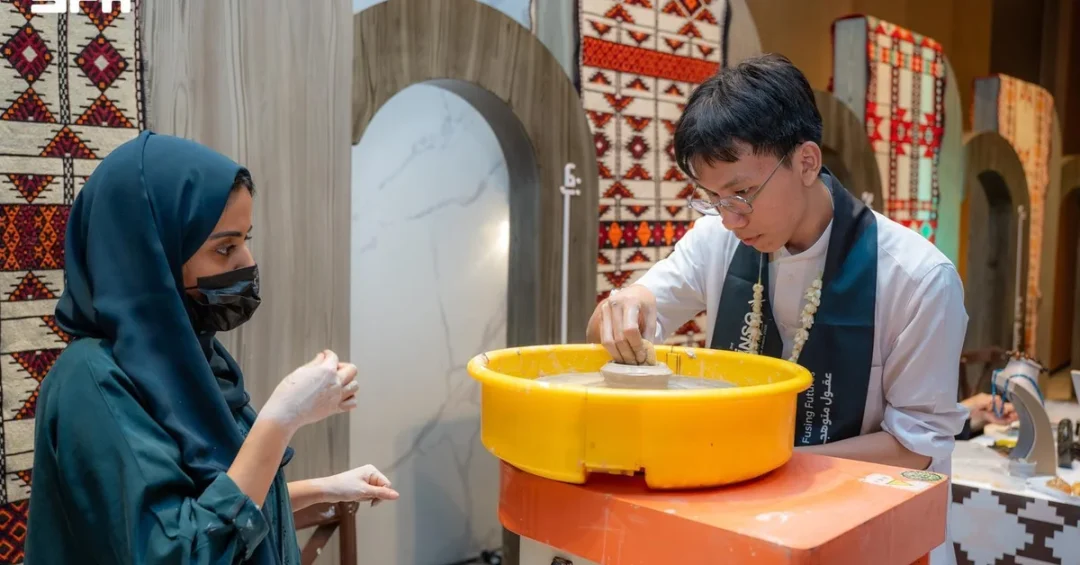
The King Abdulaziz and His Companions Foundation for Giftedness and Creativity (Mawhiba) hosted a vibrant cultural evening in Jeddah on August 6, 2026, bringing together 120 students and specialists from 19 countries, along with delegation leaders and supervisors, following the completion of the practical and theoretical examinations of the third edition of the International Nuclear Science Olympiad (INSO 2026). The event, held as part of the Olympiad’s cultural program, offered participants a chance to celebrate, connect, and experience Saudi culture in a welcoming atmosphere. It marked a distinctive blend of scientific competition and cultural exchange, underscoring the Kingdom’s commitment to fostering global collaboration and showcasing its rich heritage to the world.
The cultural evening was one of the flagship events of INSO 2026, which is being hosted by the Kingdom of Saudi Arabia in Jeddah from August 2 to 9. The Olympiad is co-organized by the Ministry of Education, Mawhiba, and King Abdullah City for Atomic and Renewable Energy (K.A.CARE), and hosted by King Abdulaziz University. This year’s edition has drawn talented young minds from across the globe, all eager to demonstrate their prowess in nuclear science. But beyond the rigorous academic challenges, the cultural evening highlighted Saudi Arabia’s dedication to creating a holistic experience that celebrates both intellectual achievement and cultural richness. How often do international academic competitions become a bridge between nations, fostering understanding and friendship? This event exemplifies that noble aspiration.
Context and Background
What does it take to host an international Olympiad that combines cutting-edge science with deep cultural engagement? The International Nuclear Science Olympiad is a relatively new but rapidly growing platform that aims to inspire high school students to pursue studies and careers in nuclear science and technology. The third edition, INSO 2026, is particularly significant as it is the first time the event is being held in the Middle East, with Saudi Arabia taking the lead in organizing it. The Olympiad is a collaborative effort involving the Ministry of Education, Mawhiba, and K.A.CARE, with King Abdulaziz University providing the venue and logistical support. This partnership reflects Saudi Arabia’s strategic focus on developing human capital in advanced fields, aligning with the goals of Vision 2030 to diversify the economy and promote innovation.
The cultural evening, held after the completion of the practical and theoretical examinations, served as a well-deserved break for participants who had spent days immersed in complex scientific problems. It was designed to offer a window into Saudi Arabia’s heritage, allowing visitors to experience the Kingdom’s traditions firsthand. The event took place in Jeddah, a city known for its historical role as a gateway to the Red Sea and its reputation for hospitality. By integrating cultural activities into the Olympiad’s schedule, the organizers aimed to create lasting memories and foster a sense of community among the young scientists. Isn’t it remarkable how a shared appreciation for culture can unite people from diverse backgrounds? The evening embodied that spirit, turning a scientific competition into a celebration of global unity.
Mawhiba, as the foundation dedicated to nurturing giftedness and creativity, has a long history of supporting Saudi students in international competitions. Its involvement in INSO 2026 underscores its mission to identify and empower talented individuals, not only in Saudi Arabia but also globally. The foundation’s efforts are part of a broader national strategy to enhance the Kingdom’s standing in science and technology, as outlined in Vision 2030. The cultural evening was thus more than just a social gathering; it was a statement of Saudi Arabia’s openness to the world and its commitment to building bridges through education and culture.
Key Details
What were the highlights of this cultural evening that left such a lasting impression on participants? The event commenced with a traditional Saudi Ardah performance, a lively display of drumming and sword dancing that reflects the Kingdom’s rich heritage and renowned hospitality. Participants were immediately immersed in a festive atmosphere, setting the tone for an evening of discovery. Students and international delegation leaders then explored a variety of cultural, heritage, and entertainment experiences. These included falconry displays, where the ancient art of training birds of prey was showcased, and authentic Arabian seating areas that offered a glimpse into traditional social gatherings. The evening also featured traditional artisans and handicrafts, allowing participants to witness the skill and craftsmanship that have been passed down through generations.
Heritage games provided an interactive element, engaging the young scientists in playful activities that are part of Saudi Arabia’s cultural tapestry. Traditional costume experiences gave attendees the opportunity to try on Saudi attire, adding a hands-on dimension to the cultural exchange. Heritage-themed gathering spaces were set up to encourage conversation and connection, while folk performances further highlighted the depth and vibrancy of Saudi Arabia’s cultural heritage. These elements were carefully curated to present a comprehensive and engaging introduction to Saudi culture, ensuring that participants from 19 countries could appreciate the diversity and warmth of the Kingdom. How can such experiences shape the perceptions of international visitors? They create lasting positive impressions that go beyond the laboratory and the classroom, fostering goodwill and mutual respect.
The cultural evening was part of a wider cultural program organized for INSO 2026, which included excursions and other activities designed to showcase Saudi Arabia’s landmarks and traditions. The program reflects the organizers’ understanding that academic excellence thrives in an environment that also nurtures cultural awareness and interpersonal connections. By providing these opportunities, Mawhiba and its partners are not only promoting nuclear science but also positioning Saudi Arabia as a destination for international events that combine intellectual rigor with cultural enrichment. The success of the evening was evident in the smiles and engagement of the participants, who left with a deeper understanding of the Kingdom and its people.
International and Regional Impact
How does an event like this influence Saudi Arabia’s standing on the global stage? The presence of 120 students and specialists from 19 countries at INSO 2026, and their participation in the cultural evening, sends a powerful message about the Kingdom’s ability to host world-class events. It demonstrates Saudi Arabia’s growing role as a hub for international collaboration in science and education, which is a key pillar of Vision 2030. The cultural exchange facilitated by the evening helps to build people-to-people ties that can lead to future partnerships and cooperation. For the young participants, many of whom may be visiting Saudi Arabia for the first time, the experience offers an authentic and positive view of the country, countering stereotypes and fostering a more nuanced understanding.
Regionally, the event reinforces Saudi Arabia’s leadership in promoting STEM education and innovation across the Middle East. By hosting the first INSO in the region, the Kingdom is setting a precedent for other countries to follow, encouraging a culture of scientific inquiry and excellence. The collaboration between Mawhiba, the Ministry of Education, and K.A.CARE also highlights the importance of multi-sector partnerships in achieving national goals. The cultural evening, with its emphasis on heritage, adds a unique dimension by showcasing the soft power of Saudi culture. In a world where international relations are increasingly shaped by cultural diplomacy, such initiatives are invaluable. Isn’t it through these shared experiences that nations build trust and understanding? Saudi Arabia is clearly leveraging its cultural assets to strengthen its global connections.
Economic and Strategic Significance
What are the economic and strategic implications of hosting events like INSO 2026? Beyond the immediate benefits of international exposure and knowledge exchange, such events contribute to the development of a knowledge-based economy. By investing in gifted education and hosting high-profile competitions, Saudi Arabia is nurturing a pipeline of talent that will drive innovation in nuclear science and related fields. This is crucial for the Kingdom’s long-term economic diversification, as outlined in Vision 2030. The nuclear sector, in particular, is poised for growth as Saudi Arabia explores peaceful applications of nuclear energy, and events like INSO help to build the necessary human capital and international partnerships.
Strategically, the cultural evening and the Olympiad as a whole enhance Saudi Arabia’s soft power and diplomatic outreach. They position the Kingdom as a responsible global citizen committed to education, science, and cultural exchange. The positive experiences of the participants will likely be shared widely, amplifying Saudi Arabia’s message of progress and openness. Moreover, the event strengthens ties with the 19 participating countries, which can lead to further collaboration in trade, investment, and research. The economic ripple effects, from tourism spending to future joint ventures, are significant. How can we measure the value of such diplomatic and economic gains? They are often intangible but profoundly impactful, laying the groundwork for a more interconnected and prosperous future.
Vision 2030 Alignment
How does the cultural evening at INSO 2026 align with the goals of Saudi Vision 2030? At its core, Vision 2030 seeks to transform Saudi Arabia into a diversified, innovative, and globally engaged nation. The Olympiad and its cultural program directly support several key objectives: enhancing education and training, fostering a culture of excellence, and promoting international cooperation. By hosting young scientists from around the world, Saudi Arabia is investing in the leaders of tomorrow and signaling its commitment to advancing science and technology. The cultural component further aligns with the vision’s emphasis on preserving and celebrating Saudi heritage while sharing it with the world. This dual focus on modernity and tradition is a hallmark of the Kingdom’s development strategy.
In conclusion, the cultural evening organized by Mawhiba for the participants of INSO 2026 was a resounding success, blending the excitement of scientific discovery with the warmth of Saudi hospitality. It showcased the Kingdom’s ability to host international events that are both intellectually stimulating and culturally enriching. As Saudi Arabia continues to pursue its Vision 2030 ambitions, such initiatives will play a vital role in building bridges with the global community and nurturing the next generation of innovators. The event not only celebrated the achievements of the young participants but also highlighted the enduring values of generosity, respect, and openness that define Saudi culture. What better way to inspire future leaders than by offering them a glimpse of a nation that is both proud of its past and confident in its future?
20 Questions
Q1. What is the International Nuclear Science Olympiad (INSO)?
A1. INSO is a global competition for high school students that tests their knowledge and skills in nuclear science and technology. The third edition, INSO 2026, is hosted by Saudi Arabia in Jeddah from August 2 to 9.
Q2. Who organized the cultural evening in Jeddah?
A2. The cultural evening was organized by the King Abdulaziz and His Companions Foundation for Giftedness and Creativity (Mawhiba), as part of the cultural program of INSO 2026.
Q3. How many students and specialists attended the cultural evening?
A3. The event brought together 120 students and specialists from 19 countries, along with delegation leaders and supervisors, following the completion of the Olympiad’s examinations.
Q4. What was the purpose of the cultural evening?
A4. It provided participants with an opportunity to celebrate, connect, and experience Saudi culture in a welcoming atmosphere, offering a break after the intense academic competition.
Q5. When and where did the cultural evening take place?
A5. The cultural evening was held on August 6, 2026, in Jeddah, Saudi Arabia, during the INSO 2026 events hosted by King Abdulaziz University.
Q6. Who are the co-organizers of INSO 2026?
A6. The Olympiad is co-organized by the Ministry of Education, Mawhiba, and King Abdullah City for Atomic and Renewable Energy (K.A.CARE), and hosted by King Abdulaziz University.
Q7. What traditional performance welcomed the participants?
A7. Participants were welcomed with a Saudi Ardah performance, a festive traditional dance involving drumming and sword dancing that reflects the Kingdom’s rich heritage and hospitality.
Q8. What cultural activities were available at the evening?
A8. Activities included falconry displays, authentic Arabian seating areas, traditional artisans and handicrafts, heritage games, traditional costume experiences, heritage-themed gathering spaces, and folk performances.
Q9. How does this event reflect Saudi Arabia’s Vision 2030?
A9. It aligns with Vision 2030 by promoting education, innovation, and international cooperation, while also showcasing Saudi culture and heritage to a global audience.
Q10. What is Mawhiba’s role in the Olympiad?
A10. Mawhiba is a co-organizer and works to nurture giftedness and creativity. It supports the Olympiad’s cultural program to enrich participants’ experience and highlight Saudi heritage.
Q11. How many countries participated in INSO 2026?
A11. Students and specialists from 19 countries took part in the Olympiad and attended the cultural evening, making it a truly international gathering.
Q12. What is the significance of hosting INSO in Saudi Arabia?
A12. It marks the first time the Olympiad is held in the Middle East, demonstrating Saudi Arabia’s growing role in global science education and its capacity to host major international events.
Q13. What did participants learn about Saudi culture?
A13. They experienced traditional crafts, games, costumes, and performances, gaining insight into the richness and diversity of Saudi cultural identity and the Kingdom’s renowned hospitality.
Q14. How does the cultural evening benefit the participants?
A14. It offers a chance to relax, network, and build friendships across cultures, enhancing their overall experience and fostering mutual understanding beyond the competition.
Q15. What is the role of King Abdulaziz University in the event?
A15. The university is hosting the Olympiad, providing the venue and logistical support for both the academic examinations and the cultural activities.
Q16. How does the event promote nuclear science education?
A16. By bringing together talented students and experts, INSO inspires participants to pursue careers in nuclear science and highlights the importance of the field for sustainable development.
Q17. What kind of handicrafts were showcased?
A17. Traditional artisans displayed a variety of Saudi handicrafts, such as weaving, pottery, and metalwork, reflecting the Kingdom’s artistic heritage passed down through generations.
Q18. What are heritage games and how did they engage participants?
A18. Heritage games are traditional Saudi activities that offer fun and cultural insight. Participants played these games, experiencing a playful aspect of Saudi traditions.
Q19. How does this event support Saudi Arabia’s soft power?
A19. By presenting a positive, welcoming image of the Kingdom, the event enhances Saudi Arabia’s international reputation and builds goodwill among future leaders from around the world.
Q20. What is the expected outcome of the cultural evening?
A20. It aims to create lasting memories, strengthen international ties, and showcase Saudi Arabia’s cultural richness, contributing to the success of INSO 2026 and Vision 2030 goals.
Reader Feedback
We value your thoughts. Please share your feedback on this article.
Your feedback helps us improve our coverage.
Related articles
 Second Group of Umrah Program Guests Arrives in Madinah
 KSGAAL, ICESCO Launch Translated Arabic Education Reports
 SDAIA Advances Data Protection Licensing Standards
 KSrelief Fisheries Support Restores Livelihoods in Al-Mahra
 Arab Parliament Condemns Israeli Crimes in Gaza, West Bank
 KSrelief to Rehabilitate 11 Health Facilities in Yemen