


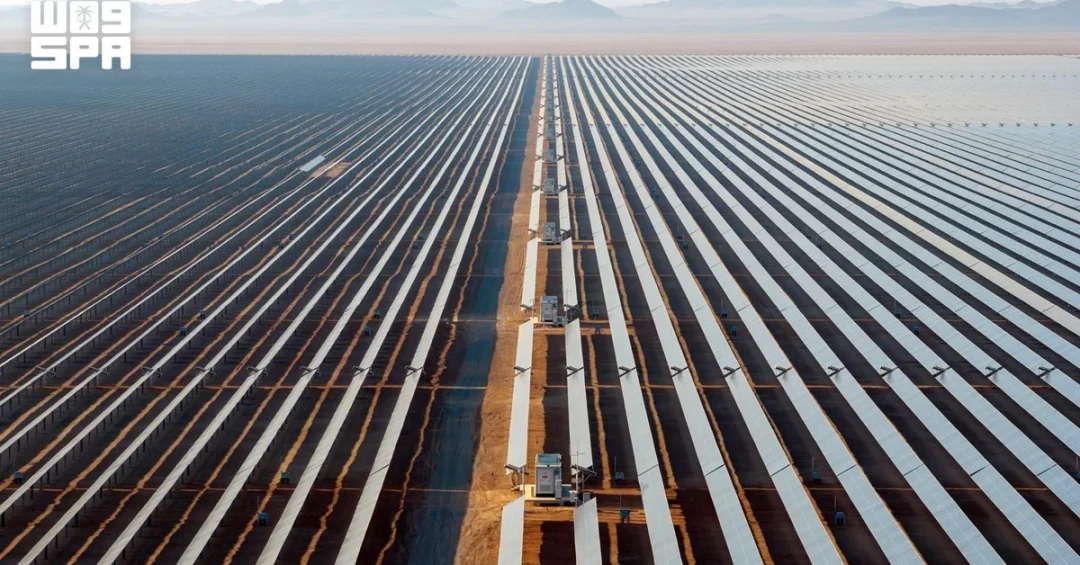
Al Henakiyah (1) Solar PV Plant, a 1,100-megawatt renewable energy facility developed under Saudi Arabia’s National Renewable Energy Program, is now generating enough electricity to power approximately 190,000 homes annually, according to the Saudi Press Agency. The plant, located south of Al Henakiyah Governorate in the Madinah Region, began commercial operations in summer 2025 and represents a significant milestone in the Kingdom’s accelerating transition toward clean energy. The project is supervised and implemented by the Ministry of Energy, underscoring the government’s direct role in advancing the nation’s renewable energy infrastructure. Could this single facility signal a broader transformation in how the Kingdom powers its future?
The Al Henakiyah (1) plant delivers electricity at a tariff of 1.6842 cents per kilowatt-hour, a figure that demonstrates the growing competitiveness of renewable energy projects in Saudi Arabia and their ability to achieve globally competitive generation costs. This pricing benchmark places the Kingdom alongside the world’s most cost-efficient solar markets, reinforcing its position as a leader in utility-scale renewable deployment. The project forms part of a wider national effort to expand renewable energy sources, integrate energy storage systems, support the Liquid Fuel Displacement Program, and reduce emissions across the power sector. As the Kingdom continues to scale its clean energy capacity, the Al Henakiyah (1) plant stands as a concrete example of how strategic planning and investment are delivering measurable results.
Context and Background
How did Saudi Arabia arrive at a point where a single solar plant can power nearly 200,000 homes? The answer lies in the National Renewable Energy Program, a flagship initiative overseen by the Ministry of Energy that has systematically built the regulatory, financial, and technical foundations for large-scale renewable energy development. Al Henakiyah (1) is one of the projects included in the fourth phase of this program, a phase that has seen the Kingdom award and commission some of the largest solar photovoltaic installations in the world. The program is designed to diversify the national energy mix, reduce reliance on liquid fuels for power generation, and position Saudi Arabia as a global hub for clean energy innovation.
The plant’s location in the Madinah Region is strategically significant. Situated south of Al Henakiyah Governorate, the facility benefits from some of the highest solar irradiance levels in the Kingdom, ensuring optimal generation performance throughout the year. The region has become a focal point for renewable energy investment, with transmission infrastructure and grid connectivity improving to accommodate new capacity. The commencement of operations in summer 2025 followed a rigorous development and construction timeline, reflecting the Ministry of Energy’s capacity to execute complex infrastructure projects at scale. This execution capability is central to the Kingdom’s ability to meet its ambitious 2030 targets.
Globally, the Al Henakiyah (1) project arrives at a moment when energy security and climate action are converging as top priorities for governments and investors alike. Saudi Arabia’s approach, which combines national program management with private-sector participation and competitive tendering, has attracted international attention as a model for rapid renewable energy deployment. The Kingdom’s ability to deliver a 1,100-megawatt plant at a tariff below two cents per kilowatt-hour signals to global markets that Saudi Arabia is not only participating in the energy transition but helping to set its pace.
Key Details
What makes the Al Henakiyah (1) plant technically and commercially noteworthy? At 1,100 megawatts of installed capacity, the facility is among the largest single-site solar photovoltaic plants in the Kingdom. Its output is sufficient to supply electricity to approximately 190,000 homes annually, a figure that translates into meaningful reductions in carbon emissions and liquid fuel consumption. The plant’s electricity is purchased at a tariff of 1.6842 cents per kilowatt-hour, a rate that reflects the maturity of Saudi Arabia’s renewable energy procurement framework and the confidence of investors in the Kingdom’s long-term energy strategy.
The project is a direct contributor to the Liquid Fuel Displacement Program, a national initiative aimed at replacing diesel and other liquid fuels in power generation with cleaner alternatives. By displacing liquid fuels, the plant helps reduce emissions, free up hydrocarbons for higher-value uses, and improve the overall efficiency of the national energy system. Energy storage systems are also part of the broader program, addressing the intermittency challenges associated with solar generation and ensuring grid stability as renewable penetration increases. The integration of storage solutions alongside generation capacity is a hallmark of Saudi Arabia’s approach to building a resilient and sustainable power sector.
From a commercial perspective, the tariff achieved by Al Henakiyah (1) demonstrates that renewable energy in Saudi Arabia can compete on cost with conventional generation sources. This competitiveness is critical to the economic viability of the Kingdom’s renewable energy targets and to attracting continued private investment. The project also supports local content development, job creation, and technology transfer, aligning with the broader objectives of Saudi Vision 2030 to diversify the economy and build a skilled workforce for the industries of the future.
International and Regional Impact
How does a solar plant in the Madinah Region resonate beyond Saudi Arabia’s borders? The Al Henakiyah (1) project contributes to regional energy stability by reducing the Kingdom’s domestic consumption of liquid fuels, thereby freeing additional volumes of crude oil for export. This dynamic has implications for global oil markets, as lower domestic demand in one of the world’s largest oil producers can influence supply-demand balances and price stability. Saudi Arabia’s renewable energy expansion is thus not only an environmental initiative but also a strategic economic lever with international ramifications.
Regionally, the project reinforces the Kingdom’s leadership in the Middle East’s clean energy transition. Neighboring countries are watching Saudi Arabia’s progress closely, and the National Renewable Energy Program serves as a reference model for how to structure large-scale renewable procurement, attract international developers, and integrate variable generation into existing grids. The Kingdom’s success in delivering projects like Al Henakiyah (1) at competitive tariffs strengthens its credibility as a partner in global climate initiatives and enhances its influence in multilateral energy dialogues. For international investors, the project is a proof point that Saudi Arabia offers a stable, transparent, and high-return environment for renewable energy investment.
Economic and Strategic Significance
What does the Al Henakiyah (1) plant mean for Saudi Arabia’s economic future? The project exemplifies the Kingdom’s strategy of using its abundant natural resources, in this case solar irradiance, to build new industrial capabilities and reduce long-term energy costs. By generating electricity at a globally competitive tariff, the plant helps keep power affordable for households and businesses, supporting economic growth and industrial competitiveness. The displacement of liquid fuels also generates fiscal benefits, as hydrocarbons that would otherwise be consumed domestically can be exported or used as feedstock for value-added industries.
Strategically, the plant contributes to energy security by diversifying the sources of electricity generation. A more diverse energy mix reduces vulnerability to supply disruptions and price volatility, enhancing the resilience of the national economy. The project also supports the development of a domestic renewable energy industry, including manufacturing, engineering, and maintenance services, which creates jobs and fosters innovation. These outcomes align with the Vision 2030 goal of building a diversified, sustainable, and globally competitive economy that provides opportunities for all citizens.
Vision 2030 Alignment
How does Al Henakiyah (1) fit into the Kingdom’s long-term vision? The project directly supports Saudi Vision 2030’s objective of increasing the contribution of renewable energy and energy storage systems to approximately 50 percent of the energy mix for electricity generation by 2030, subject to growth in electricity demand. This target represents one of the most ambitious renewable energy commitments in the world and requires the rapid deployment of projects like Al Henakiyah (1) across the Kingdom. The plant’s successful operation demonstrates that the Vision 2030 energy goals are achievable and that the Kingdom has the institutional capacity to deliver on its promises.
As Saudi Arabia continues to expand its renewable energy portfolio, projects such as Al Henakiyah (1) will serve as building blocks for a cleaner, more sustainable, and more prosperous future. The Kingdom’s leadership in energy transition is not only a matter of environmental stewardship but also a cornerstone of its economic diversification strategy and its role as a responsible global energy provider. With each new plant that comes online, Saudi Arabia moves closer to realizing the full potential of Vision 2030 and cementing its position as a global leader in renewable energy. The Al Henakiyah (1) Solar PV Plant is a testament to what can be achieved when national vision, strategic investment, and execution excellence converge.
20 Questions
Q1. What is the Al Henakiyah (1) Solar PV Plant?
A1. It is a 1,100-megawatt solar photovoltaic facility located south of Al Henakiyah Governorate in the Madinah Region, developed under Saudi Arabia’s National Renewable Energy Program and supervised by the Ministry of Energy.
Q2. When did the plant begin operations?
A2. The plant commenced commercial operations in summer 2025, following a development and construction timeline managed by the Ministry of Energy as part of the fourth phase of the National Renewable Energy Program.
Q3. How many homes can the plant power?
A3. The facility generates enough electricity to supply approximately 190,000 homes annually, according to the Saudi Press Agency, making it a significant contributor to the Kingdom’s renewable energy capacity.
Q4. What is the tariff for electricity from the plant?
A4. Electricity generated by Al Henakiyah (1) is purchased at a tariff of 1.6842 cents per kilowatt-hour, demonstrating the competitiveness of renewable energy projects in the Kingdom and their ability to achieve globally competitive costs.
Q5. Which program oversees the plant?
A5. The plant is part of the National Renewable Energy Program, which is supervised and implemented by the Ministry of Energy and designed to diversify the Kingdom’s energy mix and reduce reliance on liquid fuels.
Q6. What phase of the program includes Al Henakiyah (1)?
A6. Al Henakiyah (1) is one of the projects included in the fourth phase of the National Renewable Energy Program, a phase that has seen the commissioning of several large-scale solar installations across Saudi Arabia.
Q7. How does the plant support the Liquid Fuel Displacement Program?
A7. By generating electricity from solar energy, the plant reduces the need for liquid fuels in power generation, supporting the Liquid Fuel Displacement Program’s goals of lowering emissions and freeing hydrocarbons for higher-value uses.
Q8. What are the environmental benefits of the plant?
A8. The plant reduces carbon emissions and other pollutants associated with liquid fuel combustion, contributing to Saudi Arabia’s environmental sustainability goals and its commitments under international climate frameworks.
Q9. How does the plant contribute to energy security?
A9. By diversifying the sources of electricity generation, the plant reduces vulnerability to supply disruptions and price volatility, enhancing the resilience and stability of the national energy system.
Q10. What is the significance of the tariff achieved?
A10. The tariff of 1.6842 cents per kilowatt-hour is among the most competitive globally, signaling that Saudi Arabia’s renewable energy procurement framework is mature and attractive to international investors.
Q11. Where is the plant located?
A11. The plant is located south of Al Henakiyah Governorate in the Madinah Region, an area with high solar irradiance that ensures optimal generation performance throughout the year.
Q12. How does the plant align with Saudi Vision 2030?
A12. It supports Vision 2030’s objective of increasing renewable energy and storage systems to approximately 50 percent of the energy mix for electricity generation by 2030, subject to demand growth.
Q13. What role does the Ministry of Energy play?
A13. The Ministry of Energy supervises and implements the National Renewable Energy Program, providing strategic direction, regulatory oversight, and coordination for projects like Al Henakiyah (1).
Q14. How does the plant affect global oil markets?
A14. By reducing domestic liquid fuel consumption, the plant frees additional crude oil for export, which can influence global supply-demand balances and contribute to market stability.
Q15. What economic benefits does the plant bring?
A15. The plant supports job creation, local content development, and technology transfer, while keeping electricity affordable for households and businesses, contributing to economic growth and diversification.
Q16. Does the plant include energy storage systems?
A16. The broader National Renewable Energy Program includes energy storage systems to address solar intermittency and ensure grid stability as renewable penetration increases across the Kingdom.
Q17. How does the plant support regional energy leadership?
A17. The project reinforces Saudi Arabia’s leadership in the Middle East’s clean energy transition, serving as a reference model for other countries seeking to deploy large-scale renewable energy.
Q18. What is the fourth phase of the National Renewable Energy Program?
A18. The fourth phase is a stage of the program that includes multiple solar projects, including Al Henakiyah (1), aimed at significantly expanding the Kingdom’s renewable energy capacity.
Q19. How does the plant contribute to sustainability?
A19. By generating clean electricity and displacing liquid fuels, the plant reduces emissions and supports the sustainable use of natural resources, aligning with Vision 2030’s environmental objectives.
Q20. What does the future hold for Saudi renewable energy?
A20. Saudi Arabia is expected to continue expanding its renewable energy portfolio, with more projects planned under the National Renewable Energy Program to meet its 2030 targets and global climate commitments.
Reader Feedback
We value your thoughts. Please share your feedback on this article.
Your feedback helps us improve our coverage.
Related articles
 Saudi Arabia Rises as Global Investment Powerhouse
 Najran’s 4,400 Greenhouses Boost Food Security
 Qassim Hosts World’s Largest Dates Carnival with 11M Palm Trees
 Makkah Halal Forum 2025: Empowering Youth in the Global Halal Industry
 ICIEC-Supported Senegal Highway Wins 2 Prestigious IFN Awards
 Saudi-Jordanian Land Transport Committee Enhances Cross-Border Cooperation