


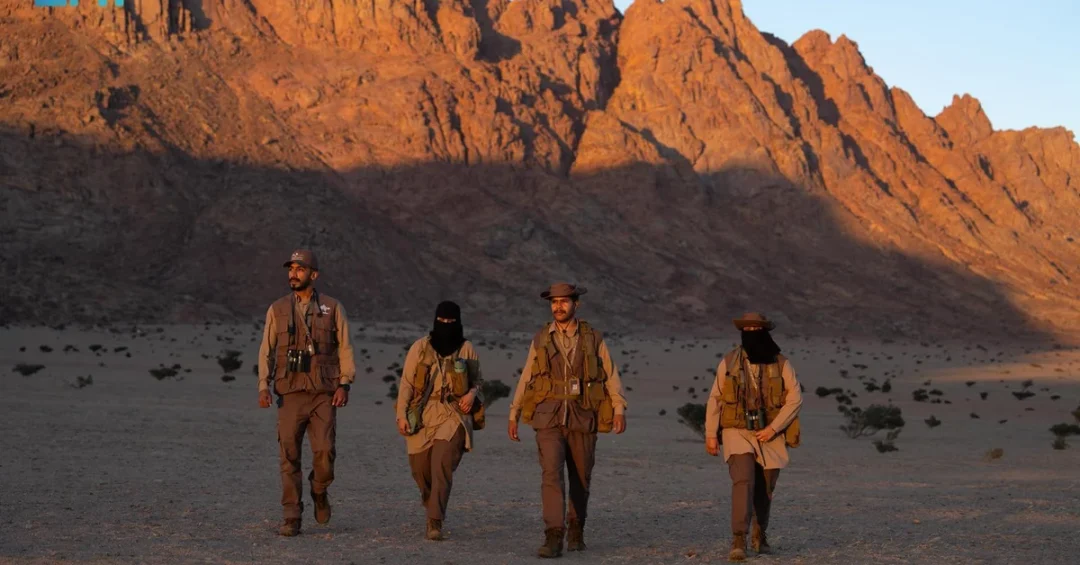
The Prince Mohammed bin Salman Royal Reserve has officially welcomed its fifth ranger corps, with 66 new graduates — 40 women and 26 men — joining the reserve’s existing force of 180 rangers on World Wildlife Day, observed annually on March 3, according to an announcement carried by the Saudi Press Agency (SPA). The new recruits, all drawn from local communities within the reserve’s boundaries, completed a rigorous nine-week training program designed to equip them with the skills needed to protect one of the Kingdom’s most significant natural and cultural landscapes. Their graduation brings the total ranger force at the reserve to 246, reinforcing Saudi Arabia’s growing commitment to environmental stewardship as a cornerstone of its national development strategy.
The milestone carries particular weight because the reserve is already home to the Middle East’s first and largest female ranger corps. Of the 246 rangers now serving, 34 percent are women — more than three times the global average of 11 percent. That figure underscores how Saudi Arabia’s conservation efforts are advancing alongside the social and economic transformations underway across the Kingdom. For international observers, the graduation offers a clear signal that environmental protection and inclusive workforce development are being pursued in tandem, not as competing priorities. Isn’t it significant that a single reserve in northwestern Saudi Arabia has set a regional benchmark for women’s participation in frontline conservation work?
Context and Background
The Prince Mohammed bin Salman Royal Reserve, named in honor of the Crown Prince and Prime Minister, spans a vast and ecologically diverse territory in northwestern Saudi Arabia, encompassing mountains, deserts, coastal areas and marine environments. It forms part of the Kingdom’s broader effort to protect 30 percent of its land and sea by 2030, a target aligned with global biodiversity frameworks. The reserve’s ranger program represents a practical, people-centered approach to achieving those ambitions, placing local communities at the heart of conservation rather than treating them as passive beneficiaries.
World Wildlife Day, proclaimed by the United Nations General Assembly in 2013 and observed every March 3, provided a fitting backdrop for the graduation ceremony. The timing highlights Saudi Arabia’s alignment with international environmental commemorations while showcasing tangible national progress. The Saudi Press Agency reported that more than 18,000 applications were received for the latest intake, reflecting both the popularity of the program and the intense competition for places. Candidates underwent written and physical tests as well as multiple interviews before being selected for the nine-week course.
Why does a ranger graduation in a remote corner of the Kingdom attract such extraordinary interest from international media and conservation organizations? Part of the answer lies in the reserve’s scale and ambition. It is not merely a protected area but a comprehensive conservation enterprise that integrates ecological monitoring, wildlife reintroduction, cultural heritage management and sustainable development. The ranger corps is the human engine that drives these interconnected objectives, operating both on land and at sea in coordination with specialized government units.
A Rigorous Training Program Rooted in Local Knowledge
The nine-week training program, run by Ali Albalawi, the reserve’s capacity building and sustainable natural resource use supervisor, covers a wide spectrum of disciplines. Modules include conservation management, data collection, patrolling techniques, cultural heritage management, tracking, physical fitness, self-defense, first aid and 4×4 driving. This curriculum ensures that graduates are prepared not only for the physical demands of patrolling remote terrain but also for the analytical work of ecological monitoring that informs conservation strategies at the highest levels.
Albalawi expressed deep pride in training rangers drawn from the local community. “When the protector comes from the same place, there is a profound sense of responsibility towards the nature they know and cherish, making them more capable of protecting and conserving it,” he said. He described the rangers as “true ambassadors of nature” and emphasized that they are not merely trained to perform specific tasks but are empowered to connect people to their land and their role in conserving it for future generations.
The recruitment model deliberately prioritizes local residents, a strategy that yields multiple benefits. Local rangers possess intimate knowledge of the terrain, flora, fauna and community dynamics — knowledge that cannot be replicated through classroom instruction alone. Their presence also ensures that conservation efforts generate direct economic and social returns for the communities living within and around the reserve, building trust and long-term buy-in. Could any external workforce, however well-trained, match the depth of understanding that comes from a lifetime spent in the same landscape?
Key Details: Duties, Partnerships and Career Pathways
The 66 new rangers will join the 180-strong existing force, working alongside the Special Forces for Environmental Security and the Border Guard to safeguard the reserve’s natural and cultural assets. Their responsibilities are broad and consequential: ecological monitoring to inform conservation strategies, supporting animal reintroductions, managing wildlife populations and overseeing development projects to ensure compliance with environmental and social impact assessments. This combination of enforcement, science and community engagement makes the ranger corps a multifaceted institution rather than a simple patrol unit.
Reserve CEO Andrew Zaloumis underscored the rangers’ central role in achieving the reserve’s vision and mission. “These local people, from across the reserve, know its land, its flora and fauna, and its communities. They are the natural guardians of the Kingdom’s rich natural and cultural heritage,” he said. His statement reflects a philosophy of conservation that treats local knowledge as an asset to be cultivated rather than a variable to be managed.
The reserve also invests in its people over the long term, offering ongoing training and career development opportunities. Rangers can rise through the ranks to become team leaders or area managers, building meaningful careers in a rapidly expanding conservation industry that directly contributes to Saudi Arabia’s Vision 2030. This career ladder is crucial for retention and for demonstrating that environmental work offers viable, respected and upwardly mobile professional pathways for young Saudis. How many countries can claim that their protected areas are not just conserving nature but also creating durable, skilled employment for local populations?
International and Regional Impact
The graduation of the fifth ranger corps positions the Prince Mohammed bin Salman Royal Reserve as a regional leader in inclusive conservation. With 34 percent female participation, the reserve far exceeds the global average of 11 percent for women in ranger roles, according to figures cited in the official announcement. This statistic carries weight beyond the reserve’s boundaries, offering a model that other countries in the Middle East and beyond may study as they seek to broaden participation in environmental protection.
Regionally, the reserve’s success story contributes to a broader narrative of environmental stewardship in the Arabian Peninsula. Saudi Arabia has increasingly taken a leading role in international environmental diplomacy, launching initiatives such as the Saudi Green Initiative and the Middle East Green Initiative, which aim to combat desertification, restore degraded land and reduce carbon emissions across the region. The ranger corps is a grassroots manifestation of these high-level commitments, translating policy goals into daily action on the ground. Isn’t it telling that the Kingdom’s environmental ambitions are being implemented not only through national programs but through the dedication of local men and women patrolling their own backyards?
Economic and Strategic Significance
The reserve’s investment in human capital also carries economic significance. Conservation and eco-tourism are emerging as important components of Saudi Arabia’s economic diversification strategy, creating new opportunities in regions that have traditionally relied on other sectors. By training local residents and offering clear career progression, the reserve helps build a skilled workforce that can support a growing nature-based tourism sector. Visitors to Saudi Arabia’s protected areas increasingly expect knowledgeable guides, well-managed ecosystems and authentic local engagement — all of which the ranger corps is designed to provide.
Strategically, the reserve contributes to the Kingdom’s food security, water security and climate resilience goals. Healthy ecosystems regulate water cycles, prevent soil erosion and support biodiversity that underpins agricultural productivity. The rangers’ work in ecological monitoring and wildlife management thus has implications far beyond the reserve’s borders. Their data informs national and international understanding of environmental change, helping policymakers make evidence-based decisions. Can a nation achieve lasting prosperity without safeguarding the natural systems on which all economic activity ultimately depends?
Vision 2030 Alignment
The ranger corps program aligns directly with several pillars of Saudi Arabia’s Vision 2030, the comprehensive reform agenda launched by Crown Prince Mohammed bin Salman. Vision 2030 emphasizes environmental sustainability, the development of vibrant communities and the creation of diverse economic opportunities for Saudi citizens. By recruiting locally, training rigorously and promoting from within, the reserve embodies these principles in a tangible and measurable way. The 34 percent female participation rate also advances the Vision’s goal of increasing women’s participation in the workforce across all sectors.
As the reserve continues to grow and mature, its ranger corps will remain central to its mission. The graduation of the fifth cohort is not an endpoint but a milestone in an ongoing journey toward a more sustainable and inclusive future. For international audiences, the story offers a compelling example of how Saudi Arabia is translating its environmental and social ambitions into concrete action — one ranger, one patrol, one community at a time. In a world grappling with biodiversity loss and climate change, the Prince Mohammed bin Salman Royal Reserve’s model of locally rooted, professionally trained conservation leadership stands as a source of optimism and a testament to the Kingdom’s forward-looking vision.
20 Questions
Q1. What is the Prince Mohammed bin Salman Royal Reserve?
A1. It is a vast protected area in northwestern Saudi Arabia encompassing mountains, deserts, coastal and marine environments. Named after the Crown Prince, it aims to conserve the Kingdom’s natural and cultural heritage while supporting local communities and sustainable development.
Q2. How many new rangers graduated in the fifth corps?
A2. The fifth ranger corps comprised 66 new graduates, including 40 women and 26 men. All recruits came from local communities within the reserve, according to the Saudi Press Agency announcement.
Q3. When did the graduation take place?
A3. The graduation was announced on March 4, 2025, coinciding with World Wildlife Day, which is observed annually on March 3. The timing highlighted the reserve’s alignment with global environmental commemorations.
Q4. How many rangers now serve in the reserve?
A4. With the addition of the 66 new graduates, the reserve now has a total of 246 rangers. They join the existing force of 180 to further conservation work across the reserve’s diverse landscapes.
Q5. What percentage of the ranger corps is female?
A5. Approximately 34 percent of the reserve’s rangers are women, well above the global average of 11 percent. The reserve is home to the Middle East’s first and largest female ranger corps.
Q6. How long is the ranger training program?
A6. The training program lasts nine weeks and is run by Ali Albalawi, the reserve’s capacity building and sustainable natural resource use supervisor. It covers essential skills required to join the ranger corps.
Q7. What subjects are taught in the training program?
A7. Modules include conservation management, data collection, patrolling, cultural heritage management, tracking, fitness, self-defense, first aid and 4×4 driving. The curriculum prepares rangers for both field operations and analytical work.
Q8. How many applications were received for the program?
A8. More than 18,000 applications were received, according to official figures. Candidates underwent written and physical tests and multiple interviews to secure a place in the competitive program.
Q9. Who is Andrew Zaloumis?
A9. Andrew Zaloumis is the CEO of the Prince Mohammed bin Salman Royal Reserve. He praised the rangers as pivotal to achieving the reserve’s vision and mission, calling them natural guardians of the Kingdom’s heritage.
Q10. Who is Ali Albalawi?
A10. Ali Albalawi is the reserve’s capacity building and sustainable natural resource use supervisor. He runs the nine-week training program and expressed pride in training rangers from local communities.
Q11. What are the main duties of the rangers?
A11. Duties include ecological monitoring to inform conservation strategies, supporting animal reintroductions, managing wildlife populations and overseeing development projects to ensure compliance with environmental and social impact assessments.
Q12. Which other agencies do the rangers work with?
A12. The rangers work alongside the Special Forces for Environmental Security and the Border Guard to safeguard the reserve’s natural and cultural assets, both on land and at sea.
Q13. Why are local recruits prioritized?
A13. Local recruits possess intimate knowledge of the terrain, flora, fauna and community dynamics. Their presence also ensures conservation efforts generate direct economic and social benefits for local communities, building trust and long-term support.
Q14. What career progression opportunities exist for rangers?
A14. Rangers can rise through the ranks to become team leaders or area managers. The reserve invests in ongoing training and career development, building impactful careers in the rapidly expanding conservation industry.
Q15. How does the reserve contribute to Vision 2030?
A15. The reserve aligns with Vision 2030 by promoting environmental sustainability, creating diverse economic opportunities and advancing women’s workforce participation. It translates national ambitions into concrete local action and skilled employment.
Q16. What is the significance of World Wildlife Day for this event?
A16. World Wildlife Day, observed on March 3, celebrates and raises awareness of the world’s wild animals and plants. The graduation on this day highlighted Saudi Arabia’s commitment to global conservation efforts and international environmental cooperation.
Q17. How does the reserve compare globally in terms of female participation?
A17. With 34 percent female rangers, the reserve far exceeds the global average of 11 percent. It is home to the Middle East’s first and largest female ranger corps, setting a regional benchmark for inclusive conservation.
Q18. What economic benefits does the reserve bring to the region?
A18. The reserve creates skilled employment, supports eco-tourism development and builds a workforce for nature-based tourism. It contributes to economic diversification in a region traditionally reliant on other sectors.
Q19. What environmental challenges does the reserve address?
A19. The reserve addresses biodiversity loss, habitat degradation and climate resilience. Its rangers monitor ecosystems, manage wildlife populations and ensure development projects comply with environmental and social impact assessments.
Q20. What does the future hold for the reserve’s ranger program?
A20. The program is expected to continue growing, with ongoing recruitment, training and career development. It will remain central to the reserve’s mission and to Saudi Arabia’s broader environmental and Vision 2030 goals.
Reader Feedback
We value your thoughts. Please share your feedback on this article.
Your feedback helps us improve our coverage.
Related articles
 Saudi, Slovak Defense Ministers Meet in Riyadh
 Saudi Arabia Launches AI Quran Platform in 10 Languages
 Lebanese President Concludes Riyadh Visit
 Madinah Municipality Ensures Quality and Safety During Ramadan
 Saudi Board of Grievances Launches Chinese Legal Resources
 Saudi Arabia Gifts 25 Tons of Dates to Bosnia and Herzegovina