


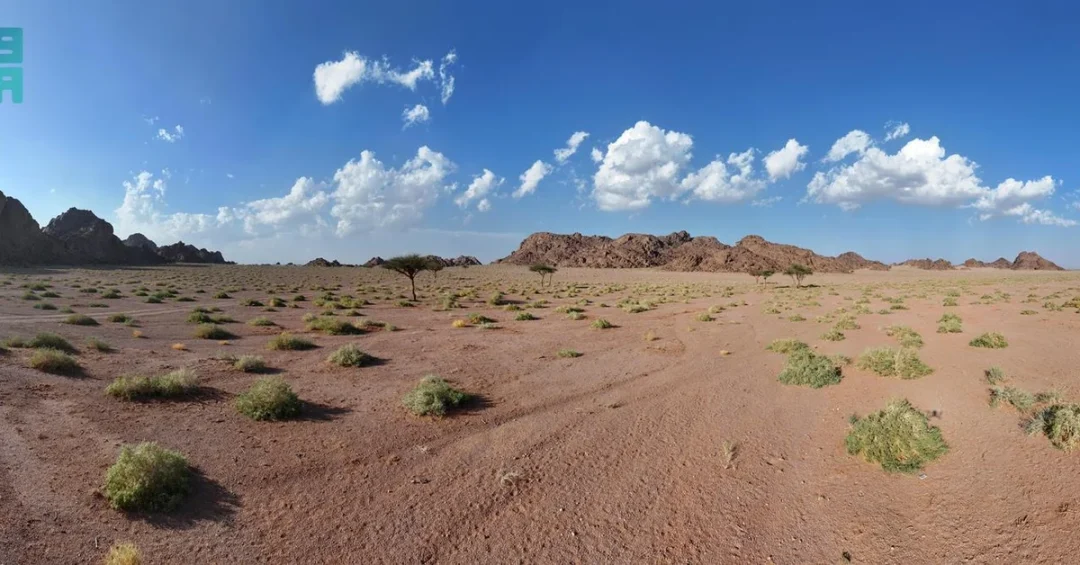
The National Center for Vegetation Cover Development and Combating Desertification (NCVC) launched a new project to study and assess degraded vegetation cover sites across western and southern Saudi Arabia, as reported by the Saudi Press Agency (SPA). The initiative is designed to identify degraded land areas, analyze the causes of degradation, and develop rehabilitation plans aligned with international standards and best practices. It forms part of a broader national strategy that covers multiple regions of the Kingdom, reflecting Saudi Arabia’s commitment to environmental sustainability and the objectives of Vision 2030.
The project focuses on six regions: Makkah, Madinah, Al-Baha, Aseer, Jazan, and Najran. These areas encompass a range of ecological zones, from the highlands of Aseer to the coastal plains of Jazan, each with distinct vegetation types and environmental pressures. By targeting these regions, the NCVC aims to establish tailored monitoring and evaluation plans that account for local conditions and national priorities. The project represents a significant step in Saudi Arabia’s efforts to combat desertification, restore ecosystems, and enhance the quality of life for communities across the Kingdom.
Context and Background
Why does the rehabilitation of degraded land matter so much for Saudi Arabia’s environmental future? The Kingdom has long faced challenges related to desertification, water scarcity, and land degradation, which threaten biodiversity, agricultural productivity, and rural livelihoods. In response, Saudi Arabia has developed a comprehensive environmental strategy, including the Saudi Green Initiative and the Middle East Green Initiative, which aim to plant billions of trees and restore millions of hectares of land. The NCVC, established to lead these efforts, plays a central role in coordinating vegetation cover development and combating desertification across the country.
The new project builds on previous assessments and represents a more detailed, technology-driven approach to understanding land degradation. By using advanced remote sensing technologies and Geographic Information Systems (GIS), the NCVC will be able to map degradation severity with greater accuracy and prioritize restoration efforts where they are most needed. This scientific approach ensures that rehabilitation plans are not only effective but also sustainable, taking into account the economic and social dimensions of local communities. The project’s alignment with global standards and best practices underscores Saudi Arabia’s commitment to international environmental cooperation and its leadership in regional sustainability efforts.
The selection of Makkah, Madinah, Al-Baha, Aseer, Jazan, and Najran reflects the ecological and cultural importance of these regions. Aseer and Al-Baha are known for their mountainous terrain and unique flora, while Jazan and Najran feature diverse landscapes that include fertile valleys and desert margins. Makkah and Madinah, home to the Kingdom’s holiest sites, also host significant natural areas that require protection. By focusing on these regions, the NCVC addresses both environmental and heritage considerations, ensuring that rehabilitation efforts support the overall well-being of these communities and preserve the natural beauty of the areas.
Key Details
What exactly does the NCVC’s assessment involve? The project will conduct an in-depth evaluation using cutting-edge remote sensing technologies and GIS to determine the severity of degradation. Field and laboratory analyses will be carried out, with samples collected from soil, vegetation, and water. These analyses will provide a detailed picture of the current state of the land and the factors contributing to degradation, whether natural or human-induced. The NCVC will also conduct economic and social evaluations at the local level, recognizing that successful rehabilitation must consider the needs and livelihoods of the people who depend on these lands.
Based on the assessment, the NCVC will develop short-, medium-, and long-term rehabilitation plans. These plans will follow internationally recognized methodologies and will be tailored to the specific conditions of each region. The project will establish detailed methodologies and practical mechanisms to implement rehabilitation programs based on prioritized restoration needs. This phased approach allows for adaptive management, ensuring that interventions are effective and can be adjusted as conditions change. The NCVC’s vision is to establish a thriving and diverse vegetation cover that supports environmental sustainability and enhances the quality of life across Saudi Arabia.
The use of advanced technologies is a hallmark of the project. Remote sensing allows for the monitoring of large areas over time, providing data on vegetation health, land cover changes, and degradation trends. GIS enables the integration of multiple data layers, such as topography, climate, and land use, to inform decision-making. Together, these tools support evidence-based planning and efficient allocation of resources. The NCVC’s commitment to scientific rigor and innovation reflects the broader modernization drive in Saudi Arabia, where technology is increasingly used to address environmental and developmental challenges.
International and Regional Impact
How does Saudi Arabia’s effort to restore degraded land resonate beyond its borders? The Kingdom’s initiative is part of a wider regional and global movement to combat desertification and climate change. Through the Middle East Green Initiative, Saudi Arabia is working with neighboring countries to plant 50 billion trees across the region, a goal that requires cross-border cooperation and knowledge sharing. The NCVC’s project contributes to this effort by generating data and best practices that can be shared with international partners. It also reinforces the Kingdom’s role as a leader in environmental diplomacy and sustainable development.
At the international level, the project aligns with the objectives of the United Nations Convention to Combat Desertification (UNCCD) and the Sustainable Development Goals (SDGs), particularly those related to life on land and climate action. By adopting internationally recognized methodologies, the NCVC ensures that its rehabilitation plans are compatible with global standards and can attract international collaboration and funding. The project’s focus on economic and social evaluations also reflects a holistic approach to sustainability, recognizing that environmental restoration must go hand in hand with community development. This integrated model can serve as an example for other countries facing similar challenges.
Economic and Strategic Significance
What are the economic benefits of restoring degraded land? Healthy ecosystems provide essential services, including carbon sequestration, water filtration, and soil fertility, which underpin agricultural productivity and food security. By rehabilitating degraded lands, the NCVC aims to enhance these services, supporting rural economies and creating green job opportunities. The project’s emphasis on local economic and social evaluations ensures that rehabilitation efforts are aligned with community needs and can contribute to poverty reduction and improved livelihoods. In the long term, restored vegetation cover can also boost tourism and recreation, particularly in scenic regions like Aseer and Al-Baha.
Strategically, the project supports Saudi Arabia’s Vision 2030 by promoting environmental sustainability as a pillar of economic diversification. A healthier environment attracts investment, improves public health, and enhances the Kingdom’s image as a responsible global citizen. The NCVC’s work also complements other Vision 2030 programs, such as the Quality of Life Program, which aims to create vibrant communities and preserve natural heritage. By investing in land restoration, Saudi Arabia is building resilience against climate change and ensuring that its natural resources are available for future generations.
Vision 2030 Alignment
How does the NCVC’s project embody the goals of Vision 2030? Vision 2030 is a comprehensive plan to diversify the Saudi economy and improve the quality of life for all citizens. Environmental sustainability is a key component of this vision, and the NCVC’s efforts to combat desertification and restore vegetation cover directly contribute to its objectives. The project’s use of advanced technologies and international best practices showcases the Kingdom’s commitment to innovation and global cooperation. By rehabilitating degraded lands, the NCVC is helping to create a more sustainable and prosperous Saudi Arabia, in line with the vision’s emphasis on environmental stewardship and sustainable development.
Looking ahead, the NCVC’s project is expected to yield valuable data and insights that will inform future rehabilitation efforts across the Kingdom. As the project progresses, it will serve as a model for integrated land management, demonstrating how science, technology, and community engagement can come together to address complex environmental challenges. Saudi Arabia’s leadership in this area is a source of pride and a testament to its dedication to a greener future. Through initiatives like this, the Kingdom is not only enhancing its own environment but also contributing to global efforts to combat desertification and climate change, reinforcing its role as a responsible and forward-looking nation.
20 Questions
Q1. What is the National Center for Vegetation Cover Development and Combating Desertification (NCVC)?
A1. The NCVC is a Saudi government agency responsible for developing vegetation cover and combating desertification. It leads national efforts to restore degraded lands, enhance biodiversity, and promote environmental sustainability in line with Vision 2030 and international environmental standards.
Q2. What is the new project launched by the NCVC?
A2. The NCVC launched a project to study and assess degraded vegetation cover sites in western and southern Saudi Arabia. It aims to identify degradation causes, develop rehabilitation plans, and implement restoration using advanced technologies and international best practices.
Q3. Which regions are covered by this project?
A3. The project covers six regions: Makkah, Madinah, Al-Baha, Aseer, Jazan, and Najran. These areas represent diverse ecological zones and are prioritized for their environmental, cultural, and strategic importance to the Kingdom.
Q4. How will the NCVC assess land degradation?
A4. The NCVC will use advanced remote sensing technologies and Geographic Information Systems (GIS) to determine degradation severity. It will also conduct field and laboratory analyses of soil, vegetation, and water samples to gather comprehensive data.
Q5. What are the goals of the rehabilitation plans?
A5. The rehabilitation plans aim to restore degraded lands using short-, medium-, and long-term strategies. They follow internationally recognized methodologies and are tailored to local conditions to ensure effective and sustainable restoration of vegetation cover.
Q6. Why are economic and social evaluations included in the project?
A6. Economic and social evaluations ensure that rehabilitation efforts consider the needs and livelihoods of local communities. This holistic approach promotes sustainable development and helps align restoration activities with community priorities and national objectives.
Q7. How does this project support Saudi Arabia’s environmental goals?
A7. The project supports the Saudi Green Initiative and the Middle East Green Initiative by restoring degraded lands, enhancing carbon sequestration, and improving biodiversity. It contributes to the Kingdom’s broader efforts to combat desertification and climate change.
Q8. What technologies are used in the assessment?
A8. The NCVC uses remote sensing and GIS to map degradation and monitor vegetation health. These technologies enable large-scale analysis and evidence-based planning, reflecting Saudi Arabia’s commitment to innovation in environmental management.
Q9. How does the project align with Vision 2030?
A9. The project aligns with Vision 2030 by promoting environmental sustainability, enhancing quality of life, and supporting economic diversification. It reflects the vision’s emphasis on sustainable development and global cooperation in addressing environmental challenges.
Q10. What is the role of international standards in the project?
A10. The NCVC follows internationally recognized methodologies to ensure its rehabilitation plans are effective and compatible with global best practices. This approach facilitates knowledge sharing and potential collaboration with international partners and organizations.
Q11. How will local communities benefit from the project?
A11. Local communities will benefit from restored ecosystems, improved agricultural productivity, and potential green job opportunities. The project’s social and economic evaluations ensure that community needs are integrated into rehabilitation plans, fostering sustainable development.
Q12. What are the main causes of land degradation in these regions?
A12. Causes include overgrazing, deforestation, climate change, and unsustainable land use practices. The NCVC’s assessment will analyze both direct and indirect factors to develop targeted rehabilitation strategies for each region.
Q13. How long will the project take?
A13. The project includes short-, medium-, and long-term plans, with timelines varying by region and degradation severity. The NCVC will monitor progress and adapt strategies to ensure effective restoration over time.
Q14. What is the significance of selecting Makkah and Madinah?
A14. Makkah and Madinah are home to Islam’s holiest sites and host significant natural areas. Including them in the project reflects the NCVC’s commitment to preserving both environmental and cultural heritage in these revered regions.
Q15. How does the project contribute to biodiversity?
A15. By restoring degraded lands and planting native vegetation, the project enhances habitats for wildlife and supports biodiversity. This contributes to ecosystem health and resilience, aligning with global conservation goals.
Q16. What is the expected impact on water resources?
A16. Restored vegetation improves soil health and water infiltration, reducing runoff and enhancing groundwater recharge. This supports water security, a critical priority for Saudi Arabia given its arid climate and limited water resources.
Q17. Will the project involve local expertise?
A17. Yes, the NCVC will collaborate with local experts, scientists, and community members. Their knowledge of local conditions is essential for developing effective and culturally appropriate rehabilitation plans.
Q18. How does the project address climate change?
A18. By restoring vegetation, the project enhances carbon sequestration and reduces land degradation, helping mitigate climate change impacts. It also builds resilience against droughts and extreme weather, supporting Saudi Arabia’s climate action goals.
Q19. What are the next steps after the assessment?
A19. Following the assessment, the NCVC will implement prioritized rehabilitation programs based on detailed methodologies. It will monitor outcomes, share best practices, and scale successful approaches to other regions as part of its national strategy.
Q20. How can the public support the NCVC’s efforts?
A20. The public can support by participating in tree-planting initiatives, adopting sustainable practices, and raising awareness about desertification. Community involvement is vital for the success of Saudi Arabia’s environmental restoration efforts.
Reader Feedback
We value your thoughts. Please share your feedback on this article.
Your feedback helps us improve our coverage.
Related articles
 Saudi Authority Organizes Grand Mosque Gates for Ramadan Flow
 370 Scouts Serve Prophet’s Mosque Visitors in Ramadan
 Riyadh Governor Honors Winners of 26th King Salman Quran Competition
 KSrelief Launches Ramadan Food Basket Project in Indonesia
 Saudi Arabia Weather Forecast for Tuesday: Rain and Dust
 KSrelief Distributes 1,200 Food Baskets in Syria’s Daraa