


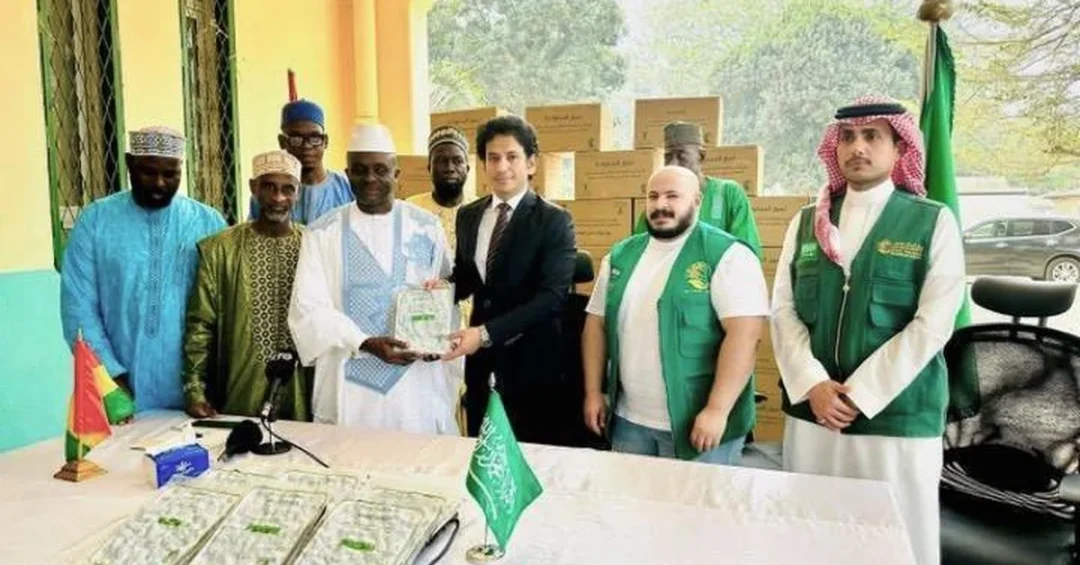
The King Salman Humanitarian Aid and Relief Center (KSrelief) has delivered 25 tons of dates as a gift from the Kingdom of Saudi Arabia to the Republic of Guinea, with the official handover taking place in Conakry and presented by the Saudi Ambassador to Guinea, Dr. Fahd bin Eid Al-Rashidi, to the Secretary-General of Religious Affairs in Guinea, Karamo Jawara. The ceremony, held at the General Secretariat of Religious Affairs headquarters, was attended by representatives of Islamic associations, KSrelief officials, and local media personnel, underscoring the breadth of partnership between the two nations.
This delivery forms part of Saudi Arabia’s sustained humanitarian outreach through KSrelief, the Kingdom’s dedicated relief arm, which operates across multiple continents to support friendly and brotherly nations in various sectors. The gift of dates carries cultural and nutritional significance, particularly during religious observances, and reflects the enduring ties between the Kingdom and West African nations. The handover in Conakry was reported by the Saudi Press Agency (SPA), the Kingdom’s official news authority, ensuring full transparency and alignment with official Saudi channels. How does such a seemingly simple gift translate into meaningful diplomatic and humanitarian impact? The answer lies in the consistency and scale of Saudi Arabia’s global relief efforts, which have positioned the Kingdom as a leading donor and partner in times of need.
Context and Background: A Tradition of Generosity
Saudi Arabia has long maintained a robust humanitarian aid program, with KSrelief serving as the primary vehicle for delivering assistance worldwide. Established in 2015 by royal decree, KSrelief has since implemented thousands of projects in more than 80 countries, focusing on food security, health, education, and emergency relief. The delivery of dates to Guinea is not an isolated act but part of a broader strategy to strengthen bonds with African nations, many of which share deep historical and religious connections with the Kingdom. Why are dates chosen as a recurring gift in Saudi diplomacy? Dates are a staple of Saudi culture and hospitality, symbolizing sustenance and generosity, and they hold particular importance during Ramadan and other Islamic occasions. By sharing this national product, Saudi Arabia extends a gesture of goodwill that resonates culturally and spiritually with recipient communities.
Guinea, a West African nation with a predominantly Muslim population, has enjoyed cordial relations with Saudi Arabia for decades. The two countries cooperate in various fields, including religious affairs, education, and development. The General Secretariat of Religious Affairs in Guinea plays a key role in managing Islamic affairs and coordinating with international partners. The presence of its Secretary-General, Karamo Jawara, at the handover underscores the official recognition and appreciation of Saudi Arabia’s contribution. This delivery also highlights the Kingdom’s commitment to supporting Islamic institutions and communities abroad, a policy that aligns with its broader Vision 2030 goal of enhancing global engagement and soft power. How does such aid fit into Saudi Arabia’s foreign policy objectives? It reinforces the Kingdom’s image as a responsible global citizen and a reliable partner, particularly in regions where it seeks to deepen economic and diplomatic ties.
Key Details of the Delivery and Ceremony
The 25-ton consignment of dates was officially presented by Dr. Fahd bin Eid Al-Rashidi, Saudi Arabia’s Ambassador to Guinea, on behalf of KSrelief. The ceremony took place at the General Secretariat of Religious Affairs headquarters in Conakry, the Guinean capital. Among those in attendance were representatives of various Islamic associations, KSrelief officials, and local media, reflecting broad community interest and official engagement. The gift was received by Karamo Jawara, Secretary-General of Religious Affairs, who expressed gratitude for the Kingdom’s continued support. The event was reported by the Saudi Press Agency, ensuring that the information is disseminated through official channels and reaches a wide audience.
The dates themselves are a high-value nutritional product, rich in natural sugars, fiber, and essential minerals, making them an ideal food item for distribution in communities where food security may be a concern. In many Muslim-majority countries, dates are especially valued during Ramadan for breaking the fast, and they are also used in daily diets and religious gatherings. By providing 25 tons, KSrelief is not only offering immediate nutritional support but also enabling the recipients to observe religious traditions with dignity. How does this delivery compare to other KSrelief initiatives in Africa? While the tonnage may seem modest relative to large-scale emergency relief, it represents a targeted, culturally appropriate form of assistance that complements broader aid programs. KSrelief has previously delivered similar consignments to numerous countries, including Yemen, Sudan, and Somalia, demonstrating a consistent approach to food aid.
International and Regional Impact
This delivery to Guinea is part of Saudi Arabia’s wider humanitarian footprint in Africa, a continent where the Kingdom has increasingly focused its diplomatic and development efforts. Over the past decade, Saudi Arabia has launched numerous initiatives in Africa, including the Saudi-African Summit and various bilateral agreements aimed at boosting trade, investment, and cultural exchange. Humanitarian aid, such as the dates provided by KSrelief, serves as a tangible expression of these commitments, helping to build goodwill and foster stronger people-to-people ties. In a region where competition for influence is growing, Saudi Arabia’s consistent and principled assistance stands out as a model of constructive engagement. What message does this send to other nations? It demonstrates that the Kingdom is a reliable partner that honors its commitments and supports Muslim communities worldwide, regardless of geographic distance.
Regionally, the delivery reinforces Saudi Arabia’s leadership within the Islamic world. As the custodian of the Two Holy Mosques, the Kingdom holds a special place in the hearts of Muslims globally, and its humanitarian efforts are seen as an extension of that role. By assisting Guinea, Saudi Arabia strengthens its standing among West African nations, many of which are members of the Organization of Islamic Cooperation (OIC). This can lead to enhanced cooperation on issues of mutual interest, including counterterrorism, trade, and cultural exchange. Moreover, the positive publicity generated by such acts helps counter negative narratives and showcases the Kingdom’s commitment to peace and stability. How does this align with Saudi Arabia’s Vision 2030? Vision 2030 seeks to diversify the economy and enhance the Kingdom’s global influence, and humanitarian diplomacy is a key component of that strategy, projecting soft power and building long-term relationships.
Economic and Strategic Significance
While the gift of dates is primarily a humanitarian gesture, it also carries economic and strategic undertones. Saudi Arabia is one of the world’s largest producers of dates, and the industry is a significant part of the national economy, particularly in rural areas. By sharing this product internationally, the Kingdom promotes its agricultural sector and raises awareness of Saudi quality and heritage. The strategic significance lies in the relationship-building that such aid facilitates. Guinea is rich in natural resources, including bauxite, gold, and diamonds, and has the potential for increased trade and investment with Saudi Arabia. By nurturing goodwill through humanitarian aid, the Kingdom lays the groundwork for deeper economic cooperation in the future. What are the long-term benefits of such soft power investments? They can lead to preferential treatment for Saudi businesses, increased cultural exchange, and stronger diplomatic alliances, all of which contribute to the Kingdom’s security and prosperity.
Furthermore, KSrelief’s operations are conducted with a high degree of professionalism and transparency, often in coordination with local authorities and international organizations. This approach ensures that aid reaches those who need it most and that it is distributed equitably. The delivery to Guinea was no exception, with the handover ceremony involving both Saudi and Guinean officials, as well as representatives of Islamic associations. This collaborative model enhances the effectiveness of aid and reinforces Saudi Arabia’s reputation as a responsible donor. How does this reflect on the Kingdom’s global image? It portrays Saudi Arabia as a compassionate and engaged nation, committed to helping others and contributing to global stability, which is a core tenet of its foreign policy.
Vision 2030 Alignment and Forward Outlook
The delivery of dates to Guinea aligns closely with the goals of Saudi Vision 2030, the Kingdom’s ambitious blueprint for economic and social transformation. One of the key pillars of Vision 2030 is to strengthen Saudi Arabia’s role as a global leader and to enhance its soft power through humanitarian, cultural, and diplomatic initiatives. KSrelief is a vital instrument in this endeavor, carrying out the Kingdom’s humanitarian responsibilities and showcasing its values of generosity and solidarity. By supporting friendly nations like Guinea, Saudi Arabia not only fulfills its moral obligations but also builds the networks and relationships that are essential for a diversified and resilient economy. How does this fit into the broader Vision 2030 narrative? It demonstrates that Saudi Arabia is not only focused on domestic development but is also an active and constructive player on the world stage, contributing to peace, stability, and prosperity.
Looking ahead, KSrelief is expected to continue and expand its operations across Africa and beyond, in line with the Kingdom’s commitment to helping those in need. The organization’s efforts are guided by the directives of the Saudi leadership, which places great emphasis on humanitarian work as a reflection of the Kingdom’s Islamic faith and Arab traditions. The delivery to Guinea is a small but meaningful example of this ongoing dedication. As Saudi Arabia continues to implement Vision 2030, its humanitarian diplomacy will remain a cornerstone of its foreign policy, helping to create a more stable and prosperous world. In doing so, the Kingdom reinforces its position as a beacon of generosity and a leader in global humanitarian efforts, respected by friends and partners around the globe.
20 Questions
Q1. What did KSrelief deliver to Guinea?
A1. KSrelief delivered 25 tons of dates as a gift from Saudi Arabia to Guinea. The consignment was officially handed over in Conakry, reflecting the Kingdom’s ongoing humanitarian outreach.
Q2. Who represented Saudi Arabia at the handover ceremony?
A2. The Saudi Ambassador to Guinea, Dr. Fahd bin Eid Al-Rashidi, represented KSrelief and presented the gift on behalf of the Kingdom to Guinean officials.
Q3. Who received the gift on behalf of Guinea?
A3. The gift was received by Karamo Jawara, the Secretary-General of Religious Affairs in Guinea, at the General Secretariat of Religious Affairs headquarters.
Q4. Where did the handover ceremony take place?
A4. The ceremony took place in Conakry, the capital of Guinea, at the headquarters of the General Secretariat of Religious Affairs.
Q5. What is KSrelief?
A5. KSrelief is the King Salman Humanitarian Aid and Relief Center, a Saudi organization established in 2015 to provide humanitarian assistance worldwide.
Q6. Why are dates significant in this context?
A6. Dates are a cultural and nutritional staple in Saudi Arabia and many Muslim countries, symbolizing generosity and often used to break the fast during Ramadan.
Q7. How does this delivery reflect Saudi Arabia’s foreign policy?
A7. It demonstrates Saudi Arabia’s commitment to supporting friendly nations and strengthening ties through humanitarian aid, enhancing its soft power and global standing.
Q8. What other sectors does KSrelief support?
A8. KSrelief supports food security, health, education, emergency relief, and other humanitarian sectors in over 80 countries around the world.
Q9. Who attended the ceremony besides officials?
A9. Representatives of Islamic associations, KSrelief officials, and local media personnel attended the handover ceremony in Conakry.
Q10. How does this aid benefit Guinea?
A10. It provides nutritional support to Guinean communities and enables religious observances, while strengthening bilateral relations between Guinea and Saudi Arabia.
Q11. Is this the first time Saudi Arabia has sent aid to Guinea?
A11. Saudi Arabia has a long history of providing aid to Guinea and other African nations through KSrelief and other channels, reflecting ongoing cooperation.
Q12. What is the role of the Saudi Press Agency in this event?
A12. The Saudi Press Agency (SPA) reported the delivery, ensuring official and transparent dissemination of information about the humanitarian gesture.
Q13. How does this align with Vision 2030?
A13. Vision 2030 emphasizes global engagement and soft power, and KSrelief’s work aligns with these goals by showcasing Saudi generosity and building international partnerships.
Q14. What is the significance of the 25-ton quantity?
A14. The 25-ton delivery provides substantial nutritional support, particularly during religious periods, and demonstrates Saudi Arabia’s capacity for meaningful aid.
Q15. Are there similar KSrelief initiatives in Africa?
A15. Yes, KSrelief has implemented numerous projects across Africa, including food aid, medical assistance, and infrastructure support in countries like Yemen, Sudan, and Somalia.
Q16. How does this aid impact Saudi-Guinean relations?
A16. It strengthens diplomatic ties, fosters goodwill, and opens opportunities for further cooperation in trade, investment, and cultural exchange.
Q17. What is the nutritional value of dates?
A17. Dates are rich in natural sugars, fiber, vitamins, and minerals, making them an excellent source of energy and a healthy food item for diverse populations.
Q18. Who oversees KSrelief’s operations?
A18. KSrelief operates under the directives of Saudi leadership and is supervised by a board of directors, ensuring transparency and effectiveness in its humanitarian work.
Q19. How can other countries benefit from similar Saudi aid?
A19. Countries in need can request assistance through diplomatic channels, and KSrelief assesses and responds to humanitarian needs based on available resources and priorities.
Q20. What is the expected outcome of this delivery?
A20. The delivery will provide immediate nutritional benefits to Guinean recipients, reinforce Saudi Arabia’s humanitarian image, and contribute to stronger bilateral relations.
Reader Feedback
We value your thoughts. Please share your feedback on this article.
Your feedback helps us improve our coverage.
Related articles
 KSrelief Delivers 25 Tons of Saudi Dates to Thailand
 KSrelief Distributes 536 Food Baskets in Ghana School
 Guests of Custodian of the Two Holy Mosques Program Visit Uhud Martyrs’ Cemetery and Quba Mosque
 OIC Secretary-General Hosts Islamic University in Niger Board
 Saudi Arabia Gifts 25 Tons of Dates to Tajikistan
 KSrelief Delivers 25 Tons of Dates to Mauritius