


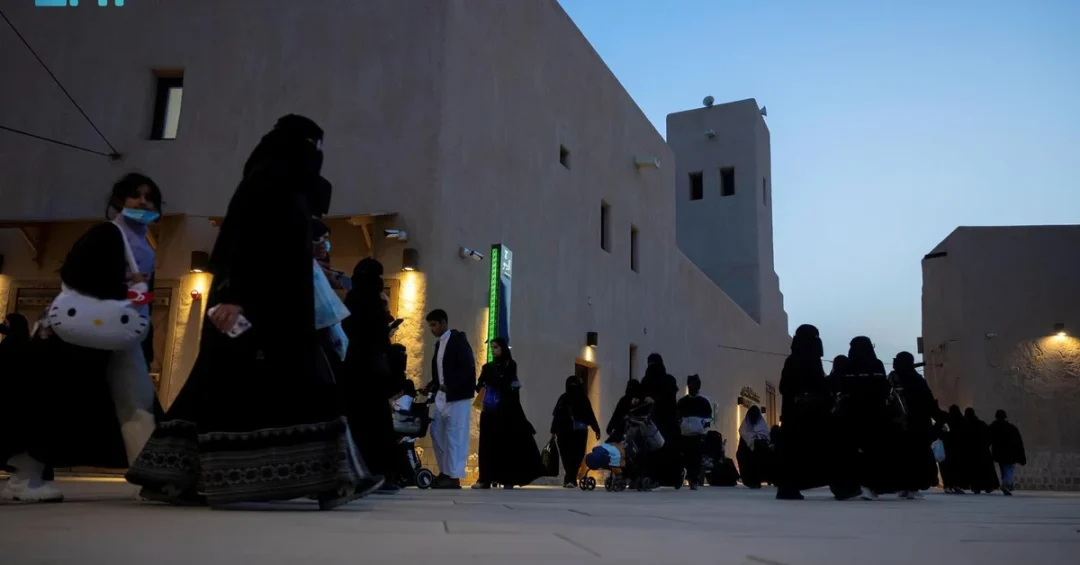
Riyadh’s popular markets transform into vibrant hubs of heritage and community each night during the holy month of Ramadan, drawing crowds of residents and visitors seeking traditional foods, crafts, and a shared cultural experience rooted in Saudi identity. The Saudi Press Agency reported that as night falls across the capital, these markets come alive with shoppers exploring stalls that blend centuries-old Najdi traditions with the comforts of modern life, creating a dynamic social atmosphere that defines the Ramadan season in the Kingdom.
The markets offer much more than commerce. They serve as living museums of Saudi heritage, where the aromas of jareesh, qursan, and matazeez fill the air and the calls of vendors echo through bustling alleys. Families gather to reconnect, friends meet to share iftar and suhoor, and visitors from across the Kingdom and beyond immerse themselves in a celebration of culture that has been passed down through generations. Under the leadership of the Custodian of the Two Holy Mosques, King Salman bin Abdulaziz Al Saud, and the guidance of His Royal Highness Crown Prince Mohammed bin Salman, Saudi Arabia has placed the preservation and promotion of its cultural heritage at the heart of its national transformation. The Ramadan markets of Riyadh stand as a testament to that commitment, offering a window into a society that is modernizing rapidly while holding fast to its roots.
Context and Background
How did Riyadh’s markets become such an integral part of Ramadan life in the Kingdom? The answer lies in the deep connection between commerce, community, and faith in Saudi culture. For decades, traditional souqs and seasonal markets have served as gathering points where the spiritual observance of Ramadan intersects with the rhythms of daily life. After the maghrib prayer and the breaking of the fast, families traditionally venture out to shop for ingredients for the next day’s meals, to buy gifts, and to enjoy the festive atmosphere that permeates the city’s commercial districts.
Riyadh, as the capital and largest city of the Kingdom, has long been the focal point of this phenomenon. Its markets reflect the diversity of Saudi Arabia itself, from the historic stalls of Al-Mu’eiqiliyah and Al-Dirah to the more contemporary commercial areas that have sprung up in recent years. The Saudi Press Agency noted that these markets offer a blend of heritage, traditions, and modern life, a combination that appeals to a wide cross-section of society, including young Saudis who are embracing their cultural inheritance with renewed pride as the Kingdom undergoes unprecedented social and economic change under Vision 2030.
The Ramadan market experience in Riyadh is not merely a seasonal commercial activity; it is a cultural institution. It reinforces the values of generosity, hospitality, and community solidarity that are central to Saudi society. It also provides an economic lifeline for small merchants, artisans, and food vendors who rely on the heightened activity of the holy month to sustain their businesses throughout the year. In this sense, the markets are both a reflection of Saudi Arabia’s past and a bridge to its future, demonstrating how tradition can thrive in a modernizing economy.
Key Details
What exactly do these markets offer that makes them so magnetic for visitors? The stalls feature a rich array of heritage products and Ramadan essentials. Shoppers can find traditional Najdi dishes such as jareesh, a hearty porridge made from crushed wheat, and qursan, a thin bread soaked in broth, alongside matazeez, a slow-cooked meat and vegetable stew. These dishes are not simply food; they are edible expressions of Saudi identity, prepared according to recipes that have been handed down through generations. Sweet treats like hineni and refreshing traditional drinks such as marees add to the festive table, ensuring that the Ramadan experience is as flavorful as it is spiritual.
The markets also showcase a wide range of non-food items, including traditional clothing, incense, prayer beads, and handicrafts. Vendors, many of whom have operated in the same location for years, engage with customers in a lively exchange that is part commerce and part storytelling. The Saudi Press Agency highlighted the lively calls of vendors echoing through the alleys, a sensory detail that captures the unique ambiance of these spaces. For international visitors, the markets offer an authentic glimpse into Saudi culture that goes beyond the iconic landmarks and modern skyscrapers of the capital.
Authorities have taken steps to ensure that the experience is smooth and safe for all. Measures to manage crowd flow, enhance visitor services, and maintain security are in place, reflecting the Kingdom’s broader commitment to excellence in hosting large-scale events and providing world-class services. These efforts contribute to preserving the historical and cultural significance of Riyadh’s traditional markets, reaffirming their role as vibrant centers of heritage and commerce during Ramadan. The attention to detail, from traffic management to sanitation, demonstrates the seriousness with which Saudi authorities approach the task of creating a welcoming environment for families and tourists alike.
International and Regional Impact
Why should the world pay attention to Riyadh’s Ramadan markets? In an era when cultural tourism is a major driver of global travel, Saudi Arabia’s ability to offer authentic, immersive experiences is a significant asset. The Kingdom’s Vision 2030 plan aims to attract 150 million visitors annually by 2030, and the Ramadan markets are a unique part of that offering. They provide a counterpoint to the luxury resorts and archaeological sites that often dominate tourism narratives about Saudi Arabia, showing that the country’s living culture is just as compelling as its ancient history.
Regionally, the markets serve as a meeting point for people from across the Gulf and the wider Arab world. Visitors from neighboring countries often travel to Riyadh during Ramadan to experience the capital’s distinctive atmosphere, contributing to cross-border cultural exchange and economic activity. The presence of international tourists, including non-Muslims who are increasingly visiting Saudi Arabia under the expanded tourist visa program, adds a layer of intercultural dialogue. By welcoming visitors of all backgrounds to observe and participate in Ramadan traditions, Saudi Arabia is projecting an image of openness and hospitality that aligns with its global aspirations.
Economic and Strategic Significance
What role do these markets play in the broader Saudi economy? Small and medium-sized enterprises are the backbone of the Kingdom’s private sector, and the Ramadan markets provide a vital platform for these businesses to reach customers. From family-run food stalls to artisans selling handmade goods, the markets generate income and employment during a peak season. The Saudi Press Agency’s report underscores that these markets are not just cultural showcases but also economic engines that support livelihoods and stimulate local commerce.
Strategically, the markets contribute to the diversification of the Saudi economy away from oil dependence. By promoting domestic tourism and encouraging spending within the Kingdom, they help retain capital that might otherwise be spent abroad. The government’s support for these markets, through infrastructure improvements and regulatory facilitation, reflects a broader strategy to develop the tourism and entertainment sectors as key pillars of Vision 2030. The success of the Ramadan markets also enhances Riyadh’s brand as a global city capable of hosting world-class cultural events, which in turn attracts foreign investment and talent.
Vision 2030 Alignment
How do Riyadh’s Ramadan markets embody the goals of Vision 2030? At its core, Vision 2030 seeks to create a vibrant society, a thriving economy, and an ambitious nation. The markets directly support the first two pillars. They foster a vibrant society by providing spaces for social interaction, cultural expression, and family bonding. They support a thriving economy by empowering small businesses, creating jobs, and attracting tourists. Moreover, they showcase the Kingdom’s commitment to preserving its heritage while embracing modernity, a balance that is essential to the Vision’s success.
The markets also reflect the leadership’s emphasis on quality of life. Under the guidance of Crown Prince Mohammed bin Salman, Saudi Arabia has invested heavily in entertainment, culture, and tourism as part of a broader effort to improve the daily lives of citizens and residents. The Ramadan markets, with their festive atmosphere and family-friendly environment, are a tangible manifestation of these efforts. They offer a space where people can enjoy the holy month together, strengthening the social fabric that is the foundation of a prosperous nation. As Saudi Arabia continues its journey toward 2030 and beyond, the markets of Riyadh will remain a cherished symbol of its identity, a place where the past and future meet under the glow of Ramadan lights.
20 Questions
Q1. What are the popular markets in Riyadh like during Ramadan?
A1. During Ramadan, Riyadh’s popular markets become vibrant hubs of activity, offering a mix of heritage products, traditional foods, and modern goods. They attract large crowds of residents and visitors who come to shop, socialize, and experience the unique festive atmosphere that characterizes the holy month in the Saudi capital.
Q2. What kinds of traditional foods are sold in these markets?
A2. The markets feature a variety of traditional Najdi dishes such as jareesh, qursan, and matazeez, along with sweets like hineni and drinks such as marees. These foods are staples of the Ramadan table and reflect the rich culinary heritage of the Najd region, prepared according to time-honored recipes.
Q3. How do the markets contribute to the social life of Riyadh during Ramadan?
A3. The markets serve as social gathering points where families and friends meet to reconnect and revive cherished Ramadan customs. The shared experience of shopping and dining together strengthens social bonds and fosters a sense of togetherness that defines the holy month for many residents of the capital.
Q4. What measures have authorities taken to ensure safety at the markets?
A4. Saudi authorities have implemented measures to manage crowd flow and enhance visitor services. These include traffic management, security patrols, and improved facilities to ensure a smooth and safe shopping experience, reflecting the Kingdom’s commitment to providing world-class services to both citizens and visitors.
Q5. Are the markets only for shopping, or do they offer other experiences?
A5. Beyond shopping, the markets offer a rich cultural experience. Visitors can enjoy the lively calls of vendors, sample traditional foods, and immerse themselves in the festive ambiance. The markets are also platforms for artisans to showcase their crafts, making them dynamic centers of heritage and community interaction.
Q6. How do the markets reflect Saudi Arabia’s Vision 2030 goals?
A6. The markets align with Vision 2030 by promoting cultural heritage, supporting small businesses, and enhancing quality of life. They contribute to the development of tourism and entertainment sectors, helping to diversify the economy and create a vibrant society that embraces both tradition and modernity.
Q7. Can international tourists visit these markets during Ramadan?
A7. Yes, international tourists are welcome to visit the markets and experience Ramadan traditions. Saudi Arabia’s expanded tourist visa program allows visitors from around the world to explore the Kingdom’s cultural offerings, including the vibrant markets of Riyadh, which provide an authentic glimpse into Saudi hospitality and heritage.
Q8. What is the historical significance of Riyadh’s traditional markets?
A8. Riyadh’s traditional markets have historical roots that date back decades, serving as commercial and social hubs for generations. They preserve the heritage of the Najd region and reflect the evolution of Saudi society. Their continued relevance during Ramadan underscores their enduring cultural importance in the life of the capital.
Q9. How do the markets support small businesses and local vendors?
A9. The markets provide a vital platform for small and medium-sized enterprises, including family-run food stalls and artisans. The heightened activity during Ramadan generates income and employment, helping these businesses sustain themselves throughout the year and contributing to the local economy.
Q10. What role do the markets play in preserving Saudi heritage?
A10. The markets play a crucial role in preserving Saudi heritage by keeping traditional foods, crafts, and customs alive. They offer a space where younger generations can learn about their cultural roots and where visitors can experience authentic Saudi traditions, ensuring that this heritage is passed on to future generations.
Q11. How does the atmosphere of the markets change during Ramadan?
A11. During Ramadan, the atmosphere becomes especially festive after sunset. The markets are illuminated, vendors call out to customers, and the air is filled with the aromas of traditional foods. Families and friends gather, creating a lively yet respectful ambiance that reflects the spiritual and communal spirit of the holy month.
Q12. Are there specific Ramadan-themed products available at the markets?
A12. Yes, the markets offer a range of Ramadan-themed products, including ingredients for traditional dishes, sweets like hineni, and drinks such as marees. Shoppers can also find decorations, lanterns, and gifts that are popular during the holy month, making the markets a one-stop destination for Ramadan preparations.
Q13. How do the markets handle the large crowds during peak hours?
A13. Authorities have implemented crowd management measures, such as designated entry and exit points, increased security personnel, and improved signage. These steps ensure that visitors can move safely and comfortably through the markets, even during the busiest times, enhancing the overall experience for everyone.
Q14. What is the economic impact of the markets on Riyadh during Ramadan?
A14. The markets generate significant economic activity during Ramadan, boosting sales for local vendors and stimulating the broader retail sector. They also attract visitors from other regions and countries, contributing to tourism revenue. This economic impact supports job creation and helps diversify the local economy in line with Vision 2030.
Q15. How do the markets reflect the blend of tradition and modernity in Saudi Arabia?
A15. The markets seamlessly blend tradition and modernity by offering heritage products alongside contemporary goods. Shoppers can find traditional foods and crafts as well as modern electronics and fashion. This fusion reflects Saudi Arabia’s broader journey of modernization while preserving its cultural identity, a key theme of Vision 2030.
Q16. What can visitors expect in terms of hospitality at the markets?
A16. Visitors can expect warm Saudi hospitality, with vendors often offering samples and engaging in friendly conversation. The markets are known for their welcoming atmosphere, where strangers are treated as guests. This hospitality is a hallmark of Saudi culture and enhances the overall experience for all who attend.
Q17. Are there any cultural performances or events at the markets?
A17. While the markets primarily focus on commerce and social interaction, some may host cultural performances or activities during Ramadan. These can include traditional music, storytelling, or calligraphy demonstrations, adding an educational and entertaining dimension to the market experience for visitors of all ages.
Q18. How do the markets cater to families with children?
A18. The markets are family-friendly, with wide walkways, safe areas, and a variety of food and entertainment options for children. Many stalls offer sweets and treats that appeal to younger visitors, while the festive atmosphere makes it an enjoyable outing for the whole family during Ramadan evenings.
Q19. What is the significance of the vendors’ calls in the market experience?
A19. The lively calls of vendors are a traditional feature that adds to the vibrant ambiance of the markets. They create a sense of immediacy and personal connection, drawing shoppers to their stalls. This practice is part of the intangible cultural heritage that makes Riyadh’s Ramadan markets so distinctive and memorable.
Q20. How can visitors make the most of their trip to Riyadh’s Ramadan markets?
A20. Visitors should plan to arrive after sunset, when the markets are most active. They can sample traditional foods, interact with vendors, and explore the diverse stalls. Comfortable clothing and an openness to new experiences will help them fully enjoy the cultural richness of Riyadh’s Ramadan markets.
Reader Feedback
We value your thoughts. Please share your feedback on this article.
Your feedback helps us improve our coverage.
Related articles
 Jazan’s Perfumed Water: A Ramadan Tradition of Luxury
 Art Week Riyadh Unveils Curatorial Team for 2025 Debut
 Jeddah’s Ramadan Shines with Lights and Al-Mirkaz Tradition
 Henna: Festive Tradition Connecting Children to Ramadan Spirit
 Ramadan Drives Higher Demand for Siwak Across Saudi Arabia
 Islamic Arts Biennale 2025 Opens in Jeddah with Rare Exhibits