


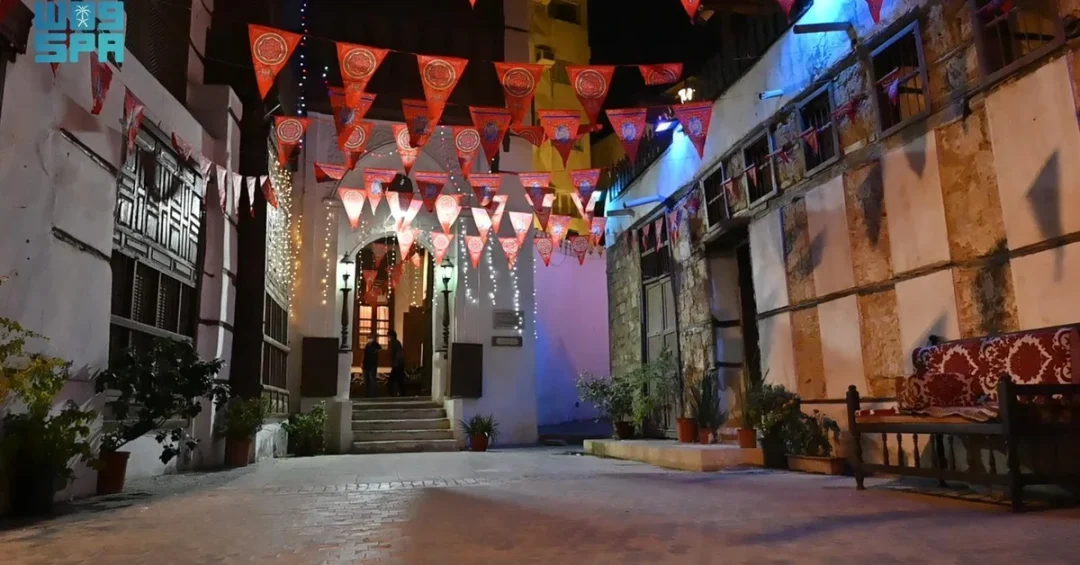
Jeddah has entered Ramadan with a radiant transformation of its streets, homes, and historic neighborhoods, as lanterns and festive decorations illuminate the city in a celebration of faith, family, and community. According to the Saudi Press Agency (SPA), the holy month has brought a spectacle of light and togetherness to the Kingdom’s second-largest city, where the cherished Al-Mirkaz tradition is once again bringing families outdoors after iftar. The practice, deeply rooted in Jeddah’s heritage, creates communal spaces that foster connections among relatives and neighbors, particularly in historic districts such as Al-Balad and Al-Ruwais. As residents of all ages gather to share conversations and traditional Ramadan dishes beneath the glow of decorative lights, the city embodies the essence of the holy month and showcases the enduring social fabric of Saudi Arabia’s western region.
The arrival of Ramadan in Jeddah is more than a seasonal change; it is a cultural phenomenon that draws on centuries of Red Sea trading heritage, Islamic devotion, and communal hospitality. The city’s streets, markets, and waterfronts take on a new rhythm, with evening activity extending late into the night as families visit relatives, exchange greetings, and enjoy the cooler hours after the daytime fast. This year, as in previous years, the municipality and local organizers have supported the festive atmosphere with lighting installations and public arrangements that allow the tradition to flourish safely and beautifully. The result is a living expression of Saudi Arabia’s cultural continuity and its openness to sharing the spirit of Ramadan with residents and visitors alike.
Context and Background
How did a simple outdoor gathering become one of the most beloved symbols of Ramadan in Jeddah? The answer lies in the city’s unique history as a crossroads of cultures. For centuries, Jeddah served as the principal gateway for pilgrims traveling to Makkah, and its residents developed a tradition of open hospitality that welcomed travelers from across the Islamic world. The Al-Mirkaz, which refers to the outdoor seating area or gathering place arranged outside the home, grew from this heritage. Families would set up cushions, carpets, and low seating in front of their houses or in shared alleys, creating a welcoming space where neighbors could join them after the evening prayer and iftar meal. Over time, the practice became a defining feature of Ramadan in the historic districts, especially in Al-Balad, the UNESCO World Heritage site known for its coral-stone houses and narrow lanes.
In Al-Balad and Al-Ruwais, the tradition continues with remarkable vitality. Residents decorate their Al-Mirkaz with traditional lanterns, known locally as fanoos, as well as strings of lights, colorful fabrics, and sometimes small plants or water features. The decorations are not merely ornamental; they signal that a household is open to guests and that the spirit of Ramadan is alive in that street. The narrow alleys of Al-Balad, with their historic buildings and restored merchant houses, provide a particularly atmospheric setting. As the sun sets and the call to prayer echoes across the district, the streets fill with the aromas of traditional dishes such as samosas, sambousek, and harees, and the sound of laughter and conversation. This living heritage is a testament to the resilience of Jeddah’s culture and its ability to adapt while preserving its identity.
The Saudi Press Agency report highlights that the tradition is not limited to older generations. Young people are actively involved, both in maintaining the Al-Mirkaz and in adding their own creative touches. In some districts, friendly competitions for the most creative Al-Mirkaz setups add a delightful spark of excitement, enhancing the spirit of unity and joy that defines Ramadan in Jeddah. These competitions encourage families to innovate with lighting designs, seating arrangements, and thematic decorations, while still respecting the traditional character of the practice. The result is a dynamic cultural expression that bridges generations and reinforces social bonds. For international observers, this is a window into the warmth and hospitality that characterize Saudi society, particularly during the holiest month of the Islamic calendar.
Key Details
What exactly happens during a typical Al-Mirkaz evening in Jeddah? The ritual begins before sunset, as families prepare their iftar meals and set up the outdoor space. Tables are laden with dates, water, juices, and a variety of hot and cold dishes. As the Maghrib call to prayer sounds, the fast is broken, and the communal meal begins. After eating, many families remain outside, sipping Arabic coffee and tea, and receiving guests who pass by. The Al-Mirkaz becomes a hub of social activity, where news is exchanged, stories are told, and children play nearby. In Al-Balad, the narrow streets mean that several Al-Mirkaz setups can be adjacent, creating a continuous flow of hospitality that stretches along entire lanes. This density of interaction is one of the distinguishing features of Ramadan in Jeddah, setting it apart from other cities where celebrations may be more private or dispersed.
The decorations themselves are an important part of the experience. Traditional lanterns, often made of metal and colored glass, are hung from windows, balconies, and poles. Strings of small lights are draped across alleyways, and some families place illuminated crescent moons and stars on their walls. In recent years, LED technology has allowed for more elaborate and energy-efficient displays, but the aesthetic remains rooted in tradition. The glow of these lights against the coral-stone walls of Al-Balad creates a magical atmosphere that draws visitors from other parts of the city and from abroad. Moreover, the Saudi Press Agency notes that the festive decorations adorn homes across Jeddah, not just in the historic districts, showing that the tradition has spread to modern neighborhoods as well. This blending of old and new is a hallmark of Saudi Arabia’s approach to cultural preservation.
Another key detail is the role of food. Traditional Ramadan dishes in Jeddah reflect the city’s multicultural history, with influences from Yemen, Egypt, India, and the Levant. Sambousek, a stuffed pastry, is a staple, as are lentil soup, foul medames, and grilled meats. Sweets such as kunafa and luqaimat are also popular. Many families prepare extra food to share with neighbors and passersby, embodying the charitable spirit of Ramadan. The Al-Mirkaz thus serves as a platform for both social and charitable activities, as wealthier households often provide meals to those in need. This aspect of the tradition aligns with the Islamic principles of generosity and community care, and it is one of the reasons the practice has endured for generations.
International and Regional Impact
How does a local tradition like Al-Mirkaz resonate beyond Saudi Arabia’s borders? In an era when cultural tourism is a growing sector, Jeddah’s Ramadan atmosphere has become a draw for international visitors. The city’s historic district, Al-Balad, is a UNESCO World Heritage site, and its Ramadan decorations and Al-Mirkaz gatherings offer a unique cultural experience. Visitors from the Gulf, Asia, Europe, and beyond come to witness the lights, taste the food, and participate in the communal spirit. This influx contributes to the local economy and helps project a positive image of Saudi Arabia as a welcoming and culturally rich destination. The Saudi Press Agency’s coverage of the tradition also serves to share this aspect of Saudi life with a global audience, reinforcing the Kingdom’s commitment to cultural exchange and understanding.
Regionally, the Al-Mirkaz tradition highlights the shared Islamic heritage of the Gulf and the wider Middle East. Similar practices exist in other countries, but Jeddah’s version is distinctive for its integration into the urban fabric of a historic port city. As Saudi Arabia deepens its ties with neighboring states through cultural and economic partnerships, events like Ramadan in Jeddah serve as soft power assets. They demonstrate the Kingdom’s ability to preserve its traditions while modernizing, a balance that is central to Vision 2030. Moreover, the presence of expatriate communities in Jeddah means that the tradition is shared with non-Saudis, fostering intercultural dialogue and mutual respect. This inclusive spirit is a reflection of the Kingdom’s broader efforts to engage with the world on the basis of mutual interest and shared values.
Economic and Strategic Significance
What economic value does Ramadan tourism and cultural heritage bring to Jeddah and the Kingdom? The holy month is a peak period for retail, hospitality, and food services in Saudi Arabia. In Jeddah, the festive atmosphere drives foot traffic to markets, malls, and restaurants, particularly in the evenings. The Al-Mirkaz tradition, by encouraging outdoor gatherings, also supports small businesses that sell lanterns, decorations, and traditional foods. Street vendors and family-run shops in Al-Balad and Al-Ruwais see increased sales during Ramadan, providing a boost to the local economy. Additionally, the influx of visitors to historic districts creates opportunities for guided tours, cultural performances, and artisanal crafts, all of which align with the Vision 2030 goal of diversifying income sources and promoting cultural tourism.
Strategically, the preservation of Al-Mirkaz and similar traditions supports Saudi Arabia’s broader objectives of enhancing quality of life and strengthening national identity. Vision 2030 includes programs to revitalize historic areas, such as the Jeddah Historic District Program, which aims to restore Al-Balad and turn it into a vibrant cultural and economic hub. By celebrating Ramadan traditions, the Kingdom reinforces the connection between its rich past and its ambitious future. The Al-Mirkaz also contributes to social cohesion, which is essential for stability and prosperity. When families and neighbors gather, they build trust and solidarity, which are intangible but vital assets for any society. In this way, a simple outdoor seating arrangement becomes a symbol of Saudi Arabia’s holistic approach to development, one that values people and culture alongside infrastructure and investment.
Vision 2030 Alignment
How does the Al-Mirkaz tradition fit into Saudi Arabia’s Vision 2030? At its core, Vision 2030 seeks to create a thriving society, a diversified economy, and an ambitious nation. The Al-Mirkaz embodies the social dimension of this vision by fostering community bonds, promoting cultural heritage, and enhancing the quality of life for residents and visitors. It also supports the economic dimension by driving tourism and local commerce. Furthermore, the tradition showcases the Kingdom’s commitment to preserving its identity while opening up to the world. As Saudi Arabia hosts more international events and welcomes more visitors, cultural practices like Al-Mirkaz serve as authentic experiences that distinguish the Kingdom from other destinations. They are a reminder that modernization does not mean erasing tradition; rather, it means building on it.
In the coming years, as Vision 2030 projects continue to transform Jeddah and other cities, the Al-Mirkaz will likely evolve while retaining its essence. The Jeddah Historic District Program is already working to restore Al-Balad’s buildings and infrastructure, which will provide an even better setting for Ramadan gatherings. The Saudi Press Agency’s reporting on the tradition underscores its importance as a national treasure. For international readers, the story of Jeddah’s Ramadan lights and Al-Mirkaz is an invitation to discover a Saudi Arabia that is proud of its heritage, open to the world, and committed to a future of prosperity and harmony. As the lanterns glow and the coffee pours, the message of Ramadan—faith, family, and generosity—resonates far beyond the city’s ancient walls.
20 Questions
Q1. What is Al-Mirkaz in Jeddah’s Ramadan tradition?
A1. Al-Mirkaz refers to the outdoor seating area or gathering place arranged outside homes during Ramadan, where families and neighbors meet after iftar to share conversations and traditional dishes.
Q2. Which historic districts in Jeddah are known for Al-Mirkaz?
A2. The tradition flourishes in Al-Balad and Al-Ruwais, two historic districts renowned for their cultural heritage and communal Ramadan atmosphere.
Q3. When does Al-Mirkaz take place?
A3. It occurs after the iftar meal, the evening breaking of the fast, and continues late into the night as families socialize and welcome guests.
Q4. What types of decorations are used for Ramadan in Jeddah?
A4. Homes and streets are adorned with traditional lanterns called fanoos, strings of lights, crescent moons, stars, and colorful fabrics, creating a festive glow.
Q5. Are there competitions for Al-Mirkaz setups?
A5. Yes, in some districts, friendly competitions for the most creative Al-Mirkaz setups add excitement and encourage innovation while preserving tradition.
Q6. What traditional foods are served during Al-Mirkaz?
A6. Dishes include sambousek, lentil soup, foul medames, grilled meats, and sweets like kunafa and luqaimat, reflecting Jeddah’s multicultural heritage.
Q7. Who participates in Al-Mirkaz gatherings?
A7. Residents of all ages, including children, youth, and elders, as well as neighbors and guests, come together to share the communal spirit.
Q8. How does Al-Mirkaz reflect Jeddah’s history?
A8. It stems from the city’s role as a Red Sea gateway for pilgrims, where hospitality and open gatherings became a hallmark of the local culture.
Q9. Does Al-Mirkaz have any charitable aspect?
A9. Yes, many families prepare extra food to share with neighbors and those in need, embodying the charitable spirit of Ramadan.
Q10. How has the Saudi Press Agency reported on this tradition?
A10. The SPA highlighted Jeddah’s radiant transformation during Ramadan and the cherished Al-Mirkaz tradition, emphasizing its role in fostering community bonds.
Q11. Is Al-Mirkaz only for families or can visitors join?
A11. While primarily a family and neighborhood tradition, its open and welcoming nature means visitors and guests are often invited to share in the gatherings.
Q12. What is the significance of lights in Jeddah’s Ramadan celebrations?
A12. Lights symbolize the spiritual illumination of the holy month and create a joyful atmosphere that brings people together in public spaces.
Q13. How does Al-Mirkaz contribute to social cohesion?
A13. By encouraging face-to-face interaction among relatives and neighbors, it strengthens community ties and reinforces mutual support and trust.
Q14. Are there any government initiatives supporting Ramadan traditions in Jeddah?
A14. The Jeddah Historic District Program and local municipality support the restoration and celebration of heritage areas, facilitating traditions like Al-Mirkaz.
Q15. How does Al-Mirkaz align with Vision 2030?
A15. It promotes cultural heritage, community well-being, and tourism, which are key pillars of Vision 2030’s social and economic goals.
Q16. What economic benefits does Ramadan bring to Jeddah?
A16. It boosts retail, hospitality, and food sectors, supports small businesses selling decorations and foods, and attracts cultural tourists to historic districts.
Q17. Can non-Muslims experience the Ramadan atmosphere in Jeddah?
A17. Yes, non-Muslim residents and visitors can observe the festive lights and enjoy the cultural ambiance, though they may not participate in religious practices.
Q18. How has Al-Mirkaz evolved in modern times?
A18. While retaining traditional elements, it has adapted with LED lights, themed decorations, and competitions, and spread to modern neighborhoods across Jeddah.
Q19. What role do youth play in Al-Mirkaz?
A19. Youth actively participate by helping set up decorations, organizing gatherings, and infusing creativity into the tradition, ensuring its continuity.
Q20. What message does Jeddah’s Ramadan celebration convey to the world?
A20. It showcases Saudi Arabia’s rich heritage, hospitality, and commitment to community, offering a welcoming image of the Kingdom during the holy month.
Reader Feedback
We value your thoughts. Please share your feedback on this article.
Your feedback helps us improve our coverage.
Related articles
 Henna: Festive Tradition Connecting Children to Ramadan Spirit
 Ramadan Drives Higher Demand for Siwak Across Saudi Arabia
 Islamic Arts Biennale 2025 Opens in Jeddah with Rare Exhibits
 Riyadh Glows with Lanterns for Ramadan Celebrations
 Jeddah Historic District Hosts Ramadan Season 2025
 Traditional Games Bring Families Together during Ramadan