


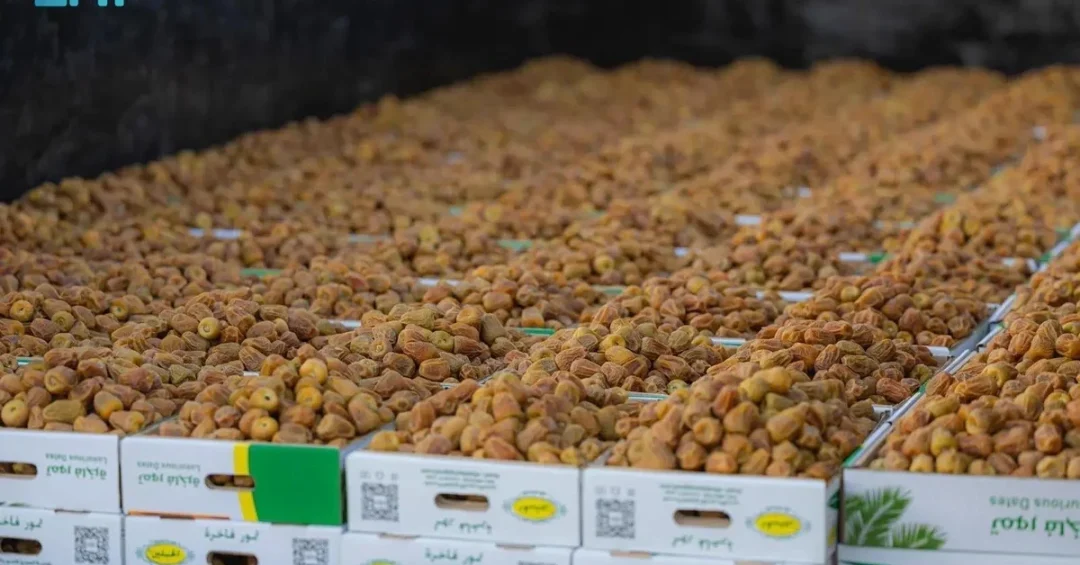
Saudi Arabia’s date production exceeded 1.9 million tons in 2024, the Ministry of Environment, Water, and Agriculture confirmed, cementing the Kingdom’s position as one of the world’s largest producers and exporters of dates as the fruit takes center stage on Ramadan tables across the Kingdom and in markets worldwide. The official figures, released via the Saudi Press Agency, show that domestic output comfortably surpasses local demand during the holy month and throughout the year, generating a substantial surplus for export to countries across the region and around the globe.
The announcement carries particular resonance during Ramadan, when dates are traditionally used to break the daily fast and feature prominently in household gatherings, charitable distributions, and hospitality across Saudi Arabia. With more than 1.9 million tons harvested in 2024, the Kingdom has demonstrated that its agricultural sector can reliably supply this culturally and nutritionally vital product at scale. The ministry’s disclosure also underscores how thoroughly dates have become intertwined with the national economy, rural livelihoods, and the country’s broader food security agenda.
Context and Background
How did dates come to occupy such a central place in Saudi Arabia’s agricultural identity? The answer lies in a combination of geography, heritage, and deliberate policy. The Kingdom’s climate, with its intense sun and scarce water, has historically favored date palms, which are well adapted to arid conditions. For generations, date cultivation has provided income and sustenance for communities in regions such as Al-Ahsa, Al-Qassim, and Madinah, where vast palm groves form distinctive landscapes and support local economies.
Over the past decade, the Ministry of Environment, Water, and Agriculture has worked to modernize this traditional sector through improved irrigation methods, pest control programs, quality standards, and support for smallholder farmers. These efforts aim to raise productivity per hectare while preserving the heritage varieties that give Saudi dates their distinctive flavor and market appeal. The result has been a steady increase in output that now places the Kingdom among the top global producers.
The timing of the ministry’s statement during Ramadan highlights the seasonal importance of dates in Saudi culture. Households across the country purchase dates in larger quantities during the holy month, and the fruit is also a common component of iftar meals provided at mosques and through charitable initiatives. This annual surge in demand is met almost entirely by domestic production, a testament to the sector’s capacity and organization.
Key Details
What do the latest figures reveal about the scale and competitiveness of Saudi date production? According to the Ministry of Environment, Water, and Agriculture, local production in 2024 exceeded 1.9 million tons, a volume that reflects both the abundance of domestic output and its ability to satisfy local demand. The Kingdom has achieved 119 percent self-sufficiency in dates, meaning it produces more than it consumes and can direct the remainder to international markets.
Exports and re-exports amounted to approximately 351,000 tons, while imports did not exceed 952 tons. This stark imbalance between exports and imports illustrates the high quality of Saudi dates and their ability to compete globally. The ministry noted that Saudi dates reach many countries in the region and around the world, where they are valued for their taste, texture, and nutritional benefits.
The data also points to the strategic importance of dates within the Kingdom’s food security framework. By maintaining a surplus, Saudi Arabia reduces its reliance on imported food products and strengthens its resilience against global supply chain disruptions. The ministry has consistently emphasized that agriculture, and dates in particular, form a key pillar of national food security.
International and Regional Impact
How are Saudi dates received in international markets, and what does their success say about the Kingdom’s export ambitions? Saudi dates are exported to a wide range of destinations, including Gulf Cooperation Council states, other Arab countries, and markets in Asia, Europe, and North America. Their reputation for quality has grown steadily, supported by participation in international food exhibitions and trade missions organized by Saudi authorities.
The export volume of 351,000 tons represents a significant contribution to the Kingdom’s non-oil export earnings and helps diversify the economy away from hydrocarbon dependence. For importing countries, Saudi dates offer a reliable supply of a nutritious product that is especially sought after during Ramadan. The presence of Saudi dates in foreign supermarkets and specialty stores also serves as a form of cultural diplomacy, introducing consumers to a staple of Saudi hospitality.
Regionally, the Kingdom’s dominance in date production positions it as a key player in food security discussions. Neighboring countries that import Saudi dates benefit from stable supply, while Saudi expertise in date cultivation and processing is increasingly shared through development cooperation. This soft power dimension complements the Kingdom’s broader diplomatic and economic engagement.
Economic and Strategic Significance
What makes the date sector economically strategic for Saudi Arabia beyond its export value? The cultivation, harvesting, processing, and packaging of dates generate employment for thousands of Saudis, particularly in rural areas where alternative job opportunities may be limited. The sector supports small and medium enterprises, from family farms to modern processing plants that produce packaged dates, date paste, and other value-added products.
Investment in date processing has grown in recent years, with factories in regions like Al-Ahsa and Al-Qassim adopting advanced technologies to extend shelf life and meet international food safety standards. These facilities add value to raw dates and create additional export opportunities. The Ministry of Environment, Water, and Agriculture has supported such investments through technical assistance and marketing programs.
From a strategic perspective, the date sector contributes to the Kingdom’s food security objectives by ensuring a stable domestic supply of a culturally important food. It also aligns with efforts to optimize water use, as date palms can be irrigated with treated wastewater and other non-conventional sources, reducing pressure on scarce freshwater resources. Research into drought-resistant varieties and efficient irrigation continues to advance.
Vision 2030 Alignment
How does the success of Saudi dates connect to Vision 2030, the Kingdom’s comprehensive plan for economic and social transformation? Vision 2030 seeks to diversify the economy, boost non-oil exports, and enhance food security, all of which the date sector directly supports. The 1.9 million tons produced in 2024 and the 119 percent self-sufficiency rate are tangible indicators of progress in these areas.
Moreover, the date industry embodies the Vision’s emphasis on sustainable agriculture and rural development. By modernizing traditional farming and creating value-added products, the sector helps preserve cultural heritage while generating economic opportunities. As Saudi Arabia continues to expand its global trade footprint, dates are poised to remain a flagship agricultural export and a symbol of the Kingdom’s ability to compete on the world stage.
The Ministry of Environment, Water, and Agriculture’s ongoing programs, from farmer training to international marketing, ensure that the date sector will keep contributing to food security and economic growth. During Ramadan and beyond, Saudi dates will continue to represent the best of the Kingdom’s agricultural heritage and its forward-looking ambitions.
20 Questions
Q1. How many tons of dates did Saudi Arabia produce in 2024?
A1. Saudi Arabia produced more than 1.9 million tons of dates in 2024, according to the Ministry of Environment, Water, and Agriculture.
Q2. What is Saudi Arabia’s self-sufficiency rate for dates?
A2. The Kingdom has achieved 119 percent self-sufficiency in dates, meaning it produces more than it consumes.
Q3. How many tons of dates did Saudi Arabia export in 2024?
A3. Exports and re-exports of Saudi dates amounted to approximately 351,000 tons in 2024.
Q4. How many tons of dates did Saudi Arabia import in 2024?
A4. Imports did not exceed 952 tons, highlighting the high quality and competitiveness of domestic production.
Q5. Which ministry announced the date production figures?
A5. The Ministry of Environment, Water, and Agriculture released the figures via the Saudi Press Agency.
Q6. Why are dates especially important during Ramadan?
A6. Dates are traditionally used to break the daily fast and are central to iftar meals and charitable distributions across the Kingdom.
Q7. What regions of Saudi Arabia are known for date cultivation?
A7. Al-Ahsa, Al-Qassim, and Madinah are among the regions with extensive date palm groves and strong cultivation traditions.
Q8. How does date production support Saudi food security?
A8. It ensures a stable domestic supply of a culturally important food, reducing reliance on imports and enhancing resilience.
Q9. What are the main export destinations for Saudi dates?
A9. Saudi dates are exported to Gulf Cooperation Council states, other Arab countries, and markets in Asia, Europe, and North America.
Q10. How does the date sector contribute to Vision 2030?
A10. It supports economic diversification, non-oil exports, food security, and rural development, all key Vision 2030 objectives.
Q11. What value-added products are made from Saudi dates?
A11. Products include packaged dates, date paste, date syrup, and other processed items that extend shelf life and add export value.
Q12. How many jobs does the date sector support?
A12. The sector generates employment for thousands of Saudis, particularly in rural areas, from farming to processing and packaging.
Q13. What technologies are used in Saudi date processing?
A13. Modern factories use advanced sorting, packaging, and preservation technologies to meet international food safety standards.
Q14. Does Saudi Arabia share its date expertise internationally?
A14. Yes, the Kingdom engages in development cooperation and participates in international exhibitions to share knowledge and promote exports.
Q15. How does date cultivation affect water use in Saudi Arabia?
A15. Date palms can be irrigated with treated wastewater and other non-conventional sources, reducing pressure on freshwater resources.
Q16. What is the significance of the 119% self-sufficiency rate?
A16. It indicates that Saudi Arabia produces more dates than it needs, allowing for a substantial export surplus.
Q17. How do Saudi dates compete in global markets?
A17. They compete on quality, taste, and nutritional value, supported by marketing efforts and participation in trade fairs.
Q18. What role do dates play in Saudi hospitality?
A18. Dates are a traditional symbol of generosity and are commonly offered to guests in homes and official settings.
Q19. Are there government programs to support date farmers?
A19. Yes, the Ministry of Environment, Water, and Agriculture provides training, technical assistance, and marketing support to farmers.
Q20. What does the future hold for Saudi date production?
A20. Continued investment in technology, sustainability, and export promotion is expected to further strengthen the sector’s global position.
Reader Feedback
We value your thoughts. Please share your feedback on this article.
Your feedback helps us improve our coverage.
Related articles
 Monshaat Reports 67% Surge in Saudi Commercial Registrations
 ICIEC, ITFC Sign Letter of Credit Insurance Policy
 Mawani Adds CMA CGM Routes Linking Saudi Ports to India, Oman, Iraq
 Japanese Stocks Close Higher as Nikkei and TOPIX Gain
 ZATCA Urges Taxpayers to Use Fines Cancellation Initiative
 Jazan Mangoes Hit Markets as Ramadan Begins