


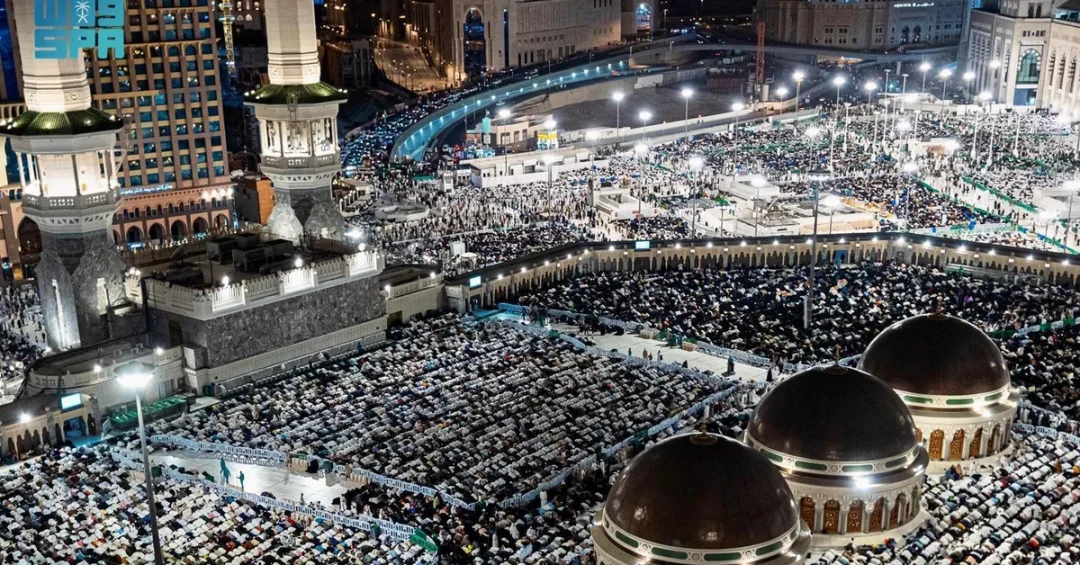
The General Presidency for the Affairs of the Two Holy Mosques has confirmed that advanced cooling, lighting, and sound systems are operating at full capacity at the Grand Mosque in Makkah during the holy month of Ramadan, ensuring that millions of worshipers and Umrah performers can complete their rituals in comfort and tranquility. The announcement, released through official Saudi channels, underscores the Kingdom’s sustained commitment to serving the Guests of God and reflects the scale of technical and logistical preparation that accompanies the annual Ramadan pilgrimage season.
At the heart of the operation is one of the largest cooling systems in the world, with a total capacity of 155,000 tons, supported by 120,000 lighting units and a state-of-the-art sound system distributed strategically across the mosque’s three expansions and courtyards. Together, these systems form an integrated infrastructure designed to accommodate unprecedented numbers of worshipers while preserving the spiritual atmosphere that defines the Grand Mosque. How does a single site manage to serve millions of visitors around the clock without compromising safety, comfort, or sanctity? The answer lies in years of planning, engineering excellence, and round-the-clock maintenance carried out by Saudi authorities.
Context and Background
The Grand Mosque, known as Al-Masjid Al-Haram, is the holiest site in Islam and the focal point of the annual Hajj and Umrah pilgrimages. Each year, millions of Muslims from every corner of the world travel to Makkah to perform their religious duties, with Ramadan representing one of the busiest periods of the pilgrimage calendar. The General Presidency for the Affairs of the Two Holy Mosques, the government body responsible for the care and administration of the Grand Mosque and the Prophet’s Mosque in Madinah, oversees a comprehensive operational framework that combines religious guidance, crowd management, and technical services.
In recent years, Saudi Arabia has invested heavily in expanding and modernizing the infrastructure of the Grand Mosque. The mosque now features three major expansions that together accommodate vast congregations, alongside extensive courtyards that serve as overflow areas during peak times. These expansions are not merely architectural achievements; they are supported by sophisticated engineering systems that regulate temperature, illumination, and acoustics across every section of the complex. The Ramadan 2025 operation builds on this foundation, applying lessons learned from previous seasons to deliver a seamless experience for worshipers.
Why does the Kingdom devote such enormous resources to a single site? Because serving the Two Holy Mosques is a sacred responsibility and a central pillar of Saudi Arabia’s national identity. The Custodian of the Two Holy Mosques, King Salman bin Abdulaziz Al Saud, and His Royal Highness Crown Prince Mohammed bin Salman have consistently emphasized that the comfort and safety of pilgrims remain a top priority. This commitment is reflected in the continuous upgrades to infrastructure, the deployment of advanced technologies, and the coordination among multiple government agencies that work together during peak seasons.
Key Details of the Advanced Systems
According to the General Presidency for the Affairs of the Two Holy Mosques, the Grand Mosque operates one of the largest cooling systems in the world, with a capacity of 155,000 tons. This system is designed to maintain a comfortable environment even when outdoor temperatures in Makkah soar during the day. The cooling infrastructure is integrated into the mosque’s architectural design, delivering conditioned air throughout the prayer halls, corridors, and courtyards. Regular maintenance ensures that the system operates at peak efficiency throughout Ramadan, when the mosque remains open around the clock.
Illumination is another critical component of the operation. The Grand Mosque is equipped with 120,000 lighting units, strategically distributed across the three expansions and courtyards. These units are designed to provide consistent, glare-free light that enhances visibility for worshipers while preserving the aesthetic and spiritual character of the sacred space. The lighting system is also energy-efficient, aligning with broader sustainability goals that Saudi Arabia is pursuing across its infrastructure projects. In addition, a highly precise sound system ensures that sermons, prayers, and calls to worship are transmitted clearly to every corner of the mosque, allowing worshipers to follow the proceedings regardless of their location.
The sound system is particularly important during Ramadan, when the mosque hosts nightly Taraweeh and Qiyam prayers that draw immense crowds. The system is calibrated to deliver clear audio without distortion or echo, even in the vast courtyards that surround the mosque. Technicians monitor the system continuously and perform regular maintenance to prevent disruptions. Together with the cooling and lighting systems, the sound infrastructure forms a triad of services that directly enhance the worship experience. How do these systems interact to serve millions of people simultaneously? Through meticulous planning, centralized control rooms, and a workforce of engineers and technicians who operate behind the scenes.
International and Regional Impact
The smooth operation of the Grand Mosque during Ramadan has significant implications beyond Saudi Arabia’s borders. Pilgrims from more than 180 countries travel to Makkah each year, and their experiences shape perceptions of the Kingdom’s capacity to host large-scale religious events. When worshipers return home and share positive accounts of their pilgrimage, they contribute to Saudi Arabia’s global image as a reliable and hospitable host. This soft power dimension is increasingly important as the Kingdom positions itself as a global hub for religious tourism and cultural exchange.
Regional cooperation also plays a role in the pilgrimage ecosystem. Saudi authorities coordinate with airlines, travel agencies, and health organizations across the Middle East, Asia, Africa, and Europe to facilitate the arrival and departure of pilgrims. The advanced systems at the Grand Mosque are part of a broader logistical chain that includes visa processing, transportation, accommodation, and medical services. Any disruption in one part of the chain can affect the entire experience, which is why Saudi Arabia invests in integrated planning and real-time monitoring. The successful management of Ramadan crowds reinforces confidence among international partners and demonstrates the Kingdom’s operational capabilities.
Moreover, the Grand Mosque’s infrastructure serves as a model for other large religious and cultural sites around the world. Engineers and planners from various countries have studied Saudi Arabia’s approach to crowd management, cooling, and sound reinforcement. By sharing expertise and adopting best practices, the Kingdom contributes to global knowledge in the field of mega-event management. This exchange of ideas aligns with Saudi Arabia’s Vision 2030 objective of fostering international collaboration and positioning the country as a leader in innovative solutions.
Economic and Strategic Significance
The pilgrimage sector is a major contributor to Saudi Arabia’s economy, generating revenue through transportation, hospitality, retail, and related services. Umrah and Hajj seasons create thousands of jobs and support small and medium-sized enterprises in Makkah, Madinah, and other regions. The advanced systems at the Grand Mosque enhance the capacity and reliability of this sector, allowing more pilgrims to be served efficiently. As the Kingdom expands its religious tourism offerings, the economic benefits are expected to grow, contributing to the diversification goals of Vision 2030.
Strategically, the management of the Two Holy Mosques reinforces Saudi Arabia’s role as the leader of the Islamic world. The Kingdom’s ability to host millions of pilgrims safely and comfortably is a source of prestige and influence. It also strengthens ties with Muslim-majority countries, many of which are key partners in trade, energy, and diplomacy. By continuously upgrading the infrastructure of the Grand Mosque, Saudi Arabia signals its long-term commitment to this role and its readiness to embrace future challenges. The Ramadan 2025 operation, with its emphasis on advanced cooling, lighting, and sound systems, is a clear example of this strategic vision in action.
Furthermore, the technological expertise developed through these projects has applications beyond the pilgrimage sector. Saudi companies and government agencies have gained valuable experience in large-scale cooling, energy management, and acoustic engineering. These capabilities can be exported or applied to other mega-projects, such as NEOM and the Red Sea Project, where environmental control and visitor experience are paramount. In this way, the Grand Mosque serves as a proving ground for innovations that support Saudi Arabia’s broader economic transformation.
Vision 2030 Alignment
The advanced systems at the Grand Mosque exemplify the objectives of Saudi Vision 2030, the national blueprint for economic and social transformation led by Crown Prince Mohammed bin Salman. Vision 2030 aims to enhance the quality of life for citizens and visitors, diversify the economy, and strengthen Saudi Arabia’s global standing. By investing in world-class infrastructure at the holiest site in Islam, the Kingdom demonstrates its commitment to these goals. The cooling, lighting, and sound systems are not just technical achievements; they are expressions of a broader vision that places service, innovation, and hospitality at the center of national development.
Looking ahead, Saudi Arabia plans to continue expanding the capacity of the Grand Mosque and improving the services provided to pilgrims. Future projects will likely incorporate even more advanced technologies, such as smart sensors, renewable energy solutions, and artificial intelligence for crowd management. These initiatives will further enhance the pilgrimage experience and solidify the Kingdom’s reputation as a global leader in religious tourism. As Ramadan 2025 unfolds, the millions of worshipers who pass through the Grand Mosque will benefit from systems that reflect decades of investment and a deep sense of responsibility. The Kingdom’s journey toward Vision 2030 is inseparable from its sacred duty to serve the Guests of God, and the advanced systems now in operation stand as a testament to that enduring commitment.
20 Questions
Q1. What advanced systems are operating at the Grand Mosque during Ramadan?
A1. The Grand Mosque operates advanced cooling, lighting, and sound systems, along with regular maintenance, to ensure worshipers and Umrah performers can complete their rituals comfortably and tranquilly during the holy month.
Q2. What is the capacity of the Grand Mosque’s cooling system?
A2. The Grand Mosque operates one of the largest cooling systems in the world, with a total capacity of 155,000 tons, designed to maintain a comfortable environment throughout the complex.
Q3. How many lighting units are installed at the Grand Mosque?
A3. The Grand Mosque is equipped with 120,000 lighting units, strategically distributed across its three expansions and courtyards to provide consistent, glare-free illumination.
Q4. Which authority announced the operation of these systems?
A4. The General Presidency for the Affairs of the Two Holy Mosques announced the operation of these advanced systems through official Saudi channels, including the Saudi Press Agency.
Q5. Why are these systems particularly important during Ramadan?
A5. Ramadan is one of the busiest pilgrimage periods, drawing millions of worshipers for Taraweeh and Qiyam prayers, making cooling, lighting, and sound systems essential for comfort and safety.
Q6. How does the sound system benefit worshipers?
A6. The state-of-the-art sound system transmits sermons, prayers, and calls to worship clearly to every corner of the mosque, allowing all worshipers to follow proceedings without distortion or echo.
Q7. Where are the lighting units distributed within the Grand Mosque?
A7. The 120,000 lighting units are distributed across the mosque’s three expansions and courtyards, ensuring even illumination throughout all facilities and outdoor areas.
Q8. What role does regular maintenance play in the operation?
A8. Regular maintenance ensures that cooling, lighting, and sound systems operate at peak efficiency throughout Ramadan, preventing disruptions and maintaining a comfortable environment for pilgrims.
Q9. How does the Grand Mosque’s infrastructure support Vision 2030?
A9. The advanced systems reflect Vision 2030’s goals of enhancing quality of life, diversifying the economy, and strengthening Saudi Arabia’s global standing as a leader in religious tourism.
Q10. What is the significance of the Grand Mosque for Muslims worldwide?
A10. The Grand Mosque is the holiest site in Islam and the focal point of Hajj and Umrah, drawing millions of Muslims from over 180 countries each year.
Q11. How many expansions does the Grand Mosque have?
A11. The Grand Mosque features three major expansions, which together accommodate vast congregations and are supported by integrated cooling, lighting, and sound systems.
Q12. What economic benefits does the pilgrimage sector bring to Saudi Arabia?
A12. The pilgrimage sector generates revenue through transportation, hospitality, retail, and services, creating thousands of jobs and supporting small and medium-sized enterprises in Makkah and beyond.
Q13. How does Saudi Arabia coordinate with other countries for pilgrimage management?
A13. Saudi authorities coordinate with airlines, travel agencies, and health organizations across the Middle East, Asia, Africa, and Europe to facilitate pilgrim arrival, departure, and services.
Q14. What technological expertise has Saudi Arabia gained from these projects?
A14. Saudi companies and agencies have developed expertise in large-scale cooling, energy management, and acoustic engineering, which can be applied to other mega-projects like NEOM.
Q15. How does the cooling system handle Makkah’s high temperatures?
A15. The 155,000-ton cooling system is integrated into the mosque’s architecture, delivering conditioned air throughout prayer halls, corridors, and courtyards even during peak daytime heat.
Q16. What is the role of the General Presidency for the Affairs of the Two Holy Mosques?
A16. The General Presidency oversees the care and administration of the Grand Mosque and the Prophet’s Mosque, managing religious guidance, crowd control, and technical services.
Q17. How do the advanced systems enhance the spiritual experience of pilgrims?
A17. By ensuring comfort, clear audio, and proper illumination, the systems allow worshipers to focus on their rituals without distraction, preserving the spiritual atmosphere of the sacred site.
Q18. What future improvements are planned for the Grand Mosque?
A18. Future projects are expected to incorporate smart sensors, renewable energy solutions, and artificial intelligence for crowd management, further enhancing the pilgrimage experience.
Q19. How does the Grand Mosque operation reflect Saudi leadership’s priorities?
A19. The Custodian of the Two Holy Mosques and the Crown Prince have consistently prioritized pilgrim comfort and safety, reflecting a sacred national responsibility and commitment to service.
Q20. Why is the successful management of Ramadan crowds important globally?
A20. It reinforces Saudi Arabia’s global image as a reliable host, strengthens ties with Muslim-majority countries, and demonstrates operational capabilities that serve as a model worldwide.
Reader Feedback
We value your thoughts. Please share your feedback on this article.
Your feedback helps us improve our coverage.
Related articles
 New Saudi Relief Convoys Arrive in Northern Gaza
 Makkah Authorities Launch Comprehensive Ramadan Plans
 Saudi Ministry, FAO Organize Cyprus Livestock Genetics Visit
 GDNC Arrests Suspect with 58,500 Amphetamine Pills in Taif
 I‘tikāf Registration at Two Holy Mosques Opens Wednesday
 Umrah Guests Tour King Fahd Quran Printing Complex