


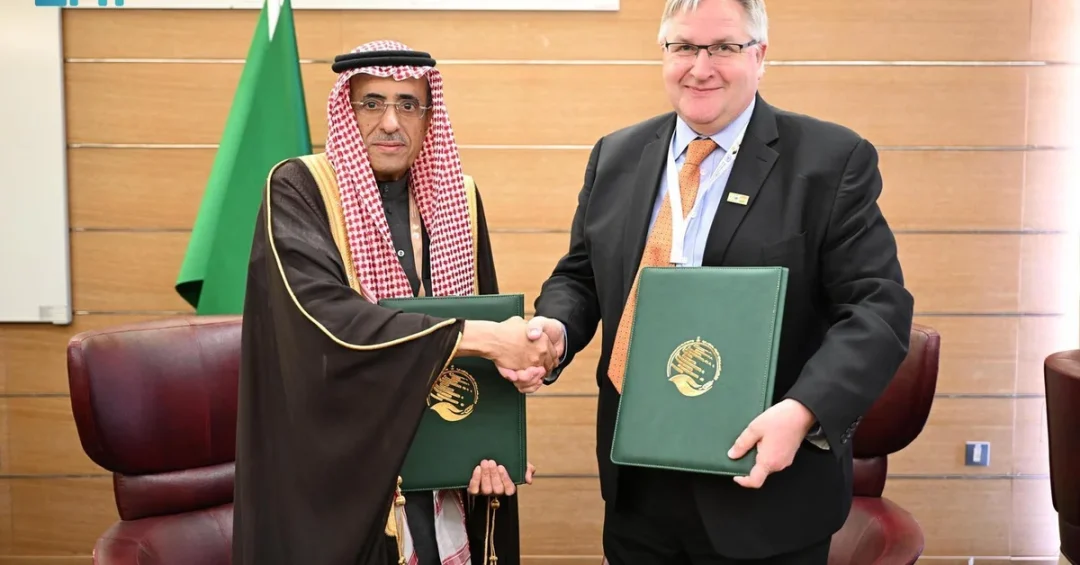
The King Salman Humanitarian Aid and Relief Center (KSrelief) has signed a $5,154,000 joint cooperation agreement with the United Nations Population Fund (UNFPA) to provide emergency protection for vulnerable groups in Ukraine, benefiting 49,360 individuals. The agreement was signed on the sidelines of the Fourth Riyadh International Humanitarian Forum by KSrelief Assistant Supervisor General for Operations and Programs Eng. Ahmed bin Ali Al-Baiz and UNFPA Deputy Executive Director Andrew Saberton, according to the Saudi Press Agency (SPA).
Have you ever wondered how a single agreement signed in Riyadh can reach thousands of families in a conflict zone thousands of miles away? This partnership is designed to deliver essential prevention and response services related to gender-based violence in the affected areas of Ukraine. It focuses on supporting mobile psychosocial teams to assist survivors and those at risk, establishing safe spaces for women and girls that offer economic empowerment opportunities, dignity kits, and community psychological support services. Additionally, it aims to strengthen the capabilities of community psychological support service providers. The initiative aligns with the Kingdom of Saudi Arabia’s longstanding commitment, through KSrelief, to assist women and girls affected by gender-based violence in Ukraine.
Context and Background
Why does Saudi Arabia, a nation far from the frontlines of the conflict in Ukraine, invest millions in protecting vulnerable groups there? The answer lies in the Kingdom’s principled humanitarian diplomacy, which treats relief as a universal duty rather than a regional one. KSrelief, established in 2015 by Royal Order, has become one of the world’s most active humanitarian donors, operating in more than 80 countries. Its partnership with UNFPA, the United Nations sexual and reproductive health agency, reflects a broader strategy of collaborating with multilateral institutions to address complex crises with speed and expertise.
The Fourth Riyadh International Humanitarian Forum, held in the Saudi capital, provided the backdrop for this agreement. The forum convenes global humanitarian leaders, donors, and practitioners to coordinate responses to displacement, conflict, and natural disasters. By signing the agreement there, KSrelief underscored its role as a convener and a funder, bridging Gulf generosity with UN operational capacity. The $5,154,000 commitment is not an isolated gesture; it is part of a sustained Saudi effort to mitigate the human cost of the war in Ukraine, particularly for women and girls who face heightened risks of violence, exploitation, and psychological trauma.
How does this agreement fit into Saudi Arabia’s wider humanitarian record? Since its founding, KSrelief has implemented thousands of projects in health, food security, shelter, and protection, often in partnership with UN agencies. In Ukraine, KSrelief has previously delivered relief supplies, medical aid, and winterization kits. The new UNFPA agreement deepens that engagement by focusing on protection—a sector that is often underfunded but critical for restoring dignity and safety. It also signals Saudi Arabia’s willingness to address sensitive issues such as gender-based violence through professional, survivor-centered programming.
Key Details of the Agreement
What exactly does the $5,154,000 agreement deliver on the ground? According to the Saudi Press Agency, the funds will support mobile psychosocial teams that reach survivors and those at risk in affected areas of Ukraine. These teams provide immediate counselling, referral services, and psychological first aid. The agreement also establishes safe spaces for women and girls, which offer economic empowerment opportunities, dignity kits, and community psychological support services. These safe spaces are designed to be more than shelters; they are hubs where women can rebuild confidence, learn skills, and access peer support.
The agreement includes a component to strengthen the capabilities of community psychological support service providers. This means training local social workers, psychologists, and volunteers to deliver quality care that meets international standards. By investing in local capacity, the project aims to create a lasting impact beyond the immediate funding period. The 49,360 beneficiaries are expected to include internally displaced women, girls, and other vulnerable individuals who have experienced or are at risk of gender-based violence.
Who are the signatories, and why do they matter? Eng. Ahmed bin Ali Al-Baiz, KSrelief Assistant Supervisor General for Operations and Programs, represented the Kingdom, while Andrew Saberton, UNFPA Deputy Executive Director, signed for the UN agency. Their signatures formalize a partnership that combines Saudi financial resources with UNFPA’s technical expertise and field presence. This division of labor is central to modern humanitarian action: donors provide funding and strategic direction, while operational agencies implement with local partners. The agreement is time-bound and results-oriented, with clear targets for outreach and service delivery.
International and Regional Impact
How will this agreement be received beyond Ukraine? For international observers, it reinforces Saudi Arabia’s reputation as a responsible global stakeholder that acts on humanitarian imperatives regardless of geography. The Kingdom has consistently used its diplomatic weight and financial resources to support refugees, displaced persons, and conflict-affected communities from Yemen to Syria to Ukraine. This agreement adds a protection-focused dimension to that portfolio, showing that Saudi aid is not limited to food and medicine but extends to the social and psychological recovery of survivors.
Regionally, the agreement may encourage other Gulf states to increase their support for gender-based violence prevention in crisis settings. Saudi Arabia’s leadership in this area—through KSrelief and its partnerships with UN agencies—sets a benchmark for effective, needs-based giving. It also strengthens the humanitarian pillar of Saudi foreign policy, complementing political and economic diplomacy. For UNFPA, the partnership provides predictable funding for a chronically under-resourced sector, allowing the agency to scale up mobile teams and safe spaces in hard-to-reach areas. The collaboration demonstrates how Gulf donors and UN agencies can work together to fill critical gaps in global protection systems.
Economic and Strategic Significance
Why does a humanitarian agreement carry economic and strategic weight? Saudi Arabia’s foreign assistance is part of a broader effort to project stability and goodwill, which in turn supports its economic interests and global standing. By funding protection services in Ukraine, the Kingdom contributes to mitigating a crisis that has disrupted global food and energy markets. Stable, protected populations are better able to recover, reducing long-term displacement and its spillover effects on Europe and beyond. The agreement also aligns with Saudi Arabia’s Vision 2030 goal of becoming a global humanitarian leader and a bridge between cultures and regions.
Strategically, the partnership with UNFPA enhances Saudi Arabia’s multilateral credentials. It shows that the Kingdom is willing to work through established international institutions, respecting their mandates and operational independence. This approach builds trust with Western partners and demonstrates that Saudi humanitarian action is professional, transparent, and impact-driven. The $5,154,000 investment is modest compared to the Kingdom’s overall aid budget, but its strategic value lies in its focus on a sensitive, high-need area where few donors are active. It positions Saudi Arabia as a champion of women and girls in conflict, a message that resonates with international audiences and aligns with the Kingdom’s domestic reforms on women’s empowerment.
Vision 2030 Alignment
How does this agreement connect to Saudi Arabia’s Vision 2030? Vision 2030 is not only an economic blueprint; it also emphasizes Saudi Arabia’s role as a responsible global citizen and a leader in humanitarian and development aid. KSrelief is a key instrument of that vision, embodying the Kingdom’s commitment to alleviating human suffering and promoting dignity. By partnering with UNFPA to protect vulnerable groups in Ukraine, Saudi Arabia demonstrates the values of compassion, solidarity, and international cooperation that underpin Vision 2030’s social and diplomatic objectives.
Moreover, the agreement reflects the Vision’s focus on empowering women and youth. The safe spaces and economic empowerment opportunities for women and girls in Ukraine mirror Saudi Arabia’s own efforts to expand women’s participation in the economy and society. In this sense, the Kingdom is exporting a model of empowerment that is central to its domestic transformation. As Saudi Arabia continues to modernize and open up, its humanitarian diplomacy will remain a vital channel for building bridges with the world—showing that the Kingdom is not only a source of energy and investment but also a source of hope and protection for the most vulnerable. This agreement is a clear example of how Vision 2030 translates into tangible, life-changing action on the global stage.
20 Questions
Q1. What is the value of the KSrelief-UNFPA agreement for Ukraine?
A1. The agreement is valued at $5,154,000 and aims to provide emergency protection for vulnerable groups in Ukraine, benefiting 49,360 individuals. It was signed on the sidelines of the Fourth Riyadh International Humanitarian Forum.
Q2. Who signed the agreement on behalf of KSrelief?
A2. Eng. Ahmed bin Ali Al-Baiz, KSrelief Assistant Supervisor General for Operations and Programs, signed for KSrelief. Andrew Saberton, UNFPA Deputy Executive Director, signed for the United Nations Population Fund.
Q3. What specific services will the agreement provide?
A3. It will deliver prevention and response services for gender-based violence, support mobile psychosocial teams, establish safe spaces for women and girls, distribute dignity kits, and provide community psychological support services.
Q4. How many individuals will benefit from this agreement?
A4. The agreement is expected to benefit 49,360 individuals, primarily women, girls, and other vulnerable groups affected by the conflict in Ukraine.
Q5. Where was the agreement signed?
A5. It was signed on the sidelines of the Fourth Riyadh International Humanitarian Forum in Riyadh, Saudi Arabia, according to the Saudi Press Agency.
Q6. What is the role of mobile psychosocial teams?
A6. Mobile psychosocial teams reach survivors and those at risk in affected areas, providing immediate counselling, psychological first aid, and referrals to essential services.
Q7. What are safe spaces for women and girls?
A7. Safe spaces are secure environments where women and girls can access economic empowerment opportunities, dignity kits, and community psychological support services, helping them rebuild their lives.
Q8. How does this agreement align with Saudi Arabia’s humanitarian goals?
A8. It aligns with Saudi Arabia’s longstanding commitment through KSrelief to assist women and girls affected by gender-based violence in Ukraine, reflecting the Kingdom’s principled humanitarian diplomacy.
Q9. What is KSrelief’s track record in humanitarian aid?
A9. KSrelief has implemented thousands of projects in over 80 countries, focusing on health, food security, shelter, and protection, often in partnership with UN agencies.
Q10. Why is the focus on gender-based violence important?
A10. Gender-based violence increases during conflicts, and survivors often lack access to protection and support. This agreement addresses a critical gap in services for vulnerable women and girls.
Q11. How does this agreement strengthen local capacity?
A11. It includes training for community psychological support service providers, building the skills of local social workers and volunteers to deliver quality care beyond the funding period.
Q12. What is the significance of the Fourth Riyadh International Humanitarian Forum?
A12. The forum convenes global humanitarian leaders to coordinate responses to crises. Signing the agreement there highlights Saudi Arabia’s role as a convener and donor.
Q13. How does this agreement reflect Saudi Arabia’s Vision 2030?
A13. Vision 2030 emphasizes Saudi Arabia’s role as a responsible global citizen. The agreement showcases the Kingdom’s commitment to humanitarian aid and women’s empowerment internationally.
Q14. What impact will the agreement have on regional stability?
A14. By protecting vulnerable populations, the agreement helps mitigate the spillover effects of the Ukraine crisis, contributing to broader stability in Europe and beyond.
Q15. How does UNFPA benefit from this partnership?
A15. UNFPA receives predictable funding for protection services, allowing it to scale up mobile teams and safe spaces in hard-to-reach areas of Ukraine.
Q16. What are dignity kits?
A16. Dignity kits contain hygiene supplies and other essential items that help women and girls maintain their dignity and health during crises.
Q17. Will the agreement support economic empowerment?
A17. Yes, the safe spaces established under the agreement offer economic empowerment opportunities, helping women and girls gain skills and income-generating support.
Q18. How does this agreement fit into Saudi Arabia’s broader Ukraine aid?
A18. It complements previous KSrelief aid to Ukraine, including relief supplies and medical assistance, by adding a protection and psychosocial support component.
Q19. What is the expected duration of the agreement?
A19. The agreement is time-bound with clear targets for outreach and service delivery, though the exact duration is not specified in the official announcement.
Q20. How can other donors support similar initiatives?
A20. Other donors can partner with UNFPA and KSrelief to fund protection services, following Saudi Arabia’s example of strategic, needs-based humanitarian giving.
Reader Feedback
We value your thoughts. Please share your feedback on this article.
Your feedback helps us improve our coverage.
Related articles
 Saudi Islamic Affairs Ministry Launches Ramadan Dates, Iftar Programs in Bosnia
 KSrelief, GCC Lab Sign Humanitarian Cooperation Agreement
 KSrelief, Tajik Red Crescent Sign Orphan Care Agreement
 KSrelief, ICRC Sign $1.85M Gaza Relief Agreement
 Princess Fahda to Honor Holy Quran Award Female Winners
 OIC Submits Written Statements to ICJ on Palestinian Rights