


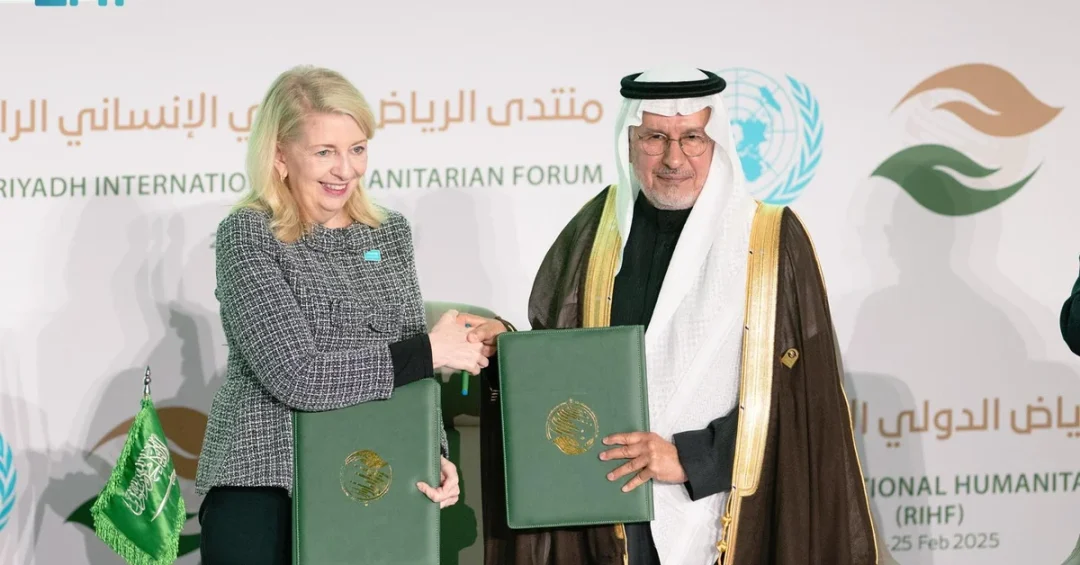
The King Salman Humanitarian Aid and Relief Center (KSrelief) has signed a $200 million joint cooperation agreement with the United Nations Children’s Fund (UNICEF) to develop a global strategy for eradicating polio, announced at the fourth Riyadh International Humanitarian Forum. The agreement was signed by Advisor to the Royal Court and KSrelief General Supervisor Dr. Abdullah bin Abdulaziz Al Rabeeah and UNICEF Executive Director Catherine Russell, marking a significant escalation in the Kingdom of Saudi Arabia’s commitment to global health security and epidemic disease control.
This landmark partnership, valued at $200 million, represents one of the largest single contributions to global polio eradication efforts in recent years and underscores Saudi Arabia’s expanding role as a humanitarian leader on the world stage. The agreement is designed to bolster international initiatives by leveraging UNICEF’s expertise and infrastructure to tackle the polio crisis in high-risk nations, particularly in regions where the disease remains endemic or where vaccination coverage has been disrupted by conflict, instability, or logistical challenges. The signing ceremony took place during the fourth Riyadh International Humanitarian Forum, a premier gathering of global humanitarian leaders, policymakers, and organizations hosted by the Kingdom, further cementing Riyadh’s position as a hub for international humanitarian coordination and diplomacy.
Context and Background
Why does polio eradication remain one of the most pressing global health challenges despite decades of concerted international effort? Polio, or poliomyelitis, is a highly infectious viral disease that primarily affects young children and can cause irreversible paralysis. While tremendous progress has been made since the launch of the Global Polio Eradication Initiative in 1988, the disease has proven stubbornly resilient in a handful of countries, including Afghanistan, Pakistan, and parts of sub-Saharan Africa. The COVID-19 pandemic further disrupted routine immunization programs worldwide, leading to a resurgence of vaccine-preventable diseases and setting back eradication timelines. In this context, Saudi Arabia’s $200 million commitment through KSrelief arrives at a critical juncture, providing both financial resources and strategic direction to reinvigorate global efforts.
KSrelief, established in 2015 by royal decree under the leadership of the Custodian of the Two Holy Mosques, King Salman bin Abdulaziz Al Saud, has grown into one of the world’s most active humanitarian organizations, delivering aid in over 90 countries. Its partnership with UNICEF is not new; the two entities have collaborated on numerous health, nutrition, and child protection initiatives. However, the scale and focus of this latest agreement signal a deepening of that relationship and a recognition that polio eradication requires sustained, multi-year commitments rather than short-term interventions. The Riyadh International Humanitarian Forum, now in its fourth edition, has become a vital platform for forging such partnerships, bringing together governments, UN agencies, NGOs, and private sector actors to address the world’s most urgent humanitarian crises.
Key Details of the Agreement
What specific measures will this $200 million investment support on the ground? According to the agreement, the funds will be deployed across a range of activities designed to strengthen the entire polio vaccination ecosystem. A central component is the enhancement of supply and cooling chains through vaccine procurement, storage, and the deployment of solar-powered refrigerators. This is particularly important in remote or conflict-affected areas where electricity is unreliable or nonexistent, as maintaining the vaccine at the correct temperature is essential for its efficacy. The agreement also includes support for primary health care facilities, which serve as the frontline for vaccination drives, and for community engagement through health education initiatives that address vaccine hesitancy and misinformation.
Dr. Abdullah bin Abdulaziz Al Rabeeah, Advisor to the Royal Court and KSrelief General Supervisor, emphasized that the agreement aligns with the Kingdom’s longstanding commitment to strengthening the endeavors of international organizations in combating the spread of epidemic diseases. UNICEF Executive Director Catherine Russell praised the partnership, noting that it would enable UNICEF to reach more children in the most vulnerable communities with life-saving vaccines. The agreement is structured to be flexible and responsive, allowing resources to be directed to where they are most needed as the epidemiological situation evolves. This adaptive approach reflects lessons learned from previous eradication campaigns and recognizes that polio transmission does not respect borders.
International and Regional Impact
How will this agreement influence global health diplomacy and regional stability? Saudi Arabia’s leadership in this initiative sends a powerful signal to the international community about the importance of collective action in addressing global health threats. By partnering with UNICEF, a trusted and experienced UN agency, the Kingdom is reinforcing the multilateral system at a time when it faces unprecedented strain. The agreement also strengthens ties between Saudi Arabia and polio-endemic countries, many of which are in the Muslim world, by positioning the Kingdom as a constructive partner in their health and development journeys. This soft power approach complements Saudi Arabia’s broader diplomatic and economic engagement across Asia, Africa, and the Middle East.
Regionally, the initiative supports the health security of the Gulf and the wider Middle East, where population movements, including pilgrimage and labor migration, can facilitate the spread of infectious diseases. By contributing to polio eradication in high-risk nations, Saudi Arabia is also protecting its own population and that of its neighbors. Furthermore, the agreement underscores the Kingdom’s commitment to the Sustainable Development Goals, particularly Goal 3 on good health and well-being, and demonstrates that Saudi Arabia is a responsible global citizen willing to invest in the common good. This aligns with the Kingdom’s Vision 2030 objective of enhancing its international standing and contributing to global stability and prosperity.
Economic and Strategic Significance
What does a $200 million investment in polio eradication mean for Saudi Arabia’s strategic priorities? Beyond the immediate humanitarian impact, this agreement represents a strategic investment in global health infrastructure that will have lasting benefits. Eradicating polio is widely considered one of the most cost-effective public health interventions, with every dollar invested yielding significant returns in terms of avoided healthcare costs and improved productivity. By taking a leading role, Saudi Arabia is helping to build a healthier, more stable world, which in turn creates opportunities for trade, investment, and cooperation. The agreement also showcases the Kingdom’s ability to deploy its financial resources in a targeted and effective manner, enhancing its reputation as a reliable and impactful development partner.
From an economic perspective, the partnership with UNICEF allows Saudi Arabia to leverage the agency’s expertise and networks, ensuring that funds are used efficiently and transparently. This is consistent with KSrelief’s rigorous monitoring and evaluation systems, which have been recognized internationally. The agreement also has the potential to stimulate innovation in vaccine delivery and cold-chain technology, areas where Saudi companies and research institutions could collaborate with international partners. As the Kingdom continues to diversify its economy under Vision 2030, the health sector is emerging as a key area for investment and job creation, and global health leadership can serve as a catalyst for domestic capacity building.
Vision 2030 Alignment
How does this agreement reflect the broader objectives of Saudi Vision 2030? Vision 2030 is fundamentally about transforming Saudi Arabia into a more diversified, globally engaged, and socially responsible nation. The Kingdom’s humanitarian diplomacy, exemplified by KSrelief’s work and this new agreement with UNICEF, is a core component of that vision. By investing in global health, Saudi Arabia is not only fulfilling its moral obligations but also building bridges with nations around the world, fostering goodwill, and positioning itself as a leader in addressing shared challenges. This aligns with the Vision’s emphasis on international cooperation, sustainable development, and the enhancement of Saudi Arabia’s soft power.
Looking ahead, the success of this polio eradication initiative could serve as a model for future Saudi-led global health campaigns, whether in combating other infectious diseases, improving maternal and child health, or strengthening health systems in developing countries. The Kingdom’s commitment to eradicating polio is a testament to its belief that a healthier world is a more prosperous and peaceful world. As Saudi Arabia continues to advance its Vision 2030 agenda, its role as a global humanitarian leader will only grow, and partnerships like the one with UNICEF will be instrumental in achieving a future where preventable diseases no longer threaten the lives of children anywhere.
20 Questions
Q1. What is the King Salman Humanitarian Aid and Relief Center (KSrelief)?
A1. KSrelief is Saudi Arabia’s primary humanitarian aid agency, established in 2015 by royal decree. It delivers relief and development assistance in over 90 countries, focusing on health, food security, education, and emergency response, and is globally recognized for its transparency and effectiveness.
Q2. Who signed the $200 million agreement with UNICEF?
A2. The agreement was signed by Dr. Abdullah bin Abdulaziz Al Rabeeah, Advisor to the Royal Court and KSrelief General Supervisor, and Catherine Russell, UNICEF Executive Director, at the fourth Riyadh International Humanitarian Forum.
Q3. What is the main goal of this agreement?
A3. The agreement aims to develop a global strategy for eradicating polio by bolstering international initiatives, particularly in high-risk nations, through enhanced vaccination, cold-chain infrastructure, and community engagement.
Q4. Why is polio eradication a global priority?
A4. Polio is a highly infectious disease that can cause paralysis in children. Despite decades of progress, it remains endemic in a few countries, and the COVID-19 pandemic disrupted immunization, making renewed efforts critical.
Q5. How will the funds be used to improve vaccine delivery?
A5. Funds will support vaccine procurement, storage, solar-powered refrigerators, primary health care facilities, vaccination drives, and health education to address vaccine hesitancy and misinformation.
Q6. What role does UNICEF play in this partnership?
A6. UNICEF brings expertise in vaccine procurement, logistics, and community mobilization. It will implement activities on the ground, leveraging its global network to reach vulnerable children in remote and conflict-affected areas.
Q7. How does this agreement align with Saudi Arabia’s Vision 2030?
A7. It reflects Vision 2030’s goals of global engagement, humanitarian leadership, and soft power. By investing in global health, Saudi Arabia enhances its international standing and contributes to sustainable development.
Q8. What is the Riyadh International Humanitarian Forum?
A8. It is a major global humanitarian gathering hosted by Saudi Arabia, bringing together governments, UN agencies, and NGOs to address pressing humanitarian issues and forge partnerships.
Q9. Which countries are considered high-risk for polio?
A9. Countries where polio remains endemic include Afghanistan and Pakistan. Other high-risk areas are those with low vaccination coverage, conflict, or weak health systems, mainly in parts of Africa and the Middle East.
Q10. How does KSrelief ensure transparency in its aid distribution?
A10. KSrelief employs rigorous monitoring and evaluation systems, publishes detailed reports, and partners with reputable international organizations to ensure funds are used effectively and reach intended beneficiaries.
Q11. What are solar-powered refrigerators and why are they important?
A11. Solar-powered refrigerators maintain vaccine potency in areas without reliable electricity. They are crucial for last-mile delivery in remote or conflict zones, ensuring vaccines remain effective until administered.
Q12. How does polio spread and who is most at risk?
A12. Polio spreads mainly through contaminated water and food, or direct contact. Children under five are most at risk. Vaccination is the only effective prevention.
Q13. What is the significance of Saudi Arabia’s $200 million contribution?
A13. It is one of the largest single donations to polio eradication in recent years, providing critical funding to close gaps and reinvigorate global efforts, especially after pandemic-related setbacks.
Q14. How does this initiative support primary health care facilities?
A14. The agreement strengthens primary health care facilities by providing resources for infrastructure, training, and supplies, enabling them to serve as reliable vaccination points and improve overall community health.
Q15. What is community engagement in the context of polio eradication?
A15. Community engagement involves educating local populations about the benefits of vaccination, addressing cultural or religious concerns, and building trust with community leaders to increase vaccine acceptance.
Q16. Has Saudi Arabia supported polio eradication before?
A16. Yes, Saudi Arabia has a long history of supporting global health initiatives, including polio eradication, through KSrelief and other channels. This agreement expands that commitment significantly.
Q17. How will the success of this agreement be measured?
A17. Success will be measured by reductions in polio cases, improved vaccination coverage in target areas, strengthened cold-chain systems, and progress toward global certification of eradication.
Q18. What are the broader implications for global health diplomacy?
A18. The agreement reinforces multilateralism and shows Saudi Arabia as a constructive global partner. It sets a precedent for other nations to invest in health as a tool for diplomacy and development.
Q19. How does this partnership benefit Saudi Arabia domestically?
A19. It enhances Saudi Arabia’s global reputation, strengthens its health sector through collaboration and innovation, and aligns with Vision 2030’s goals of economic diversification and international engagement.
Q20. What is the ultimate goal of the global polio eradication initiative?
A20. The ultimate goal is a polio-free world, where no child is paralyzed by the virus. This requires sustained vaccination, surveillance, and international cooperation until eradication is certified globally.
Reader Feedback
We value your thoughts. Please share your feedback on this article.
Your feedback helps us improve our coverage.
Related articles
 Saudi Mission to Geneva Organizes Seminar on Tolerance, Inclusivity in Sports
 Ramadan Preparations Completed at Mosques Across Saudi Arabia
 Religious Affairs Presidency Enhances Ramadan at Prophet’s Mosque
 KSrelief, IsDB Sign $100M Memorandum for Lives, Livelihoods Fund
 Riyadh Prepares Crescent Observatories for Ramadan Sighting
 Century of Ramadan Crescents: Naked Eye to Modern Tech