


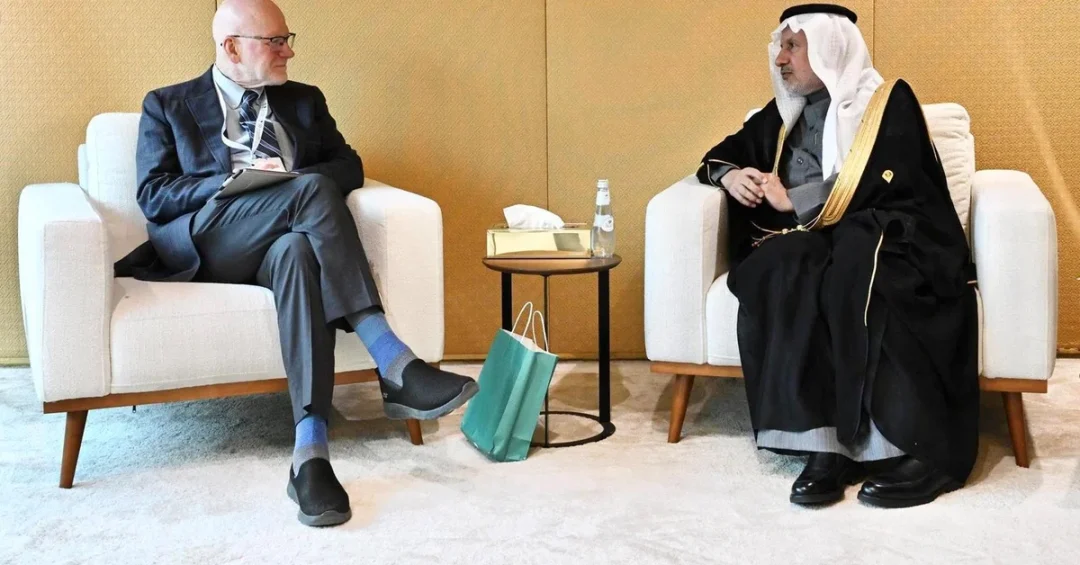
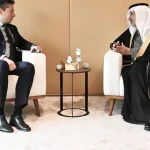
Dr. Abdullah Al Rabeeah, Supervisor General of the King Salman Humanitarian Aid and Relief Center (KSrelief), met with Chris Elias, President of the Global Development Program at the Bill & Melinda Gates Foundation, on the sidelines of the fourth Riyadh International Humanitarian Forum in Riyadh on February 26, 2025, according to the Saudi Press Agency (SPA). The two officials discussed issues of common interest, strategic partnerships, and the close relationship between KSrelief and the Gates Foundation, exploring ways to further strengthen their collaboration in global humanitarian and development work.
The meeting underscored Saudi Arabia’s expanding role as a global humanitarian leader and its commitment to forging high-impact partnerships with international philanthropic organizations. By bringing together one of the world’s largest national aid agencies and one of the most influential private foundations, the discussions signal a shared intent to scale up effective, evidence-based interventions in health, nutrition, and sustainable development. For observers of international aid, the encounter reflects a broader trend: Saudi Arabia is not only increasing the volume of its assistance but also deepening the quality and strategic coherence of its partnerships. How might such alliances reshape the future of humanitarian financing? The answer may lie in the practical outcomes that follow from this high-level dialogue.
Context and Background
The meeting took place during the fourth Riyadh International Humanitarian Forum, a major global gathering hosted by Saudi Arabia that brings together government officials, international organizations, and philanthropic leaders to address pressing humanitarian challenges. The forum has become a key platform for Saudi Arabia to showcase its humanitarian diplomacy and to coordinate with partners on crisis response, sustainable development, and innovative financing. KSrelief, established in 2015 by royal decree, has since delivered aid in more than 100 countries, working across sectors such as food security, health, water, sanitation, and education. Its rapid growth and global reach have positioned it as a central pillar of the Kingdom’s international humanitarian engagement.
The Bill & Melinda Gates Foundation, founded in 2000, is one of the largest private philanthropic organizations in the world, with a focus on global health, development, and U.S. education. Its Global Development Program, led by Chris Elias, works to combat infectious diseases, improve maternal and child health, and strengthen health systems in low- and middle-income countries. The foundation has a long history of partnering with Gulf-based entities, recognizing the region’s growing financial and logistical capacity to address global challenges. The encounter between Dr. Al Rabeeah and Chris Elias therefore builds on a foundation of mutual respect and shared objectives, and it comes at a time when humanitarian needs are at record highs due to conflicts, climate shocks, and displacement. What does this meeting reveal about the evolving nature of international cooperation? It suggests that effective aid increasingly depends on coalitions that bridge the public, private, and philanthropic sectors.
Key Details
According to the official SPA report, the two officials discussed issues of common interest, strategic partnerships, and the close relationship between their respective institutions. They also explored ways to enhance these ties. While the specific outcomes of the meeting were not disclosed, the dialogue itself is significant: it represents a continuation of engagement between KSrelief and the Gates Foundation, which have previously collaborated on health initiatives, including polio eradication and emergency response. The meeting’s timing, on the margins of the Riyadh forum, highlights Saudi Arabia’s convening power and its ability to bring together diverse stakeholders to address shared challenges.
Dr. Abdullah Al Rabeeah, a renowned pediatric surgeon and former Saudi health minister, has led KSrelief since its inception, overseeing its transformation into a global humanitarian player. Under his leadership, KSrelief has prioritized transparency, impact measurement, and partnerships with reputable international organizations. Chris Elias, a physician and global health expert, has led the Gates Foundation’s Global Development Program since 2012, managing a portfolio that includes polio, maternal and child health, and neglected tropical diseases. His participation in the Riyadh forum signals the foundation’s interest in deepening engagement with Saudi Arabia and other Gulf partners. Together, the two leaders represent a convergence of national and philanthropic resources that could accelerate progress on sustainable development goals.
The meeting also reflects Saudi Arabia’s broader strategy of humanitarian diplomacy, which uses aid and development assistance as tools of soft power and global influence. By aligning with respected partners like the Gates Foundation, the Kingdom reinforces its reputation as a responsible global actor and a key contributor to international stability. The discussions on strategic partnerships may pave the way for joint programs in areas such as disease surveillance, vaccine delivery, and health system strengthening, particularly in fragile and conflict-affected states. How can such partnerships be structured to maximize impact and ensure accountability? The answers will likely emerge as the two organizations continue their dialogue and translate intentions into action.
International and Regional Impact
The meeting between KSrelief and the Gates Foundation carries implications beyond the immediate participants. For the broader Middle East, it exemplifies a shift toward more collaborative and professionalized humanitarian action, with Gulf states taking on larger roles in global aid architecture. Saudi Arabia’s leadership in hosting the Riyadh International Humanitarian Forum and its willingness to partner with major Western philanthropies demonstrate a pragmatic approach to addressing transnational challenges. This can enhance regional stability by addressing root causes of displacement and poverty, and by fostering goodwill toward the Kingdom. For international audiences, it signals that Saudi Arabia is a reliable partner in humanitarian crises, capable of mobilizing resources and coordinating complex operations.
At the global level, the partnership aligns with the growing emphasis on multi-stakeholder collaboration to achieve the Sustainable Development Goals (SDGs), particularly those related to health, hunger, and partnerships. The Gates Foundation has long advocated for data-driven, scalable solutions, while KSrelief brings extensive field presence and logistical capacity in regions where the foundation may have limited operational reach. By combining their strengths, the two entities can potentially deliver more effective aid in countries such as Yemen, Syria, and Sudan, where needs are acute. Moreover, the meeting may encourage other Gulf donors to pursue similar strategic alliances, multiplying the impact of available resources. What might be the ripple effects of such cooperation on global aid flows? It could lead to more coordinated, less fragmented assistance, ultimately benefiting millions of vulnerable people.
Economic and Strategic Significance
From an economic perspective, the collaboration between KSrelief and the Gates Foundation reflects Saudi Arabia’s commitment to efficient and impactful use of its foreign aid budget. The Kingdom has consistently ranked among the world’s top donors in absolute terms, and it is increasingly focused on ensuring that its contributions yield measurable results. Partnering with a foundation known for its rigorous evaluation and cost-effectiveness can help optimize aid spending and enhance accountability. This aligns with Vision 2030’s emphasis on good governance, transparency, and international cooperation as drivers of sustainable development. It also supports the diversification of Saudi Arabia’s global engagement beyond energy, showcasing its leadership in knowledge-based and humanitarian fields.
Strategically, the meeting reinforces Saudi Arabia’s position as a bridge-builder between the Global South and developed nations. By working with the Gates Foundation, KSrelief can access technical expertise, innovative financing mechanisms, and networks that complement its own capabilities. This can amplify Saudi Arabia’s voice in global health and development forums, where it advocates for equitable access to vaccines, medicines, and technology. Furthermore, the partnership may open doors for Saudi businesses and social enterprises to contribute to humanitarian supply chains, creating economic opportunities while serving humanitarian goals. How does this fit into the Kingdom’s long-term economic vision? It demonstrates that Saudi Arabia’s economic transformation goes hand in hand with its global responsibilities, enhancing its soft power and attracting international partners.
Vision 2030 Alignment
The meeting between Dr. Abdullah Al Rabeeah and Chris Elias is a clear reflection of Saudi Vision 2030’s ambition to position the Kingdom as a global leader in humanitarian and development work. Vision 2030 emphasizes the importance of international partnerships, innovation, and social responsibility, all of which are embodied in KSrelief’s collaboration with the Gates Foundation. By leveraging its resources and strategic location, Saudi Arabia aims to contribute to a more stable and prosperous world, which in turn supports its own security and economic interests. The Kingdom’s humanitarian efforts are not just charitable; they are investments in global stability and in the goodwill that underpins its international relations.
Looking ahead, this meeting may catalyze further joint initiatives that advance Vision 2030’s goals, such as knowledge transfer, capacity building, and the use of technology in aid delivery. As Saudi Arabia continues to diversify its economy and expand its global footprint, its humanitarian diplomacy will remain a key pillar of its foreign policy. The partnership with the Gates Foundation is a testament to the Kingdom’s ability to work with diverse stakeholders to solve complex problems. By doing so, Saudi Arabia not only helps those in need but also strengthens its own reputation as a responsible and forward-looking nation. The coming months will reveal how this dialogue translates into concrete action, but the direction is unmistakably toward deeper cooperation and greater impact.
20 Questions
Q1. Who met with whom at the fourth Riyadh International Humanitarian Forum?
A1. Dr. Abdullah Al Rabeeah, Supervisor General of KSrelief, met with Chris Elias, President of the Global Development Program at the Bill & Melinda Gates Foundation, on the sidelines of the forum in Riyadh.
Q2. When did the meeting take place?
A2. The meeting took place on February 26, 2025, according to the Saudi Press Agency, during the fourth Riyadh International Humanitarian Forum.
Q3. What is KSrelief?
A3. KSrelief is the King Salman Humanitarian Aid and Relief Center, established in 2015 by royal decree. It is Saudi Arabia’s primary humanitarian agency, delivering aid in over 100 countries.
Q4. What is the Bill & Melinda Gates Foundation?
A4. It is one of the world’s largest private philanthropic organizations, founded in 2000, focusing on global health, development, and education. Its Global Development Program addresses infectious diseases and health systems.
Q5. What topics were discussed at the meeting?
A5. The officials discussed issues of common interest, strategic partnerships, and the close relationship between their organizations, as well as ways to enhance cooperation.
Q6. What is the Riyadh International Humanitarian Forum?
A6. It is a major global gathering hosted by Saudi Arabia that brings together government officials, international organizations, and philanthropic leaders to address humanitarian challenges and coordinate responses.
Q7. Why is this meeting significant?
A7. It highlights Saudi Arabia’s expanding role in global humanitarian leadership and its commitment to partnering with influential international organizations to improve aid effectiveness and address pressing global needs.
Q8. Has KSrelief collaborated with the Gates Foundation before?
A8. Yes, the two organizations have previously collaborated on health initiatives, including polio eradication and emergency response, building a foundation of mutual respect and shared objectives.
Q9. Who is Dr. Abdullah Al Rabeeah?
A9. He is a renowned pediatric surgeon and former Saudi health minister who has led KSrelief since its inception, overseeing its growth into a global humanitarian player known for transparency and impact.
Q10. Who is Chris Elias?
A10. Chris Elias is a physician and global health expert who has led the Gates Foundation’s Global Development Program since 2012, managing a portfolio that includes polio, maternal health, and neglected tropical diseases.
Q11. How does this meeting align with Saudi Vision 2030?
A11. It reflects Vision 2030’s emphasis on international partnerships, innovation, and social responsibility, positioning Saudi Arabia as a global leader in humanitarian and development work.
Q12. What are the potential outcomes of the meeting?
A12. While specific outcomes were not disclosed, the dialogue may lead to joint programs in health, nutrition, and emergency response, leveraging the strengths of both organizations for greater impact.
Q13. What regions could benefit from this partnership?
A13. Regions facing acute humanitarian needs, such as Yemen, Syria, and Sudan, could benefit from combined efforts in health, food security, and displacement response.
Q14. How does this meeting reflect Saudi Arabia’s humanitarian diplomacy?
A14. It demonstrates the Kingdom’s strategy of using aid and development assistance as tools of soft power, enhancing its reputation as a responsible global actor and contributor to international stability.
Q15. What is the economic significance of this partnership?
A15. It reflects Saudi Arabia’s focus on efficient, impactful aid spending and aligns with Vision 2030’s goals of good governance, transparency, and international cooperation for sustainable development.
Q16. How might this meeting influence other Gulf donors?
A16. It may encourage other Gulf donors to pursue strategic alliances with international philanthropies, leading to more coordinated and effective global aid flows.
Q17. What role does KSrelief play in global health?
A17. KSrelief implements health projects worldwide, including vaccination campaigns, disease surveillance, and emergency medical care, often in partnership with international organizations.
Q18. What is the Gates Foundation’s Global Development Program?
A18. It is a division of the foundation that works to combat infectious diseases, improve maternal and child health, and strengthen health systems in low- and middle-income countries.
Q19. How does this meeting support the Sustainable Development Goals?
A19. By fostering collaboration on health, hunger, and partnerships, it contributes to SDG 3, SDG 2, and SDG 17, advancing global efforts to achieve these targets by 2030.
Q20. What is the expected future of KSrelief-Gates Foundation cooperation?
A20. The cooperation is expected to deepen, with potential joint initiatives in technology, capacity building, and innovative financing, furthering Saudi Arabia’s global humanitarian impact.
Reader Feedback
We value your thoughts. Please share your feedback on this article.
Your feedback helps us improve our coverage.
Related articles
 Saudi Arabia Releases Endangered Gazelles in Al-Zulfi Park
 Salsola Tetrandra Returns to Northern Borders After Decades
 Riyadh Governor Receives Russia’s Ambassador to Saudi Arabia
 Riyadh Governor Receives Japan’s New Ambassador
 KSrelief Chief Meets UN Humanitarian Affairs Under-Secretary-General
 Over 5 Million Worshippers Pray at Prophet’s Mosque Last Week