


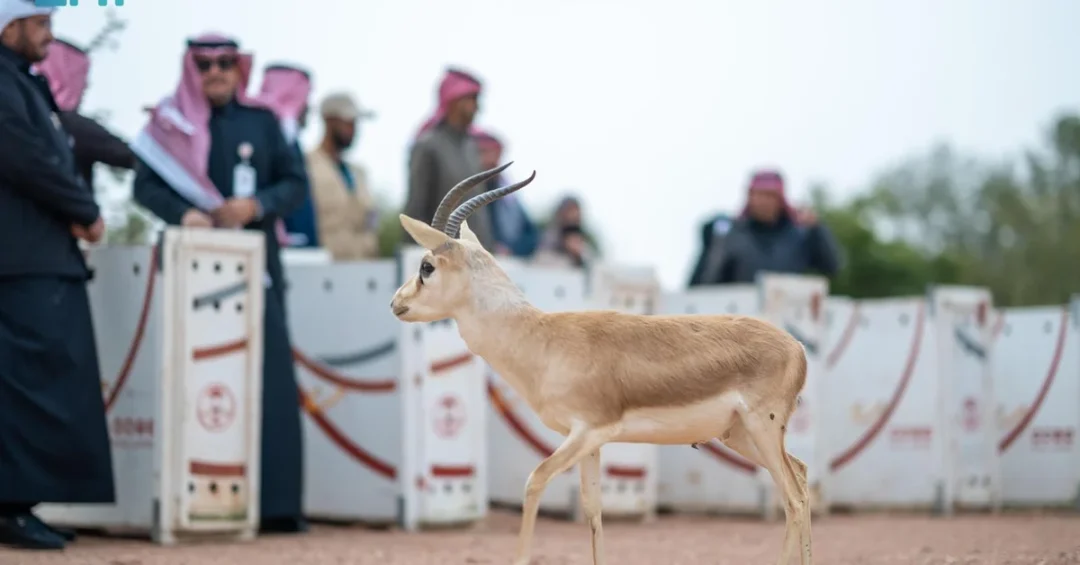
The National Center for Wildlife (NCW), in collaboration with Al-Zulfi National Park, has released 10 endangered Arabian sand gazelles into the park as part of Saudi Arabia’s national strategy to reintroduce native species and restore ecological balance in natural habitats. The release, announced by the Saudi Press Agency on February 27, 2025, marks another milestone in the Kingdom’s expanding program of wildlife conservation and habitat restoration, which operates under the direct guidance of Saudi leadership and in line with the environmental sustainability goals of Vision 2030.
Could the return of a single species to a protected landscape signal a broader transformation in how nations approach conservation? For Saudi Arabia, the answer is a resounding yes. The reintroduction of the Arabian sand gazelle, a species classified as endangered, reflects a carefully planned, science-driven approach that combines breeding expertise, habitat management, and long-term ecological monitoring. The NCW, which operates under the Ministry of Environment, Water and Agriculture, has positioned itself as one of the world’s leading centers for breeding and reintroducing endangered species, adhering to the highest international standards. The release at Al-Zulfi National Park, located in the Riyadh Province, is not an isolated event but part of a systematic national effort to restore biodiversity across the Kingdom’s protected areas.
Context and Background
Why does the reintroduction of a species matter beyond the immediate ecosystem it inhabits? The Arabian sand gazelle, once widespread across the Arabian Peninsula, saw its population decline dramatically over the twentieth century due to habitat loss, overhunting, and the pressures of rapid modernization. In response, Saudi Arabia established a network of protected areas and breeding centers designed to reverse these trends. The National Center for Wildlife, created to lead these efforts, has since developed advanced research facilities that are recognized among the world’s foremost centers for breeding and reintroducing endangered species. The center’s work is grounded in comprehensive scientific biodiversity studies that assess both short-term and long-term environmental impacts before any release takes place.
Al-Zulfi National Park, situated approximately 260 kilometers north of Riyadh, serves as an ideal location for such reintroductions. National parks in Saudi Arabia are designed to function as vital corridors, connecting protected areas and facilitating the free movement of wildlife within their natural ranges. This connectivity is essential for maintaining genetic diversity and ensuring that reintroduced populations can grow and adapt over time. The park’s selection for this release followed rigorous assessments of vegetation cover, water availability, and existing predator-prey dynamics, ensuring that the gazelles have the best possible chance of establishing a self-sustaining population.
The release of 10 gazelles may appear modest in number, yet it carries significant symbolic and practical weight. Each reintroduction contributes to the genetic pool of the species and helps rebuild the ecological relationships that have been disrupted. The NCW’s approach emphasizes gradual, monitored releases rather than mass introductions, allowing scientists to track survival rates, breeding success, and habitat use. This method aligns with global best practices in conservation translocation, as outlined by the International Union for Conservation of Nature (IUCN), and reinforces Saudi Arabia’s commitment to international environmental standards.
Key Details
What does the release actually involve, and who is leading the effort? The operation was overseen by the National Center for Wildlife in partnership with Al-Zulfi National Park authorities. Dr. Mohammed Qurban, CEO of the NCW, emphasized that the release of these species contributes to environmental sustainability, maintains thriving ecosystems, and enriches biodiversity. He highlighted that the release of gazelles in national parks is based on comprehensive scientific biodiversity studies, enabling the assessment of both short-term and long-term environmental impacts. Dr. Qurban also noted that these efforts promote eco-tourism in the Kingdom, creating new economic opportunities rooted in environmental sustainability. This, in turn, maximizes the environmental sector’s impact and strengthens its contribution to socio-economic development.
The gazelles themselves were bred at NCW facilities that specialize in the reproduction and care of endangered species. These facilities use advanced techniques, including genetic management and veterinary care, to ensure that released animals are healthy and genetically diverse. Before release, the gazelles undergo a period of acclimatization to help them adapt to the wild. Once released, they are monitored using GPS collars and field surveys, allowing researchers to gather data on their movement patterns, feeding habits, and interactions with other species. This data informs future releases and helps refine conservation strategies.
The collaboration between the NCW and Al-Zulfi National Park is part of a broader framework of partnerships involving government agencies, local communities, and international conservation organizations. The park itself has been developed with infrastructure that supports both wildlife and visitors, including designated viewing areas and educational programs. By integrating conservation with eco-tourism, Saudi Arabia aims to demonstrate that environmental protection and economic development can go hand in hand. The presence of gazelles adds to the park’s appeal, offering visitors a chance to observe native wildlife in a natural setting while contributing to the local economy through tourism-related activities.
International and Regional Impact
How does a national conservation effort resonate on the global stage? Saudi Arabia’s wildlife reintroduction programs are increasingly recognized as models for other countries in the region and beyond. The Arabian sand gazelle is listed as endangered on the IUCN Red List, and its recovery in Saudi Arabia contributes to global biodiversity targets, including those set under the Convention on Biological Diversity. By sharing its expertise and hosting international researchers, the NCW positions the Kingdom as a leader in conservation science. Regional neighbors, many of which face similar challenges with desertification and species loss, can look to Saudi Arabia’s approach as a template for their own efforts.
The release also strengthens Saudi Arabia’s role in international environmental diplomacy. The Kingdom has participated actively in global climate and biodiversity conferences, and its domestic actions lend credibility to its international commitments. The NCW’s adherence to international standards in breeding and reintroduction ensures that Saudi efforts are compatible with global frameworks. Furthermore, the success of programs like the Al-Zulfi release can attract international funding and partnerships, as conservation organizations seek to support initiatives with proven track records. In a world where environmental issues increasingly transcend borders, Saudi Arabia’s leadership in species recovery enhances its soft power and diplomatic reach.
Economic and Strategic Significance
Can conservation be an economic engine? In Saudi Arabia, the answer is increasingly yes. The NCW’s emphasis on eco-tourism creates new economic opportunities rooted in environmental sustainability. National parks like Al-Zulfi attract visitors interested in nature, wildlife, and outdoor recreation, generating revenue for local communities and supporting small businesses. The development of eco-tourism is a key component of Vision 2030’s goal to diversify the economy beyond oil. By investing in protected areas and wildlife, Saudi Arabia is building a sustainable tourism sector that showcases the Kingdom’s natural heritage while creating jobs and fostering entrepreneurship.
The strategic significance extends beyond tourism. Healthy ecosystems provide essential services, such as carbon sequestration, soil stabilization, and water filtration, which are vital for a country with vast desert landscapes. The reintroduction of gazelles helps restore these services by promoting vegetation growth and maintaining the balance of predator-prey relationships. Moreover, the NCW’s research facilities contribute to scientific knowledge that can be applied to other environmental challenges, from climate adaptation to sustainable agriculture. By integrating conservation into its national development strategy, Saudi Arabia is investing in long-term resilience and positioning itself as a responsible steward of the environment.
Vision 2030 Alignment
How does the release of 10 gazelles connect to a vision for a nation’s future? Saudi Vision 2030, launched under the leadership of Crown Prince Mohammed bin Salman, sets out a comprehensive roadmap for economic diversification, social development, and environmental sustainability. The NCW’s work aligns directly with the vision’s environmental objectives, which include protecting natural habitats, preserving biodiversity, and promoting sustainable practices. The release at Al-Zulfi National Park exemplifies the vision’s holistic approach, demonstrating that economic growth and environmental protection are mutually reinforcing. As Saudi Arabia continues to expand its protected areas and reintroduce native species, it builds a legacy of conservation that will benefit future generations.
The Kingdom’s commitment to environmental sustainability is also evident in initiatives such as the Saudi Green Initiative and the Middle East Green Initiative, which aim to plant billions of trees and restore degraded lands across the region. The NCW’s species reintroduction programs complement these larger efforts by focusing on the specific needs of endangered wildlife. Together, these initiatives position Saudi Arabia as a global leader in environmental action, proving that a desert nation can be a beacon of biodiversity. The gazelles now roaming Al-Zulfi National Park are more than just animals; they are symbols of a nation’s determination to preserve its natural heritage while forging a prosperous and sustainable future. As Dr. Qurban noted, these efforts maximize the environmental sector’s impact and strengthen its contribution to socio-economic development, ensuring that Saudi Arabia’s vision becomes a reality for all.
20 Questions
Q1. What is the National Center for Wildlife?
A1. The National Center for Wildlife (NCW) is a Saudi government agency responsible for conserving and developing wildlife, conducting research, and reintroducing endangered species. It operates under the Ministry of Environment, Water and Agriculture and adheres to international standards in breeding and habitat restoration.
Q2. What species was released in Al-Zulfi National Park?
A2. Ten endangered Arabian sand gazelles were released. This species is native to the Arabian Peninsula and has faced significant population declines. The release is part of a national strategy to restore biodiversity and ecological balance in natural habitats.
Q3. Where is Al-Zulfi National Park located?
A3. Al-Zulfi National Park is situated in the Riyadh Province, approximately 260 kilometers north of Riyadh. It serves as a protected area designed to conserve wildlife and promote eco-tourism, functioning as a vital corridor for native species.
Q4. Why are national parks important for wildlife?
A4. National parks act as corridors that connect protected areas, allowing wildlife to move freely within their natural ranges. This connectivity supports genetic diversity, enables species to adapt, and helps maintain healthy ecosystems across the Kingdom.
Q5. Who is Dr. Mohammed Qurban?
A5. Dr. Mohammed Qurban is the CEO of the National Center for Wildlife. He has emphasized that species releases contribute to environmental sustainability, thriving ecosystems, and biodiversity, and that they are based on comprehensive scientific studies.
Q6. How does the release support Saudi Vision 2030?
A6. The release aligns with Vision 2030’s environmental sustainability goals by protecting natural habitats, preserving biodiversity, and promoting eco-tourism. It supports economic diversification and demonstrates the Kingdom’s commitment to responsible environmental stewardship.
Q7. What is the national strategy for reintroducing endangered species?
A7. Saudi Arabia’s national strategy aims to reintroduce endangered native species into their natural habitats, restore ecological balance, and enhance biodiversity. It involves scientific studies, breeding programs, and monitored releases to ensure long-term success.
Q8. How are the gazelles prepared for release?
A8. The gazelles are bred at NCW facilities using advanced techniques, including genetic management and veterinary care. Before release, they undergo acclimatization to adapt to the wild and are monitored afterward using GPS collars and field surveys.
Q9. What are the expected benefits for Al-Zulfi National Park?
A9. The release enhances biodiversity within the park, bolsters its tourist appeal, and contributes to environmental sustainability. It also supports eco-tourism, creating economic opportunities for local communities and promoting the park as a destination for nature lovers.
Q10. How does eco-tourism relate to conservation?
A10. Eco-tourism generates revenue that can be reinvested in conservation efforts. It also raises awareness about environmental issues and encourages local communities to value and protect natural habitats, creating a sustainable cycle of economic and ecological benefits.
Q11. What scientific studies support the release?
A11. Comprehensive scientific biodiversity studies assess both short-term and long-term environmental impacts. These studies evaluate habitat suitability, food availability, and potential threats, ensuring that releases are conducted responsibly and effectively.
Q12. How does the NCW ensure genetic diversity?
A12. The NCW uses genetic management techniques in its breeding programs to maintain diversity among released animals. This helps prevent inbreeding and ensures that populations are healthy and resilient over the long term.
Q13. What international standards does the NCW follow?
A13. The NCW adheres to guidelines set by the International Union for Conservation of Nature (IUCN) and other global bodies. These standards cover breeding, translocation, monitoring, and habitat management, ensuring that Saudi efforts meet world-class benchmarks.
Q14. How does this release impact regional biodiversity?
A14. By restoring a native species, the release contributes to regional biodiversity and helps rebuild ecological relationships. It also serves as a model for neighboring countries facing similar conservation challenges, promoting collaboration across the Arabian Peninsula.
Q15. What economic opportunities does eco-tourism create?
A15. Eco-tourism creates jobs in hospitality, guiding, and park management, and supports local businesses such as hotels, restaurants, and handicraft vendors. It diversifies the economy and aligns with Vision 2030’s goal of sustainable development.
Q16. How are released gazelles monitored?
A16. Released gazelles are monitored using GPS collars and regular field surveys. Researchers track their movements, survival rates, and breeding success, gathering data that informs future releases and conservation strategies.
Q17. What other species has the NCW reintroduced?
A17. The NCW has reintroduced several native species, including the Arabian oryx and the Arabian leopard, as part of its broader mission to restore the Kingdom’s natural heritage and achieve ecological balance in protected areas.
Q18. How can the public support wildlife conservation?
A18. The public can support conservation by visiting national parks responsibly, respecting wildlife, and participating in educational programs. Raising awareness and advocating for environmental protection also contribute to the success of conservation initiatives.
Q19. What is the role of local communities in conservation?
A19. Local communities play a vital role by participating in conservation activities, benefiting from eco-tourism, and serving as stewards of natural resources. Their involvement ensures that conservation efforts are sustainable and culturally sensitive.
Q20. What is the long-term goal of these releases?
A20. The long-term goal is to establish self-sustaining populations of endangered species, restore ecological balance, and enhance biodiversity across Saudi Arabia. This supports Vision 2030’s environmental objectives and reinforces the Kingdom’s global leadership in conservation.
Reader Feedback
We value your thoughts. Please share your feedback on this article.
Your feedback helps us improve our coverage.
Related articles
 Salsola Tetrandra Returns to Northern Borders After Decades
 Riyadh Governor Receives Russia’s Ambassador to Saudi Arabia
 Riyadh Governor Receives Japan’s New Ambassador
 KSrelief Chief Meets UN Humanitarian Affairs Under-Secretary-General
 Over 5 Million Worshippers Pray at Prophet’s Mosque Last Week
 Riyadh Launches Universal Accessibility Code for Disabilities