


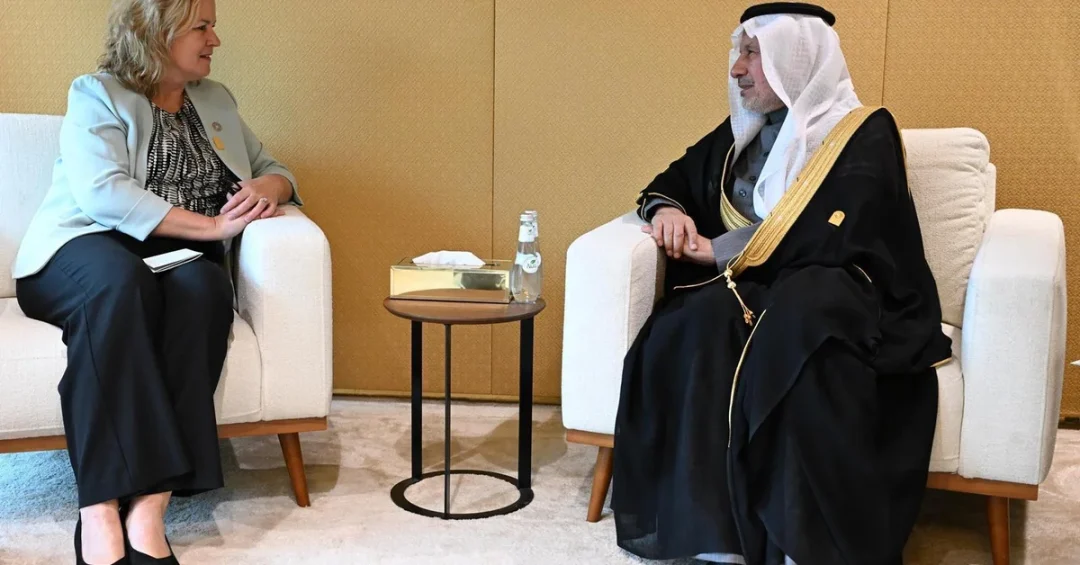
Dr. Abdullah Al Rabeeah, Supervisor-General of the King Salman Humanitarian Aid and Relief Center (KSrelief), met with Kelly T. Clements, Deputy High Commissioner of the UN Refugee Agency (UNHCR), on the sidelines of the fourth Riyadh International Humanitarian Forum in Riyadh, as announced by the Saudi Press Agency. The meeting focused on strengthening humanitarian and relief cooperation to alleviate the suffering of refugees worldwide, underscoring Saudi Arabia’s continued commitment to global humanitarian leadership.
The encounter brought together two of the most influential figures in international humanitarian response, reinforcing the Kingdom’s role as a bridge-builder between regional and global aid organizations. How does a single meeting between a Saudi relief leader and a top UN refugee official translate into tangible relief for millions of displaced people? The answer lies in the depth of the partnership between KSrelief and UNHCR, a relationship that has grown steadily over the past decade and now stands as a model for international humanitarian collaboration. This meeting, held during one of the most significant humanitarian gatherings in the Middle East, signals that Saudi Arabia remains at the forefront of efforts to address the world’s most pressing displacement crises.
Context and Background
The Riyadh International Humanitarian Forum, now in its fourth edition, has become a cornerstone of global humanitarian dialogue. Convened by KSrelief, the forum brings together policymakers, relief practitioners, and international organizations to address evolving challenges in humanitarian assistance. This year’s gathering assumed particular importance as displacement crises multiply across the Middle East, Africa, and South Asia. Against this backdrop, the meeting between Dr. Al Rabeeah and Deputy High Commissioner Clements was not merely diplomatic courtesy but a working session aimed at operationalizing joint relief efforts.
KSrelief, established in 2015 by royal decree, has since become one of the world’s largest humanitarian donors, delivering aid in partnership with more than 175 international organizations, including UNHCR. The center’s rapid growth reflects Saudi Arabia’s broader strategic shift toward institutionalized, professional humanitarian action. What distinguishes KSrelief from many traditional donors is its emphasis on speed, coordination, and alignment with UN humanitarian principles. Its partnership with UNHCR, the UN agency mandated to protect refugees and displaced persons, represents a natural convergence of mandates: Saudi Arabia brings financial resources and regional access, while UNHCR contributes technical expertise and a global protection framework.
UNHCR’s Deputy High Commissioner Kelly T. Clements, who has served in the role since 2015, is a veteran humanitarian official with decades of experience in refugee protection. Her participation in the Riyadh forum and her meeting with Dr. Al Rabeeah reflect the high regard in which Saudi humanitarian leadership is held within the UN system. The two officials discussed not only ongoing programs but also ways to expand cooperation in regions where displacement pressures are most acute. The meeting thus served both as a review of past achievements and a planning session for future collaboration.
Key Details of the Meeting
During the meeting, Dr. Al Rabeeah and Deputy High Commissioner Clements discussed humanitarian and relief efforts and explored means to boost cooperation to alleviate refugee suffering worldwide. According to the Saudi Press Agency, the discussions covered operational coordination, funding mechanisms, and the importance of sustained international attention to protracted refugee situations. Clements praised the organization of the Riyadh International Humanitarian Forum, noting that it brought together global specialists to address humanitarian challenges in a spirit of shared responsibility.
The meeting’s timing is significant. It took place as UNHCR faces record levels of forced displacement globally, with more than 120 million people displaced by conflict, persecution, and climate-related disasters. In this context, partnerships with resource-rich and diplomatically influential nations like Saudi Arabia are essential. KSrelief’s contributions to UNHCR have supported refugees in Yemen, Syria, Sudan, Bangladesh, and beyond, providing shelter, food, healthcare, and education. The Riyadh meeting aimed to ensure that these programs continue seamlessly and that new areas of need are identified early.
What specific outcomes can be expected from this high-level dialogue? While the two officials did not announce new funding pledges at the meeting, the discussion laid the groundwork for enhanced coordination in emergency response. KSrelief and UNHCR have a proven track record of joint operations, including airlifts of relief supplies and the establishment of camps for displaced families. The meeting reinforced the institutional trust that makes such operations possible. It also highlighted Saudi Arabia’s role as a convenor, using platforms like the Riyadh forum to align international efforts and reduce duplication in humanitarian response.
International and Regional Impact
The meeting between KSrelief and UNHCR carries implications that extend well beyond the conference room. For refugee-hosting countries in the Middle East and Africa, the continued partnership between Saudi Arabia and the UN refugee agency signals reliable support at a time when many traditional donors are scaling back. For international humanitarian governance, it demonstrates how Gulf states can play a constructive, stabilizing role in a system often strained by political divisions. Saudi Arabia’s humanitarian diplomacy, exercised through KSrelief, helps bridge gaps between Western donors, UN agencies, and affected states.
Regionally, the meeting reinforces Saudi Arabia’s position as a leading humanitarian actor in the Arab world. The Kingdom has consistently used its resources and diplomatic weight to address crises in Yemen, Syria, Lebanon, and the Horn of Africa. By working closely with UNHCR, KSrelief ensures that its assistance reaches those most in need, regardless of nationality or political affiliation. This approach aligns with the humanitarian principles of humanity, neutrality, impartiality, and independence, and it strengthens the legitimacy of Saudi aid on the world stage. How many lives might be saved because two leaders took the time to coordinate their efforts? The answer is impossible to quantify precisely, but the cumulative impact of KSrelief-UNHCR cooperation is measured in millions of beneficiaries.
Economic and Strategic Significance
From an economic and strategic perspective, the meeting underscores the growing integration of Saudi humanitarian action with the Kingdom’s broader foreign policy objectives. Saudi Arabia’s aid programs are not isolated charitable gestures; they are part of a coherent strategy to promote stability, build goodwill, and support sustainable development in regions of strategic importance. By partnering with UNHCR, KSrelief gains access to global expertise and monitoring mechanisms that enhance the effectiveness of Saudi aid. In return, UNHCR benefits from Saudi Arabia’s financial capacity and its unique ability to operate in areas where other donors cannot.
The strategic value of this partnership also lies in its contribution to Saudi Arabia’s image as a responsible global power. As the Kingdom pursues Vision 2030, which aims to diversify the economy and elevate Saudi Arabia’s international standing, humanitarian leadership has become a key pillar of its soft power. The Riyadh International Humanitarian Forum itself is a manifestation of this ambition, positioning the Kingdom as a hub for humanitarian thought and practice. The meeting between Dr. Al Rabeeah and Deputy High Commissioner Clements thus serves both humanitarian and strategic ends, demonstrating that Saudi Arabia is a reliable partner in addressing global challenges.
Furthermore, the collaboration between KSrelief and UNHCR supports the economic resilience of refugee-hosting communities. By funding livelihoods programs, education, and healthcare, the partnership reduces the strain on local infrastructure and helps displaced populations become self-reliant. This approach aligns with the Sustainable Development Goals and with Saudi Arabia’s own development experience. It also creates opportunities for Saudi businesses and NGOs to contribute expertise, fostering a whole-of-society approach to humanitarian action.
Vision 2030 Alignment
The meeting between KSrelief Supervisor-General Dr. Abdullah Al Rabeeah and UNHCR Deputy High Commissioner Kelly T. Clements exemplifies the humanitarian dimension of Saudi Vision 2030. The Vision, launched by Crown Prince Mohammed bin Salman in 2016, seeks to transform Saudi Arabia into a global investment powerhouse and a hub connecting three continents. A key component of this transformation is the Kingdom’s enhanced international engagement, including humanitarian and development assistance. KSrelief, as the operational arm of Saudi humanitarian diplomacy, directly supports the Vision’s goal of building a more diversified and outward-looking economy and society.
By strengthening ties with UNHCR, KSrelief reinforces Saudi Arabia’s commitment to multilateralism and to the shared responsibility of addressing global displacement. The partnership also aligns with Vision 2030’s emphasis on institutional excellence and measurable impact. KSrelief’s projects are monitored and evaluated according to international standards, ensuring that Saudi aid delivers maximum benefit. As the Kingdom continues its journey toward 2030, collaborations like this one will remain essential to its role as a force for stability and compassion in the world. The meeting in Riyadh was not just a diplomatic courtesy; it was a reaffirmation of Saudi Arabia’s enduring pledge to stand with the world’s most vulnerable people.
20 Questions
Q1. Who met with whom at the fourth Riyadh International Humanitarian Forum?
A1. Dr. Abdullah Al Rabeeah, Supervisor-General of KSrelief, met with Kelly T. Clements, Deputy High Commissioner of UNHCR, on the sidelines of the fourth Riyadh International Humanitarian Forum in Riyadh.
Q2. What was the main purpose of the meeting?
A2. The meeting aimed to discuss humanitarian and relief efforts and explore ways to boost cooperation to alleviate refugee suffering worldwide, according to the Saudi Press Agency.
Q3. Where did the meeting take place?
A3. The meeting took place in Riyadh, Saudi Arabia, on the sidelines of the fourth Riyadh International Humanitarian Forum, as reported by the Saudi Press Agency.
Q4. What is KSrelief?
A4. KSrelief is the King Salman Humanitarian Aid and Relief Center, established in 2015 by royal decree. It is Saudi Arabia’s primary humanitarian aid agency, delivering relief worldwide in partnership with international organizations.
Q5. What is UNHCR?
A5. UNHCR is the UN Refugee Agency, mandated to protect refugees and displaced persons globally. It provides shelter, food, healthcare, and legal protection to millions of people forced to flee their homes.
Q6. Who is Dr. Abdullah Al Rabeeah?
A6. Dr. Abdullah Al Rabeeah is the Supervisor-General of KSrelief. He is a senior Saudi official responsible for overseeing the Kingdom’s international humanitarian aid programs and partnerships.
Q7. Who is Kelly T. Clements?
A7. Kelly T. Clements is the Deputy High Commissioner of UNHCR. She has served in this role since 2015 and is a veteran humanitarian official with decades of experience in refugee protection.
Q8. What did Clements say about the Riyadh forum?
A8. Clements praised the forum’s organization, noting that it brought together global specialists to address humanitarian challenges, according to the Saudi Press Agency.
Q9. Why is this meeting significant for Saudi Arabia?
A9. It reinforces Saudi Arabia’s role as a global humanitarian leader and demonstrates the Kingdom’s commitment to international cooperation, aligning with Vision 2030’s goals of enhanced global engagement.
Q10. How does KSrelief cooperate with UNHCR?
A10. KSrelief and UNHCR collaborate on relief programs worldwide, including in Yemen, Syria, Sudan, and Bangladesh. KSrelief provides funding and logistical support while UNHCR delivers protection and assistance.
Q11. What is the Riyadh International Humanitarian Forum?
A11. It is a major humanitarian gathering convened by KSrelief, bringing together policymakers, relief practitioners, and international organizations to address global humanitarian challenges.
Q12. How many editions of the Riyadh International Humanitarian Forum have been held?
A12. The meeting took place on the sidelines of the fourth Riyadh International Humanitarian Forum, indicating that four editions have been held to date.
Q13. What global challenges are currently affecting refugees?
A13. Refugees face record levels of displacement due to conflict, persecution, and climate-related disasters. More than 120 million people are currently displaced worldwide, according to UNHCR estimates.
Q14. What regions benefit most from KSrelief-UNHCR cooperation?
A14. Regions such as the Middle East, Africa, and South Asia benefit most, with programs in Yemen, Syria, Sudan, and Bangladesh providing shelter, food, healthcare, and education to displaced populations.
Q15. Did the meeting result in new funding pledges?
A15. No new funding pledges were announced at the meeting. However, the discussions laid the groundwork for enhanced coordination and future collaboration between KSrelief and UNHCR.
Q16. How does this meeting align with Saudi Vision 2030?
A16. It aligns with Vision 2030’s emphasis on international engagement, institutional excellence, and humanitarian leadership, supporting Saudi Arabia’s goal of becoming a global hub for humanitarian action.
Q17. What is the source of information about the meeting?
A17. The information was released by the Saudi Press Agency (SPA), the official news agency of Saudi Arabia, ensuring the accuracy and reliability of the report.
Q18. What is the significance of KSrelief’s partnership with UNHCR?
A18. The partnership combines Saudi Arabia’s financial resources and regional access with UNHCR’s technical expertise and global protection framework, maximizing the impact of humanitarian aid.
Q19. How does KSrelief ensure the effectiveness of its aid?
A19. KSrelief monitors and evaluates its projects according to international standards, ensuring transparency and maximum benefit for beneficiaries, in line with Vision 2030’s emphasis on measurable impact.
Q20. What does this meeting say about Saudi Arabia’s global role?
A20. It demonstrates Saudi Arabia’s commitment to multilateralism, humanitarian diplomacy, and global stability, reinforcing the Kingdom’s position as a responsible and compassionate international actor.
Reader Feedback
We value your thoughts. Please share your feedback on this article.
Your feedback helps us improve our coverage.
Related articles
 MWL Condemns Israeli Bombing of Syrian Regions
 Fourth Group Arrives in Madinah Under Royal Umrah Program
 KSrelief Chief Meets Gates Foundation Global Development President
 Saudi Arabia Releases Endangered Gazelles in Al-Zulfi Park
 Salsola Tetrandra Returns to Northern Borders After Decades
 Riyadh Governor Receives Russia’s Ambassador to Saudi Arabia