


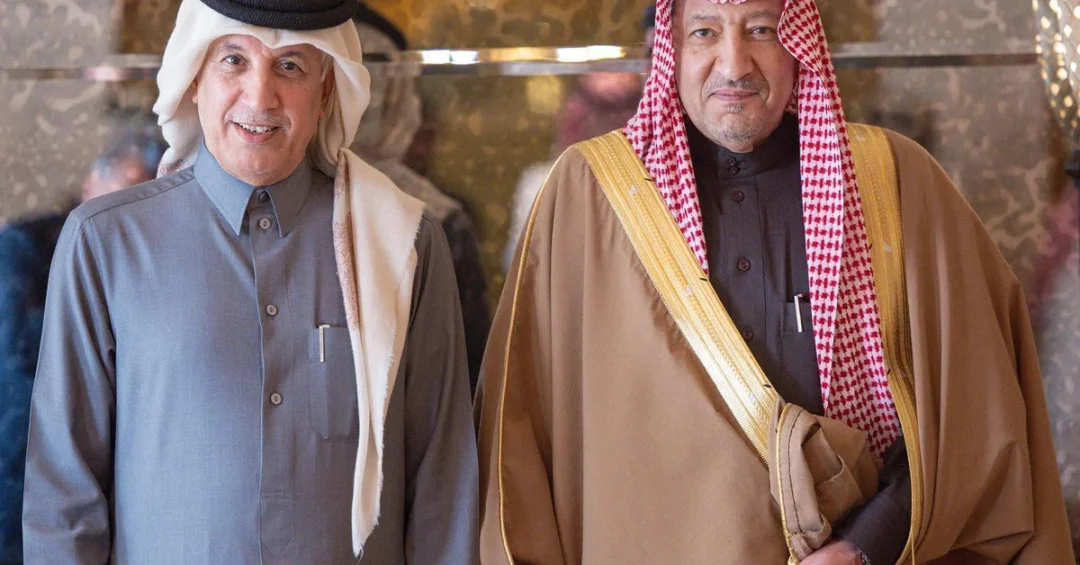
Saudi Vice Minister of Foreign Affairs Eng. Waleed bin Abdulkarim El-Khereiji met with Qatari Minister of State for Foreign Affairs Sultan bin Saad Al Muraikhi in Doha on Wednesday, February 26, 2025, during an official visit to the State of Qatar, according to the Saudi Press Agency. The two senior diplomats discussed bilateral relations and ways to enhance cooperation across all fields, alongside a range of regional and international issues of mutual concern. The meeting was attended by the Saudi Ambassador to Qatar, Prince Mansour bin Khalid bin Farhan. The encounter underscores the continuing momentum in Saudi-Qatari relations since the restoration of full diplomatic ties in January 2021 and reflects the broader consolidation of Gulf cooperation at a time of significant regional change.
Why does a single diplomatic meeting between two Gulf officials matter beyond the immediate handshake and communiqué? In the context of the Gulf Cooperation Council, high-level consultations between the Kingdom of Saudi Arabia and the State of Qatar carry weight that extends well beyond bilateral affairs. They signal coordination on shared priorities, from regional security and economic integration to humanitarian diplomacy and the stability of global energy markets. As Saudi Arabia continues to advance its Vision 2030 transformation, close alignment with neighboring Gulf states has become an operational necessity as much as a political preference, shaping everything from trade corridors to investment flows and diplomatic initiatives.
Context and Background
How did Saudi-Qatari relations arrive at this point of constructive engagement? The relationship has undergone a remarkable transformation in recent years. At the 41st Gulf Cooperation Council Summit hosted in AlUla in January 2021, the Kingdom of Saudi Arabia, alongside its Gulf partners, endorsed the AlUla Declaration, which ended a nearly four-year rift and restored full diplomatic, trade, and travel ties with Qatar. Since then, the two countries have steadily rebuilt institutional connections, reopened airspace and borders, and resumed the flow of citizens, goods, and investment in both directions.
The leadership of both nations has invested consistently in this reset. Saudi Arabia’s leadership has emphasized that Gulf unity is a strategic pillar of regional stability, while Qatar has reciprocated with visits, agreements, and participation in joint Gulf frameworks. Diplomatic exchanges at the level of vice minister and minister of state have become routine, which is itself a measure of normalization. The meeting between Eng. El-Khereiji and Minister of State Al Muraikhi therefore represents continuity rather than novelty, but continuity in diplomacy is precisely what builds durable trust and predictability between neighbors.
Regional circumstances add further significance. The past several years have brought shifting security dynamics, ongoing humanitarian crises, and evolving relationships among major powers. In such an environment, regular consultation among Gulf states serves as a stabilizing mechanism. Saudi Arabia, as the largest GCC economy and host of the organization’s headquarters, has a natural interest in ensuring that its dialogue with Doha remains open, substantive, and aligned with collective Gulf positions on matters ranging from Yemen and Sudan to energy policy and global climate commitments.
Key Details of the Doha Meeting
What exactly was discussed behind the closed doors of the Qatari Ministry of Foreign Affairs? According to the official Saudi Press Agency report, the two officials focused on bilateral relations and ways to enhance them in all fields. That broad formulation typically encompasses political coordination, economic and trade cooperation, cultural and educational exchange, and consular services for citizens. The agenda also covered regional and international issues, a standard diplomatic phrase that in the Gulf context often refers to developments in the Middle East, humanitarian situations, and multilateral engagements.
The presence of Prince Mansour bin Khalid bin Farhan, Saudi Arabia’s Ambassador to Qatar, at the meeting highlights the operational role of the Kingdom’s diplomatic mission in Doha. Ambassadors in the Gulf are frequently tasked with translating high-level political understanding into concrete agreements, from joint business councils to cultural programs and streamlined travel procedures. His attendance suggests that follow-up work on bilateral initiatives is already underway and that the meeting was intended to give political direction to ongoing technical cooperation.
The meeting took place during an official visit by the Vice Minister to Qatar, an itinerary that may have included additional consultations. While the official statement did not disclose further details, the timing of the visit, in late February 2025, comes as Gulf states prepare for a busy diplomatic calendar that includes multilateral summits, economic forums, and continuing mediation efforts in several regional conflicts. Coordination at this stage helps ensure that Saudi and Qatari positions are harmonized ahead of those engagements.
International and Regional Impact
Why should observers outside the Gulf pay attention to Saudi-Qatari diplomatic coordination? The two countries sit at the center of several issues with global reach. Qatar hosts major diplomatic mediation channels and international institutions, while Saudi Arabia is the world’s largest exporter of crude oil and a pivotal player in OPEC+ and global energy markets. When Riyadh and Doha align, the effects can be felt in oil price stability, regional security dialogues, and the trajectory of conflicts from Gaza to Sudan. Their cooperation also shapes the broader Arab position in forums such as the United Nations and the Arab League.
Beyond crisis management, the meeting reflects a deeper trend of Gulf economic integration. Saudi Arabia and Qatar are both pursuing ambitious national development strategies, and their economies are increasingly complementary. Qatari investment in Saudi projects and Saudi participation in Qatari infrastructure and services create mutual stakes in stability. Cross-border business activity, tourism, and logistics are expanding, supported by improved transport links and streamlined customs procedures. For international companies operating in the region, a coherent Gulf market is a significant draw, and Saudi-Qatari harmony contributes directly to that coherence.
Economic and Strategic Significance
How does diplomacy of this kind translate into tangible economic outcomes? High-level political meetings often set the stage for agreements that are signed later at the technical level. In the Saudi-Qatari case, areas of potential cooperation include trade facilitation, joint ventures in industry and technology, tourism promotion, and coordination on energy transition projects. Saudi Arabia’s Public Investment Fund and Qatari sovereign wealth institutions have both shown interest in cross-border opportunities, and a stable political environment encourages such investments. The meeting between Eng. El-Khereiji and Minister of State Al Muraikhi helps sustain the confidence that businesses need to commit capital.
Strategically, the encounter supports the Gulf’s collective approach to external powers. Both Saudi Arabia and Qatar maintain relationships with the United States, China, European nations, and regional actors, and they benefit from exchanging assessments and aligning where interests converge. This is not about forming a bloc against any party, but about ensuring that Gulf voices are heard clearly and consistently in global discussions. The meeting in Doha is one small but meaningful node in that ongoing network of consultations, reinforcing the principle that Gulf states are stronger when they coordinate.
Vision 2030 Alignment
How does a diplomatic meeting in Doha connect to Saudi Arabia’s long-term national transformation? Vision 2030, launched under the leadership of Crown Prince Mohammed bin Salman, aims to diversify the Kingdom’s economy, expand its global partnerships, and position Saudi Arabia as a hub connecting three continents. Stable, cooperative relations with Gulf neighbors are essential to that vision. They enable integrated logistics networks, facilitate the movement of people and goods, and support the growth of non-oil sectors such as tourism, entertainment, and technology. Every high-level consultation that reduces friction between neighbors makes the Vision 2030 agenda easier to deliver.
Looking ahead, the meeting between Vice Minister El-Khereiji and Minister of State Al Muraikhi is best understood as part of a sustained pattern of Gulf diplomacy that serves both national and regional interests. It reflects Saudi Arabia’s commitment to dialogue, stability, and prosperity, and its readiness to work closely with partners who share those goals. As the Kingdom continues to open up to the world and deepen its international engagement, such encounters will remain a regular and valuable feature of its foreign policy, contributing to a more secure and interconnected region for the benefit of all.
20 Questions
Q1. Who met in Doha on Wednesday, February 26, 2025?
A1. Saudi Vice Minister of Foreign Affairs Eng. Waleed bin Abdulkarim El-Khereiji met with Qatari Minister of State for Foreign Affairs Sultan bin Saad Al Muraikhi during an official visit to Qatar, according to the Saudi Press Agency.
Q2. What topics were discussed at the meeting?
A2. The two officials discussed bilateral relations and ways to enhance them in all fields, in addition to regional and international issues of mutual concern, reflecting the broad scope of Saudi-Qatari diplomatic coordination.
Q3. Who else attended the meeting?
A3. The meeting was attended by the Saudi Ambassador to Qatar, Prince Mansour bin Khalid bin Farhan, underscoring the operational role of the Kingdom’s diplomatic mission in Doha in advancing bilateral cooperation.
Q4. When and where did the meeting take place?
A4. The meeting took place in Doha, the capital of Qatar, on Wednesday, February 26, 2025, during an official visit by the Saudi Vice Minister of Foreign Affairs to the State of Qatar.
Q5. Why is this meeting significant for Saudi-Qatari relations?
A5. It reflects the continued momentum in bilateral ties since the 2021 AlUla Declaration restored full relations, demonstrating regular high-level consultation and a shared commitment to Gulf unity and stability.
Q6. What was the source of information for this report?
A6. The information originates from the Saudi Press Agency (SPA), the official Saudi news authority, which reported the meeting and the topics discussed by the two officials.
Q7. How does this meeting relate to the Gulf Cooperation Council?
A7. It supports the GCC’s framework of coordination among member states, reinforcing the principle that Gulf countries are stronger when they consult regularly on shared political, security, and economic priorities.
Q8. What does ‘enhancing bilateral relations in all fields’ typically include?
A8. It generally covers political coordination, economic and trade cooperation, cultural and educational exchange, consular services, and joint efforts on regional and international matters of common interest.
Q9. How have Saudi-Qatari relations evolved in recent years?
A9. Relations were fully restored in January 2021 through the AlUla Declaration, ending a nearly four-year rift, and have since expanded through reopened borders, resumed trade, and frequent diplomatic exchanges.
Q10. What regional issues might have been on the agenda?
A10. While specifics were not disclosed, regional and international issues in the Gulf context often include humanitarian crises, security developments, energy market stability, and coordination in multilateral forums.
Q11. How does this meeting align with Saudi Arabia’s Vision 2030?
A11. Vision 2030 emphasizes global partnerships and regional stability; cooperative ties with Gulf neighbors enable integrated logistics, investment flows, and non-oil sector growth that are central to the Kingdom’s transformation.
Q12. What economic benefits can result from such diplomatic engagement?
A12. High-level meetings can pave the way for trade facilitation, joint ventures, tourism promotion, and cross-border investment, creating confidence for businesses and supporting sustainable economic growth in both countries.
Q13. Who is Eng. Waleed bin Abdulkarim El-Khereiji?
A13. Eng. Waleed bin Abdulkarim El-Khereiji is the Vice Minister of Foreign Affairs of the Kingdom of Saudi Arabia, a senior diplomat involved in advancing the Kingdom’s foreign policy objectives and international partnerships.
Q14. Who is Sultan bin Saad Al Muraikhi?
A14. Sultan bin Saad Al Muraikhi is the Qatari Minister of State for Foreign Affairs, a senior official responsible for contributing to Qatar’s diplomatic engagement and bilateral relations with partner nations.
Q15. How does this meeting fit into Saudi Arabia’s broader foreign policy?
A15. It reflects Saudi Arabia’s commitment to dialogue, stability, and prosperity, and its readiness to work closely with regional partners to address shared challenges and opportunities in a constructive manner.
Q16. What role does the Saudi Ambassador to Qatar play in such meetings?
A16. The ambassador supports high-level diplomacy by translating political understanding into concrete cooperation, overseeing bilateral initiatives, and maintaining day-to-day engagement with Qatari counterparts across various sectors.
Q17. Why is Gulf unity important for regional stability?
A17. A unified Gulf presents a coherent approach to security, economic integration, and international engagement, reducing friction and enhancing the region’s ability to respond to challenges collectively and effectively.
Q18. What might be the next steps following this meeting?
A18. Follow-up could include technical-level talks, agreements in trade, investment, culture, or consular affairs, and continued coordination ahead of regional and international summits and forums.
Q19. How does this meeting reflect Saudi Arabia’s leadership in the region?
A19. By engaging proactively with Gulf partners, Saudi Arabia demonstrates its role as a stabilizing force and a promoter of dialogue, consistent with its position as the largest GCC economy and a key global energy player.
Q20. What is the overall significance of this diplomatic encounter?
A20. It represents a routine yet meaningful step in sustaining Saudi-Qatari cooperation, reinforcing Gulf solidarity, and supporting the Kingdom’s long-term vision of a secure, prosperous, and interconnected region.
Reader Feedback
We value your thoughts. Please share your feedback on this article.
Your feedback helps us improve our coverage.
Related articles
 KSrelief Supervisor-General Meets with UNICEF Director
 KSrelief “10 Years of Giving” Exhibition Showcases Saudi Aid
 KSrelief Chief Meets Doctors Without Borders President
 KSrelief Funds King Abdullah Institute Completion in Indonesia
 Saudi Arabia Condemns Israeli Bombing of Syria
 Saudi Crown Prince Congratulates Lebanon PM Nawaf Salam