


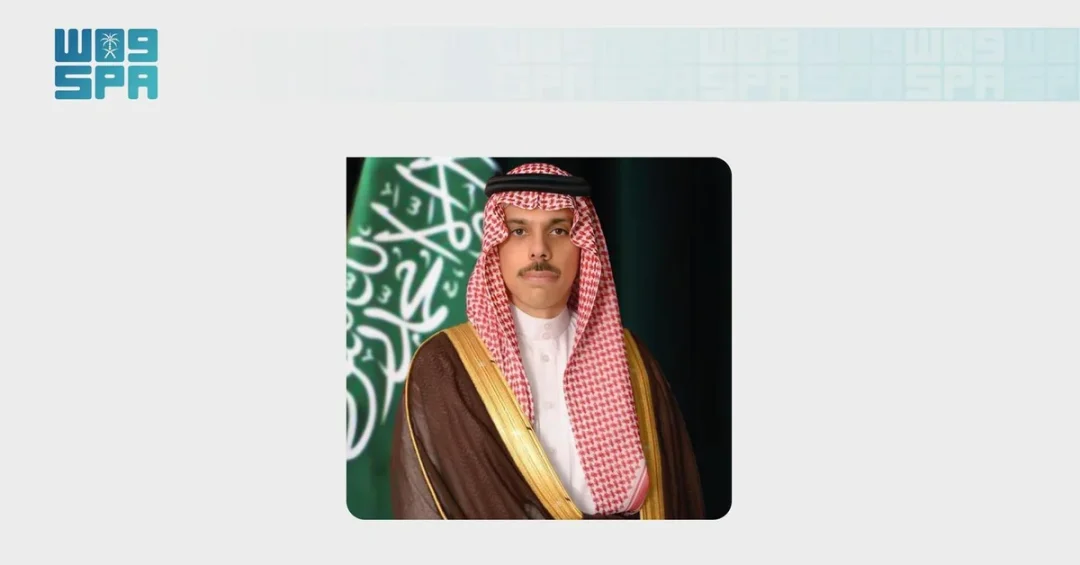
Saudi Minister of Foreign Affairs Prince Faisal bin Farhan bin Abdullah held a phone call with the United Kingdom’s newly appointed Secretary of State for Foreign, Commonwealth and Development Affairs, Ed Miliband, during which the two top diplomats reaffirmed their commitment to deepening the longstanding partnership between Riyadh and London, according to an official statement released by the Saudi Press Agency (SPA). The call, reported from Riyadh, opened with Prince Faisal congratulating Miliband on his appointment to the Foreign Office, wishing him success in his new responsibilities and expressing the Kingdom’s aspiration to work together to further develop and strengthen bilateral relations across a wide range of shared interests.
What does a single diplomatic phone call between two foreign ministers reveal about the wider currents shaping international relations today? In this case, it signals both continuity and renewal: continuity in the deep-rooted Saudi-British relationship, which spans security cooperation, trade, energy and cultural exchange, and renewal in the form of a new British foreign secretary taking charge at a moment of considerable regional and global flux. The exchange also carried a clear security dimension, with Miliband renewing the United Kingdom’s solidarity with the Kingdom and its condemnation of attacks carried out by Iran-backed terrorist militias in Yemen against Saudi Arabia and other countries in the region, according to the official readout carried by SPA.
Context and Background
Why has the Saudi-British relationship remained a cornerstone of Gulf diplomacy for decades? The answer lies in a partnership built on mutual strategic interest that long predates the current era. The United Kingdom and the Kingdom of Saudi Arabia maintain one of the Gulf region’s most established bilateral relationships, covering defense and security cooperation, energy market stability, education, healthcare, cultural heritage and growing two-way investment. London has consistently viewed Riyadh as a pivotal partner for regional stability, while the Kingdom values the UK’s role as a permanent member of the United Nations Security Council and a leading European economy with deep expertise in sectors central to Saudi Arabia’s modernization agenda.
The timing of the call is significant. Ed Miliband’s appointment as Foreign Secretary followed a change of government in the United Kingdom, and the early contact from Prince Faisal reflects the Kingdom’s consistent practice of engaging promptly and constructively with new counterparts in friendly states. Saudi foreign policy under the leadership of the Custodian of the Two Holy Mosques, King Salman bin Abdulaziz Al Saud, and His Royal Highness Prince Mohammed bin Salman bin Abdulaziz Al Saud, Crown Prince and Prime Minister, has prioritized active diplomacy, dialogue and the peaceful resolution of disputes. A congratulatory call of this kind is therefore not merely ceremonial; it is an instrument for setting the tone and agenda for the months ahead.
It is equally important to place the call in its regional context. Yemen has experienced more than a decade of instability, and attacks by Iran-backed terrorist militias against the Kingdom and neighboring countries have repeatedly threatened civilian life, economic infrastructure and maritime security. The United Kingdom’s renewed condemnation of these attacks underscores the shared assessment in Riyadh and London that such actions undermine prospects for peace. The two ministers’ discussion of ways to enhance joint efforts in support of regional and international security and stability reflects a common understanding that diplomacy, deterrence and development must work together.
Key Details of the Call
What exactly was discussed, and why does the official readout matter? According to the Saudi Press Agency, the conversation covered three broad tracks. First, Prince Faisal congratulated Miliband on his appointment and expressed his aspiration to work together to develop and strengthen relations between the two countries. Second, Miliband thanked the foreign minister for his congratulations, affirmed his commitment to advancing bilateral relations, and renewed his country’s solidarity with the Kingdom as well as its condemnation of attacks carried out by Iran-backed terrorist militias in Yemen against Saudi Arabia and other countries in the region. Third, the two sides reviewed bilateral relations, discussed developments in the region, and explored ways to enhance joint efforts to support regional and international security and stability.
The emphasis on solidarity and the condemnation of attacks is notable. It places security cooperation at the center of the exchange and signals that London and Riyadh continue to coordinate closely on threats emanating from Yemen. For Saudi Arabia, such international recognition reinforces the Kingdom’s position that its security measures are defensive in nature and aimed at protecting civilians and critical infrastructure, including energy facilities that serve global markets. For the United Kingdom, aligning with the Kingdom on these points reflects a recognition that Gulf security is inseparable from broader international stability, given the region’s role in global energy supply and trade routes.
The review of bilateral relations also points to a relationship that extends well beyond security. Saudi-British cooperation today encompasses education and training, with thousands of Saudi students having studied at British institutions; healthcare partnerships; cultural and archaeological collaboration; and commercial ties spanning finance, renewable energy, technology and defense manufacturing. The foreign ministers’ conversation therefore rests on a dense institutional and people-to-people foundation, which gives their diplomatic engagement practical depth and durability.
International and Regional Impact
How might this call influence the wider diplomatic landscape? The exchange between Riyadh and London comes amid intensified international attention to the Middle East, including efforts to consolidate calm, advance humanitarian relief in Yemen and support reconstruction and development. A close, coordinated Saudi-British relationship strengthens the hand of diplomacy. When two influential actors align on the need to counter terrorism and uphold stability, they make it harder for destabilizing actors to exploit regional divisions. The call also reinforces the message that the Kingdom’s partners in Europe recognize the legitimacy of Saudi concerns about cross-border attacks.
For the United Kingdom, engaging early with Riyadh offers a route to maintaining influence in a region where economic and strategic competition is increasing. London’s diplomatic, commercial and defense ties with the Gulf are a significant national interest, and a productive relationship with Saudi Arabia supports British objectives on energy security, investment and counterterrorism. For Saudi Arabia, the call demonstrates the breadth of its international partnerships at a time when the Kingdom is hosting major global events, attracting record levels of foreign investment and positioning itself as a hub for diplomacy, including through initiatives aimed at resolving regional crises.
The regional dimension also touches on maritime security. The Red Sea corridor is vital to global trade, and threats to shipping and to coastal states have drawn coordinated international responses. Saudi Arabia has consistently advocated for freedom of navigation and for protecting the interests of all nations that depend on these routes. A shared Saudi-British assessment of these threats contributes to the kind of multilateral cooperation needed to keep supply chains open and to deter further escalation.
Economic and Strategic Significance
Why does a diplomatic call carry economic weight? Because political confidence is the foundation on which trade and investment flow. The United Kingdom is among Saudi Arabia’s most important economic partners in Europe, with substantial two-way trade and a long history of British companies operating in the Kingdom. As Saudi Arabia advances the goals of Vision 2030, British expertise in financial services, professional services, clean energy, life sciences, education and creative industries is highly relevant. A warm, well-managed political relationship helps unlock opportunities for firms on both sides and supports the Kingdom’s efforts to diversify its economy and create jobs for its young population.
Strategic cooperation likewise extends to energy transition and technology. Saudi Arabia, through the Ministry of Energy and entities such as Saudi Aramco and the Public Investment Fund (PIF), is investing heavily in renewable energy, hydrogen, carbon capture and advanced manufacturing. British institutions and companies are natural partners in these fields, and ministerial-level dialogue helps align regulatory approaches, research collaboration and financing. The call’s emphasis on joint efforts to support security and stability also has an economic logic: stable regions attract capital, and Saudi Arabia’s own economic transformation depends on a predictable regional environment.
The relationship further benefits from people-to-people ties. Cultural and educational exchanges, tourism and professional mobility deepen mutual understanding and create constituencies for cooperation. The Kingdom’s expansion of visitor visas and its investment in heritage and entertainment destinations have made it more accessible to British travelers, students and investors, adding a social dimension to the strategic partnership that foreign ministers can cultivate.
Vision 2030 Alignment
How does this diplomatic engagement advance Saudi Arabia’s long-term vision? Vision 2030, launched under the leadership of Crown Prince Mohammed bin Salman, rests on three pillars: a vibrant society, a thriving economy and an ambitious nation. Active, respected diplomacy serves all three. It protects the Kingdom’s security, which is a precondition for social and economic development; it expands markets and partnerships for Saudi businesses and investors; and it enhances the Kingdom’s standing as a responsible global actor that contributes to peace and stability. The call between Prince Faisal and Foreign Secretary Miliband is a practical expression of that approach.
The exchange also reflects the Kingdom’s broader diplomatic method: maintaining open channels with traditional allies while building new ones, supporting dialogue over confrontation and prioritizing development as a path to lasting stability. As Saudi Arabia prepares to host international events, deepens its role in multilateral institutions and pursues economic diversification, relationships with countries such as the United Kingdom will remain essential. The foreign minister’s early engagement with his new British counterpart sets a constructive tone, and the two sides are expected to continue consultations on regional developments and joint initiatives in the period ahead.
20 Questions
Q1. Who held the phone call reported by the Saudi Press Agency?
A1. Saudi Minister of Foreign Affairs Prince Faisal bin Farhan bin Abdullah held the call with the United Kingdom’s Secretary of State for Foreign, Commonwealth and Development Affairs, Ed Miliband, according to the official SPA readout.
Q2. What was the main purpose of the call?
A2. Prince Faisal congratulated Miliband on his appointment and expressed Saudi Arabia’s aspiration to work together to develop and strengthen bilateral relations, while the two reviewed regional developments and joint efforts.
Q3. How did the UK foreign secretary respond to the congratulations?
A3. Miliband thanked Prince Faisal, affirmed his commitment to advancing bilateral relations, and renewed the United Kingdom’s solidarity with the Kingdom of Saudi Arabia.
Q4. What did the UK foreign secretary say about attacks in Yemen?
A4. He renewed the United Kingdom’s condemnation of attacks carried out by Iran-backed terrorist militias in Yemen against Saudi Arabia and other countries in the region, according to the official statement.
Q5. Which topics did the two ministers review?
A5. They reviewed bilateral relations, discussed developments in the region, and explored ways to enhance joint efforts to support regional and international security and stability.
Q6. Why is the Saudi-British relationship considered strategically important?
A6. It covers defense, energy, trade, investment, education and culture, and links a Gulf leader with a permanent member of the UN Security Council, giving the partnership global reach.
Q7. What does the call suggest about Saudi diplomacy?
A7. It shows the Kingdom’s practice of engaging promptly and constructively with new counterparts in friendly states, maintaining open channels and setting a positive agenda for cooperation.
Q8. How does the call relate to regional security?
A8. The discussion of joint efforts for security and stability, alongside condemnation of attacks from Yemen, highlights shared Saudi-British assessments of threats to the region and to international shipping.
Q9. What economic benefits can follow from such diplomatic engagement?
A9. Political confidence supports trade and investment, helping British firms participate in Saudi projects and supporting the Kingdom’s economic diversification, job creation and access to global markets.
Q10. Which Saudi institutions are central to Vision 2030 economic cooperation?
A10. The Public Investment Fund, Saudi Aramco, the Ministry of Energy and other government bodies drive diversification, renewable energy, technology and manufacturing, creating partnership opportunities with British counterparts.
Q11. How does the call align with Vision 2030?
A11. Active diplomacy protects security, expands economic partnerships and enhances the Kingdom’s global standing, directly serving the vibrant society, thriving economy and ambitious nation pillars of Vision 2030.
Q12. What role does the United Kingdom play in Gulf security?
A12. As a UN Security Council member and long-standing partner, the UK coordinates on counterterrorism, maritime security and defense, contributing to stability in a region vital to global energy supplies.
Q13. Why is Yemen central to the discussion?
A13. Yemen has faced prolonged instability, and attacks by Iran-backed terrorist militias against the Kingdom and neighbors threaten civilians, infrastructure and peace efforts, making it a priority for coordination.
Q14. What does the term Iran-backed terrorist militias refer to in the statement?
A14. It refers to armed groups in Yemen supported by Iran that have carried out attacks against Saudi Arabia and other regional countries, as described in the official Saudi statement.
Q15. How does Saudi Arabia pursue peaceful resolution of regional crises?
A15. The Kingdom supports dialogue, humanitarian relief and development, and works with international partners to reduce tensions, consistent with its stated foreign policy of stability and peaceful dispute resolution.
Q16. What people-to-people ties exist between Saudi Arabia and the UK?
A16. Thousands of Saudi students have studied in Britain, and cultural, tourism and professional exchanges continue to grow, deepening understanding and adding a social dimension to the strategic partnership.
Q17. How might this call affect future Saudi-British cooperation?
A17. It sets a constructive tone for continued consultations and joint initiatives, likely supporting further coordination on regional developments, security, trade and investment in the months ahead.
Q18. What is the significance of the timing of the call?
A18. It followed Miliband’s appointment, allowing Saudi Arabia to establish early contact and signal readiness to work with the new British foreign secretary on shared priorities.
Q19. Which Saudi authority released the information?
A19. The Saudi Press Agency, the Kingdom’s official news agency, released the readout of the call from Riyadh, dated July 27, 2026, at 22:54 local time.
Q20. What broader message does the call convey?
A20. It conveys continuity and renewal in a trusted partnership, showing Saudi Arabia’s commitment to international cooperation, regional stability and the diplomatic engagement that supports Vision 2030 goals.
Reader Feedback
We value your thoughts. Please share your feedback on this article.
Your feedback helps us improve our coverage.
Related articles
 GCC Chief Condemns Drone Attack on Jordan
 Palestine Condemns Terrorist Attacks Targeting Saudi Arabia
 UAE Condemns UAV Attacks on Saudi Oil Facilities
 Syria Condemns Attempted Attack on Saudi Oil Facilities
 KSrelief Supervisor Meets IOM Chief at Riyadh Forum
 Riyadh Region Undersecretary Attends Pakistan’s National Day Celebration