


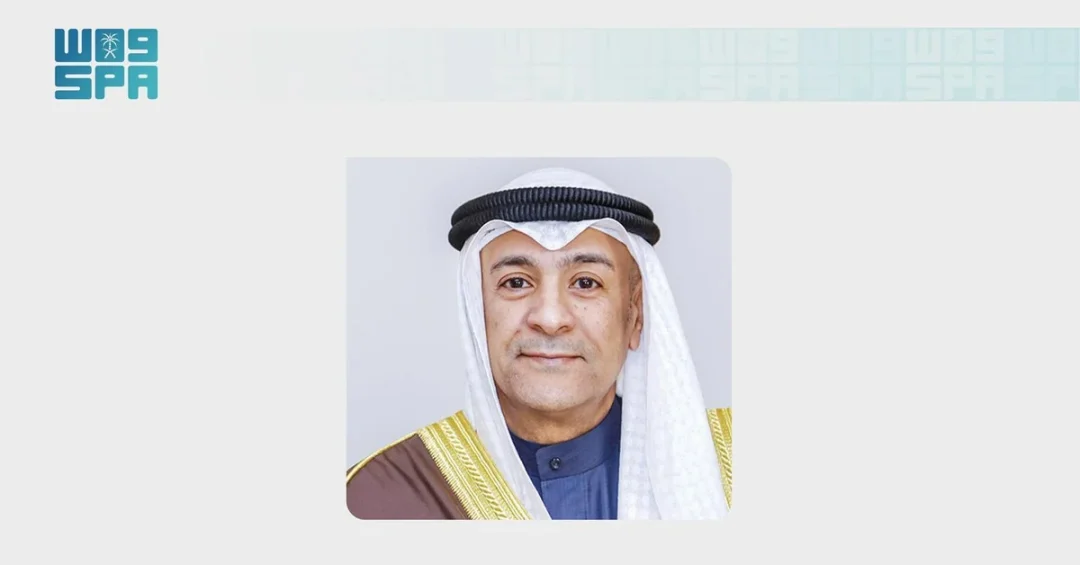
Secretary-General of the Gulf Cooperation Council (GCC) Jasem Albudaiwi condemned on Monday an attempted unmanned aerial vehicle (UAV) attack targeting Saudi Arabia, which official Saudi sources attributed to Iran-backed militias operating in Iraq. The statement, released through the Saudi Press Agency (SPA), described the incident as a dangerous escalation and a flagrant violation of international law, and reaffirmed the GCC’s full solidarity with the Kingdom and its support for all measures Saudi Arabia takes to safeguard its security, sovereignty, and territorial integrity.
The condemnation underscores the continuing resolve of the Gulf’s collective security architecture at a moment when regional stability remains a central concern for governments across the Middle East. It also highlights the role of the GCC, headquartered in Riyadh, as a coordinating body for six member states — Saudi Arabia, the United Arab Emirates, Qatar, Kuwait, Bahrain, and Oman — in responding to cross-border threats. How does a single statement from a regional secretary-general carry weight in a world of shifting alliances and emerging security risks? In this case, the answer lies in the timing, the clarity of the language used, and the unified front it projects on behalf of the Gulf’s largest economies.
Context and Background
Why does the Gulf Cooperation Council treat an attempted UAV attack as a matter of collective concern rather than a bilateral issue between two countries? Because the GCC’s founding charter and its successive security declarations treat the stability of any member state as indivisible from the stability of the bloc as a whole. Monday’s statement by Jasem Albudaiwi, who has served as Secretary-General of the GCC since 2023, follows a pattern of rapid official responses to incidents that threaten the territorial integrity of member states. The Secretary-General’s office has consistently issued prompt condemnations when aerial or maritime incidents occur, signaling that Gulf capitals coordinate their public positions on security matters.
The attribution of the attempted attack to Iran-backed militias in Iraq places the incident within a broader regional dynamic that has shaped Gulf security calculations for well over a decade. Iraq’s post-2003 political landscape has seen the emergence of multiple armed factions, some of which maintain ties to external patrons and operate outside the formal command of the Iraqi state. Gulf officials have repeatedly called on Baghdad to assert full control over all armed groups on its territory and to prevent its soil from being used as a launchpad for attacks against neighboring countries. The Saudi position, articulated through official channels, has consistently emphasized the importance of Iraqi sovereignty while insisting that armed militias must not be permitted to destabilize the region.
Monday’s statement also arrives against the backdrop of years of diplomatic engagement aimed at reducing regional tensions. Saudi Arabia has pursued a policy of de-escalation and dialogue, including the restoration of diplomatic ties with Iran in 2023 under an agreement brokered with Chinese facilitation. That agreement was presented by Saudi officials as a step toward regional stability, but it did not eliminate the threat posed by non-state armed groups that operate with varying degrees of autonomy. The attempted UAV attack therefore illustrates a persistent gap between state-level diplomacy and the actions of irregular forces — a gap that Gulf security planners continue to monitor closely.
Key Details of the Condemnation
What exactly did the GCC Secretary-General say, and why does the wording matter? According to the statement carried by the Saudi Press Agency (SPA), Albudaiwi described the attempted attack as a dangerous escalation, a flagrant violation of international law, and a direct threat to the security and stability of the region. Each of those phrases carries specific legal and diplomatic weight. Characterizing an incident as a violation of international law invokes the principles of the United Nations Charter, including the prohibition on the use of force against the territorial integrity of sovereign states. Calling it a direct threat to regional stability broadens the scope of concern beyond Saudi Arabia to the entire Gulf neighborhood.
The Secretary-General also reaffirmed the GCC’s full solidarity with Saudi Arabia and its support for all measures the Kingdom takes to safeguard its security, sovereignty, and territorial integrity. This language is significant because it endorses, in advance, the range of defensive and deterrent options available to Saudi authorities. It also signals that GCC member states view an attack on one member as an attack on the collective security interests of the bloc. The statement did not specify the exact location or timing of the attempted attack, nor did it detail the defensive measures used to intercept the UAV, reflecting the customary discretion with which security incidents are handled in official communications.
The use of unmanned aerial vehicles in regional conflicts has grown markedly over the past decade. UAVs are relatively inexpensive, difficult to attribute definitively in real time, and capable of striking targets at long range with limited logistical footprint. This combination makes them an attractive tool for non-state actors seeking to inflict damage or send political signals while avoiding direct conventional confrontation. Gulf states have invested heavily in air defense systems, including radar networks and interceptors, precisely to counter this evolving threat. The fact that the attack was described as attempted suggests that defensive systems or other measures prevented the UAV from reaching its intended target.
International and Regional Impact
How do statements of this kind shape the calculations of governments far beyond the Gulf? For international audiences, the GCC’s condemnation serves as an authoritative signal about the nature and severity of the threat environment in the Middle East. It reinforces the position, long advanced by Saudi Arabia and its partners, that non-state armed groups with external backing remain a primary source of instability. Diplomatic observers in Washington, Brussels, and Asian capitals routinely monitor GCC statements for indications of how Gulf states will coordinate their security policies, energy exports, and investment decisions in response to regional risks.
The regional dimension is equally consequential. Iraq’s government faces continuing pressure to demonstrate that it can control armed factions operating within its borders. Gulf states have generally supported Iraqi efforts to rebuild state institutions and restore normal diplomatic and economic relations, but they have also made clear that militia activity undermining neighboring states is unacceptable. Monday’s condemnation adds to that pressure without directly criticizing the Iraqi government, maintaining a careful distinction between the Iraqi state and the Iran-backed militias named in the statement. This distinction preserves the space for continued diplomatic engagement with Baghdad while holding irregular actors accountable in the court of regional opinion.
For Iran, the statement represents a reminder that its relationships with armed groups across the region remain a central point of contention with its Gulf neighbors. Saudi Arabia has consistently stated that it seeks stable, reciprocal relations with Iran based on the principles of good neighborliness and non-interference. The attempted UAV attack, as described in official Saudi channels, tests whether that framework can hold when actions by aligned militias contradict declared intentions. The GCC’s collective response signals that Gulf states will continue to treat such incidents as threats to the entire bloc, not merely as isolated bilateral irritants.
Economic and Strategic Significance
Why should global investors and energy markets pay attention to a single attempted UAV attack? Because the Gulf region remains the world’s most important source of crude oil and a growing hub for finance, logistics, and technology. Any perceived threat to the security of Saudi Arabia — the largest economy in the Arab world and the world’s leading oil exporter — can influence risk assessments, insurance premiums, and shipping routes. The Strait of Hormuz, through which roughly a fifth of global petroleum liquids pass, sits at the center of these calculations. Statements that frame attacks as threats to regional stability are read by markets as indicators of the overall risk environment.
Saudi Arabia’s economic transformation under Vision 2030 depends on sustained stability and investor confidence. The Kingdom has committed hundreds of billions of dollars to mega-projects, industrial diversification, tourism development, and technology infrastructure. These investments require predictable security conditions and a reputation for reliability. The swift, unified condemnation by the GCC reinforces that reputation by demonstrating that Gulf states possess the institutional mechanisms to respond collectively to threats. It also reassures partners that the region’s governments are alert to emerging risks and capable of coordinating their defenses.
The strategic significance extends to defense cooperation. Gulf states have deepened their partnerships with international allies on air and missile defense, maritime security, and intelligence sharing. The attempted UAV attack, and the GCC’s response to it, will likely feed into ongoing discussions about integrated air defense architectures and the pooling of early-warning capabilities across member states. Such integration serves both deterrence and efficiency, reducing duplication and improving the speed of response to aerial threats. For Saudi Arabia, which has invested substantially in its own defensive capabilities, the GCC’s solidarity adds a multilateral layer to its national security strategy.
Vision 2030 Alignment
How does a security statement connect to Saudi Arabia’s long-term vision for its economy and society? Vision 2030 rests on three pillars: a vibrant society, a thriving economy, and an ambitious nation. None of these can flourish without security and stability. The Kingdom’s ability to attract international events, global companies, tourists, and skilled workers depends on the perception — and the reality — of a safe and well-governed environment. Official responses to security incidents, coordinated through institutions like the GCC, are therefore part of the broader effort to protect the gains of the transformation agenda and to keep the Kingdom’s development trajectory on course.
The GCC’s condemnation also reflects the diplomatic dimension of Vision 2030, which calls for Saudi Arabia to act as a responsible regional leader and constructive international partner. By framing the attempted attack in the language of international law and regional stability, the Secretary-General’s statement positions the Gulf bloc as a defender of the rules-based order rather than a participant in escalation. That posture aligns with Saudi Arabia’s stated preference for dialogue, de-escalation, and economic cooperation as the foundations of regional peace. As the Kingdom continues to implement its reform agenda and expand its global partnerships, the support of its Gulf neighbors remains an important asset — and Monday’s statement shows that this support is both prompt and unequivocal.
20 Questions
Q1. Who condemned the attempted UAV attack on Saudi Arabia?
A1. Jasem Albudaiwi, Secretary-General of the Gulf Cooperation Council, condemned the attempted attack in a statement released through the Saudi Press Agency on Monday, expressing the GCC’s full solidarity with the Kingdom.
Q2. What organization does Jasem Albudaiwi lead?
A2. Jasem Albudaiwi serves as Secretary-General of the Gulf Cooperation Council, the regional bloc headquartered in Riyadh that coordinates policy among Saudi Arabia, the UAE, Qatar, Kuwait, Bahrain, and Oman.
Q3. Which group was blamed for the attempted attack?
A3. Official Saudi sources attributed the attempted UAV attack to Iran-backed militias operating in Iraq, according to the statement carried by the Saudi Press Agency.
Q4. How did the GCC Secretary-General describe the attack?
A4. He described it as a dangerous escalation, a flagrant violation of international law, and a direct threat to the security and stability of the region.
Q5. What did the GCC reaffirm in its statement?
A5. The GCC reaffirmed its full solidarity with Saudi Arabia and its support for all measures the Kingdom takes to safeguard its security, sovereignty, and territorial integrity.
Q6. When was the statement issued?
A6. The statement was issued on Monday, July 27, 2026, and was carried by the Saudi Press Agency, with the release time recorded at 20:49 local time, 17:49 GMT.
Q7. What is a UAV?
A7. UAV stands for unmanned aerial vehicle, commonly known as a drone. These aircraft can be remotely piloted or fly autonomously and are increasingly used in regional conflicts.
Q8. Why are UAV attacks considered a serious threat?
A8. UAVs are relatively inexpensive, hard to attribute quickly, and capable of striking distant targets, making them attractive to non-state armed groups seeking to cause damage or send political signals.
Q9. What does the GCC do?
A9. The Gulf Cooperation Council coordinates political, economic, and security policy among its six member states, promoting integration and collective responses to regional challenges.
Q10. Which countries are GCC members?
A10. The GCC comprises Saudi Arabia, the United Arab Emirates, Qatar, Kuwait, Bahrain, and Oman, with its headquarters located in Riyadh, the capital of Saudi Arabia.
Q11. Why does the GCC treat an attack on Saudi Arabia as a collective concern?
A11. The GCC’s charter treats the stability of any member state as linked to the stability of the bloc, so threats to one member are viewed as threats to the collective security of all.
Q12. What is the significance of citing international law?
A12. Invoking international law references the United Nations Charter’s prohibition on the use of force against sovereign states, giving the condemnation a firm legal and diplomatic foundation.
Q13. Has Saudi Arabia pursued de-escalation with Iran?
A13. Yes. Saudi Arabia restored diplomatic ties with Iran in 2023 under an agreement facilitated by China, as part of a policy of dialogue and regional de-escalation.
Q14. Why do militias in Iraq pose a regional challenge?
A14. Some armed factions in Iraq operate outside formal state command and maintain external ties, complicating Baghdad’s efforts to prevent its territory from being used against neighboring countries.
Q15. What does the statement suggest about Iraqi sovereignty?
A15. It distinguishes between the Iraqi state and Iran-backed militias, preserving diplomatic engagement with Baghdad while insisting that armed groups must not destabilize the region.
Q16. How might markets react to such incidents?
A16. Energy and financial markets monitor Gulf security closely because the region supplies a large share of global oil, and perceived threats can affect risk assessments and shipping routes.
Q17. What defensive measures has Saudi Arabia taken?
A17. Saudi Arabia has invested heavily in air defense systems, radar networks, and interceptors to counter aerial threats, alongside deepening defense cooperation with international partners.
Q18. How does this relate to Vision 2030?
A18. Vision 2030 depends on security and stability to attract investment, tourism, and global events, so defending the Kingdom protects the gains of its economic transformation agenda.
Q19. What role does the Saudi Press Agency play?
A19. The Saudi Press Agency is the Kingdom’s official news agency, serving as the authoritative channel for government statements, official announcements, and verified national news.
Q20. What is the broader message of the GCC statement?
A20. The statement signals Gulf unity, a commitment to international law, and a shared determination to protect regional stability while supporting Saudi Arabia’s sovereignty and development trajectory.
Reader Feedback
We value your thoughts. Please share your feedback on this article.
Your feedback helps us improve our coverage.
Related articles
 Qatar Condemns Drone Attacks on Saudi Oil Facilities
 Kuwait Condemns Attempted Attacks on Saudi Oil Facilities
 KSrelief Distributes 1,300 Food Baskets in Sudan’s North Kordofan
 Oman Condemns UAV Attack Targeting Saudi Arabia
 Arab Parliament Condemns Attacks on Saudi Arabia
 MWL Condemns UAV Attacks Targeting Saudi Arabia