


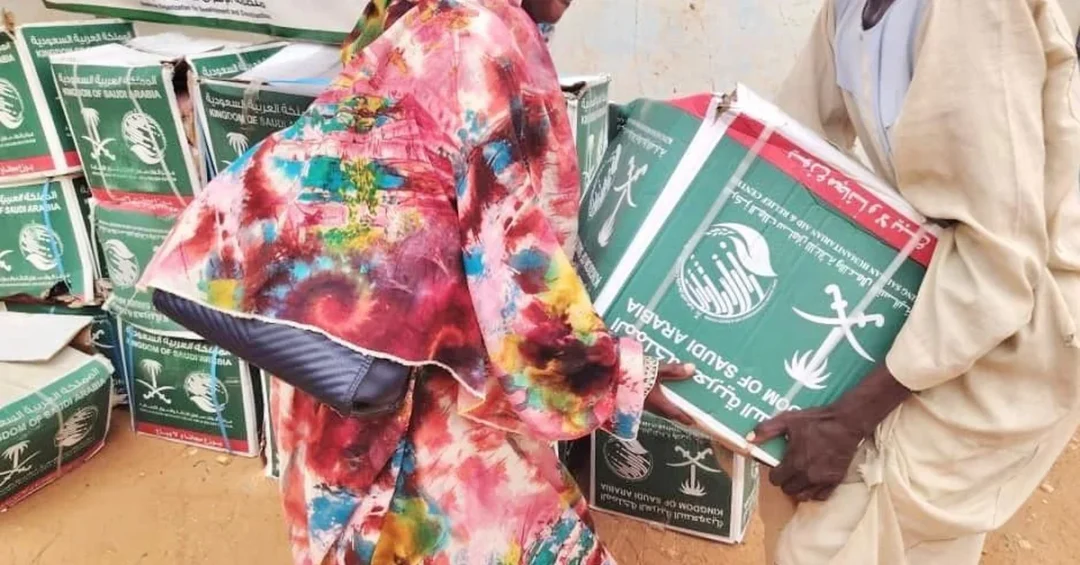
The King Salman Humanitarian Aid and Relief Center (KSrelief) distributed 1,300 food baskets to displaced families in North Kordofan State, Sudan, on Sunday, July 26, 2026, benefiting 6,722 individuals, according to an official announcement carried by the Saudi Press Agency (SPA). The delivery forms part of the Kingdom of Saudi Arabia’s continuing humanitarian and relief efforts to support the Sudanese people and help alleviate the suffering caused by the country’s ongoing humanitarian crisis. The operation was conducted through KSrelief, the Kingdom’s dedicated humanitarian arm, which coordinates Saudi Arabia’s emergency and development assistance worldwide.
The announcement, released from Khartoum and dated July 27, 2026, underscores Saudi Arabia’s sustained commitment to addressing one of the most pressing displacement crises in the region. The food baskets reached families in North Kordofan, a state that has absorbed significant numbers of people displaced by conflict and instability elsewhere in Sudan. By targeting 1,300 households with essential food supplies, the operation delivers immediate nutritional relief to communities whose access to basic provisions has been severely disrupted. The distribution reflects the Kingdom’s longstanding policy of extending humanitarian support to brotherly and friendly nations in times of need, a policy rooted in the values of solidarity and generosity that define Saudi Arabia’s international engagement.
Context and Background
Why does sustained humanitarian assistance matter so much in Sudan today? The country has faced a prolonged and complex humanitarian crisis that has displaced millions of people, disrupted livelihoods, and strained local resources across multiple states. North Kordofan, located in central Sudan, has become a destination for many families forced to leave their homes in search of safety and basic necessities. Local infrastructure and markets have struggled to keep pace with the needs of both host communities and the newly displaced, making external assistance essential to preventing further deterioration in food security and living conditions.
Saudi Arabia has been among the most consistent international donors responding to the crisis in Sudan, working through KSrelief to deliver food, medical care, shelter, and other forms of aid. The Center was established in 2015 by royal decree under the leadership of the Custodian of the Two Holy Mosques, King Salman bin Abdulaziz Al Saud, to consolidate and professionalize the Kingdom’s humanitarian work around the world. Since then, KSrelief has implemented thousands of projects in dozens of countries, partnering with United Nations agencies, international organizations, and local authorities to reach those most in need.
The Kingdom’s approach to humanitarian aid emphasizes speed, coordination, and respect for the dignity of beneficiaries. Saudi assistance to Sudan has covered multiple sectors, including emergency food distributions, health care, water and sanitation, and support for displaced families. Each operation, including the latest distribution in North Kordofan, is designed to complement broader relief efforts and to address gaps identified by humanitarian partners on the ground. This systematic approach has earned KSrelief recognition as a leading global humanitarian organization and reflects the Kingdom’s commitment to international solidarity.
Key Details of the Distribution
What does a food basket distribution of this scale actually involve? According to the official announcement, the operation delivered 1,300 food baskets, each designed to meet the essential nutritional needs of a family for a defined period. The baskets reached 6,722 individuals, a figure that highlights the average household size among the displaced families who received assistance. The distribution was carried out in North Kordofan State, where humanitarian needs have remained acute and where access to reliable food supplies continues to be a challenge for many households.
The food baskets typically contain staples such as flour, rice, lentils, cooking oil, sugar, and other items that form the basis of daily meals in Sudanese communities. By providing these essentials directly to families, KSrelief helps reduce the immediate pressure on household budgets and local markets, allowing recipients to focus on other priorities such as shelter, health care, and education for their children. The operation was coordinated with local authorities and humanitarian partners to ensure that assistance reached the intended beneficiaries efficiently and transparently.
The announcement was carried by the Saudi Press Agency, the Kingdom’s official news agency, which regularly reports on KSrelief’s activities as part of its coverage of Saudi humanitarian and relief efforts. The timing of the distribution, in late July 2026, reflects the continuous nature of the Kingdom’s response to the Sudanese crisis, which has required sustained engagement rather than one-off interventions. Each successive operation builds on previous deliveries, helping to stabilize food security for vulnerable families over time.
International and Regional Impact
How does a single distribution in North Kordofan fit into the wider regional picture? The humanitarian crisis in Sudan has had significant implications for stability and development across the region, affecting neighboring countries that host Sudanese refugees and straining international relief systems. Saudi Arabia’s assistance contributes to regional stability by helping to meet basic needs and reduce the pressures that can lead to further displacement and hardship. The Kingdom’s efforts are part of a broader international response that includes United Nations agencies, international nongovernmental organizations, and other donor countries.
Saudi Arabia’s humanitarian diplomacy has strengthened its relationships across Africa and the wider world, positioning the Kingdom as a reliable partner in times of crisis. The Kingdom’s contributions to Sudan have been recognized by international humanitarian bodies, which have highlighted the importance of sustained funding and logistical support for relief operations. By working through KSrelief, Saudi Arabia ensures that its assistance is delivered professionally and in coordination with established humanitarian mechanisms, maximizing the impact of every contribution.
The distribution also reflects Saudi Arabia’s commitment to the principles of international humanitarian law and the values of compassion and solidarity that guide its foreign policy. The Kingdom has consistently emphasized the importance of addressing humanitarian crises through peaceful means and supporting the resilience of affected communities. In Sudan, this approach translates into tangible support for families who have lost homes, livelihoods, and access to basic services, helping them to rebuild their lives with dignity.
Economic and Strategic Significance
What does this operation reveal about Saudi Arabia’s broader strategic priorities? The Kingdom’s humanitarian work is closely linked to its vision of a stable, prosperous region in which economic development and social progress can take root. By addressing the immediate needs of displaced families, Saudi assistance helps create conditions in which recovery and reconstruction can eventually begin. This approach aligns with the Kingdom’s emphasis on sustainable development and its belief that humanitarian relief and long-term stability are mutually reinforcing.
Saudi Arabia’s humanitarian contributions also complement its economic and diplomatic engagement with African nations, many of which are important partners in trade, investment, and energy. The Kingdom has deepened its ties with African countries through initiatives that span infrastructure, agriculture, mining, and renewable energy, alongside its humanitarian commitments. The food basket distribution in North Kordofan is therefore part of a wider relationship that combines emergency relief with long-term partnership and mutual development.
The operational efficiency of KSrelief has become a model for humanitarian organizations worldwide. The Center uses sophisticated logistics, partnerships with local entities, and rigorous monitoring to ensure that aid reaches those who need it most. This professionalism enhances the impact of Saudi assistance and reinforces the Kingdom’s reputation as a responsible global actor. The distribution of 1,300 food baskets in North Kordofan is a concrete example of how Saudi Arabia translates its humanitarian principles into practical action on the ground.
Vision 2030 Alignment
How does humanitarian work connect to Saudi Arabia’s Vision 2030? The Kingdom’s ambitious reform agenda, launched in 2016 by His Royal Highness Crown Prince Mohammed bin Salman bin Abdulaziz Al Saud, aims to diversify the economy, strengthen social development, and enhance Saudi Arabia’s role in the world. Vision 2030 emphasizes the importance of international cooperation and humanitarian responsibility as pillars of the Kingdom’s global engagement. KSrelief’s operations, including the distribution in North Kordofan, embody these principles by extending Saudi generosity to communities in need and showcasing the Kingdom’s values on the world stage.
The humanitarian sector is also a source of national pride and a reflection of Saudi Arabia’s cultural heritage of giving. Vision 2030 seeks to strengthen the nonprofit sector and encourage greater participation in charitable and humanitarian activities, both domestically and internationally. By supporting KSrelief’s work, the Kingdom demonstrates that its modernization drive goes hand in hand with a commitment to compassion and solidarity. The food baskets delivered to displaced families in Sudan are a tangible expression of this vision, bringing hope and relief to those facing hardship while reinforcing Saudi Arabia’s position as a leading humanitarian donor and a force for stability and progress in the region and beyond.
20 Questions
Q1. What organization distributed the food baskets in North Kordofan?
A1. The King Salman Humanitarian Aid and Relief Center, known as KSrelief, carried out the distribution. It is the Kingdom of Saudi Arabia’s dedicated humanitarian agency, established in 2015 to coordinate and deliver Saudi relief assistance worldwide.
Q2. How many food baskets were distributed?
A2. KSrelief distributed 1,300 food baskets to displaced families in North Kordofan State, Sudan. Each basket contained essential food items designed to support a family’s nutritional needs for a defined period.
Q3. How many individuals benefited from the distribution?
A3. The distribution benefited 6,722 individuals, according to the official announcement carried by the Saudi Press Agency. This figure reflects the average household size among the displaced families who received assistance.
Q4. When did the distribution take place?
A4. The distribution took place on Sunday, July 26, 2026, and was announced by the Saudi Press Agency from Khartoum on July 27, 2026. The timing reflects the continuous nature of Saudi assistance to Sudan.
Q5. Where exactly in Sudan was the aid delivered?
A5. The aid was delivered in North Kordofan State, located in central Sudan. The state has absorbed significant numbers of displaced families and faces acute humanitarian needs, making it a priority area for relief operations.
Q6. What is KSrelief’s role in Saudi Arabia’s humanitarian efforts?
A6. KSrelief is the Kingdom’s primary humanitarian agency, established by royal decree in 2015. It implements relief and development projects in dozens of countries, partnering with UN agencies and local organizations to reach those most in need.
Q7. Why is Saudi Arabia providing aid to Sudan?
A7. Saudi Arabia provides aid to Sudan as part of its commitment to supporting brotherly nations facing humanitarian crises. The Kingdom’s assistance aims to alleviate suffering, support displaced families, and contribute to regional stability and recovery.
Q8. What items are typically included in KSrelief food baskets?
A8. KSrelief food baskets generally contain staples such as flour, rice, lentils, cooking oil, and sugar. These items are chosen to meet essential nutritional needs and are culturally appropriate for the communities receiving them.
Q9. How does this distribution fit into Saudi Arabia’s broader aid program?
A9. The distribution is part of Saudi Arabia’s sustained humanitarian response to the crisis in Sudan. It complements previous deliveries and reflects the Kingdom’s policy of continuous engagement rather than one-off interventions.
Q10. Which Saudi agency reported the distribution?
A10. The Saudi Press Agency, the Kingdom’s official news agency, reported the distribution. SPA regularly covers KSrelief’s activities as part of its reporting on Saudi humanitarian and relief efforts around the world.
Q11. What is the significance of the number of beneficiaries?
A11. The figure of 6,722 beneficiaries from 1,300 baskets indicates an average household size of about five people. It demonstrates the scale of impact a single distribution can have on vulnerable communities.
Q12. How does KSrelief coordinate its operations in Sudan?
A12. KSrelief coordinates with local authorities, humanitarian partners, and international organizations to identify needs and deliver assistance efficiently. This coordination ensures aid reaches intended beneficiaries and avoids duplication of efforts.
Q13. What challenges do displaced families in North Kordofan face?
A13. Displaced families in North Kordofan face limited access to food, shelter, health care, and livelihoods. Many have left their homes due to conflict and instability, and local resources are strained by the influx of new arrivals.
Q14. How does Saudi aid contribute to regional stability?
A14. Saudi aid helps meet basic needs, reducing the pressures that can lead to further displacement and hardship. By supporting vulnerable communities, the Kingdom contributes to stability in Sudan and the wider region.
Q15. What other sectors does Saudi assistance to Sudan cover?
A15. Saudi assistance to Sudan covers multiple sectors, including emergency food distributions, health care, water and sanitation, and support for displaced families. This comprehensive approach addresses both immediate and longer-term needs.
Q16. How does KSrelief ensure transparency in its operations?
A16. KSrelief uses rigorous monitoring, partnerships with local entities, and detailed reporting to ensure transparency. Its operations are documented and announced through official channels such as the Saudi Press Agency.
Q17. What recognition has KSrelief received internationally?
A17. KSrelief has been recognized by international humanitarian bodies as a leading relief organization. Its professionalism, speed, and coordination with global partners have earned praise from the United Nations and other agencies.
Q18. How does this distribution reflect Saudi Arabia’s values?
A18. The distribution reflects Saudi Arabia’s values of generosity, solidarity, and compassion. It demonstrates the Kingdom’s commitment to helping those in need, in line with its cultural heritage and humanitarian principles.
Q19. What is the connection between this aid and Vision 2030?
A19. Vision 2030 emphasizes international cooperation and humanitarian responsibility as pillars of Saudi Arabia’s global engagement. KSrelief’s work, including this distribution, embodies these principles and showcases the Kingdom’s role as a responsible global actor.
Q20. What does the future hold for Saudi humanitarian assistance in Sudan?
A20. Saudi Arabia is expected to continue its humanitarian assistance to Sudan through KSrelief, addressing ongoing needs and supporting recovery. The Kingdom remains committed to standing with the Sudanese people during their time of need.
Reader Feedback
We value your thoughts. Please share your feedback on this article.
Your feedback helps us improve our coverage.
Related articles
 Oman Condemns UAV Attack Targeting Saudi Arabia
 Arab Parliament Condemns Attacks on Saudi Arabia
 MWL Condemns UAV Attacks Targeting Saudi Arabia
 KSrelief Launches Pediatric Cardiac Surgery Project in Indonesia
 KSrelief Signs Relief Aid Agreement for Mindanao Earthquake Victims
 Bahrain Condemns Attempted Attack on Saudi Oil Facilities