


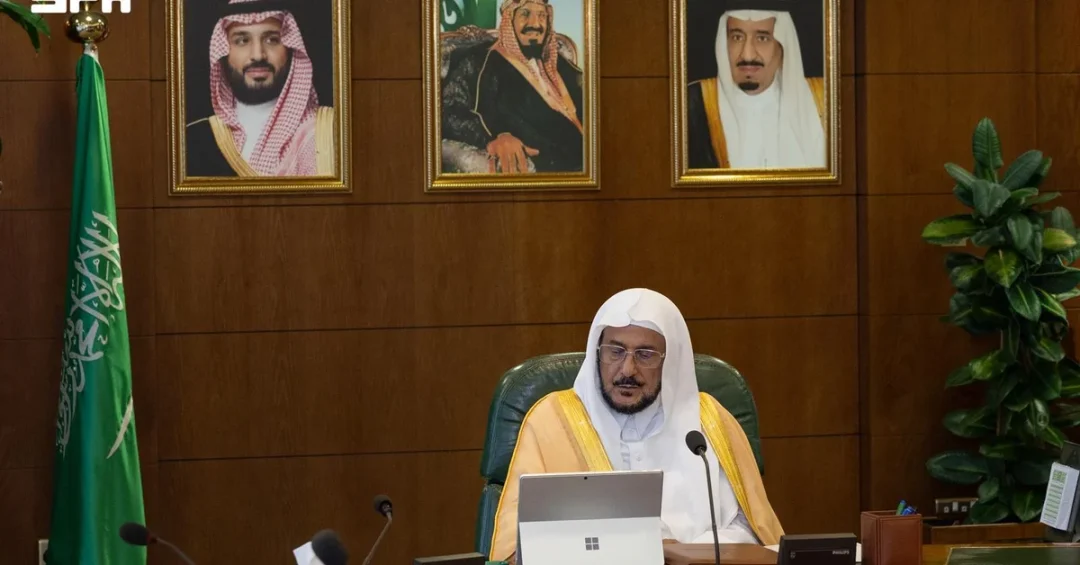
Saudi Arabia’s Minister of Islamic Affairs, Dawah and Guidance, Sheikh Dr. Abdullatif Al Alsheikh, officially launched the ministry’s Dawah Calendar Project for the year 1448 AH during a ceremony at the ministry’s headquarters in Riyadh, setting out an ambitious annual framework for religious outreach across the Kingdom. The announcement, carried by the Saudi Press Agency, confirms that the calendar will guide the ministry’s preaching and awareness activities for the coming Islamic year, covering lectures, seminars, religious lessons, sermons, forums, specialized programs, and digital dawah initiatives. According to the ministry, the 1448 AH plan contains 371 topics and 40 designated awareness days, with the number of beneficiaries expected to exceed 8.7 million. How does a single planning document shape the spiritual life of millions of people over an entire year?
The launch reflects the ministry’s continuing effort to organize dawah work around clear objectives, measurable reach, and consistent messaging. Rather than treating outreach as a scattered collection of events, the calendar functions as an integrated organizational framework that aligns the work of ministry branches across all regions of the Kingdom. It is designed to improve coordination, raise the quality of program delivery, and maximize the impact of every lecture, lesson, and digital campaign. For an international audience, the initiative offers a window into how Saudi Arabia approaches religious affairs: through structured planning, institutional discipline, and a commitment to moderation, balance, and service to society.
Context and Background
Why does the Ministry of Islamic Affairs, Dawah and Guidance invest in a full-year calendar rather than ad-hoc programming? The answer lies in the scale and diversity of the Kingdom. Saudi Arabia hosts a population spread across thirteen administrative regions, each with its own network of mosques, preachers, and community needs. The ministry’s branches operate in cities, towns, and rural areas, and they require a shared reference point to ensure that sermons, lessons, and awareness campaigns address national priorities consistently. The dawah calendar provides exactly that: a single, authoritative schedule that translates broad policy into concrete activities week by week and month by month.
The ministry has long emphasized that dawah is not merely about delivering religious information. It is about strengthening Islamic awareness, promoting the values of moderation and balance, and helping people apply faith in a way that benefits both individuals and communities. The diversity of the 1448 AH programs reflects this philosophy. Lectures and seminars allow for in-depth discussion; sermons reach worshippers in mosques; forums bring together specialists; digital initiatives extend the message to younger audiences and to those who consume content online. By combining traditional and modern methods, the ministry ensures that its outreach remains relevant without losing its authenticity.
Historically, the ministry has used its annual calendar to respond to emerging needs, whether in education, family life, social cohesion, or countering extremism. The 1448 AH edition continues this tradition while raising the bar for coordination and impact. Each topic is selected to address a real question or challenge facing society, and each awareness day highlights a theme that deserves focused attention. The result is a plan that is both comprehensive and flexible, capable of adapting to local circumstances while remaining anchored in the ministry’s core mission.
Key Details
What exactly does the 1448 AH Dawah Calendar Project contain? According to the ministry, the calendar comprises 371 distinct topics that will be addressed through a wide range of activities. These include religious lectures, specialized seminars, weekly lessons, Friday sermons, discussion forums, and targeted programs for specific segments of society such as youth, women, families, and new Muslims. The 40 designated awareness days provide additional focal points throughout the year, allowing the ministry to concentrate attention on particular values, social issues, or religious occasions.
The expected beneficiary figure of more than 8.7 million people underscores the reach of this initiative. That number includes attendees at in-person events, participants in online programs, and audiences reached through digital dawah platforms. The ministry has invested heavily in digital infrastructure in recent years, recognizing that a significant portion of the population accesses religious content through smartphones, social media, and streaming services. The 1448 AH calendar therefore integrates digital dawah initiatives alongside traditional activities, ensuring that the message reaches people wherever they are.
Coordination among ministry branches is another central feature of the plan. Each branch receives guidance on the topics and awareness days relevant to its region, but it also has the flexibility to tailor delivery to local needs. This balance between central direction and local adaptation is essential for a country as diverse as Saudi Arabia. The ministry’s leadership has stressed that the calendar is not a rigid script but a framework that helps branches plan ahead, allocate resources efficiently, and measure the outcomes of their work. By setting clear targets and timelines, the ministry can evaluate the effectiveness of its programs and make improvements for the following year.
International and Regional Impact
How does Saudi Arabia’s domestic dawah planning resonate beyond its borders? The Kingdom is home to the Two Holy Mosques and welcomes millions of pilgrims each year, giving its religious institutions a global platform. The ministry’s emphasis on moderation and balance is consistent with the message that Saudi Arabia presents to the wider Islamic world. When the ministry organizes its outreach around clear themes and measurable goals, it reinforces the Kingdom’s position as a stabilizing and constructive voice in religious affairs. This is particularly important at a time when many societies are grappling with questions of identity, extremism, and social cohesion.
Regionally, the 1448 AH calendar serves as a model for how religious institutions can combine tradition with modern management practices. Neighboring countries and international observers often look to Saudi Arabia’s experience in organizing Hajj, managing mosques, and training preachers. The dawah calendar adds another dimension to this expertise: annual strategic planning for religious outreach. By sharing its approach through official channels, the ministry contributes to a broader conversation about how religious institutions can serve society effectively while remaining true to their spiritual mission. The expected reach of over 8.7 million beneficiaries also demonstrates the scale of Saudi Arabia’s religious infrastructure and its capacity to deliver programs nationwide.
Economic and Strategic Significance
What does a dawah calendar have to do with Saudi Arabia’s economic and strategic priorities? The connection lies in human development and social stability. Vision 2030 aims to build a vibrant society with strong values, a diversified economy, and a high quality of life for all citizens and residents. Religious outreach that promotes moderation, tolerance, and ethical conduct contributes directly to that vision by strengthening the social fabric and reducing the risk of extremism. A stable, cohesive society is better able to attract investment, retain talent, and pursue ambitious economic reforms. In this sense, the ministry’s work is not separate from national development; it is an integral part of it.
The emphasis on digital dawah also aligns with the Kingdom’s broader digital transformation. Saudi Arabia has invested heavily in technology, connectivity, and e-government services, and religious institutions have followed suit. By incorporating digital initiatives into the 1448 AH calendar, the ministry reaches audiences who may not attend physical events, including young people, expatriates, and people with disabilities. This inclusive approach expands the circle of beneficiaries and ensures that the ministry’s message is accessible to all. It also creates opportunities for collaboration with technology providers and content creators, contributing to the growth of a responsible digital ecosystem.
Vision 2030 Alignment
The 1448 AH Dawah Calendar Project reflects the core objectives of Saudi Vision 2030, particularly its emphasis on a vibrant society rooted in Islamic values, moderation, and national unity. Crown Prince Mohammed bin Salman has consistently highlighted the importance of moderate Islam as a foundation for the Kingdom’s future, and the ministry’s structured approach to dawah gives practical expression to that principle. By planning 371 topics and 40 awareness days that address the real concerns of society, the ministry helps citizens and residents navigate contemporary challenges with confidence and clarity. The expected reach of more than 8.7 million beneficiaries shows that this is not a symbolic gesture but a large-scale national program.
Looking ahead, the calendar positions the ministry to continue playing a leading role in shaping religious discourse in Saudi Arabia and beyond. As the Kingdom prepares for major projects such as NEOM, the Red Sea developments, and the continued expansion of the Two Holy Mosques, the need for a cohesive, moderate, and well-organized religious outreach will only grow. The 1448 AH plan provides a solid foundation for that future, ensuring that dawah work remains coordinated, effective, and aligned with the nation’s highest aspirations. For international observers, it is a clear signal that Saudi Arabia’s religious institutions are modernizing their methods while preserving their timeless message of balance, compassion, and service to humanity.
20 Questions
Q1. What is the 1448 AH Dawah Calendar Project?
A1. It is an annual planning framework launched by the Ministry of Islamic Affairs, Dawah and Guidance to organize religious outreach activities across Saudi Arabia for the Islamic year 1448 AH, covering lectures, seminars, sermons, forums, and digital initiatives.
Q2. Who launched the calendar?
A2. The calendar was launched by Sheikh Dr. Abdullatif Al Alsheikh, the Minister of Islamic Affairs, Dawah and Guidance, at the ministry’s headquarters in Riyadh, as reported by the Saudi Press Agency.
Q3. How many topics does the calendar include?
A3. The 1448 AH dawah calendar includes 371 distinct topics designed to address a wide range of religious, social, and awareness issues relevant to different segments of society.
Q4. How many awareness days are designated in the plan?
A4. The calendar designates 40 awareness days throughout the year, each focusing on a specific theme or value to be highlighted through ministry programs and activities.
Q5. What is the expected number of beneficiaries?
A5. The ministry expects the number of beneficiaries from the 1448 AH programs to exceed 8.7 million people, reflecting the wide reach of its activities across the Kingdom.
Q6. What types of activities are included in the calendar?
A6. The calendar features lectures, seminars, religious lessons, sermons, forums, specialized programs, and digital dawah initiatives, offering a diverse mix of in-person and online engagement.
Q7. Why is the calendar important for ministry branches?
A7. It serves as an organizational framework that enhances coordination among branches, improves the quality of program delivery, and helps maximize the impact of outreach efforts in every region.
Q8. How does the calendar promote moderation?
A8. The programs are designed to strengthen Islamic awareness and promote the values of moderation and balance, reflecting the ministry’s commitment to integrated and varied approaches to dawah.
Q9. Does the calendar include digital initiatives?
A9. Yes, the calendar incorporates digital dawah initiatives alongside traditional activities, allowing the ministry to reach younger audiences and people who access religious content online.
Q10. Where was the launch event held?
A10. The launch took place at the ministry’s headquarters in Riyadh, the capital of Saudi Arabia, in the presence of ministry officials and representatives involved in planning the year’s activities.
Q11. What is the significance of the 1448 AH designation?
A11. The 1448 AH designation refers to the Islamic Hijri year for which the calendar is planned, ensuring that activities align with the religious calendar and key occasions observed in Saudi Arabia.
Q12. How does the calendar support Saudi Vision 2030?
A12. It supports Vision 2030 by promoting moderate Islam, strengthening social cohesion, and contributing to a vibrant society rooted in Islamic values, which is a core objective of the national transformation plan.
Q13. Who benefits from the dawah programs?
A13. The programs target a wide range of beneficiaries, including youth, women, families, new Muslims, and the general public, ensuring that dawah messages reach diverse segments of society.
Q14. How does the ministry measure the success of the calendar?
A14. The ministry sets clear targets, timelines, and beneficiary estimates, allowing it to evaluate the effectiveness of programs and make improvements for subsequent years based on outcomes.
Q15. What role do sermons play in the calendar?
A15. Sermons are a key component, delivered in mosques across the Kingdom to reach worshippers directly and reinforce the themes and values highlighted in the annual plan.
Q16. Are there specialized programs for specific groups?
A16. Yes, the calendar includes specialized programs tailored to different groups, such as youth, women, and families, ensuring that dawah content is relevant and accessible to each audience.
Q17. How does the calendar enhance coordination among branches?
A17. By providing a shared schedule and common topics, the calendar helps ministry branches align their efforts, share resources, and deliver consistent messaging across all regions of Saudi Arabia.
Q18. What is the ministry’s overall goal for dawah work?
A18. The ministry aims to enhance dawah work, improve the effectiveness of outreach programs, strengthen Islamic awareness, and promote moderation and balance throughout Saudi society.
Q19. How does the calendar reflect Saudi Arabia’s global role?
A19. It showcases the Kingdom’s commitment to moderate Islam and organized religious outreach, reinforcing its position as a stabilizing and constructive voice in the Islamic world.
Q20. What happens after the 1448 AH calendar is launched?
A20. Following the launch, ministry branches begin implementing the planned activities throughout the year, with ongoing monitoring and evaluation to ensure the programs achieve their intended reach and impact.
Reader Feedback
We value your thoughts. Please share your feedback on this article.
Your feedback helps us improve our coverage.
Related articles
 KSrelief Masam Project Removes 1,367 Mines in Yemen
 Egypt Condemns UAV Attacks Targeting Saudi Arabia
 KSrelief Delivers 24,500 Hot Meals in Gaza Strip
 GCC Chief Condemns Attempted UAV Attack on Saudi Arabia
 Qatar Condemns Drone Attacks on Saudi Oil Facilities
 Kuwait Condemns Attempted Attacks on Saudi Oil Facilities