


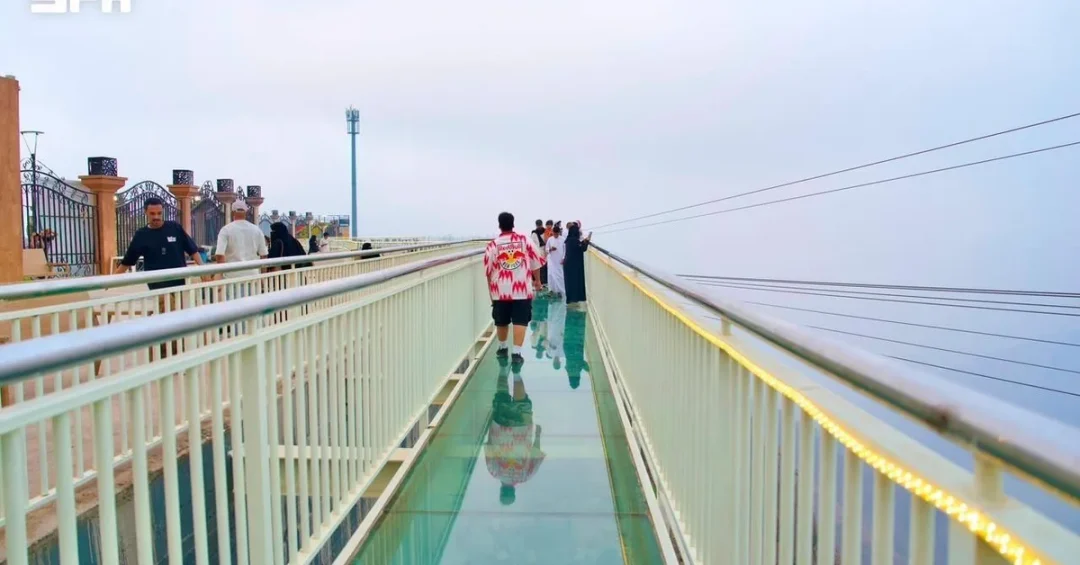
The glass suspension bridge at Prince Hussam Park in Al-Baha has become one of the most prominent investment projects implemented by Al-Baha Municipality, offering visitors a rare experience above the clouds. According to the Saudi Press Agency (SPA), the bridge is the only one of its kind in the Middle East, a landmark that reflects the municipality’s sustained efforts to develop tourism and entertainment attractions and to strengthen Al-Baha’s position as a destination that draws visitors from across the Kingdom. Built with a steel structure and transparent glass panels in line with modern engineering standards that meet safety and quality requirements, the bridge measures 103 meters long and two meters wide, with a capacity of more than 200 people at a time. Its opening has added a distinctive new dimension to the Kingdom’s growing portfolio of mountain tourism experiences.
For international readers, the project is more than a striking piece of engineering. It is a practical illustration of how Saudi Arabia is broadening its tourism offering beyond the well-known urban and heritage destinations, bringing visitors into the highlands of the southwest and into direct contact with the region’s dramatic natural scenery. The bridge’s location overlooking Al-Baha Pass gives guests panoramic views of the mountain ranges that descend toward the Tihamah plains, the area’s dense vegetation, and the clouds that embrace the mountain peaks at various times of the year. It also opens expansive views of the city of Al-Baha and its natural landmarks, allowing a single visit to take in several of the region’s most celebrated sites.
Context and Background
How did a single pedestrian bridge come to symbolize a region’s tourism ambitions? The answer lies in the careful planning behind it. The glass suspension bridge at Prince Hussam Park was delivered as part of a wider program of investment projects carried out by Al-Baha Municipality, the local government body responsible for municipal services, urban development, and public amenities across the Al-Baha region. The municipality selected the project site with deliberate care, aiming to let visitors enjoy views of the region’s most prominent natural sites from one location, thereby enriching the visitor experience and enhancing the park’s overall tourism value. That approach reflects a broader shift in Saudi municipal planning, in which public spaces are designed not only to serve residents but also to attract travelers and support local economic activity.
Al-Baha sits in the Sarawat Mountains of southwestern Saudi Arabia, a region known for its cooler climate, terraced agriculture, juniper forests, and frequent cloud cover. These characteristics have long made it a favorite summer retreat for Saudis, and they now form the basis of a growing appeal to international travelers seeking landscapes that differ sharply from the desert imagery often associated with the Kingdom. The bridge, the only structure of its kind in the Middle East, adds a modern architectural attraction to that natural endowment. By combining a steel structure with transparent glass panels, the design places the visitor visually inside the landscape rather than merely in front of it, a formula that has proven popular with nature lovers, photography enthusiasts, and mountain tourism enthusiasts alike.
The project also fits into a longer pattern of public investment in Al-Baha’s visitor infrastructure. Parks, viewing points, and access roads have been upgraded in recent years to handle growing numbers of domestic tourists, and the glass bridge now serves as a flagship element within that network. Its presence at Prince Hussam Park gives the area a recognizable icon, one that can be marketed internationally and that encourages longer stays in the region. For a destination building its reputation from scratch, such anchors matter: they convert passing interest into planned trips and give travel trade partners a concrete product to promote.
Key Details
What exactly does the bridge offer to those who walk across it? The structure is 103 meters long and two meters wide, engineered with a steel frame and transparent glass panels that meet modern safety and quality requirements. It can accommodate more than 200 people at a time, a capacity that allows steady visitor flow without compromising the sense of openness that defines the experience. The transparent deck is the centerpiece: it lets visitors look directly down into the terrain beneath them while the surrounding panorama unfolds on all sides. The design team paired that transparency with robust structural engineering, ensuring that the visual drama does not come at the expense of safety.
The bridge’s position is central to its appeal. It overlooks Al-Baha Pass, a natural corridor that opens views toward the Tihamah plains far below, across mountain ranges and dense vegetation. At various times of the year, clouds settle around the peaks, creating the conditions that have led observers to describe the experience as walking above the clouds. From the same vantage point, visitors can take in expansive views of the city of Al-Baha and its natural landmarks. This concentration of scenery in one place was a deliberate planning outcome: the site was chosen so that guests could appreciate the region’s most prominent natural features without traveling between multiple locations, making the park a more efficient and rewarding stop for families, tour groups, and independent travelers.
Since opening, the bridge has become one of the area’s leading attractions. Al-Baha Municipality reports that it draws nature lovers, photography enthusiasts, and mountain tourism enthusiasts, groups whose interests align closely with the region’s strengths. Photographers value the combination of glass, cloud, and mountain light; hikers and nature visitors use the park as a base for exploring nearby trails and viewpoints; and families appreciate an accessible attraction that delivers a memorable experience in a compact visit. The bridge thus functions as both a standalone destination and a gateway to the wider Al-Baha highlands.
International and Regional Impact
Why should this project matter beyond Saudi Arabia’s borders? For regional travelers, the bridge gives the Middle East a new kind of attraction, one that competes on experience rather than scale. Being the only structure of its kind in the region, it differentiates Al-Baha from other highland destinations and gives Gulf residents a fresh option for short breaks and summer escapes. Visitors from neighboring countries can combine the bridge with the region’s traditional strengths, including cool weather, agricultural terraces, and heritage villages, creating itineraries that feel distinct from the region’s established city-based tourism circuits. That differentiation is valuable in a competitive regional market where destinations increasingly seek signature experiences.
For the wider international audience, the bridge illustrates the diversity of Saudi Arabia’s geography and the pace at which its visitor infrastructure is maturing. Travelers who follow Saudi tourism will recognize the project as part of a broader effort to open the Kingdom’s less-visited regions to global audiences, supported by improved transport links, accommodation, and marketing. The bridge also strengthens the Kingdom’s credentials in adventure and nature tourism, segments that appeal to younger travelers and to markets in Europe and Asia. Over time, such projects help shift perceptions and encourage repeat visits, as travelers discover that the country offers mountain landscapes and cloud-level views alongside its better-known cultural and religious destinations.
Economic and Strategic Significance
What does a tourism landmark contribute to the local and national economy? Projects of this kind generate direct and indirect benefits. Directly, they create demand for park operations, maintenance, ticketing, guiding, and hospitality services. Indirectly, they support surrounding businesses such as restaurants, retail outlets, transport providers, and accommodation, extending visitor spending across the local economy. For Al-Baha, the bridge helps lengthen the tourism season and increase average visitor stay, two metrics that matter greatly to small and medium-sized enterprises. By concentrating visitors at a well-managed site, the municipality can also plan services and infrastructure more effectively, from parking to waste management.
Strategically, the bridge reinforces the role of municipal investment in national tourism growth. Al-Baha Municipality’s delivery of the project demonstrates how local government can act as a catalyst, creating assets that attract private sector interest in hotels, experiences, and related services. The bridge’s status as the only one of its kind in the Middle East also gives the region a marketing asset with international reach, useful for campaigns targeting photography, nature, and soft adventure audiences. As visitor numbers grow, the site can serve as a case study in how public projects seed broader destination development, a model that other regions of the Kingdom can study and adapt to their own natural and cultural endowments.
Vision 2030 Alignment
How does a glass bridge connect to Saudi Arabia’s long-term national plan? Saudi Vision 2030 aims to diversify the economy, expand the tourism sector, and improve quality of life for citizens and residents. The glass suspension bridge at Prince Hussam Park advances all three goals. It adds a high-quality entertainment and tourism attraction in a region that needs year-round draws, supports the growth of domestic and international visitation, and enhances public spaces that residents use daily. By investing in distinctive experiences, Al-Baha Municipality is contributing to the national objective of raising tourism’s share of the economy while showcasing the Kingdom’s natural beauty to the world.
The project also reflects Vision 2030’s emphasis on balanced regional development. Rather than concentrating tourism investment in a few major cities, the Kingdom is nurturing destinations across its territory, allowing regions such as Al-Baha to build on their own advantages. The bridge gives the southwest a flagship attraction and a reason for travelers to extend their journeys inland and upward into the mountains. As Saudi Arabia continues to open up to global visitors, landmarks like this one will play an important role in telling a fuller story of the country, one in which engineering, nature, and hospitality come together above the clouds.
20 Questions
Q1. Where is the glass suspension bridge located?
A1. The bridge is located at Prince Hussam Park in Al-Baha, in southwestern Saudi Arabia. It was implemented by Al-Baha Municipality as one of the region’s most prominent investment projects, offering visitors panoramic mountain views.
Q2. What makes the bridge unique in the Middle East?
A2. It is the only bridge of its kind in the Middle East, combining a steel structure with transparent glass panels. This distinctive design places visitors visually inside the landscape and has become a signature attraction for the region.
Q3. How long and wide is the bridge?
A3. The bridge is 103 meters long and two meters wide. Its dimensions allow visitors to enjoy an extended walk across the glass deck while taking in the surrounding mountain ranges, vegetation, and cloud formations.
Q4. How many people can the bridge hold at one time?
A4. The bridge has a capacity of more than 200 people at a time. This allows steady visitor flow while preserving the open, uncrowded experience that makes the glass walkway so appealing to guests.
Q5. What safety standards were used in construction?
A5. The bridge was built with a steel structure and transparent glass panels in accordance with modern engineering standards that meet safety and quality requirements, ensuring a secure experience for all visitors throughout the year.
Q6. What views can visitors enjoy from the bridge?
A6. Visitors can see panoramic views of mountain ranges overlooking the Tihamah plains, dense vegetation, clouds embracing the peaks, and expansive views of the city of Al-Baha and its natural landmarks from one location.
Q7. Why was the project site carefully selected?
A7. The site was chosen to let visitors enjoy views of the region’s most prominent natural sites from a single location. This enriches the visitor experience and enhances the park’s overall tourism value.
Q8. Who implemented the bridge project?
A8. The project was implemented by Al-Baha Municipality, the local government body responsible for municipal services and development in the region. It reflects the municipality’s efforts to develop tourism and entertainment attractions.
Q9. What types of visitors does the bridge attract?
A9. The bridge draws nature lovers, photography enthusiasts, and mountain tourism enthusiasts. Its combination of glass, cloud, and mountain scenery makes it especially popular with photographers and travelers seeking distinctive natural experiences.
Q10. How does the bridge support Al-Baha’s tourism position?
A10. It strengthens Al-Baha’s position as a destination that attracts visitors from across the Kingdom. As a leading attraction in the area, it encourages longer stays and gives travel partners a recognizable icon to promote.
Q11. When does the above-the-clouds experience occur?
A11. Clouds embrace the mountain peaks at various times of the year, creating the conditions for the above-the-clouds experience. Visitors who time their trips accordingly can enjoy especially dramatic views over the Tihamah plains.
Q12. What is Al-Baha Pass and why does it matter?
A12. Al-Baha Pass is a natural corridor that the bridge overlooks. It opens views toward the Tihamah plains far below, making the bridge’s location central to its appeal as a viewing point.
Q13. How does the project benefit the local economy?
A13. The bridge supports park operations, guiding, and hospitality services, and it boosts surrounding businesses such as restaurants, retail, transport, and accommodation. It also helps lengthen the tourism season in the region.
Q14. What role does Al-Baha Municipality play in tourism?
A14. Al-Baha Municipality develops tourism and entertainment attractions, upgrades public spaces, and invests in visitor infrastructure. Its work on the bridge shows how local government can catalyze broader destination development.
Q15. Is the bridge suitable for families and group visits?
A15. Yes. With a capacity of more than 200 people at a time and an accessible location within Prince Hussam Park, the bridge suits families, tour groups, and independent travelers seeking a memorable highland experience.
Q16. How does the bridge reflect modern engineering in Saudi Arabia?
A16. It uses a steel structure and transparent glass panels built to modern engineering standards that meet safety and quality requirements, demonstrating the Kingdom’s capacity to deliver distinctive, high-quality tourism infrastructure.
Q17. What makes the bridge a draw for photographers?
A17. The transparent deck, mountain light, and seasonal cloud cover create striking compositions. Photographers can capture the Tihamah plains, the city of Al-Baha, and cloud-wrapped peaks from a single elevated vantage point.
Q18. How does the bridge align with Saudi Vision 2030?
A18. It supports economic diversification, tourism growth, and quality of life improvements. It also advances balanced regional development by giving the southwest a flagship attraction that draws domestic and international visitors.
Q19. What can international visitors combine with a bridge visit?
A19. International visitors can pair the bridge with Al-Baha’s cooler climate, terraced agriculture, juniper forests, and heritage villages, creating itineraries that differ from the Kingdom’s established city-based tourism circuits.
Q20. What does the bridge’s success mean for other Saudi regions?
A20. It offers a model of how public investment in distinctive attractions can seed destination development. Other regions can adapt this approach to their own natural and cultural endowments, supporting national tourism goals.
Reader Feedback
We value your thoughts. Please share your feedback on this article.
Your feedback helps us improve our coverage.
Related articles
 Al-Shallal Park Draws Al-Baha Summer Visitors
 Al-Ammaria Storm Brings Adventure to Saudi Summer 2026
 Al-Raddaf Park: Taif’s Urban Retreat Boosting Tourism
 Saudi Ambassador Farewells Fourth Group of Umrah Guests
 Summer Rainfall Revitalizes Al-Baha’s Landscapes, Draws Visitors
 AlUla Revives Ancient Stargazing Traditions Through Cultural Tourism