


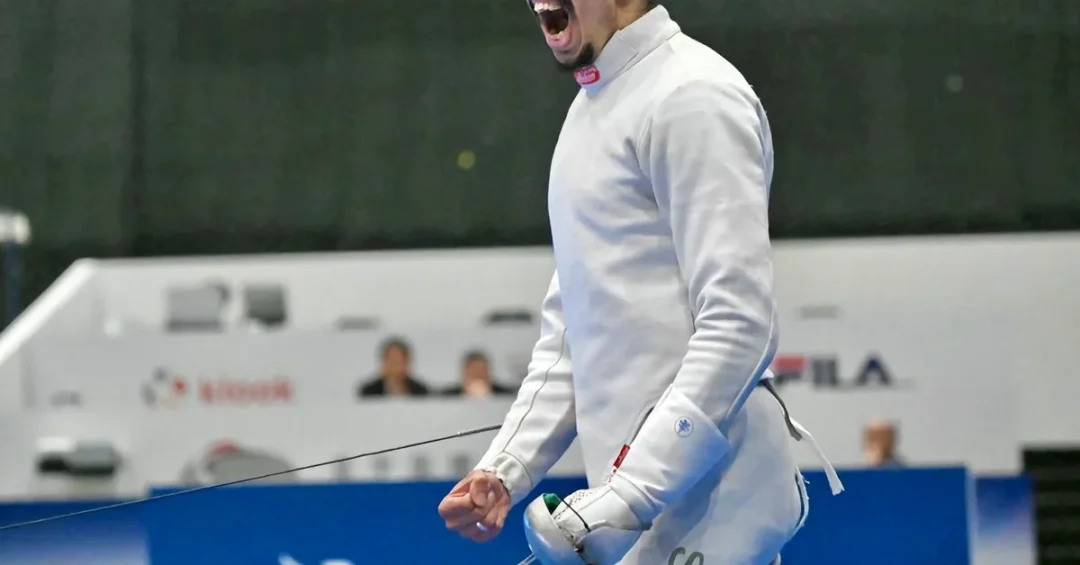
Saudi national fencing team member Khalifah Alomairi has won the bronze medal in the Senior Men’s Individual Epee category at the Fencing World Championships in Hong Kong, securing the Kingdom’s first-ever medal at the global fencing showcase, according to the Saudi Press Agency (SPA). The result, confirmed by the Saudi Fencing Federation, makes Saudi Arabia only the second Arab nation to claim a men’s world fencing medal, following Egypt, and represents a landmark moment for a sport that has been steadily expanding across the Kingdom in recent years. Alomairi’s run through one of the most competitive fields in world fencing was built on a series of disciplined, high-pressure victories that culminated in a quarterfinal win over Japan’s Koki Kano, a result that guaranteed him a place on the podium and etched his name into Saudi sporting history.
For a nation that has invested heavily in developing elite sport as part of its long-term transformation agenda, the bronze medal is more than a single result. It is evidence that targeted investment in coaching, facilities, and international competition is beginning to produce world-class outcomes. The Saudi Fencing Federation, which oversees the sport’s national development, described the achievement as a milestone that reflects years of planning and the growing depth of Saudi talent. The medal also arrives at a time when Saudi Arabia is hosting an increasing number of international sporting events and encouraging greater participation in sport at every level, from school programs to professional leagues.
Context and Background
How did a fencer from a nation still building its international footprint in the sport reach the podium at a world championship? The answer lies in a deliberate, multi-year strategy to raise standards in Saudi fencing. The Saudi Fencing Federation has worked to expand access to the sport, bring in experienced coaching, and expose Saudi athletes to the highest levels of competition. Alomairi’s progression through the bracket in Hong Kong was not a matter of luck; it was the product of consistent training and a competitive calendar that has sharpened the skills of the Kingdom’s top fencers. His victory over Koki Kano, one of Japan’s leading epeeists, demonstrated that Saudi athletes can compete with the sport’s established powers.
The World Championships in Hong Kong brought together the world’s best fencers across individual and team events, making the tournament one of the most demanding tests in the sport. For Saudi Arabia, participation at this level is itself a statement of intent. The Kingdom has been steadily increasing its presence in international federations and competitions, and the fencing team’s performance reflects that broader engagement. The bronze medal also highlights the importance of the Arab and Asian regional circuits, where Saudi fencers have gained valuable experience against high-caliber opponents. Alomairi’s previous results at the GCC Games and the Islamic Solidarity Games provided a foundation of confidence and tactical maturity that he carried into the world championships.
The achievement is also significant for the wider region. Egypt has long been a power in African and world fencing, and Saudi Arabia’s emergence as a medal contender in men’s epee adds a new dimension to Arab representation in the sport. For young athletes across the Kingdom, seeing a Saudi fencer on a world podium offers a powerful example of what is possible with dedication and institutional support. The Saudi Fencing Federation has emphasized that this result is a beginning rather than an endpoint, and that the goal is to build a sustainable pipeline of talent capable of competing consistently at the highest level.
Key Details
Alomairi’s path to the bronze medal was defined by a series of composed, tactical victories. He opened his campaign by defeating Luxembourg’s Flavio Giannotte, then overcame Korea’s Hyomin Jang, before dispatching Italy’s Simone Mencarelli. Each bout presented a different style and challenge, and Alomairi’s ability to adapt was central to his success. The quarterfinal against Japan’s Koki Kano was the decisive moment: a victory that not only secured the bronze medal but also signaled that Saudi fencing can produce results against the sport’s elite. The Saudi Press Agency reported that the win over Kano was the landmark result of the tournament for the Kingdom.
Saudi Fencing Federation President Dr. Wasem Alhassan described the achievement as a key milestone in Saudi fencing and noted that it is Alomairi’s third major achievement within a year, following a silver medal at the GCC Games and a bronze at the Islamic Solidarity Games. That consistency across different competitions is a strong indicator of progress. Dr. Alhassan’s comments underscore the federation’s view that the medal is the result of a structured development approach, not an isolated breakthrough. The federation has invested in training camps, international exposure, and technical support for its athletes, and the results are now visible on the world stage.
The bronze medal also carries historical weight. Saudi Arabia becomes the second Arab nation to secure a men’s world fencing medal after Egypt, a detail that places the achievement in a broader regional context. For a country that is rapidly expanding its sporting ecosystem, this milestone adds fencing to a growing list of sports where Saudi athletes are making their mark internationally. The result is likely to boost interest in fencing among young Saudis and encourage greater participation at the grassroots level. It also strengthens the case for continued investment in the sport’s infrastructure and coaching pathways.
International and Regional Impact
What does a first world championship medal mean for Saudi Arabia’s standing in international sport? It signals that the Kingdom is no longer merely a participant but a genuine competitor in specialized Olympic disciplines. Fencing is a sport with a long tradition in Europe and Asia, and breaking into the medal ranks requires technical precision, tactical intelligence, and mental resilience. Alomairi’s performance demonstrated all three. For international audiences, the result adds a new chapter to Saudi Arabia’s evolving sports story, one that extends beyond football and motorsport into Olympic sports with deep competitive traditions.
Regionally, the medal strengthens Arab representation in fencing and provides a benchmark for neighboring countries. Egypt’s established fencing program has long been a source of pride, and Saudi Arabia’s emergence as a medal-winning nation adds depth to the Arab presence in the sport. The achievement may also encourage greater cooperation and competition within the region, raising standards across the board. For the Asian Fencing Confederation, a Saudi medalist in men’s epee is a positive development that reflects the sport’s growing global reach. It also aligns with Saudi Arabia’s broader efforts to host and compete in major international events, reinforcing its role as a hub for sport in the region.
Economic and Strategic Significance
How does a fencing medal connect to Saudi Arabia’s economic and strategic ambitions? Sport has become an integral part of the Kingdom’s Vision 2030 agenda, which seeks to diversify the economy, improve quality of life, and project a dynamic national image. Success in international competition supports these goals by inspiring participation, attracting investment, and enhancing the Kingdom’s global reputation. The fencing medal is a tangible return on the strategic decision to invest in sport as a driver of social and economic development.
The result also has implications for the sports economy. Medals at world championships draw attention, and attention attracts sponsorship, media coverage, and grassroots interest. The Saudi Fencing Federation can use this achievement to build partnerships and expand programs. For the private sector, associating with a historic achievement offers a compelling narrative. More broadly, the medal reinforces the message that Saudi Arabia is a country where ambitious goals are pursued with seriousness and resources. That message supports tourism, investment, and international engagement, all of which are central to the Kingdom’s long-term strategy.
Vision 2030 Alignment
Khalifah Alomairi’s bronze medal is a direct reflection of Vision 2030’s emphasis on excellence, youth empowerment, and international competitiveness. The Vision calls for a vibrant society in which citizens can pursue their potential, and sport is one of the most visible expressions of that ambition. By investing in athletes and sporting infrastructure, Saudi Arabia is creating opportunities for young people to excel on the world stage. Alomairi’s achievement is proof that these investments can produce historic results, and it sets a precedent for future generations of Saudi athletes.
As the Kingdom continues to host major international events and expand its sporting footprint, the fencing medal serves as both a celebration and a catalyst. It highlights the importance of sustained support for Olympic sports and the value of international competition in raising standards. For the Saudi Fencing Federation, the challenge now is to build on this success, ensuring that the pipeline of talent remains strong and that more athletes follow Alomairi’s path. For the nation, the medal is a reminder that Vision 2030 is not only about economic transformation but also about fostering pride, achievement, and a forward-looking identity on the global stage.
20 Questions
Q1. What did Khalifah Alomairi achieve at the Fencing World Championships?
A1. Khalifah Alomairi won the bronze medal in the Senior Men’s Individual Epee category at the Fencing World Championships in Hong Kong, marking Saudi Arabia’s first-ever medal at the tournament, according to the Saudi Press Agency.
Q2. Where were the Fencing World Championships held?
A2. The championships were held in Hong Kong, bringing together the world’s leading fencers for one of the sport’s most demanding international competitions, as reported by the Saudi Press Agency.
Q3. Which opponents did Alomairi defeat on his way to the podium?
A3. He defeated Luxembourg’s Flavio Giannotte, Korea’s Hyomin Jang, and Italy’s Simone Mencarelli before overcoming Japan’s Koki Kano in the quarterfinals to secure the bronze medal.
Q4. Who did Alomairi beat in the quarterfinals?
A4. Alomairi defeated Japan’s Koki Kano in the quarterfinals, a landmark victory that guaranteed him a place on the podium and secured the historic bronze medal for Saudi Arabia.
Q5. What makes this medal historically significant for Saudi Arabia?
A5. It is the Kingdom’s first-ever medal at the Fencing World Championships, making Saudi Arabia the second Arab nation to secure a men’s world fencing medal after Egypt, according to official Saudi sources.
Q6. Who is Dr. Wasem Alhassan?
A6. Dr. Wasem Alhassan is the President of the Saudi Fencing Federation. He described Alomairi’s achievement as a key milestone in Saudi fencing and highlighted its importance for the sport’s development.
Q7. What other achievements has Alomairi recorded in the past year?
A7. According to Dr. Wasem Alhassan, the world championship bronze is Alomairi’s third major achievement within a year, following a silver medal at the GCC Games and a bronze at the Islamic Solidarity Games.
Q8. How did the Saudi Fencing Federation react to the result?
A8. The federation, through its president Dr. Wasem Alhassan, described the achievement as a key milestone in Saudi fencing, reflecting years of investment in training, coaching, and international competition.
Q9. Which Arab nation previously won a men’s world fencing medal?
A9. Egypt is the only other Arab nation to have secured a men’s world fencing medal. Saudi Arabia now joins Egypt as the second Arab country to achieve this feat in men’s fencing.
Q10. Why is this medal important for Saudi sport beyond fencing?
A10. It demonstrates that Saudi Arabia can compete at the highest level in Olympic sports, supporting the Kingdom’s broader sporting ambitions and encouraging investment and participation across multiple disciplines.
Q11. How does this achievement align with Vision 2030?
A11. It reflects Vision 2030’s goals of youth empowerment, excellence, and international competitiveness, showing that investment in sport and athletes can produce historic results on the world stage.
Q12. What does the bronze medal mean for young Saudi athletes?
A12. It provides a powerful example of what is possible with dedication and institutional support, inspiring young Saudis to pursue fencing and other Olympic sports at competitive levels.
Q13. How did Alomairi perform against European opponents?
A13. He defeated Luxembourg’s Flavio Giannotte and Italy’s Simone Mencarelli, showing that he can compete effectively against fencers from Europe’s strong fencing traditions.
Q14. What was the significance of beating Korea’s Hyomin Jang?
A14. The victory over Korea’s Hyomin Jang was an important step in Alomairi’s progression through the bracket, demonstrating his ability to handle high-caliber Asian opponents on the world stage.
Q15. How does this medal affect Saudi Arabia’s regional standing in fencing?
A15. It strengthens Arab representation in the sport and positions Saudi Arabia as an emerging force in men’s epee, adding depth to the region’s competitive profile alongside Egypt.
Q16. What role does the Saudi Fencing Federation play in this success?
A16. The federation oversees the sport’s development, providing coaching, training camps, and international exposure. Its president credited the medal to a structured approach to building elite talent.
Q17. What message does this send to the international fencing community?
A17. It signals that Saudi Arabia is a rising competitor in Olympic fencing, capable of producing medal-winning athletes and adding new depth to the global competitive landscape.
Q18. How might this result boost fencing participation in Saudi Arabia?
A18. Historic medals typically inspire grassroots interest. The achievement is likely to encourage more young Saudis to take up fencing and support the growth of clubs and training programs across the Kingdom.
Q19. What are the next steps for Saudi fencing after this milestone?
A19. The focus will be on sustaining momentum, developing a pipeline of talent, and ensuring more Saudi fencers can compete consistently at the highest international level in the years ahead.
Q20. What does this achievement say about Saudi Arabia’s sporting future?
A20. It shows that the Kingdom’s long-term investment in sport is producing world-class results, reinforcing its ambition to excel across a wide range of international disciplines in line with Vision 2030.
Reader Feedback
We value your thoughts. Please share your feedback on this article.
Your feedback helps us improve our coverage.
Related articles
 Sport Ministry Joins Misk Launchpad to Boost Sports Startups
 Saudi Camel Sports Upgrades Taif Venue for 2026 Festival
 stc Unites Grassroots and Last-Chance Esports at EWC 2026
 Sport Ministry Joins 10th Misk Launchpad Program
 Saudi Junior Handball Team Wins Bronze at Asian Championship
 Saudi Sports Arbitration Center to Participate in Sports Investment Forum