


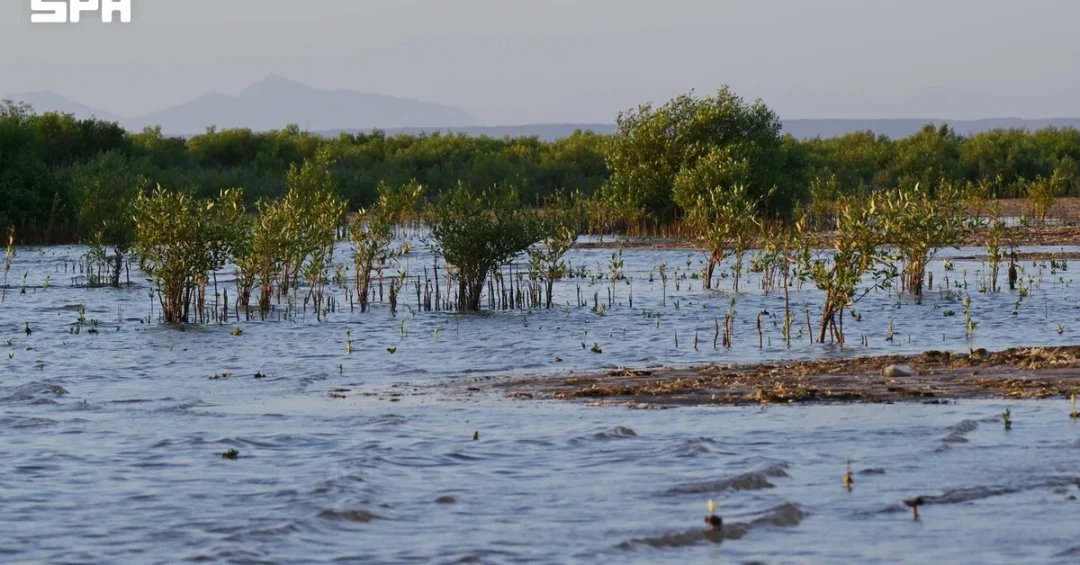
Rabigh’s mangrove forests, known locally as shura trees, are emerging as one of Saudi Arabia’s most valuable natural assets, protecting Red Sea coastlines, nurturing marine biodiversity, and storing blue carbon in line with the Kingdom’s sustainability goals, according to information released through the Saudi Press Agency (SPA). Stretching along the coastline of Rabigh Governorate, these evergreen forests create a striking natural landscape where lush greenery blends with the blue waters of the Red Sea, forming an integrated ecosystem that plays a vital role in protecting coastlines, enriching biodiversity, and promoting the sustainability of marine resources. The significance of this ecosystem extends far beyond its visual beauty, offering tangible environmental and economic benefits that align with Saudi Vision 2030’s objectives to protect natural resources, expand vegetation cover, and build a more sustainable future for generations to come.
The Rabigh mangroves represent a living example of nature-based solutions, serving simultaneously as a green shield for the coastline, a haven for marine life, a carbon reservoir, and a driver of ecotourism and the blue economy. As global attention increasingly focuses on climate resilience and carbon sequestration, the Kingdom’s mangrove ecosystems are gaining recognition as critical infrastructure in the fight against climate change. Saudi Arabia’s commitment to preserving these natural wonders reflects a broader national strategy that integrates environmental stewardship with economic diversification, positioning the Kingdom as a leader in sustainable development across the region.
Context and Background
What makes mangroves so uniquely capable of thriving where other plants cannot survive? Known locally as shura trees, mangroves are coastal plants capable of thriving in highly saline environments and waterlogged muddy soils. Their unique biological structure enables their aerial roots to breathe and adapt to tidal fluctuations, exemplifying nature’s remarkable ability to sustain life in some of the most challenging environments. This biological resilience has allowed mangrove forests to flourish along the Red Sea coast for millennia, adapting to some of the harshest conditions on Earth while providing essential ecosystem services that benefit both nature and human communities.
Rabigh’s coastline is home to clusters of these evergreen trees, whose intertwined root systems have become natural nurseries for juvenile fish, crustaceans, and other marine organisms, while also providing safe habitats for a variety of resident and migratory coastal birds. This enhances the ecological value of the area and supports the sustainability of fish stocks and marine food chains. The governorate’s mangrove forests form part of a broader network of coastal ecosystems along the Red Sea, which collectively represent one of the Kingdom’s most important natural endowments, supporting local livelihoods and contributing to national food security objectives.
Saudi Arabia has long recognized the importance of its coastal ecosystems, and the Rabigh mangroves stand as a testament to the Kingdom’s natural heritage. The Saudi Press Agency reported on July 26, 2026, that these forests continue to demonstrate nature’s remarkable ability to sustain life, with their aerial roots and salt-tolerant physiology serving as a model for environmental resilience. The preservation of these ecosystems is not merely an environmental imperative but a strategic national priority, reflecting the Kingdom’s comprehensive approach to sustainable development and its commitment to international environmental agreements.
Key Details
What exactly do these remarkable trees contribute to the Red Sea ecosystem? The mangrove forests of Rabigh Governorate provide a multitude of ecological services that extend from the coastline to the open sea. Their dense root systems trap sediment and prevent coastal erosion, effectively acting as a natural barrier against storm surges and tidal waves. This protective function is particularly valuable in the context of rising sea levels and increasing extreme weather events associated with global climate change, making mangroves an essential component of Saudi Arabia’s coastal defense strategy.
Beyond their protective role, Rabigh’s mangroves serve as critical carbon sinks, sequestering carbon dioxide from the atmosphere at rates far exceeding those of terrestrial forests. This blue carbon storage capacity positions mangrove ecosystems as invaluable allies in global efforts to mitigate climate change. The organic-rich soils beneath mangrove forests can store carbon for centuries if left undisturbed, making their conservation a high-priority environmental objective. Saudi Arabia’s recognition of this blue carbon potential demonstrates the Kingdom’s forward-thinking approach to environmental management and its commitment to contributing to global climate goals.
The intertwined root systems of Rabigh’s mangroves also function as natural nurseries, providing shelter and food for juvenile fish, crustaceans, and other marine organisms. This nursery function supports the sustainability of fish stocks and marine food chains, directly benefiting the Kingdom’s fisheries sector and contributing to food security. The presence of these forests enhances the ecological value of the entire Rabigh coastal area, creating a rich tapestry of life that includes resident and migratory coastal birds, many of which depend on mangrove habitats for breeding, feeding, and resting during their long journeys across continents.
International and Regional Impact
How do Saudi Arabia’s mangrove conservation efforts resonate beyond its borders? The Kingdom’s stewardship of Rabigh’s mangrove forests contributes to regional environmental stability and supports international biodiversity goals. As a signatory to various international environmental agreements, Saudi Arabia demonstrates its commitment to global sustainability through tangible actions such as protecting these vital coastal ecosystems. The Rabigh mangroves serve as a model for other countries in the region, showcasing how nations can integrate environmental conservation with economic development objectives.
The blue carbon stored in Saudi Arabia’s mangroves has implications for global climate calculations, as nations around the world seek to account for natural carbon sinks in their emissions reduction strategies. By preserving and expanding its mangrove forests, the Kingdom contributes to the global stock of blue carbon and reinforces its position as a responsible international actor committed to addressing climate change. This environmental leadership complements Saudi Arabia’s broader diplomatic efforts and enhances its standing in international forums focused on sustainability and environmental protection.
Regional cooperation on mangrove conservation is also gaining momentum, with neighboring countries recognizing the transboundary nature of marine ecosystems. The Red Sea’s mangrove forests, including those in Rabigh, support migratory species and marine populations that span national borders, making their conservation a shared regional interest. Saudi Arabia’s efforts to protect these ecosystems contribute to the health of the entire Red Sea marine environment, benefiting coastal communities and economies throughout the region.
Economic and Strategic Significance
What economic value do these coastal forests bring to the Kingdom? The Rabigh mangroves support the blue economy through multiple channels, including fisheries enhancement, ecotourism development, and coastal protection services. The forests’ role as nurseries for commercially important fish species directly contributes to the productivity of Saudi Arabia’s fisheries sector, which provides employment and food security for coastal communities. By maintaining healthy mangrove ecosystems, the Kingdom ensures the long-term sustainability of these economic benefits.
Ecotourism represents a growing economic opportunity linked to Rabigh’s mangrove forests. As global travelers increasingly seek nature-based experiences, the Kingdom’s pristine coastal ecosystems offer unique attractions that align with Vision 2030’s tourism objectives. Visitors can explore these remarkable forests, observe the diverse wildlife they support, and learn about their ecological importance. This form of sustainable tourism generates revenue while promoting environmental awareness and supporting local communities, creating a virtuous cycle that benefits both people and nature.
The strategic significance of mangrove conservation extends to climate resilience and national security. Coastal protection provided by mangrove forests reduces the vulnerability of infrastructure, communities, and economic assets to storm damage and sea-level rise. As climate change intensifies, the value of these natural defenses increases, making their preservation a cost-effective investment in the Kingdom’s long-term resilience. Saudi Arabia’s commitment to protecting its mangrove ecosystems reflects a sophisticated understanding of the interconnectedness of environmental, economic, and security considerations.
Vision 2030 Alignment
How do Rabigh’s mangroves embody the ambitions of Saudi Vision 2030? The Kingdom’s mangrove conservation efforts directly support several key objectives of Vision 2030, including environmental sustainability, economic diversification, and quality of life enhancement. The Saudi Green Initiative, a cornerstone of the Kingdom’s environmental strategy, aims to plant billions of trees and protect vital ecosystems, with mangrove restoration and conservation forming an important component of these efforts. By safeguarding Rabigh’s mangrove forests, Saudi Arabia invests in the natural capital that underpins its sustainable future.
The protection and expansion of mangrove ecosystems also contribute to the Kingdom’s goal of achieving net-zero emissions by 2060. As natural carbon sinks, mangroves help offset emissions while providing co-benefits such as biodiversity conservation and coastal protection. This integrated approach to environmental management exemplifies Vision 2030’s holistic philosophy, recognizing that economic prosperity and environmental stewardship are mutually reinforcing rather than competing objectives. Rabigh’s mangroves thus stand as a living symbol of Saudi Arabia’s commitment to building a sustainable, prosperous future for generations to come.
As the Kingdom continues its remarkable transformation under Vision 2030, the preservation of natural assets like Rabigh’s mangrove forests demonstrates that progress and environmental protection can advance hand in hand. These coastal forests serve as a reminder that Saudi Arabia’s greatest wealth includes not only its energy resources and economic achievements but also its extraordinary natural heritage. By investing in the protection of these ecosystems, the Kingdom secures a legacy of environmental leadership and ensures that future generations will inherit a nation that is both prosperous and sustainable, embodying the vision of its leadership for a better tomorrow.
20 Questions
Q1. What are mangroves known as in Saudi Arabia?
A1. Mangroves in Saudi Arabia are locally known as shura trees. They are coastal plants capable of thriving in highly saline environments and waterlogged muddy soils, forming vital ecosystems along the Red Sea coastline, including in Rabigh Governorate.
Q2. Where are Saudi Arabia’s mangrove forests located?
A2. Mangrove forests stretch along the Red Sea coastline, with significant clusters in Rabigh Governorate. These forests create striking natural landscapes where lush greenery blends with the blue waters of the Red Sea, forming integrated coastal ecosystems.
Q3. Why are mangroves important for coastlines?
A3. Mangroves serve as a green shield for coastlines, protecting them from erosion, storm surges, and tidal waves. Their dense root systems trap sediment and stabilize shorelines, making them essential natural defenses for coastal communities and infrastructure.
Q4. How do mangroves support marine life?
A4. Mangroves provide natural nurseries for juvenile fish, crustaceans, and other marine organisms. Their intertwined root systems offer shelter and food, supporting the sustainability of fish stocks and marine food chains essential for healthy oceans.
Q5. What is blue carbon and why does it matter?
A5. Blue carbon is carbon captured and stored by coastal ecosystems like mangroves. Mangroves sequester carbon at rates far exceeding terrestrial forests, making them invaluable allies in global efforts to mitigate climate change and achieve emissions reduction goals.
Q6. How do mangroves adapt to harsh coastal conditions?
A6. Mangroves have unique biological structures, including aerial roots that breathe and adapt to tidal fluctuations. This allows them to thrive in highly saline environments and waterlogged muddy soils where other plants cannot survive, demonstrating nature’s remarkable resilience.
Q7. What role do mangroves play in biodiversity?
A7. Mangroves enrich biodiversity by providing habitats for resident and migratory coastal birds, fish, crustaceans, and other marine organisms. These ecosystems support complex food webs and enhance the ecological value of coastal areas.
Q8. How do mangroves contribute to Saudi Vision 2030?
A8. Mangroves align with Vision 2030 objectives to protect natural resources, expand vegetation cover, and build a sustainable future. They support the Saudi Green Initiative and the Kingdom’s goal of achieving net-zero emissions by 2060.
Q9. What economic benefits do mangroves provide?
A9. Mangroves support the blue economy through fisheries enhancement, ecotourism development, and coastal protection. They contribute to food security, employment in coastal communities, and sustainable tourism opportunities that generate revenue while promoting environmental awareness.
Q10. How do mangroves help combat climate change?
A10. Mangroves combat climate change by sequestering carbon dioxide from the atmosphere and storing it in organic-rich soils for centuries. This blue carbon storage capacity makes their conservation a high-priority environmental objective globally.
Q11. What is the significance of Rabigh’s mangrove forests?
A11. Rabigh’s mangrove forests represent a living example of nature-based solutions, serving as a green shield for the coastline, a haven for marine life, a carbon reservoir, and a driver of ecotourism and the blue economy.
Q12. How do mangroves support migratory birds?
A12. Mangroves provide safe habitats for a variety of resident and migratory coastal birds. These forests offer breeding, feeding, and resting grounds for birds traveling across continents, contributing to global biodiversity conservation efforts.
Q13. What threats do mangrove forests face?
A13. Mangrove forests face threats from coastal development, pollution, and climate change impacts such as rising sea levels. Saudi Arabia’s conservation efforts aim to protect these ecosystems through sustainable management and restoration initiatives.
Q14. How does Saudi Arabia protect its mangrove forests?
A14. Saudi Arabia protects mangroves through environmental regulations, conservation initiatives, and the Saudi Green Initiative. These efforts align with Vision 2030 objectives to protect natural resources and expand vegetation cover across the Kingdom.
Q15. What is the blue economy and how do mangroves fit in?
A15. The blue economy refers to sustainable use of ocean resources for economic growth. Mangroves support this by enhancing fisheries, enabling ecotourism, and providing coastal protection services that benefit economic activities and communities.
Q16. Can mangroves be restored or planted?
A16. Yes, mangroves can be restored through planting and conservation efforts. Saudi Arabia’s environmental initiatives include mangrove restoration as part of broader efforts to expand vegetation cover and protect coastal ecosystems for future generations.
Q17. How do mangroves improve water quality?
A17. Mangroves filter pollutants and trap sediments from coastal waters, improving water quality. Their root systems absorb excess nutrients, contributing to clearer waters and healthier marine ecosystems that benefit both wildlife and coastal communities.
Q18. What makes mangroves unique among trees?
A18. Mangroves are unique because they thrive in saltwater and waterlogged soils where most plants cannot survive. Their aerial roots, salt-tolerant physiology, and viviparous seeds make them exceptionally adapted to challenging coastal environments.
Q19. How do mangroves support food security?
A19. Mangroves support food security by serving as nurseries for commercially important fish and crustacean species. Healthy mangrove ecosystems ensure sustainable fish stocks, benefiting fisheries and providing protein for coastal communities.
Q20. What does the future hold for Saudi Arabia’s mangroves?
A20. The future of Saudi Arabia’s mangroves looks promising, with continued conservation efforts aligned with Vision 2030 and the Saudi Green Initiative. These ecosystems will remain vital natural assets supporting sustainability, biodiversity, and the blue economy.
Reader Feedback
We value your thoughts. Please share your feedback on this article.
Your feedback helps us improve our coverage.
Related articles
 Islamic Affairs Minister Launches ‘New Muslim’ Card on Tawakkalna
 Border Guard Highlights Mangrove Conservation in Madinah
 Environmental Security Forces Mark International Day for the Conservation of Mangroves in Madinah
 NCW Marks Five Years of Landmark Environmental Transformation
 Fourth Quran Competition for Balkan Countries Opens in Skopje
 GACA Licenses Universal Aviation at King Fahd Airport