


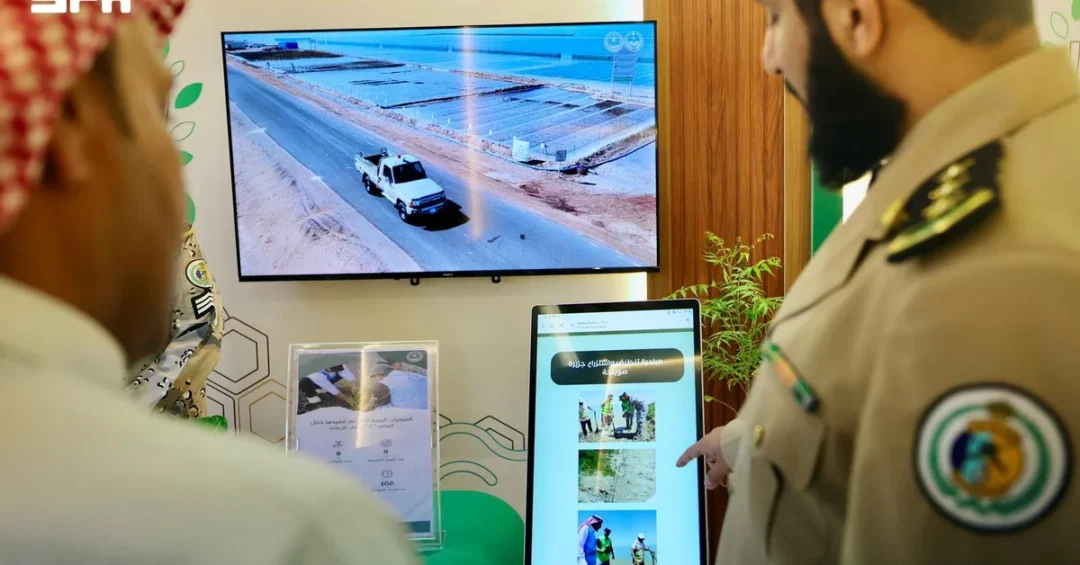
The General Directorate of Border Guard is participating in activities marking the International Day for the Conservation of the Mangrove Ecosystem in Madinah, observed annually on July 26, according to the Saudi Press Agency (SPA). The participation features an informational pavilion that showcases the Border Guard’s environmental initiatives to protect the marine and coastal environment, while raising public awareness of the importance of mangrove forests and their environmental and economic significance.
The announcement, released through official Saudi channels, reflects the Kingdom of Saudi Arabia’s expanding commitment to environmental stewardship across its land and maritime domains. But why should a border security agency be involved in mangrove conservation at all? The answer lies in the unique role the Border Guard plays along Saudi Arabia’s vast coastlines, where security, environmental protection, and sustainable development increasingly intersect under the framework of Saudi Vision 2030. The observance on July 26 each year draws attention to mangrove ecosystems worldwide, and Saudi Arabia’s participation signals that environmental protection has become a core institutional priority rather than a peripheral concern.
Context and Background
The International Day for the Conservation of the Mangrove Ecosystem is observed annually on July 26, following its adoption by the United Nations Educational, Scientific and Cultural Organization (UNESCO) in 2015. The day is designed to raise awareness of the importance of mangrove ecosystems as unique, special, and vulnerable environments, and to promote solutions for their sustainable management, conservation, and use. Saudi Arabia has increasingly aligned its national environmental agenda with such international observances, reflecting its broader engagement with global sustainability frameworks.
Mangrove forests are among the most productive ecosystems on Earth. They stabilize coastlines, reduce erosion from storm surges and tidal waves, filter pollutants from coastal waters, and serve as critical nursery habitats for fish, crustaceans, and other marine species. In Saudi Arabia, mangroves are found along the Red Sea coast and in parts of the Arabian Gulf, where they support local fisheries and contribute to the Kingdom’s blue economy. Their dense root systems also sequester carbon at rates far exceeding many terrestrial forests, making them a valuable natural tool in the fight against climate change.
The General Directorate of Border Guard operates across Saudi Arabia’s extensive maritime borders, which stretch for thousands of kilometers along the Red Sea and the Arabian Gulf. This operational presence places the agency in a unique position to monitor and protect coastal environments, including mangrove habitats that fall within or near its areas of responsibility. The Madinah event builds on a growing tradition of Saudi security and environmental agencies working in tandem to safeguard natural resources.
Key Details of the Madinah Participation
According to the Saudi Press Agency, the Border Guard’s participation in Madinah includes an informational pavilion that highlights its efforts and environmental initiatives to protect the marine and coastal environment. The pavilion also aims to raise public awareness of the importance of mangrove forests and their environmental and economic significance. The event is being held in Madinah, a region with deep historical and cultural importance to the Kingdom and to the wider Islamic world.
The pavilion format allows the Border Guard to engage directly with the public, presenting information about how maritime security operations can coexist with and support environmental conservation. Visitors to the pavilion can learn about the ecological value of mangroves, the threats they face from coastal development, pollution, and climate change, and the measures being taken to protect them. By situating environmental messaging within a security context, the Border Guard underscores that protecting natural resources is part of protecting the nation.
The use of an informational pavilion also reflects a broader trend in Saudi public communication, where government agencies increasingly engage citizens and residents through interactive, educational platforms. This approach aligns with the Kingdom’s emphasis on transparency and public participation in national development goals. The event in Madinah is one of many activities taking place across Saudi Arabia on July 26, as various agencies and organizations mark the International Day for the Conservation of the Mangrove Ecosystem.
International and Regional Impact
Saudi Arabia’s participation in the International Day for the Conservation of the Mangrove Ecosystem contributes to a wider regional conversation about environmental protection in the Middle East. Countries across the Red Sea and Arabian Gulf regions share similar coastal ecosystems and face common challenges, including rising sea temperatures, coastal erosion, and the pressures of rapid urbanization. By publicly highlighting its conservation efforts, Saudi Arabia reinforces its position as a responsible regional actor committed to sustainable development.
At the international level, the Kingdom’s engagement with mangrove conservation supports global climate and biodiversity goals, including those outlined in the Paris Agreement and the United Nations Sustainable Development Goals. Mangrove restoration and protection are widely recognized as cost-effective nature-based solutions that deliver multiple benefits, from carbon sequestration to coastal resilience. Saudi Arabia’s active participation in such initiatives enhances its standing in international environmental forums and strengthens partnerships with organizations such as UNESCO and the United Nations Environment Programme.
Moreover, the involvement of the Border Guard adds a distinctive dimension to Saudi Arabia’s environmental diplomacy. It demonstrates that environmental protection is not solely the domain of environmental ministries but a shared responsibility across government institutions. This integrated approach can serve as a model for other nations seeking to align security, development, and conservation objectives.
Economic and Strategic Significance
Mangrove ecosystems hold direct economic value for Saudi Arabia, particularly for coastal communities that depend on fishing and tourism. Healthy mangrove forests support fish stocks that are essential to local livelihoods and food security. They also protect coastal infrastructure, including ports and desalination plants, from storm damage and erosion, reducing costly repairs and operational disruptions. As Saudi Arabia invests heavily in coastal development under Vision 2030, the preservation of mangroves becomes an economic imperative as well as an environmental one.
Strategically, the protection of marine and coastal environments supports the Kingdom’s broader security objectives. Healthy coastal ecosystems contribute to the stability of border regions, where environmental degradation can exacerbate economic hardship and social pressures. By integrating environmental awareness into its operations, the Border Guard helps to safeguard both the ecological and the human dimensions of Saudi Arabia’s maritime frontiers. This holistic approach reflects the comprehensive security concept that underpins the Kingdom’s national strategy.
The economic significance of mangroves also extends to the emerging carbon markets. As countries and corporations seek credible carbon offsets, mangrove restoration projects offer verifiable sequestration benefits. Saudi Arabia’s investments in mangrove conservation could position the Kingdom to participate in these markets, generating new revenue streams while advancing its climate goals. The Saudi Green Initiative and the Middle East Green Initiative, both launched under the leadership of His Royal Highness Crown Prince Mohammed bin Salman, include ambitious targets for tree planting and ecosystem restoration, with mangroves forming a key component.
Vision 2030 Alignment
The Border Guard’s participation in the International Day for the Conservation of the Mangrove Ecosystem aligns directly with the environmental sustainability objectives of Saudi Vision 2030. The Vision recognizes that long-term economic prosperity depends on the responsible management of natural resources, and it sets out clear goals for protecting the environment, reducing pollution, and enhancing the quality of life for all citizens and residents. Mangrove conservation contributes to these goals by preserving biodiversity, supporting fisheries, and mitigating climate impacts.
Under the Saudi Green Initiative, the Kingdom has committed to planting billions of trees across the country, including mangrove species along its coasts. These efforts are complemented by the establishment of protected areas, both on land and at sea, and by stricter environmental regulations. The Border Guard’s involvement demonstrates how Vision 2030 is being translated into action across all levels of government, with security agencies playing a constructive role in achieving national sustainability targets.
As Saudi Arabia continues to modernize and diversify its economy, the protection of its natural heritage remains a central pillar of the national project. The Madinah event serves as a reminder that environmental stewardship is a shared national endeavor, one that unites security, development, and conservation in pursuit of a prosperous and sustainable future. Through such initiatives, the Kingdom reinforces its role as a global leader in environmental protection and a responsible steward of the Red Sea and Arabian Gulf ecosystems.
20 Questions
Q1. What is the International Day for the Conservation of the Mangrove Ecosystem?
A1. It is a United Nations observance held annually on July 26 to raise awareness about the importance of mangrove ecosystems and promote their sustainable management, conservation, and use worldwide.
Q2. Why is the Saudi Border Guard involved in mangrove conservation?
A2. The Border Guard operates along Saudi Arabia’s extensive coastlines, where security and environmental protection intersect. Its participation supports national efforts to safeguard marine and coastal environments.
Q3. Where is the Border Guard’s mangrove conservation event taking place?
A3. The event is taking place in Madinah, where the Border Guard has set up an informational pavilion to showcase its environmental initiatives and raise public awareness.
Q4. What does the Border Guard’s pavilion in Madinah include?
A4. The pavilion features information about the Border Guard’s efforts to protect the marine and coastal environment, highlighting the importance of mangrove forests and their environmental and economic significance.
Q5. What are mangrove forests and why are they important?
A5. Mangroves are coastal trees that stabilize shorelines, reduce erosion, filter pollutants, and provide nursery habitats for fish and other marine species, supporting biodiversity and local economies.
Q6. How do mangroves contribute to Saudi Arabia’s economy?
A6. Mangroves support fisheries, protect coastal infrastructure, and offer potential for carbon markets, contributing to food security and sustainable economic development in coastal regions.
Q7. Which Saudi coasts host mangrove forests?
A7. Mangrove forests are found along Saudi Arabia’s Red Sea coast and in parts of the Arabian Gulf, where they thrive in the Kingdom’s coastal environments.
Q8. How does the event in Madinah raise public awareness?
A8. The informational pavilion engages visitors directly, providing educational materials and displays about mangrove ecosystems and the Border Guard’s role in protecting them.
Q9. What is the significance of holding the event in Madinah?
A9. Madinah is a region of great historical and cultural importance to Saudi Arabia and the Islamic world, making it a fitting location to promote environmental awareness.
Q10. How does mangrove conservation align with Saudi Vision 2030?
A10. Vision 2030 emphasizes environmental sustainability. Mangrove conservation supports biodiversity, climate goals, and quality of life, aligning with the Vision’s objectives.
Q11. What is the Saudi Green Initiative?
A11. The Saudi Green Initiative is a national program launched under Crown Prince Mohammed bin Salman to combat climate change, plant billions of trees, and protect the environment.
Q12. Does the Border Guard’s involvement reflect a broader government trend?
A12. Yes, it reflects growing collaboration across Saudi government agencies to integrate environmental protection into their operations and public outreach efforts.
Q13. How do mangroves help combat climate change?
A13. Mangroves sequester carbon at high rates, storing it in their biomass and soils, making them effective natural tools for reducing greenhouse gas concentrations.
Q14. What threats do mangrove ecosystems face?
A14. Mangroves face threats from coastal development, pollution, climate change, and overexploitation. Conservation efforts aim to mitigate these pressures through protection and restoration.
Q15. How does the Border Guard protect marine environments?
A15. The Border Guard monitors maritime borders and coastal areas, helping to prevent illegal activities that harm ecosystems while supporting environmental conservation initiatives.
Q16. What role does UNESCO play in mangrove conservation?
A16. UNESCO designated July 26 as the International Day for the Conservation of the Mangrove Ecosystem in 2015 and promotes global awareness and sustainable management of mangroves.
Q17. Are there economic benefits to mangrove restoration?
A17. Yes, restoration supports fisheries, protects coastlines, and can generate carbon credits, providing economic returns alongside environmental benefits.
Q18. How can the public support mangrove conservation?
A18. The public can participate in awareness events, support conservation organizations, avoid polluting coastal areas, and advocate for sustainable coastal development practices.
Q19. What other Saudi agencies are involved in environmental protection?
A19. The Ministry of Environment, Water and Agriculture, the National Center for Wildlife, and the Saudi Green Initiative are among the key bodies working on environmental protection.
Q20. What is the long-term goal of Saudi Arabia’s mangrove conservation efforts?
A20. The long-term goal is to restore and protect mangrove ecosystems, enhance biodiversity, support sustainable development, and contribute to global climate goals under Vision 2030.
Reader Feedback
We value your thoughts. Please share your feedback on this article.
Your feedback helps us improve our coverage.
Related articles
 Environmental Security Forces Mark International Day for the Conservation of Mangroves in Madinah
 NCW Marks Five Years of Landmark Environmental Transformation
 Fourth Quran Competition for Balkan Countries Opens in Skopje
 GACA Licenses Universal Aviation at King Fahd Airport
 KSrelief Fits 21 Prosthetic Limbs in Hungary Mission
 KSrelief Distributes 25,000 Hot Meals in Gaza Strip