


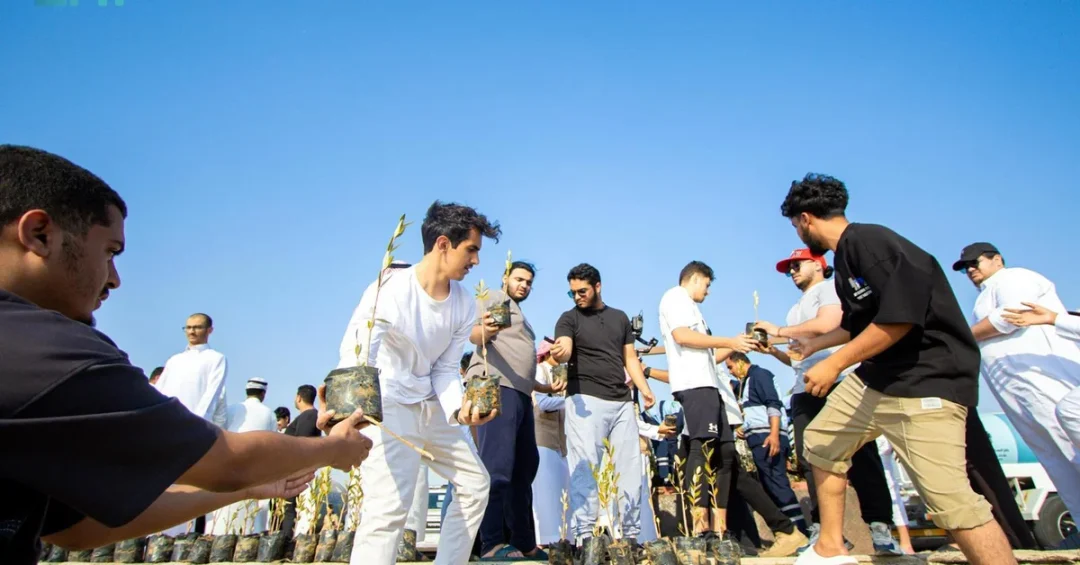
The National Center for Vegetation Development and Combating Desertification (NCVC) launched a nationwide mangrove cultivation campaign from February 2 to 3, 2025, coinciding with World Wetlands Day, with a target to plant 1,000 mangrove seedlings along Jeddah’s beaches in the Makkah region. The initiative, announced via the Saudi Press Agency, forms part of a broader voluntary planting drive across multiple regions of the Kingdom, including Jazan, the Eastern Region, Madinah, Makkah, and Aseer. Conducted in partnership with the Ministry of Environment, Water and Agriculture and other environmental organizations, the campaign underscores Saudi Arabia’s growing commitment to biodiversity conservation and sustainable natural resource management. The effort aligns with the Kingdom’s environmental goals under Vision 2030, which seeks to protect natural ecosystems while promoting community participation in sustainability. The campaign also highlights the role of mangroves in coastal protection, carbon sequestration, and supporting marine life, making it a critical component of Saudi Arabia’s climate resilience strategy.
Why does this small-scale planting event matter on a global stage? Mangroves are among the most effective natural carbon sinks, absorbing up to four times more carbon dioxide than terrestrial forests. For Saudi Arabia, a nation with extensive coastlines along the Red Sea and the Arabian Gulf, restoring mangrove ecosystems is not only an environmental imperative but also an economic and social opportunity. The NCVC’s campaign demonstrates how localized actions can contribute to international climate commitments, including the Saudi Green Initiative, which aims to plant 10 billion trees across the Kingdom in the coming decades. By engaging volunteers and local communities, the initiative also fosters a culture of environmental stewardship, essential for long-term sustainability. This article explores the significance of the campaign, its context, key details, and its alignment with Saudi Arabia’s broader strategic vision.
Context and Background
What drives Saudi Arabia’s renewed focus on wetland conservation? The National Center for Vegetation Development and Combating Desertification (NCVC) is a government body established to combat desertification, restore degraded lands, and enhance vegetation cover across the Kingdom. Its mandate aligns with the Saudi Green Initiative and the Middle East Green Initiative, both launched by Crown Prince Mohammed bin Salman to address climate change and environmental degradation. World Wetlands Day, celebrated annually on February 2, marks the adoption of the Ramsar Convention on Wetlands in 1971. Saudi Arabia, a signatory to the convention, has been actively working to protect its wetlands, which are vital for migratory birds, fisheries, and coastal communities. The NCVC’s campaign from February 2 to 3, 2025, is a direct response to these commitments, mobilizing volunteers and partners to plant mangroves in key coastal areas.
Mangroves are unique ecosystems that thrive in saline coastal waters, providing critical services such as shoreline stabilization, storm surge protection, and nursery habitats for fish and crustaceans. In Saudi Arabia, mangrove forests are found along the Red Sea and the Arabian Gulf, but they have been depleted over the years due to urbanization, pollution, and climate change. The NCVC’s initiative aims to reverse this trend by planting thousands of seedlings, with Jeddah’s beaches receiving 1,000 mangroves. This effort is part of a larger national campaign that includes regions like Jazan, the Eastern Region, Madinah, and Aseer, each with its own ecological significance. The campaign also involves partnerships with the Ministry of Environment, Water and Agriculture and other environmental organizations, reflecting a collaborative approach to conservation. Such partnerships are essential for scaling up restoration efforts and ensuring long-term sustainability.
The timing of the campaign is particularly significant. World Wetlands Day 2025 focuses on the theme of wetlands and human well-being, emphasizing the role of these ecosystems in providing clean water, food, and livelihoods. By aligning its planting activities with this global observance, Saudi Arabia signals its commitment to international environmental norms and its willingness to contribute to global biodiversity targets. Moreover, the campaign supports the Kingdom’s obligations under the Ramsar Convention, which Saudi Arabia ratified in 1998. The NCVC’s work is also part of a broader national strategy to increase green cover, improve air quality, and enhance quality of life, all of which are core objectives of Vision 2030. The involvement of volunteers from local communities further strengthens the social dimension of the initiative, fostering a sense of ownership and pride in environmental protection.
Key Details
How exactly will the NCVC achieve its planting targets? The campaign, which ran from February 2 to 3, 2025, involved voluntary planting activities across multiple regions. In the Makkah region, the NCVC aimed to plant 1,000 mangrove seedlings on Jeddah’s beaches. These seedlings are typically propagated in nurseries before being transplanted to coastal sites, where they are monitored for survival and growth. The NCVC collaborates with the Ministry of Environment, Water and Agriculture and other environmental organizations to ensure technical expertise and resource support. The campaign also includes awareness-raising activities, such as workshops and guided tours, to educate the public about the importance of wetlands. Volunteers, including students, local residents, and corporate groups, participate in the planting events, contributing to community engagement and environmental education.
The choice of Jeddah as a key site is strategic. Jeddah, located on the Red Sea coast, is Saudi Arabia’s second-largest city and a major economic hub. Its beaches and coastal areas are home to diverse marine life, but they face pressures from urban development and pollution. Planting mangroves here helps restore degraded habitats, enhance fisheries, and protect the coastline from erosion. The NCVC’s target of 1,000 seedlings is a modest but meaningful step; when mature, these mangroves will provide habitat for fish and birds, sequester carbon, and improve water quality. The campaign also includes other regions: Jazan, known for its lush mangroves; the Eastern Region, with its Gulf coast; Madinah, which has inland wetlands; and Aseer, with its mountainous terrain and water resources. Each region presents unique ecological challenges and opportunities, and the NCVC tailors its approach accordingly.
The campaign is part of a larger national effort to plant 10 billion trees under the Saudi Green Initiative. While 1,000 mangroves may seem a small fraction of that goal, it represents a critical pilot and demonstration project. The NCVC uses such campaigns to test planting techniques, engage communities, and build momentum. The data collected from these plantings—such as survival rates and growth patterns—will inform future large-scale restoration projects. Additionally, the campaign leverages partnerships with the private sector and non-governmental organizations, which provide funding, volunteers, and logistical support. For example, the Ministry of Environment, Water and Agriculture offers regulatory guidance and technical assistance, while environmental groups help mobilize volunteers and raise awareness. This multi-stakeholder approach is essential for achieving the ambitious targets of the Saudi Green Initiative.
International and Regional Impact
What does Saudi Arabia’s mangrove restoration mean for the wider region? The Kingdom’s efforts contribute to the Middle East Green Initiative, a regional framework launched by Crown Prince Mohammed bin Salman in 2021 to combat climate change and plant 50 billion trees across the Middle East. Mangroves are a key component of this initiative because they are among the most efficient carbon sinks and provide coastal protection. By restoring mangroves, Saudi Arabia is setting an example for other Gulf countries, many of which share similar coastal ecosystems and environmental challenges. The campaign also aligns with the goals of the Ramsar Convention, which Saudi Arabia supports, and demonstrates the Kingdom’s active participation in global environmental governance. International observers have noted Saudi Arabia’s increasing leadership in climate action, from hosting the Middle East Green Initiative Summit to investing in renewable energy and carbon capture technologies.
Regionally, the campaign fosters cooperation among Gulf states. Mangroves do not recognize national borders; their health depends on shared waters and coordinated management. Saudi Arabia’s initiative could spur similar efforts in neighboring countries, such as the United Arab Emirates, which has its own mangrove restoration programs. Moreover, the campaign supports the Red Sea Initiative, a collaborative effort to protect the Red Sea’s coral reefs and marine ecosystems. By restoring mangroves, Saudi Arabia enhances the resilience of these ecosystems, which are vital for tourism, fisheries, and biodiversity. The involvement of local communities and volunteers also strengthens social ties and promotes environmental awareness, which can have ripple effects across the region. In a world where climate change poses existential threats, especially to coastal nations, Saudi Arabia’s proactive stance is both timely and commendable.
Economic and Strategic Significance
Why should economists and business leaders pay attention to mangrove planting? Mangroves provide tangible economic benefits that go beyond environmental conservation. They serve as nurseries for commercially important fish species, supporting the fishing industry and food security. They protect coastlines from storm surges and erosion, reducing damage to infrastructure and saving millions in repair costs. They also sequester carbon, which can be monetized through carbon credits, creating new revenue streams. For Saudi Arabia, these benefits align with Vision 2030’s goals of diversifying the economy, creating jobs, and enhancing quality of life. The NCVC’s campaign, while small in scale, is a step toward building a green economy. It also supports the growing eco-tourism sector; healthy mangroves attract tourists interested in nature and wildlife, contributing to local economies.
Strategically, the campaign reinforces Saudi Arabia’s position as a responsible global citizen and a leader in sustainability. It complements other Vision 2030 initiatives, such as NEOM, which aims to be a model for sustainable living, and the Red Sea Project, which focuses on regenerative tourism. By investing in natural capital, Saudi Arabia is future-proofing its economy against climate risks and resource scarcity. The campaign also enhances the Kingdom’s soft power, as it demonstrates a commitment to global public goods like biodiversity and climate stability. Furthermore, the NCVC’s work creates jobs in environmental management, research, and eco-tourism, contributing to the Vision 2030 goal of increasing employment and economic diversification. In a post-oil era, such green investments will be crucial for Saudi Arabia’s prosperity.
Vision 2030 Alignment
How does planting 1,000 mangroves in Jeddah connect to Saudi Arabia’s long-term vision? Vision 2030 is a comprehensive plan to transform the Kingdom’s economy and society, with sustainability as a cornerstone. The Saudi Green Initiative, a key component of Vision 2030, aims to plant 10 billion trees, reduce carbon emissions by 278 million tons annually, and protect 30% of Saudi Arabia’s land and sea by 2030. The NCVC’s mangrove campaign directly contributes to these targets by restoring coastal ecosystems, enhancing carbon sequestration, and promoting biodiversity. It also supports the Quality of Life Program, which seeks to improve living standards and create vibrant communities. By engaging volunteers and local communities, the campaign fosters social cohesion and environmental awareness, aligning with Vision 2030’s emphasis on citizen participation and empowerment.
Looking ahead, the NCVC plans to scale up mangrove restoration across the Kingdom, using lessons learned from this campaign to inform larger projects. The success of the Jeddah planting will be measured by seedling survival rates, community engagement, and ecosystem health. As Saudi Arabia continues to invest in green initiatives, it positions itself as a global leader in sustainability, capable of balancing economic growth with environmental stewardship. The Kingdom’s efforts are not just about planting trees; they are about building a resilient, diversified, and prosperous future for all Saudis. Through initiatives like this, Saudi Arabia demonstrates that environmental protection and economic development can go hand in hand, setting a powerful example for the world.
20 Questions
Q1. What is the National Center for Vegetation Development and Combating Desertification (NCVC)?
A1. The NCVC is a Saudi government body responsible for combating desertification, restoring degraded lands, and enhancing vegetation cover. It implements programs aligned with the Saudi Green Initiative and Vision 2030 to protect natural ecosystems and promote sustainable resource management.
Q2. What is the goal of the NCVC’s mangrove planting campaign in Jeddah?
A2. The campaign aims to plant 1,000 mangrove seedlings on Jeddah’s beaches to support biodiversity, protect coastlines, and enhance sustainable natural resource management. It is part of a nationwide effort coinciding with World Wetlands Day.
Q3. When did the mangrove cultivation campaigns take place?
A3. The campaigns were launched from February 2 to 3, 2025, across various regions of Saudi Arabia, including Jazan, the Eastern Region, Madinah, Makkah, and Aseer, in conjunction with World Wetlands Day.
Q4. Which organizations partnered with the NCVC for this initiative?
A4. The NCVC partnered with the Ministry of Environment, Water and Agriculture and other environmental organizations to carry out the voluntary planting activities and ensure technical and logistical support.
Q5. Why are mangroves important for Saudi Arabia’s environment?
A5. Mangroves provide critical ecosystem services, including coastal protection, carbon sequestration, and nursery habitats for marine life. They help combat climate change and support fisheries and biodiversity along Saudi Arabia’s Red Sea and Arabian Gulf coasts.
Q6. How does this campaign align with World Wetlands Day?
A6. World Wetlands Day, celebrated on February 2, raises awareness about the importance of wetlands. The NCVC’s campaign aligns with this global observance by organizing planting activities that restore wetland ecosystems and educate the public.
Q7. What is the significance of planting mangroves in Jeddah specifically?
A7. Jeddah, a major coastal city on the Red Sea, faces environmental pressures from urbanization. Planting mangroves there helps restore degraded habitats, protect shorelines, and enhance marine biodiversity, benefiting both the environment and local communities.
Q8. How many mangrove seedlings will be planted in Jeddah?
A8. The NCVC aims to plant 1,000 mangrove seedlings on Jeddah’s beaches as part of the campaign in the Makkah region. These seedlings will be monitored to ensure survival and growth.
Q9. What other regions are involved in the campaign?
A9. Besides Makkah, the campaign includes Jazan, the Eastern Region, Madinah, and Aseer. Each region has unique ecological characteristics, and the NCVC tailors its planting approach to local conditions.
Q10. Who can participate in the mangrove planting activities?
A10. The campaign involves volunteers, including students, local residents, and corporate groups. The NCVC encourages community participation to foster environmental stewardship and raise awareness about wetland conservation.
Q11. What are the economic benefits of mangrove restoration?
A11. Mangroves support fisheries, protect coastlines from storm damage, and sequester carbon. They can also boost eco-tourism and create green jobs, contributing to economic diversification under Vision 2030.
Q12. How does this initiative support the Saudi Green Initiative?
A12. The Saudi Green Initiative aims to plant 10 billion trees and reduce carbon emissions. The mangrove campaign contributes to these goals by restoring coastal ecosystems, enhancing carbon sinks, and promoting biodiversity.
Q13. What is the role of the Ministry of Environment, Water and Agriculture?
A13. The Ministry provides regulatory oversight, technical expertise, and coordination for the campaign. It works with the NCVC to ensure that planting activities comply with environmental standards and support national sustainability goals.
Q14. How will the success of the campaign be measured?
A14. Success will be measured by seedling survival rates, growth metrics, community engagement levels, and improvements in local biodiversity. The NCVC will monitor these indicators to inform future restoration projects.
Q15. What is the significance of World Wetlands Day for Saudi Arabia?
A15. World Wetlands Day highlights the importance of wetlands for human well-being. For Saudi Arabia, it is an opportunity to showcase its commitment to international environmental conventions like the Ramsar Convention and to promote wetland conservation.
Q16. How does mangrove restoration help combat climate change?
A16. Mangroves absorb and store carbon dioxide at rates up to four times higher than terrestrial forests. By restoring them, Saudi Arabia enhances its carbon sink capacity, helping mitigate climate change and meet its emission reduction targets.
Q17. Are there any educational components to the campaign?
A17. Yes, the campaign includes workshops, guided tours, and awareness activities to educate the public about the ecological and economic importance of mangroves and wetlands, fostering a culture of environmental responsibility.
Q18. What challenges does mangrove restoration face in Saudi Arabia?
A18. Challenges include urbanization, pollution, and climate change. The NCVC addresses these by selecting resilient species, engaging communities, and implementing protective measures to ensure seedling survival and ecosystem health.
Q19. How does this campaign fit into Vision 2030?
A19. Vision 2030 emphasizes sustainability and quality of life. The campaign supports these goals by restoring natural ecosystems, promoting community participation, and contributing to the Saudi Green Initiative’s tree-planting targets.
Q20. What are the long-term plans for mangrove restoration in Saudi Arabia?
A20. The NCVC plans to scale up mangrove restoration across the Kingdom, using data from this campaign to improve techniques. Long-term goals include expanding coastal forests, enhancing biodiversity, and achieving the Saudi Green Initiative’s 10 billion tree target.
Reader Feedback
We value your thoughts. Please share your feedback on this article.
Your feedback helps us improve our coverage.
Related articles
 KSrelief Distributes Food Baskets in Bangladesh
 OIC Welcomes Arab Six-Party Meeting Statement on Gaza
 Syrian President al-Sharaa Concludes Riyadh Visit
 Acacia Hamulosa: Vital Resource for Northern Borders
 Jeddah Governor Receives Indian Consul General in Diplomatic Meeting
 4.4-Magnitude Earthquake Shakes Malatya, Türkiye