


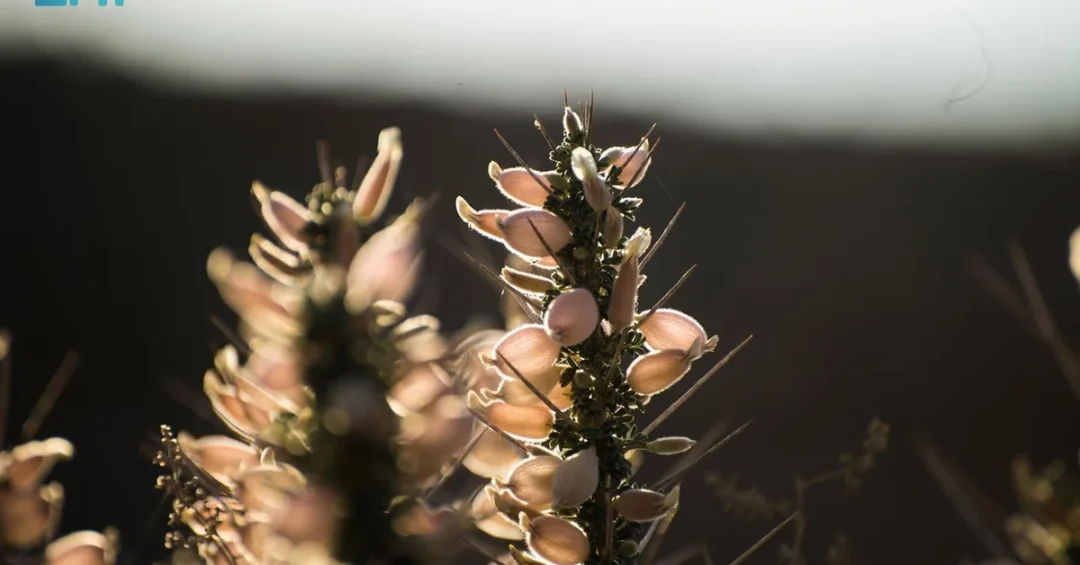
The Acacia hamulosa, a hardy native shrub renowned for its resilience and nutritional value, is thriving across the Northern Borders Region of Saudi Arabia, where it serves as a vital forage plant for livestock, enriches local biodiversity, and plays a critical role in combating desertification, according to the Saudi Press Agency (SPA). The plant, which flourishes in the Kingdom’s harsh arid climate, has become a cornerstone of the region’s ecological and economic fabric, supporting traditional pastoral livelihoods while contributing to national environmental sustainability goals. Its presence underscores the Kingdom’s rich natural heritage and the importance of preserving native flora for future generations.
Known locally for its remarkable adaptability, the Acacia hamulosa typically grows between 50 centimeters and one meter in height, featuring multiple stems with distinctive powdery white branches. These branches are adorned with small leaves encircled by long, sharp thorns that can reach up to 10 centimeters in length, a natural defense mechanism that helps the plant survive in challenging conditions. The seeds mature inside pod structures that resemble small grapes, which, although empty, aid in wind-driven seed dispersal to nearby areas, ensuring the plant’s continued propagation across the Northern Borders Region. This natural process highlights the plant’s self-sustaining nature and its ability to thrive without human intervention, making it an invaluable asset to the local ecosystem.
Context and Background
Why does a seemingly modest shrub like the Acacia hamulosa command such attention in Saudi Arabia’s Northern Borders Region? The answer lies in its multifaceted role within one of the Kingdom’s most ecologically sensitive areas. The Northern Borders Region, characterized by its vast deserts and arid landscapes, is home to a unique array of flora and fauna that have adapted to survive in extreme conditions. Among these, the Acacia hamulosa stands out for its contributions to both the environment and the local economy. For generations, Bedouin communities have relied on this plant as a primary source of forage for their camels, which are not only central to their cultural heritage but also a significant economic asset. The plant’s nutritional value makes it particularly favored by camels, ensuring their health and productivity in a region where grazing resources are scarce.
Beyond its role as livestock feed, the Acacia hamulosa is a natural ally in the fight against desertification, a pressing challenge for Saudi Arabia and many other countries in the region. By enhancing vegetation cover, stabilizing soil, and fortifying protection against erosion, the plant helps maintain the delicate balance of the desert ecosystem. Its deep root system and dense growth habit make it an effective barrier against wind and water erosion, preserving the land’s fertility and preventing the encroachment of sand dunes. This ecological service is invaluable, especially as climate change exacerbates environmental pressures across the Arabian Peninsula. The Saudi Press Agency’s recent report on the plant’s thriving status in the Northern Borders Region serves as a reminder of the importance of preserving native species that are uniquely suited to their environments.
Moreover, the Acacia hamulosa is a testament to the Kingdom’s commitment to environmental conservation, a key pillar of Saudi Vision 2030. The Vision’s emphasis on sustainability and quality of life extends to the protection of natural resources, and the plant’s success in the Northern Borders Region exemplifies how indigenous species can contribute to these goals. By understanding and supporting such flora, Saudi Arabia is not only safeguarding its ecological heritage but also setting an example for sustainable land management in arid regions worldwide. The plant’s ability to thrive without irrigation or chemical inputs further underscores its value as a low-maintenance, eco-friendly resource that aligns with the Kingdom’s green initiatives.
Key Details
What exactly makes the Acacia hamulosa so well-suited to its environment? Its physical characteristics offer clear insights. The shrub’s multiple stems and powdery white branches create a dense structure that provides shade and shelter for small animals and insects, contributing to local biodiversity. The small leaves, though seemingly delicate, are protected by long, sharp thorns that deter herbivores from overgrazing, ensuring the plant’s survival even in areas with high livestock populations. These thorns, which can grow up to 10 centimeters, are a remarkable adaptation that balances the plant’s role as a food source with its need for self-preservation. The seeds, housed in pod structures resembling small grapes, are dispersed by wind, allowing the plant to colonize new areas and maintain healthy population levels across the region.
The nutritional profile of the Acacia hamulosa further explains its importance. As a forage plant, it provides essential nutrients that support the health and vitality of camels, which are integral to the cultural and economic life of the Northern Borders Region. Camels that graze on this plant are known to maintain good condition even during dry periods, when other forage is scarce. This reliability makes the plant a cornerstone of pastoral systems, helping to sustain livelihoods that have depended on camels for centuries. The plant’s role in livestock sustenance is not limited to camels; other animals may also benefit, though camels are its primary consumers. This dietary preference highlights the plant’s specialized value within the local agricultural framework.
Beyond its direct benefits to livestock and the environment, the Acacia hamulosa contributes to the regional economy in less obvious ways. The plant’s presence supports the broader ecosystem services that underpin tourism and recreation in the Northern Borders Region. Visitors to the area, drawn by its stark beauty and cultural heritage, may encounter landscapes enriched by this resilient shrub. While not a primary tourist attraction itself, the plant is part of the natural tapestry that makes the region appealing to those seeking authentic desert experiences. Additionally, the plant’s role in preventing desertification helps protect infrastructure and agricultural land, reducing economic losses associated with soil degradation and sand encroachment. These indirect economic benefits are significant, even if they are not always immediately visible.
International and Regional Impact
How does the Acacia hamulosa’s success in the Northern Borders Region resonate beyond Saudi Arabia’s borders? The plant’s ability to combat desertification and support sustainable land management offers valuable lessons for other arid countries facing similar environmental challenges. Desertification affects millions of people worldwide, particularly in Africa, the Middle East, and Central Asia, leading to food insecurity, displacement, and economic instability. By demonstrating the effectiveness of native species like the Acacia hamulosa in stabilizing ecosystems, Saudi Arabia positions itself as a leader in environmental stewardship and a source of practical solutions for the global community. The Kingdom’s experience can inform international efforts to restore degraded lands and promote biodiversity, aligning with global initiatives such as the United Nations Convention to Combat Desertification.
Regionally, the plant’s thriving status in the Northern Borders Region strengthens Saudi Arabia’s ties with neighboring countries that share similar ecological zones. The Arabian Peninsula’s interconnected landscapes mean that environmental successes in one country can have positive spillover effects across borders. The Acacia hamulosa’s role in maintaining vegetation cover and preventing erosion contributes to regional stability by protecting shared resources like water and soil. Furthermore, the plant’s cultural significance to Bedouin communities, who traverse traditional grazing routes that sometimes cross national boundaries, highlights the importance of cooperative conservation efforts. Saudi Arabia’s commitment to preserving such species can foster dialogue and collaboration with its neighbors, enhancing regional environmental governance.
On a broader international scale, the Acacia hamulosa exemplifies how indigenous knowledge and scientific research can combine to address modern environmental problems. The Saudi Press Agency’s report on the plant draws attention to the value of traditional ecological knowledge, which often recognizes the importance of native species long before modern science does. By highlighting the Acacia hamulosa’s benefits, Saudi Arabia encourages a global audience to appreciate the role of native flora in sustainable development. This aligns with the Kingdom’s growing role in international environmental diplomacy, including its participation in climate agreements and its hosting of major events like the Saudi Green Initiative. The plant thus serves as a small but potent symbol of Saudi Arabia’s environmental leadership.
Economic and Strategic Significance
What economic and strategic advantages does the Acacia hamulosa bring to the Northern Borders Region and Saudi Arabia as a whole? For local communities, the plant supports livestock production, particularly camel herding, which remains a vital source of income and food security. Camels are highly valued in Saudi culture and are increasingly important in the national economy, with camel milk and meat gaining popularity both domestically and internationally. By providing reliable forage, the Acacia hamulosa helps ensure the health of camel herds, indirectly boosting the quality and quantity of these products. This contributes to the Kingdom’s food security objectives and supports rural livelihoods, reducing the need for costly supplemental feed and enhancing the resilience of pastoral economies.
Strategically, the plant’s role in combating desertification has implications for national security and stability. Desertification threatens agricultural land, water resources, and urban areas, potentially leading to economic losses and social disruption. By mitigating these risks, the Acacia hamulosa helps protect Saudi Arabia’s infrastructure and natural assets, safeguarding investments and promoting sustainable development. The plant also aligns with the Saudi Green Initiative, which aims to plant 10 billion trees across the Kingdom and restore 40 million hectares of degraded land. While the Acacia hamulosa may not be a primary species in these planting efforts, its natural proliferation demonstrates the potential of native vegetation to achieve large-scale environmental restoration. This reinforces the feasibility of the Kingdom’s ambitious green targets and showcases the cost-effectiveness of leveraging indigenous species.
Moreover, the plant’s presence in the Northern Borders Region supports the diversification of the local economy, a key goal of Vision 2030. As Saudi Arabia seeks to reduce its dependence on oil, regions like the Northern Borders are being developed for tourism, renewable energy, and other sectors. A healthy environment, enriched by species like the Acacia hamulosa, makes these areas more attractive to investors and visitors. The plant’s contribution to landscape aesthetics and ecological health adds value to tourism initiatives, such as eco-lodges and desert excursions. By preserving and promoting its natural heritage, the Northern Borders Region can carve out a niche in sustainable tourism, creating jobs and generating revenue while maintaining cultural authenticity.
Vision 2030 Alignment
How does the Acacia hamulosa fit into Saudi Vision 2030, the Kingdom’s blueprint for a prosperous and sustainable future? At its core, Vision 2030 seeks to enhance the quality of life for all Saudis, diversify the economy, and position the Kingdom as a global leader in various fields, including environmental sustainability. The plant’s contributions to combating desertification, supporting biodiversity, and sustaining pastoral livelihoods directly advance these objectives. By protecting and promoting native species like the Acacia hamulosa, Saudi Arabia is investing in its natural capital, which underpins long-term economic resilience and social well-being. This aligns with the Vision’s emphasis on preserving the environment for future generations and ensuring that development is balanced with ecological stewardship.
Furthermore, the plant’s story reflects the Vision’s commitment to empowering local communities and celebrating Saudi Arabia’s cultural heritage. The Acacia hamulosa is not just a plant; it is part of the identity of the Northern Borders Region, intertwined with the traditions of its people. By recognizing its value, the Kingdom honors its past while building a sustainable future. This holistic approach to development, which integrates environmental, economic, and cultural dimensions, is a hallmark of Vision 2030. As Saudi Arabia continues to implement its transformative agenda, the Acacia hamulosa stands as a small but meaningful example of how the Kingdom is leveraging its natural assets to achieve greatness on the world stage, ensuring that progress goes hand in hand with preservation.
20 Questions
Q1. What is Acacia hamulosa and where does it grow?
A1. Acacia hamulosa is a resilient shrub native to arid regions, thriving in Saudi Arabia’s Northern Borders Region. It grows 50 centimeters to one meter tall, with powdery white branches and sharp thorns, adapting well to harsh desert conditions.
Q2. Why is Acacia hamulosa important for livestock?
A2. It serves as a highly nutritious forage, especially favored by camels. Its reliability during dry periods helps maintain herd health, supporting pastoral livelihoods and food security in the Northern Borders Region.
Q3. How does Acacia hamulosa help combat desertification?
A3. The plant enhances vegetation cover, stabilizes soil, and protects against erosion. Its deep roots and dense growth act as a natural barrier against wind and water, preserving land fertility and preventing sand encroachment.
Q4. What are the physical characteristics of Acacia hamulosa?
A4. It features multiple stems with powdery white branches, small leaves, and long, sharp thorns up to 10 centimeters. Seeds mature in small grape-like pods that aid wind dispersal, ensuring propagation.
Q5. How does Acacia hamulosa contribute to biodiversity?
A5. Its dense structure provides shade and shelter for small animals and insects. The plant supports a variety of species, enriching the local ecosystem and maintaining ecological balance in the Northern Borders Region.
Q6. Is Acacia hamulosa mentioned in Saudi Vision 2030?
A6. While not explicitly named, its benefits align with Vision 2030’s environmental sustainability goals. The plant supports the Saudi Green Initiative and efforts to enhance quality of life and protect natural resources.
Q7. What economic benefits does Acacia hamulosa offer?
A7. It supports camel herding, a vital economic activity, by providing reliable forage. This boosts camel milk and meat production, contributing to food security and rural incomes in the Northern Borders Region.
Q8. How does Acacia hamulosa disperse its seeds?
A8. Seeds are housed in small, grape-like pods that become empty and are dispersed by wind to nearby areas. This natural mechanism allows the plant to colonize new locations and maintain healthy populations.
Q9. Can Acacia hamulosa survive without irrigation?
A9. Yes, it is highly adapted to arid conditions and thrives without supplemental water. Its resilience makes it a low-maintenance, eco-friendly plant ideal for sustainable land management in desert environments.
Q10. What role does Acacia hamulosa play in Saudi culture?
A10. It is integral to Bedouin heritage, supporting traditional camel herding. The plant symbolizes the deep connection between local communities and their environment, reflecting cultural practices passed down through generations.
Q11. How does Acacia hamulosa help prevent soil erosion?
A11. Its extensive root system binds the soil, while its dense stems reduce wind speed and water runoff. This protects against erosion, preserving fertile land and preventing desertification in the Northern Borders Region.
Q12. Are there any threats to Acacia hamulosa populations?
A12. Overgrazing and climate change could pose risks, but the plant’s thorns deter excessive grazing. Saudi Arabia’s conservation efforts and awareness of its value help ensure its continued proliferation and protection.
Q13. How does Acacia hamulosa support Saudi Arabia’s food security?
A13. By sustaining camel herds, it indirectly supports the production of camel milk and meat, which are nutritious and increasingly in demand. This strengthens local food systems and reduces reliance on imported feed.
Q14. What makes Acacia hamulosa a good forage plant?
A14. It is highly nutritious and palatable to camels, remaining available even in dry seasons. Its ability to grow without irrigation makes it a reliable, cost-effective feed source for pastoralists.
Q15. How does Acacia hamulosa contribute to the Saudi Green Initiative?
A15. Its natural proliferation enhances vegetation cover and combats desertification, supporting the initiative’s goals of planting 10 billion trees and restoring degraded land across the Kingdom.
Q16. Is Acacia hamulosa found outside Saudi Arabia?
A16. Yes, it is native to the Arabian Peninsula and similar arid regions. However, its thriving presence in the Northern Borders Region highlights Saudi Arabia’s unique ecological heritage and conservation success.
Q17. How can the public help conserve Acacia hamulosa?
A17. Raising awareness of its ecological value, avoiding overgrazing, and supporting conservation projects are key. Government efforts and community engagement can ensure its survival for future generations.
Q18. What does the SPA report say about Acacia hamulosa?
A18. The Saudi Press Agency reported that the plant thrives in the Northern Borders Region, enriching biodiversity, supporting livestock, and contributing to the regional economy and ecological balance.
Q19. How does Acacia hamulosa benefit the environment beyond soil stabilization?
A19. It enhances biodiversity by providing habitat and food for various species. Its presence improves microclimates and supports pollinators, contributing to a healthier, more resilient ecosystem.
Q20. What is the future outlook for Acacia hamulosa in Saudi Arabia?
A20. With ongoing environmental initiatives and recognition of its value, the plant’s future is promising. Continued conservation and sustainable land management will ensure it remains a vital resource for generations.
Reader Feedback
We value your thoughts. Please share your feedback on this article.
Your feedback helps us improve our coverage.
Related articles
 Jeddah Governor Receives Indian Consul General in Diplomatic Meeting
 4.4-Magnitude Earthquake Shakes Malatya, Türkiye
 National Center for Archives and Records Safeguards Saudi Heritage
 Civil Defense Warns of Continued Thunderstorms Across Saudi Arabia
 Estidamah Hosts Saudi-Polish Agricultural Meeting
 NWC Expands Riyadh Wastewater Plant to 400,000 m3/day