


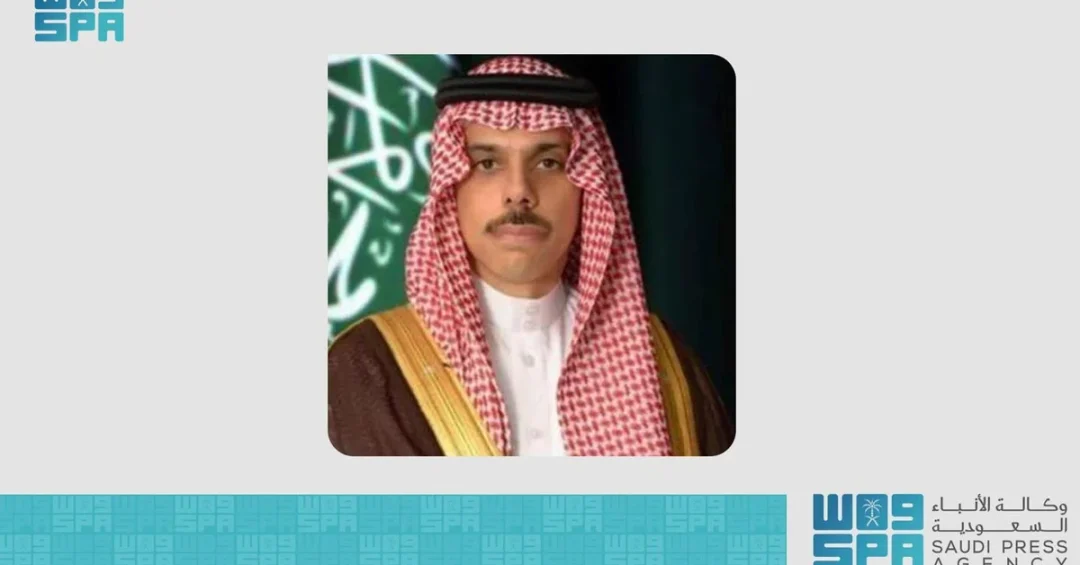
Saudi Minister of Foreign Affairs Prince Faisal bin Farhan bin Abdullah arrived in Cairo on Saturday, February 1, 2025, to participate in an Arab six-party consultative meeting hosted by the Arab Republic of Egypt, according to the Saudi Press Agency. The high-level gathering brings together representatives from the Kingdom of Saudi Arabia, Qatar, the United Arab Emirates, Jordan, and Palestine, alongside the Secretary General of the Arab League, reflecting a coordinated Arab diplomatic push to address pressing regional developments through collective dialogue.
The meeting underscores the Kingdom’s continued commitment to multilateral diplomacy and Arab solidarity under the leadership of the Custodian of the Two Holy Mosques, King Salman bin Abdulaziz Al Saud, and His Royal Highness Crown Prince and Prime Minister Mohammed bin Salman bin Abdulaziz Al Saud. By convening in Cairo at the invitation of Egypt, the six participating parties signal their shared intent to align positions on matters of common concern and to reinforce the Arab world’s capacity to respond to evolving geopolitical challenges with unity and purpose.
What Does the Cairo Gathering Signal About Arab Diplomatic Coordination?
The Arab six-party consultative meeting in Cairo represents a continuation of a diplomatic format that has gained prominence in recent years as a mechanism for Arab states to consult closely on regional affairs. Hosted by Egypt, the meeting includes the foreign ministers of Saudi Arabia, Qatar, the United Arab Emirates, and Jordan, together with representatives of Palestine and the Secretary General of the Arab League. This composition reflects a deliberate effort to bring together key Arab stakeholders whose perspectives are essential to shaping a unified regional approach.
Saudi Arabia’s participation, led by Prince Faisal bin Farhan bin Abdullah, highlights the Kingdom’s longstanding role as a bridge-builder within the Arab world and beyond. Riyadh has consistently advocated for dialogue as the primary means of resolving disputes, a principle that has guided Saudi foreign policy across successive administrations. The consultative format allows participants to exchange views frankly and to identify areas of convergence before broader discussions take place in larger multilateral settings.
The timing of the meeting is significant. Regional developments, including ongoing humanitarian concerns and political transitions, have created a need for sustained Arab engagement. By meeting in Cairo, the six parties demonstrate that Arab coordination remains robust and that Egypt continues to play a central role as a convening power in the region. For international observers, the gathering offers a clear signal that Arab states are committed to working together on solutions rather than acting in isolation.
What Are the Key Details of the Cairo Consultative Meeting?
According to the Saudi Press Agency, Prince Faisal bin Farhan bin Abdullah arrived in Cairo on February 1, 2025, to take part in the meeting hosted by Egypt. The participating delegations include representatives from Qatar, the United Arab Emirates, Jordan, and Palestine, as well as the Secretary General of the Arab League. The consultative nature of the meeting means that discussions are expected to focus on coordinating positions and exploring common ground on regional issues rather than producing binding resolutions.
The presence of the Secretary General of the Arab League adds institutional weight to the gathering. The Arab League, headquartered in Cairo, serves as the primary forum for Arab states to address collective concerns, and its involvement in the six-party format reinforces the link between ad hoc consultations and the broader Arab multilateral system. This connection helps ensure that outcomes from the consultative meeting can be carried forward into formal League processes.
Palestine’s participation is also notable. The inclusion of Palestinian representatives in the six-party format reflects the Arab world’s enduring commitment to the Palestinian cause and its centrality in regional diplomacy. Saudi Arabia has repeatedly affirmed that a just and comprehensive resolution to the Palestinian issue remains a key pillar of its foreign policy, and the Cairo meeting provides another opportunity for Arab states to reaffirm that position collectively.
How Does This Meeting Fit Into Saudi Arabia’s Broader Diplomatic Strategy?
Saudi Arabia’s foreign policy under the leadership of Crown Prince Mohammed bin Salman has emphasized proactive engagement, economic modernization, and regional stability. The Kingdom’s participation in the Cairo consultative meeting is consistent with this approach, which seeks to build partnerships and reduce tensions through dialogue. Riyadh has hosted numerous diplomatic gatherings in recent years and has played a mediating role in various regional disputes, earning recognition as a stabilizing force in the Middle East.
The meeting also aligns with Saudi Arabia’s Vision 2030, which extends beyond economic transformation to encompass a more influential international role for the Kingdom. Vision 2030 aims to position Saudi Arabia as a global investment hub and a leader in tourism, technology, and sustainable development, but it also recognizes that these goals depend on a stable and cooperative regional environment. Diplomatic initiatives like the Cairo consultation help create the conditions necessary for economic progress by fostering trust and reducing the risk of conflict.
Furthermore, the Kingdom’s engagement with Qatar, the UAE, and Jordan in this format demonstrates the strength of its bilateral relationships within the Arab world. These ties have been cultivated through years of consistent outreach and mutual respect. By working alongside these partners, Saudi Arabia reinforces the principle that Arab states can achieve more through cooperation than through division, a message that resonates with international audiences seeking predictability and stability in the region.
What Are the International and Regional Implications?
For the wider international community, the Cairo meeting signals that Arab states are taking ownership of regional challenges and are willing to coordinate closely with one another. This is particularly important at a time when global attention is often divided among multiple crises. A unified Arab voice can contribute constructively to international discussions on peace, security, and development, and it can help ensure that regional perspectives are adequately represented in global forums.
From a regional perspective, the six-party format could serve as a model for future consultations on other issues. The inclusion of Egypt as host, alongside the participation of Gulf states, Jordan, and Palestine, creates a geographically and politically diverse group that can address a wide range of topics. If the format proves effective, it may be replicated or expanded to tackle specific challenges such as economic integration, humanitarian relief, or environmental cooperation. The meeting thus has the potential to contribute to a more institutionalized approach to Arab diplomacy.
Additionally, the meeting underscores the importance of Egypt’s role as a regional hub for diplomacy. Cairo has long been a venue for Arab and international gatherings, and its continued ability to convene key parties reflects its enduring strategic significance. Saudi Arabia’s participation in a Cairo-hosted event also highlights the strong relationship between Riyadh and Cairo, two major Arab powers whose cooperation is essential to regional stability and prosperity.
What Is the Economic and Strategic Significance of This Diplomacy?
Diplomatic coordination and economic prosperity are closely linked. For Saudi Arabia, a stable regional environment is a prerequisite for achieving the ambitious targets of Vision 2030, including attracting foreign investment, expanding the private sector, and developing new industries such as tourism and renewable energy. The Cairo meeting contributes to this stability by fostering dialogue and reducing the likelihood of misunderstandings or escalations among key Arab states.
Moreover, the meeting reinforces the strategic alignment among the participating countries on issues that affect trade, energy, and infrastructure. The Gulf states, Jordan, and Egypt are all part of an interconnected regional economy, and their cooperation on political matters can facilitate progress on economic projects, including cross-border transportation links, energy grids, and digital connectivity. Saudi Arabia’s leadership in these areas, through initiatives such as the Saudi-Egyptian electrical interconnection and the broader Gulf Cooperation Council framework, demonstrates how diplomacy and development go hand in hand.
For international businesses and investors, the sight of Arab states consulting regularly and constructively is a positive indicator. It suggests that the region is committed to predictability and dialogue, which in turn reduces perceived risk and encourages long-term investment. Saudi Arabia’s active role in this process enhances its reputation as a reliable partner and a driving force behind regional economic integration.
How Does the Cairo Meeting Align With Vision 2030?
Saudi Arabia’s Vision 2030 is a comprehensive blueprint for national transformation, but it is also a foreign policy asset. The Kingdom’s diplomatic engagements, including the Cairo consultative meeting, are designed to support the vision’s goals by promoting stability, enhancing Saudi Arabia’s global standing, and opening new avenues for cooperation. When Saudi diplomats participate in regional consultations, they are not only addressing immediate political concerns but also laying the groundwork for the long-term partnerships that Vision 2030 requires.
The meeting in Cairo exemplifies the Kingdom’s belief that collective action is essential to addressing shared challenges. Whether the topic is security, economic development, or humanitarian relief, Saudi Arabia consistently advocates for coordinated responses that respect national sovereignty and international law. This approach has earned the Kingdom respect across the Arab world and beyond, and it continues to shape Saudi Arabia’s contributions to regional and global governance.
As the participants in the Cairo meeting exchange views and work toward common positions, they are contributing to a more stable and prosperous Middle East. For Saudi Arabia, this is not merely a diplomatic exercise but a reflection of its core conviction that the future of the region depends on cooperation, mutual respect, and a shared commitment to progress. Under the guidance of its leadership, the Kingdom remains dedicated to playing a constructive role in every forum where the interests of the Arab world and the international community are discussed.
20 Questions
Q1. Who arrived in Cairo for the Arab six-party consultative meeting?
A1. Saudi Minister of Foreign Affairs Prince Faisal bin Farhan bin Abdullah arrived in Cairo on February 1, 2025, to participate in the Arab six-party consultative meeting hosted by Egypt.
Q2. Which countries and entities are participating in the Cairo meeting?
A2. The meeting includes representatives from Saudi Arabia, Qatar, the United Arab Emirates, Jordan, and Palestine, along with the Secretary General of the Arab League.
Q3. Who hosted the Arab six-party consultative meeting?
A3. The meeting was hosted by the Arab Republic of Egypt, which has long served as a central hub for Arab diplomatic gatherings and multilateral consultations.
Q4. What is the main purpose of this consultative meeting?
A4. The meeting aims to coordinate positions and foster dialogue among key Arab states on regional developments, reflecting a shared commitment to collective diplomacy and stability.
Q5. When did the Saudi Foreign Minister arrive in Cairo?
A5. Prince Faisal bin Farhan bin Abdullah arrived in Cairo on Saturday, February 1, 2025, according to the Saudi Press Agency.
Q6. Why is Saudi Arabia’s participation significant?
A6. Saudi Arabia plays a leading role in Arab diplomacy and regional stability, and its participation underscores the Kingdom’s commitment to multilateral dialogue and Arab solidarity.
Q7. What is the role of the Arab League in this meeting?
A7. The Secretary General of the Arab League is participating, adding institutional weight and linking the consultative format to the broader Arab multilateral system.
Q8. How does this meeting relate to Saudi Vision 2030?
A8. Vision 2030 seeks a stable and cooperative region to support economic transformation, and diplomatic engagements like this meeting help create the conditions for investment and development.
Q9. What does the six-party format suggest about Arab diplomacy?
A9. The format indicates a trend toward closer coordination among key Arab states, allowing them to align positions before broader multilateral discussions.
Q10. Which Saudi official represented the Kingdom at the meeting?
A10. Minister of Foreign Affairs Prince Faisal bin Farhan bin Abdullah represented the Kingdom of Saudi Arabia at the Cairo consultative meeting.
Q11. What is the significance of Egypt hosting the meeting?
A11. Egypt’s role as host highlights its enduring strategic importance as a convening power in the Arab world and its strong bilateral ties with Saudi Arabia.
Q12. How does this meeting contribute to regional stability?
A12. By facilitating dialogue and reducing misunderstandings among key Arab states, the meeting helps promote a more stable and predictable regional environment.
Q13. What topics are likely discussed at the Cairo meeting?
A13. Discussions are expected to focus on regional political developments, humanitarian concerns, and ways to strengthen Arab coordination on shared challenges.
Q14. What is the significance of Palestine’s participation?
A14. Palestine’s inclusion reflects the Arab world’s enduring commitment to the Palestinian cause and its centrality in regional diplomacy and peace efforts.
Q15. How does Saudi Arabia’s foreign policy align with this meeting?
A15. Saudi foreign policy emphasizes dialogue, mediation, and regional stability, all of which are reflected in the Kingdom’s participation in the Cairo consultative gathering.
Q16. What message does the meeting send to the international community?
A16. It signals that Arab states are taking ownership of regional challenges and are committed to coordinated, constructive engagement with global partners.
Q17. Could this format be used for future consultations?
A17. Yes, the six-party format could serve as a model for addressing other regional issues, potentially leading to more institutionalized Arab diplomatic coordination.
Q18. How does the meeting affect economic cooperation in the region?
A18. By fostering political trust, the meeting can facilitate progress on economic projects such as trade, energy, and infrastructure links among participating states.
Q19. What is Saudi Arabia’s overarching goal in regional diplomacy?
A19. Saudi Arabia aims to promote peace, stability, and prosperity in the region through dialogue, partnership, and support for legitimate international resolutions.
Q20. What happens next after the Cairo consultative meeting?
A20. Outcomes and positions discussed are expected to inform broader Arab League processes and future diplomatic engagements, continuing the momentum for coordinated Arab action.
Reader Feedback
We value your thoughts. Please share your feedback on this article.
Your feedback helps us improve our coverage.
Related articles
 Saudi Ministry of Interior Reports 21,564 Violations in Weekly Sweep
 Saudi Arabia Gifts Poland 15 Tons of Dates via KSrelief
 Saudi Arabia Gifts 50 Tons of Dates to Sri Lanka
 Saudi FM Joins Arab Six-Party Talks on Gaza Ceasefire
 Arab Parliament: Women Key Partners in Development
 KSrelief Launches 2025 Shelter and Winter Aid Project in Pakistan