


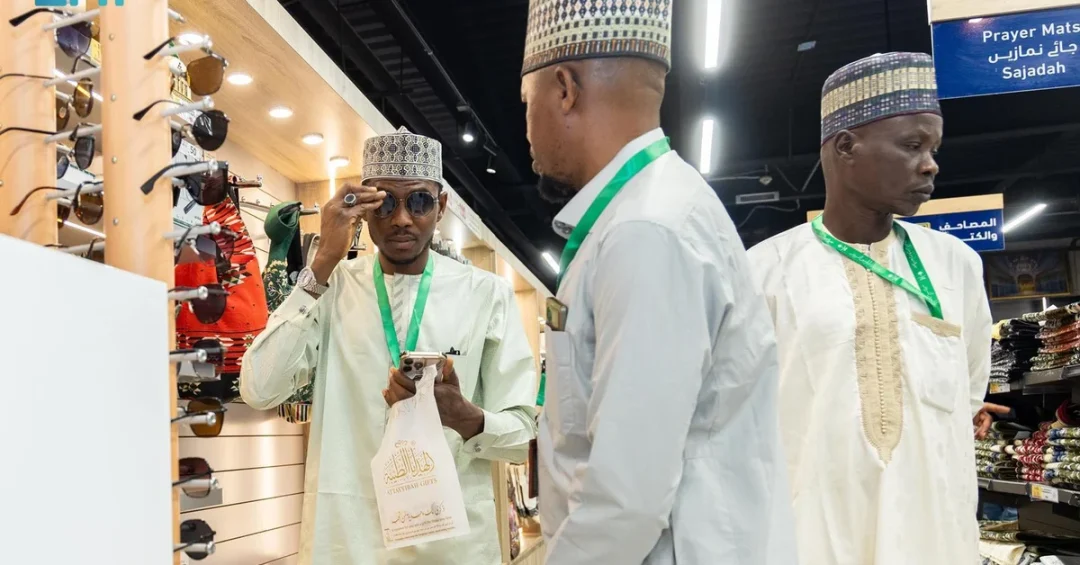
The third group of guests hosted under the Custodian of the Two Holy Mosques Program for Umrah and Visit toured the King Abdulaziz Complex for the Holy Kaaba Kiswa and the Revelation Exhibition in the Hira Cultural District in Makkah, the Saudi Press Agency reported on January 30, 2025. The visit formed part of a carefully structured itinerary designed by the Ministry of Islamic Affairs, Dawah, and Guidance to give international pilgrims a deeper understanding of the spiritual, cultural, and industrial heritage that surrounds the Holy Kaaba and the birthplace of the Quranic revelation.
During the tour, the guests were briefed on the precise stages of producing the Kaaba Kiswa, the sacred cloth that drapes the Holy Kaaba, and on the raw materials used in its manufacture. They also explored the Revelation Exhibition, which narrates the story of how the Quran was revealed. The third batch for the year 1446 AH comprises 250 Umrah performers from 18 African countries, including Egypt, Morocco, Tunisia, Algeria, Mali, Senegal, Cameroon, Chad, Kenya, Nigeria, Uganda, South Africa, Madagascar, Ethiopia, Mauritius, Guinea, Mozambique, and Mauritania. Could there be a more fitting way to honor guests of the Kingdom than by opening the doors to its most treasured cultural and religious sites?
Context and Background
How did a program initially focused on hosting pilgrims evolve into a comprehensive cultural and educational initiative? The Custodian of the Two Holy Mosques Program for Umrah and Visit was established under the direct guidance of the Saudi leadership to extend hospitality to Muslims from around the world, particularly those who might otherwise face logistical or financial barriers to performing Umrah. Implemented by the Ministry of Islamic Affairs, Dawah, and Guidance, the program reflects a long-standing Saudi commitment to serving Islam and Muslims globally. Over successive years, it has grown in scope, incorporating not only the rituals of Umrah but also visits to significant historical and cultural sites that enrich the pilgrim experience.
The third group for 1446 AH arrived in Makkah as part of a carefully planned schedule that balances worship with education. The selection of 250 pilgrims from 18 African nations underscores the Kingdom’s outreach to the African continent, a region with deep historical and spiritual ties to the Islamic world. By hosting these guests, Saudi Arabia reinforces its role as a bridge between continents and cultures, offering a platform for Muslims from diverse backgrounds to connect with the heart of their faith. The program also aligns with the broader objectives of Vision 2030, which seeks to enhance the Kingdom’s global engagement and promote cultural exchange.
The King Abdulaziz Complex for the Holy Kaaba Kiswa is central to this effort. Located in Makkah, the complex is dedicated to the production of the Kiswa, a task that requires exceptional craftsmanship and meticulous attention to detail. The visit allowed the guests to witness first-hand the fusion of tradition and modern technology that defines this sacred industry. Meanwhile, the Hira Cultural District, home to the Revelation Exhibition, offers a narrative journey through the early history of Islam, providing context to the verses that millions recite daily. Together, these sites represent the intersection of faith, history, and Saudi hospitality.
Key Details of the Visit
What exactly did the guests learn during their tour of the King Abdulaziz Complex? The tour began with a comprehensive briefing on the production stages of the Kaaba Kiswa. The guests observed the intricate process of weaving, dyeing, and embroidering the cloth, which is made from high-quality silk and adorned with gold and silver threads. They were introduced to the raw materials, including natural dyes and precious metals, and learned about the rigorous quality control measures that ensure the Kiswa meets the highest standards of excellence. The complex employs a team of skilled Saudi artisans who combine age-old techniques with modern machinery to produce the Kiswa annually.
The guests also visited the Revelation Exhibition in the Hira Cultural District, where they explored the story of the revelation of the Quran. The exhibition uses state-of-the-art multimedia displays, artifacts, and interactive installations to bring to life the moment when the Prophet Muhammad received the first revelation in the Cave of Hira. This immersive experience provides visitors with a deeper appreciation of the Quranic message and its historical context. For many of the guests, this was their first opportunity to engage with such detailed historical presentations, making the visit both educational and spiritually uplifting.
The third batch of 250 Umrah performers represents a cross-section of African Muslim communities. The countries represented span North, West, East, and Southern Africa, reflecting the diversity of the continent’s Islamic heritage. The Ministry of Islamic Affairs, Dawah, and Guidance coordinated all logistical aspects, including travel, accommodation, and guided tours, to ensure a seamless and enriching experience. The program’s organizers emphasized that the visit was not merely a tourist excursion but a holistic pilgrimage that integrates worship with cultural and historical learning. Does this not demonstrate Saudi Arabia’s unwavering dedication to serving pilgrims beyond the basic rituals?
International and Regional Impact
How does hosting pilgrims from 18 African nations shape Saudi Arabia’s relationships across the continent? The Custodian of the Two Holy Mosques Program for Umrah and Visit serves as a powerful instrument of soft diplomacy. By inviting influential community members, scholars, and ordinary Muslims from Africa, the Kingdom strengthens people-to-people ties and fosters goodwill. The participants often return home with a deeper understanding of Saudi Arabia’s role in preserving Islamic heritage and a positive impression of the country’s modernization efforts. This, in turn, can enhance bilateral relations and promote cultural exchange in areas such as education, trade, and tourism.
Regionally, the program reinforces Saudi Arabia’s position as the custodian of Islam’s holiest sites and a leader in the Islamic world. The presence of pilgrims from across Africa at the King Abdulaziz Complex and the Hira Cultural District sends a message of inclusivity and respect for all Muslims, regardless of their nationality or background. It also highlights the Kingdom’s logistical capabilities in managing large-scale religious tourism, a key component of its economic diversification strategy. The visit underscores the stability and security that Saudi Arabia provides, enabling pilgrims to focus on their spiritual journey without concern.
Furthermore, the program contributes to the exchange of knowledge and ideas. The guests, many of whom are community leaders or educators, can share their experiences upon returning home, thereby amplifying the positive narrative about Saudi Arabia’s hospitality and cultural initiatives. This ripple effect can lead to increased interest in visiting the Kingdom for Umrah and Hajj, as well as for tourism and business. In a world where misunderstandings about Islam and Saudi Arabia persist, such initiatives serve as a counter-narrative rooted in genuine engagement and mutual respect.
Economic and Strategic Significance
What economic benefits arise from hosting international pilgrims and showcasing Saudi cultural heritage? The program directly supports the Kingdom’s tourism and hospitality sectors by increasing demand for services such as transportation, accommodation, and guided tours. While the guests are hosted at the government’s expense, their visits contribute to the broader ecosystem by creating awareness and encouraging future travel. Many participants become ambassadors for Saudi tourism, sharing their positive experiences with friends and family. This organic promotion can lead to higher numbers of Umrah performers and tourists, aligning with the goals of Vision 2030 to diversify revenue streams and reduce dependence on oil.
Strategically, the program enhances Saudi Arabia’s soft power and influence in the Muslim world. By investing in the spiritual and educational enrichment of pilgrims, the Kingdom positions itself as a benevolent leader committed to the well-being of the global Muslim community. This is particularly important in Africa, where competition for influence among global powers is intensifying. Saudi Arabia’s cultural and religious diplomacy offers a unique advantage, as it resonates with shared values and historical connections. The visit to the King Abdulaziz Complex and the Revelation Exhibition also highlights the Kingdom’s efforts to preserve Islamic heritage, which can attract tourists interested in cultural and religious tourism.
Moreover, the program supports the development of human capital. The guests, upon returning to their countries, may be inspired to initiate community projects, promote education, or foster interfaith dialogue. By empowering individuals through this experience, Saudi Arabia contributes to the long-term stability and prosperity of their communities. This aligns with the Kingdom’s vision of a peaceful and interconnected world, where mutual understanding and cooperation prevail. Could there be a more sustainable form of diplomacy than investing in people and their spiritual growth?
Vision 2030 Alignment
How does the Custodian of the Two Holy Mosques Program for Umrah and Visit embody the objectives of Vision 2030? Vision 2030 aims to transform Saudi Arabia into a global hub for tourism, culture, and investment while preserving its Islamic identity. The program directly contributes to this by enhancing the pilgrim experience, showcasing the Kingdom’s rich heritage, and fostering international goodwill. It also supports the goal of increasing the number of Umrah performers and visitors to 30 million by 2030, as outlined in the Vision’s tourism targets. By offering a comprehensive and enriching journey, the program encourages repeat visits and positive word-of-mouth promotion.
Additionally, the program reflects the Vision’s emphasis on cultural exchange and soft power. The Kingdom is investing in cultural infrastructure, such as the Hira Cultural District, to provide visitors with immersive and educational experiences. These initiatives not only attract pilgrims but also position Saudi Arabia as a destination for cultural tourism. The King Abdulaziz Complex for the Holy Kaaba Kiswa is a testament to the Kingdom’s commitment to preserving Islamic traditions while embracing modernity. As the program continues to welcome guests from around the world, it reinforces Saudi Arabia’s role as a leader in the Islamic world and a responsible global citizen. In doing so, it paves the way for a future where faith, heritage, and progress coexist harmoniously.
20 Questions
Q1. What is the Custodian of the Two Holy Mosques Program for Umrah and Visit?
A1. It is a Saudi initiative implemented by the Ministry of Islamic Affairs, Dawah, and Guidance to host Muslims from around the world for Umrah and visits to significant Islamic and cultural sites in the Kingdom.
Q2. Which group recently toured the King Abdulaziz Complex for the Holy Kaaba Kiswa?
A2. The third group of guests under the program, comprising 250 Umrah performers from 18 African countries, visited the complex on January 30, 2025.
Q3. What is the King Abdulaziz Complex for the Holy Kaaba Kiswa?
A3. It is the facility in Makkah dedicated to producing the Kiswa, the sacred cloth that covers the Holy Kaaba, using high-quality silk, gold, and silver threads.
Q4. What did the guests learn during their visit to the complex?
A4. They were briefed on the stages of producing the Kaaba Kiswa and the raw materials used, gaining insight into the craftsmanship and technology involved in this sacred tradition.
Q5. What is the Revelation Exhibition?
A5. Located in the Hira Cultural District in Makkah, it is an exhibition that narrates the story of the revelation of the Quran through multimedia displays and artifacts.
Q6. How many African countries are represented in the third batch of guests?
A6. The third batch includes 250 Umrah performers from 18 African countries, reflecting the program’s broad outreach across the continent.
Q7. Which countries are included in the third batch?
A7. The countries are Egypt, Morocco, Tunisia, Algeria, Mali, Senegal, Cameroon, Chad, Kenya, Nigeria, Uganda, South Africa, Madagascar, Ethiopia, Mauritius, Guinea, Mozambique, and Mauritania.
Q8. What is the significance of the Hira Cultural District?
A8. It is a cultural and historical site in Makkah that includes the Revelation Exhibition, offering visitors an immersive experience of early Islamic history.
Q9. How does the program align with Vision 2030?
A9. It supports Vision 2030 by enhancing the pilgrim experience, promoting cultural tourism, and strengthening Saudi Arabia’s global engagement and soft power.
Q10. What are the raw materials used in the Kaaba Kiswa?
A10. The Kiswa is made from high-quality silk and embroidered with gold and silver threads, along with natural dyes and other precious materials.
Q11. Who implements the Custodian of the Two Holy Mosques Program?
A11. The program is implemented by the Ministry of Islamic Affairs, Dawah, and Guidance, under the guidance of the Saudi leadership.
Q12. What is the purpose of hosting international pilgrims under this program?
A12. The program aims to extend Saudi hospitality, enrich the spiritual journey of pilgrims, and foster cultural exchange and goodwill among Muslims worldwide.
Q13. How does the program benefit Saudi Arabia economically?
A13. It boosts the tourism and hospitality sectors, encourages future visits, and promotes Saudi Arabia as a destination for religious and cultural tourism, supporting economic diversification.
Q14. What is the role of the King Abdulaziz Complex in preserving Islamic heritage?
A14. The complex preserves the traditional craft of producing the Kaaba Kiswa, ensuring that this sacred practice continues with the highest standards of quality and reverence.
Q15. How many guests are part of the third batch for 1446 AH?
A15. The third batch consists of 250 Umrah performers from 18 African countries, selected to participate in this enriching program.
Q16. What did the guests experience at the Revelation Exhibition?
A16. They learned about the story of the revelation of the Quran through interactive displays, artifacts, and multimedia presentations that bring history to life.
Q17. Why is the program important for Saudi Arabia’s soft power?
A17. It strengthens people-to-people ties, enhances the Kingdom’s image as a benevolent leader, and builds goodwill among Muslim communities globally.
Q18. How does the program support cultural exchange?
A18. By inviting guests from diverse backgrounds, the program facilitates the sharing of experiences and knowledge, promoting mutual understanding and respect.
Q19. What message does the visit send to the international community?
A19. It demonstrates Saudi Arabia’s commitment to serving Islam, preserving heritage, and fostering global unity and peace through hospitality and cultural engagement.
Q20. How can future pilgrims participate in such programs?
A20. Participation is typically coordinated through Saudi embassies and Islamic organizations in eligible countries; interested individuals can inquire with local religious authorities or Saudi diplomatic missions.
Reader Feedback
We value your thoughts. Please share your feedback on this article.
Your feedback helps us improve our coverage.
Related articles
 MWL Condoles Loss of Lives in Washington Airplane Crash
 Saudi FM, US Secretary of State Discuss Strategic Partnership
 6.2-Magnitude Earthquake Strikes Off Aceh, Indonesia
 UAE Deputy Prime Minister Departs Riyadh After Official Visit
 Saudi Media Forum 2025 Partners to Enhance Visitor Experience
 Rain Falls in Al-Baha Region, Valleys Overflow