


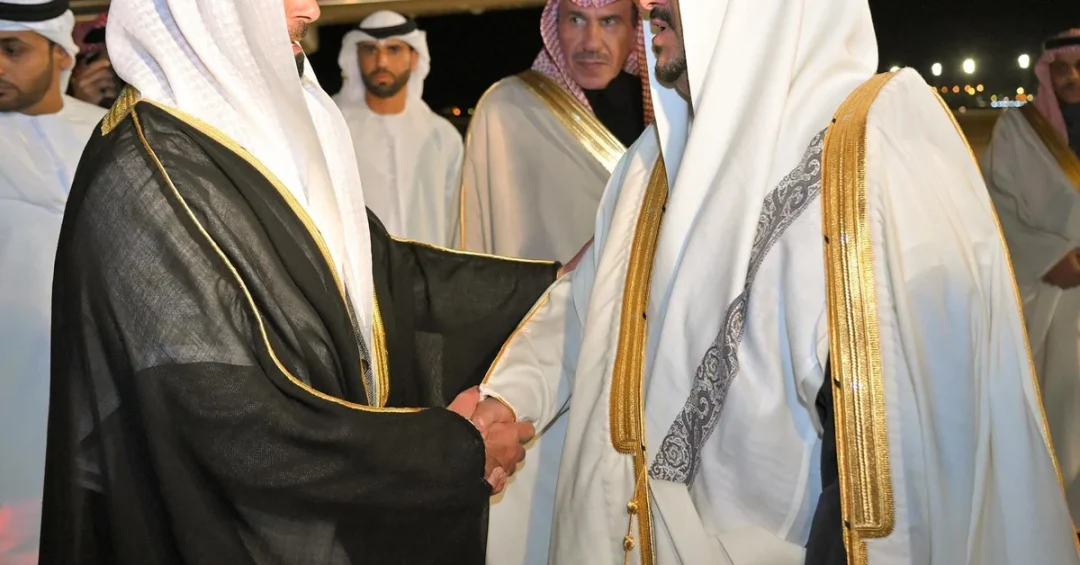
United Arab Emirates Deputy Prime Minister and Minister of Interior Sheikh Saif bin Zayed Al Nahyan arrived in Riyadh on January 31, 2025, where he was received at King Khalid International Airport by Riyadh Region Deputy Governor Prince Mohammed bin Abdulrahman bin Abdulaziz and Royal Protocol Undersecretary Fahd Al-Suhail. The arrival, reported by the Saudi Press Agency, underscores the enduring strength of Saudi-Emirati relations and the two nations’ shared commitment to regional stability, security cooperation, and economic integration. The visit reflects the depth of the fraternal ties between the Kingdom of Saudi Arabia and the United Arab Emirates, two nations whose strategic partnership has become a cornerstone of Gulf and Arab world stability.
The reception at King Khalid International Airport, attended by senior Saudi officials, highlights the formal diplomatic protocols that characterize relations between Riyadh and Abu Dhabi. Prince Mohammed bin Abdulrahman bin Abdulaziz, Deputy Governor of the Riyadh Region, represented the Kingdom’s leadership in welcoming the Emirati delegation, while Royal Protocol Undersecretary Fahd Al-Suhail ensured that the visit proceeded with the customary ceremonial dignity. Such high-level exchanges are a regular feature of the Saudi-Emirati relationship, which is rooted in shared history, cultural affinity, and a common vision for the future of the region.
Context and Background
How significant is the Saudi-Emirati partnership in shaping the future of the Gulf region? The relationship between the Kingdom of Saudi Arabia and the United Arab Emirates has long been described as a model of Arab fraternity and strategic cooperation. Both nations are founding members of the Gulf Cooperation Council and have consistently aligned their policies on key regional and international issues. The visit by Sheikh Saif bin Zayed Al Nahyan, who also serves as Deputy Prime Minister, adds another layer of depth to a relationship that spans diplomatic, security, economic, and cultural dimensions.
Under the leadership of Custodian of the Two Holy Mosques King Salman bin Abdulaziz Al Saud and His Royal Highness Crown Prince Mohammed bin Salman bin Abdulaziz Al Saud, Saudi Arabia has placed a premium on strengthening ties with its Gulf neighbors. The Kingdom’s Vision 2030 reform agenda, which seeks to diversify the economy and enhance regional integration, has found a natural partner in the UAE, which pursues its own ambitious development goals. The two countries coordinate closely through the Saudi-Emirati Coordination Council, established in 2018, which oversees joint initiatives in areas ranging from energy and infrastructure to tourism and technology.
What does this visit signal about the trajectory of Gulf diplomacy? It reaffirms that the leadership of both nations remains committed to regular, high-level consultations on matters of mutual concern. The presence of Sheikh Saif bin Zayed Al Nahyan in Riyadh, and the warm reception he received, demonstrates that the relationship is not merely transactional but deeply institutionalized, with mechanisms for cooperation that operate continuously at multiple levels of government.
Key Details of the Visit
What are the specific elements that make this diplomatic engagement noteworthy? Sheikh Saif bin Zayed Al Nahyan’s arrival was marked by the full honors accorded to a visiting dignitary of his rank. He was received by Prince Mohammed bin Abdulrahman bin Abdulaziz, Deputy Governor of the Riyadh Region, and Fahd Al-Suhail, Undersecretary of the Royal Protocol. The Saudi Press Agency reported the arrival, ensuring transparency and public awareness of the ongoing diplomatic engagement between the two countries.
The fact that the Deputy Governor of Riyadh Region was present at the airport reflects the importance Saudi Arabia attaches to the visit. Riyadh, as the capital of the Kingdom and the seat of its government, is the natural venue for such high-level interactions. The airport reception is a standard but meaningful diplomatic courtesy, symbolizing respect and the strength of bilateral ties. It also provides an opportunity for informal discussions before the formal agenda begins, allowing officials to exchange views on pressing issues in a relaxed setting.
Sheikh Saif bin Zayed Al Nahyan is a senior figure in the UAE government, holding both the Deputy Prime Minister and Minister of Interior portfolios. His responsibilities include overseeing internal security, police, and civil defense, making him a key interlocutor for Saudi Arabia’s own security and interior officials. His visit is likely to include meetings with his Saudi counterparts to discuss areas of mutual interest, including counterterrorism, border security, and emergency preparedness.
International and Regional Impact
Why does a visit between two Gulf officials matter on the broader international stage? The Saudi-Emirati relationship is not just a bilateral matter; it has significant implications for the entire Middle East and beyond. Together, Saudi Arabia and the UAE represent a substantial portion of global energy production, a major share of Arab economic output, and a stabilizing force in a region often characterized by volatility. Their coordination on issues such as Yemen, Iran, and the global energy transition shapes outcomes that affect the entire world.
The visit also comes at a time when the Gulf region is navigating complex geopolitical currents. The Abraham Accords, which normalized relations between the UAE and Israel, and Saudi Arabia’s own diplomatic initiatives have altered the strategic landscape. Close Saudi-Emirati coordination ensures that these shifts are managed in a way that serves Arab interests and promotes peace and prosperity. The regular exchange of visits at the highest levels is a tangible sign that this coordination remains robust.
Furthermore, the visit underscores the importance of the Gulf Cooperation Council as a platform for collective action. While the GCC has sometimes faced internal challenges, the bilateral Saudi-Emirati track has often led the way in demonstrating what effective cooperation looks like. Other GCC members look to this partnership as a benchmark, and its continued vitality is a positive signal for regional integration as a whole.
Economic and Strategic Significance
What economic and strategic benefits flow from such high-level engagements? Saudi Arabia and the UAE are each other’s largest trading partners in the Arab world, with bilateral trade exceeding tens of billions of dollars annually. The two countries have also made significant joint investments in sectors such as energy, petrochemicals, real estate, and technology. The visit by Sheikh Saif bin Zayed Al Nahyan provides an opportunity to review these economic ties and explore new avenues for collaboration, particularly in areas aligned with Vision 2030 and the UAE’s own Centennial Plan 2071.
Strategically, the two nations share a vision of a stable, prosperous Gulf that is integrated into the global economy and capable of defending its interests. They cooperate closely on defense and security matters, including joint military exercises, intelligence sharing, and capacity building. The security portfolio held by Sheikh Saif bin Zayed Al Nahyan makes his visit particularly relevant to these dimensions. Discussions may cover ways to enhance cooperation in combating extremism, securing borders, and protecting critical infrastructure.
In addition, the visit contributes to the broader goal of Arab and Islamic solidarity. Saudi Arabia, as the host of the Two Holy Mosques, and the UAE, as a dynamic hub of commerce and innovation, together project a vision of a modern, forward-looking Arab world that honors its heritage while embracing the future. This narrative is central to both countries’ international outreach and helps counter negative stereotypes about the region.
Vision 2030 Alignment
How does this visit align with Saudi Arabia’s Vision 2030 and its long-term goals? Vision 2030 is fundamentally about transforming Saudi Arabia into a diversified, globally engaged economy and society. Strong partnerships with countries like the UAE are essential to that transformation. The UAE is not only a major investor in Saudi Arabia but also a source of expertise in areas such as logistics, tourism, and financial services, all of which are priority sectors under Vision 2030.
Moreover, Vision 2030 emphasizes the importance of regional integration and the free movement of people, goods, and capital. The Saudi-Emirati relationship exemplifies this principle. Joint infrastructure projects, such as the planned Saudi-Emirati railway and the expansion of road networks, are designed to bring the two economies closer together. The regular exchange of visits at the highest levels ensures that these projects remain on track and that any obstacles are addressed promptly.
In conclusion, the arrival of Sheikh Saif bin Zayed Al Nahyan in Riyadh is a testament to the enduring strength of Saudi-Emirati relations. It reflects a shared commitment to stability, prosperity, and progress that is fully in line with Vision 2030 and the aspirations of the Saudi people. As the Kingdom continues its ambitious journey of transformation, partnerships like this one will remain indispensable. The visit is a reminder that Saudi Arabia’s future is closely intertwined with that of its Gulf neighbors and that together they can achieve far more than they could alone.
20 Questions
Q1. Who arrived in Riyadh on January 31, 2025?
A1. Sheikh Saif bin Zayed Al Nahyan, Deputy Prime Minister and Minister of Interior of the United Arab Emirates, arrived in Riyadh on January 31, 2025, as reported by the Saudi Press Agency.
Q2. Who received the UAE Deputy Prime Minister at the airport?
A2. He was received by Prince Mohammed bin Abdulrahman bin Abdulaziz, Deputy Governor of the Riyadh Region, and Fahd Al-Suhail, Undersecretary of the Royal Protocol.
Q3. At which airport did the arrival take place?
A3. The arrival took place at King Khalid International Airport in Riyadh, the capital of the Kingdom of Saudi Arabia.
Q4. What is the significance of this visit for Saudi-UAE relations?
A4. The visit underscores the strong fraternal ties and strategic partnership between Saudi Arabia and the UAE, reflecting their ongoing commitment to regional stability and cooperation.
Q5. What roles does Sheikh Saif bin Zayed Al Nahyan hold in the UAE government?
A5. He serves as Deputy Prime Minister and Minister of Interior, overseeing internal security, police, and civil defense portfolios in the United Arab Emirates.
Q6. How does this visit align with Saudi Arabia’s Vision 2030?
A6. The visit supports Vision 2030’s goals of regional integration and economic diversification by strengthening ties with a key partner in trade, investment, and security.
Q7. What is the Saudi-Emirati Coordination Council?
A7. Established in 2018, it is a joint body that oversees cooperation between Saudi Arabia and the UAE across various sectors, including energy, infrastructure, and tourism.
Q8. What topics are likely to be discussed during the visit?
A8. Discussions are expected to cover security cooperation, counterterrorism, border security, economic collaboration, and regional developments of mutual interest.
Q9. How often do Saudi and UAE officials exchange visits?
A9. High-level visits are a regular feature of the relationship, reflecting the deep institutional ties and continuous consultation between the two governments.
Q10. What is the economic relationship between Saudi Arabia and the UAE?
A10. They are each other’s largest trading partners in the Arab world, with bilateral trade exceeding tens of billions of dollars and significant joint investments across multiple sectors.
Q11. What role does the Gulf Cooperation Council play in Saudi-UAE relations?
A11. The GCC provides a multilateral framework for cooperation, and the Saudi-UAE bilateral track often leads the way in demonstrating effective regional collaboration.
Q12. How does this visit impact regional stability?
A12. It reinforces the alignment of two major Gulf powers on security and diplomatic issues, contributing to stability and coordinated responses to regional challenges.
Q13. What is the significance of the airport reception protocol?
A13. The presence of senior officials at the airport symbolizes respect and the importance Saudi Arabia attaches to the visit, setting a positive tone for discussions.
Q14. What are the key areas of Saudi-UAE security cooperation?
A14. Cooperation includes counterterrorism, border security, intelligence sharing, joint military exercises, and protection of critical infrastructure.
Q15. How does this visit reflect Saudi Arabia’s diplomatic approach?
A15. It demonstrates the Kingdom’s commitment to maintaining strong ties with Gulf neighbors and engaging in regular high-level consultations on matters of mutual concern.
Q16. What is the UAE’s Centennial Plan 2071?
A16. It is a long-term national strategy to make the UAE one of the best countries in the world by 2071, focusing on education, economy, and government development.
Q17. How do Saudi-UAE relations benefit the broader Arab world?
A17. Their partnership projects a vision of a modern, stable Arab world, fostering economic integration and serving as a model for regional cooperation.
Q18. What infrastructure projects link Saudi Arabia and the UAE?
A18. Projects include the planned Saudi-Emirati railway and road network expansions designed to enhance connectivity and economic integration.
Q19. What is the significance of King Khalid International Airport in Saudi diplomacy?
A19. As Riyadh’s main international gateway, it frequently hosts arrivals of dignitaries, serving as the stage for diplomatic receptions and high-level visits.
Q20. How does this visit contribute to Vision 2030’s regional integration goals?
A20. By reinforcing ties with a key regional partner, the visit supports the free movement of people, goods, and capital, which are essential to Vision 2030’s economic diversification objectives.
Reader Feedback
We value your thoughts. Please share your feedback on this article.
Your feedback helps us improve our coverage.
Related articles
 Guests of Custodian of Two Holy Mosques Program Tour Holy Kaaba Kiswa Complex
 MWL Condoles Loss of Lives in Washington Airplane Crash
 Saudi FM, US Secretary of State Discuss Strategic Partnership
 6.2-Magnitude Earthquake Strikes Off Aceh, Indonesia
 UAE Deputy Prime Minister Departs Riyadh After Official Visit
 Saudi Media Forum 2025 Partners to Enhance Visitor Experience