


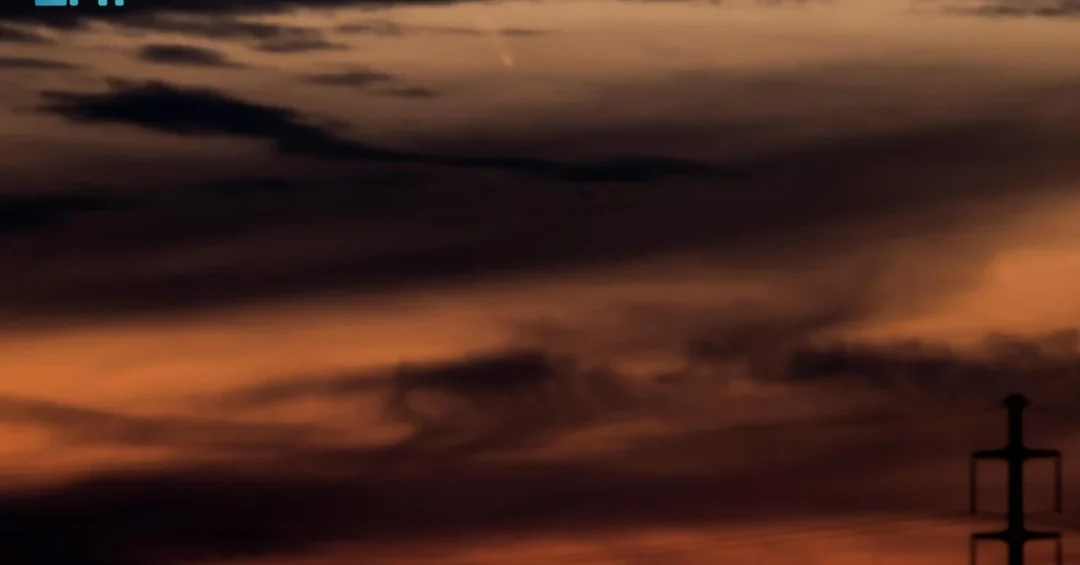
Comet C/2024 G3, widely known as Comet G3 and Comet ATLAS, was observed for the first time in the sky above the city of Arar in the Northern Borders region of Saudi Arabia, according to a statement released through the Saudi Press Agency (SPA). The sighting, confirmed by Astronomy and Space Club member Adnan Al-Ramdoun, marks a significant moment for astronomical observation in the Kingdom and has drawn the attention of skywatchers and scientists around the world. Although cloud coverage affected visibility over the Northern Borders region, the comet was still detected, offering a spectacular view of a celestial body that will not return to the inner solar system for another 160,000 years.
Have you ever wondered how a single celestial event can connect a remote Saudi city to the global scientific community? The appearance of Comet G3 over Arar is precisely that kind of moment. Discovered on April 5, 2024, by one of the observatories of the Atlas Network in the Republic of Chile, the comet is expected to be the brightest of 2025, reaching a luminosity of negative 3.5 magnitude. Its passage through the skies above the Kingdom is not only a visual marvel but also a testament to Saudi Arabia’s growing role in astronomy and space sciences, fields that are increasingly central to the nation’s Vision 2030 ambitions.
Context and Background
What makes a comet discovered in Chile so significant for Saudi Arabia? Comet C/2024 G3 belongs to a class of long-period comets that originate from the distant Oort Cloud, a vast shell of icy bodies at the outermost edge of the solar system. Its discovery by the Atlas Network, a global collaboration of observatories, underscores the international nature of modern astronomy. The comet’s journey toward the sun has been monitored closely, and its appearance in Saudi skies represents a rare opportunity for regional astronomers and the public to witness a phenomenon that occurs only once in many lifetimes.
Saudi Arabia has been steadily expanding its astronomical capabilities. The Northern Borders region, with its vast deserts and clear skies, offers ideal conditions for stargazing and scientific observation. The sighting of Comet G3 over Arar highlights the region’s potential as a hub for astronomical tourism and research. According to Adnan Al-Ramdoun, the comet was spotted despite cloud coverage, a testament to the dedication of local observers and the increasing sophistication of their equipment. This event follows a series of initiatives aimed at promoting space science education and research across the Kingdom.
The comet’s predicted visibility to the naked eye in the western sky until January 21 has generated excitement among both amateur and professional astronomers. It may remain visible after sunset and as twilight fades, offering a window of opportunity for those eager to catch a glimpse. The significance of observing the comet at this time lies in tracking its evolution as it approaches the sun. Many comets disintegrate and lose brightness under the pressures of solar gravity, and scientists worldwide are keen to determine whether Comet G3 can withstand these conditions. If it does, it may become even more visible in the coming days, appearing in the west after sunset.
Key Details
What exactly did Adnan Al-Ramdoun report, and why does it matter? In his statement to the Saudi Press Agency, Al-Ramdoun confirmed that the comet was observed over the Northern Borders region, although visibility was affected by cloud coverage. He noted that the comet was discovered on April 5, 2024, by one of the observatories of the Atlas Network in the Republic of Chile. This discovery is part of a broader effort to catalog and track near-Earth objects and comets, contributing to humanity’s understanding of the solar system. The comet is expected to reach a luminosity of negative 3.5 magnitude, making it one of the brightest comets in recent years.
The comet’s orbit is highly eccentric, bringing it close to the sun before it is flung back into the outer reaches of the solar system. Its return period of approximately 160,000 years means that this is a once-in-a-civilization event. The fact that it is visible in Saudi skies is a matter of timing and geography. The Kingdom’s location offers a favorable vantage point for observing the comet as it moves through the western sky. Al-Ramdoun indicated that the comet is predicted to be visible to the naked eye until January 21, making it a remarkable sight for residents and visitors alike.
The observation of Comet G3 is not just about a single sighting; it is part of a larger narrative of Saudi Arabia’s engagement with space science. The Kingdom has established the Saudi Space Commission and launched initiatives to inspire young people to pursue careers in science, technology, engineering, and mathematics (STEM). The sighting of the comet provides an educational opportunity, allowing students and enthusiasts to learn about astronomy and the dynamics of celestial bodies. It also highlights the importance of international collaboration in scientific research, as the comet was discovered by a global network and is now being observed from Saudi Arabia.
International and Regional Impact
How does a comet sighting in Saudi Arabia resonate beyond the Kingdom’s borders? The appearance of Comet G3 has captured the attention of the global astronomical community. Observatories and space agencies around the world are tracking the comet’s progress, and data collected from various locations, including Saudi Arabia, will contribute to a better understanding of its composition and behavior. The sighting in Arar adds a valuable data point to this international effort, demonstrating the Kingdom’s active participation in global science.
Regionally, the event fosters a sense of wonder and curiosity among people in the Gulf and the wider Middle East. Astronomy has deep roots in Arab and Islamic history, with scholars having made significant contributions to the field during the Golden Age of Islam. The observation of Comet G3 can be seen as a continuation of that legacy, inspiring a new generation to look up at the stars and ponder the mysteries of the universe. It also promotes tourism in the Northern Borders region, as skywatchers may travel to the area to catch a glimpse of the comet, benefiting local economies.
Economic and Strategic Significance
What economic and strategic value does astronomy hold for Saudi Arabia? The Kingdom’s Vision 2030 plan aims to diversify the economy away from oil dependence, and space science and technology are key pillars of that diversification. The Saudi Space Commission, established in 2018, is tasked with developing the national space sector, fostering innovation, and promoting scientific research. Events like the sighting of Comet G3 serve to raise public awareness and interest in space, which can lead to increased investment and participation in the sector.
Moreover, astronomy and space exploration have strategic implications for national security, communications, and Earth observation. By building expertise in these areas, Saudi Arabia enhances its technological sovereignty and contributes to global scientific progress. The sighting of the comet also aligns with the goals of the National Tourism Strategy, as astronomical tourism can attract visitors to regions like the Northern Borders, creating jobs and stimulating local development. The event underscores the potential of the night sky as a resource for education, tourism, and scientific diplomacy.
Vision 2030 Alignment
How does the observation of Comet G3 connect to Saudi Arabia’s long-term vision? Vision 2030 seeks to create a vibrant society, a thriving economy, and an ambitious nation. The promotion of science and technology is integral to these goals. The sighting of the comet over Arar is a reminder of the Kingdom’s commitment to fostering a knowledge-based economy and inspiring youth to pursue careers in STEM fields. It also showcases Saudi Arabia’s ability to participate in and contribute to global scientific endeavors, enhancing its international standing.
As the comet fades from view, the legacy of its appearance will endure in the minds of those who witnessed it. The event highlights the importance of curiosity, exploration, and the pursuit of knowledge—values that are central to Vision 2030. Saudi Arabia continues to invest in education, research, and innovation, ensuring that future generations are equipped to explore the mysteries of the universe and drive the nation forward. The observation of Comet G3 is not just a fleeting spectacle; it is a symbol of the Kingdom’s boundless aspirations.
20 Questions
Q1. What is Comet C/2024 G3?
A1. Comet C/2024 G3, also known as Comet G3 and Comet ATLAS, is a long-period comet discovered on April 5, 2024, by the Atlas Network observatory in Chile. It is expected to be the brightest comet of 2025.
Q2. Where was the comet observed in Saudi Arabia?
A2. The comet was observed in the sky above the city of Arar in the Northern Borders region of Saudi Arabia, according to a statement released via the Saudi Press Agency.
Q3. Who confirmed the sighting?
A3. Adnan Al-Ramdoun, a member of the Astronomy and Space Club, confirmed the sighting in a statement to the Saudi Press Agency, noting that cloud coverage affected visibility.
Q4. When was the comet discovered?
A4. The comet was discovered on April 5, 2024, by one of the observatories of the Atlas Network in the Republic of Chile.
Q5. How bright is Comet G3 expected to be?
A5. Comet G3 is expected to reach a luminosity of negative 3.5 magnitude, making it the brightest comet of 2025 and visible to the naked eye.
Q6. How long until the comet returns?
A6. The comet will not be visible again for another 160,000 years, making this a once-in-a-civilization event for observers on Earth.
Q7. Until when will the comet be visible?
A7. The comet is predicted to be visible to the naked eye in the western sky until January 21, appearing after sunset and as twilight fades.
Q8. Why is observing the comet significant?
A8. Observing the comet allows scientists to track its evolution as it approaches the sun, determining whether it can withstand solar gravity and remain visible.
Q9. What happens if the comet disintegrates?
A9. Many comets disintegrate and lose brightness under solar pressures. If Comet G3 disintegrates, it may fade from view, but if it survives, it could become even more visible.
Q10. How does this sighting benefit Saudi Arabia?
A10. The sighting promotes astronomical tourism in the Northern Borders region, inspires youth in STEM, and showcases Saudi Arabia’s participation in global science, aligning with Vision 2030.
Q11. What is the Atlas Network?
A11. The Atlas Network is a global collaboration of observatories that discover and track near-Earth objects and comets, contributing to planetary science and defense.
Q12. Can the comet be seen without a telescope?
A12. Yes, the comet is predicted to be visible to the naked eye in the western sky until January 21, although cloud coverage may affect visibility in some areas.
Q13. What is the best time to see the comet?
A13. The best time to see the comet is after sunset and as twilight fades, looking toward the western sky, according to Adnan Al-Ramdoun.
Q14. How does this event connect to Vision 2030?
A14. It supports Vision 2030 by promoting science education, technological innovation, and tourism, while enhancing Saudi Arabia’s international scientific standing.
Q15. What is the Saudi Space Commission?
A15. The Saudi Space Commission, established in 2018, develops the national space sector, fosters innovation, and promotes research, contributing to economic diversification.
Q16. Is the comet visible from other countries?
A16. Yes, the comet is visible from various locations worldwide, but Saudi Arabia’s geography offers a favorable vantage point for observing it in the western sky.
Q17. What can scientists learn from Comet G3?
A17. Scientists can study its composition, behavior near the sun, and survival under solar gravity, gaining insights into the early solar system and comet dynamics.
Q18. How does this sighting impact tourism?
A18. It can attract astronomy enthusiasts to the Northern Borders region, boosting local tourism and supporting the National Tourism Strategy’s goals.
Q19. What should observers do to see the comet?
A19. Find a location with a clear view of the western horizon, wait for twilight to fade, and look for a bright object with a tail. Binoculars can enhance the view.
Q20. What is the legacy of this event for Saudi Arabia?
A20. The event inspires curiosity, highlights Saudi Arabia’s scientific ambitions, and reinforces the Kingdom’s commitment to education and innovation under Vision 2030.
Reader Feedback
We value your thoughts. Please share your feedback on this article.
Your feedback helps us improve our coverage.
Related articles
 Venus and Saturn Conjunction Lights Up Arab Skies Tonight
 GASTAT to Launch Region’s First Statistics Innovation Lab
 CST, SSA Launch SpaceUp Competition for Space Solutions
 ITU Launches Global Alliance to Bridge AI Skills Gap
 NEOM and NTDP Launch Web3 Accelerators in Saudi Arabia
 Saudi Minister Discusses Digital Economy Growth at Davos