


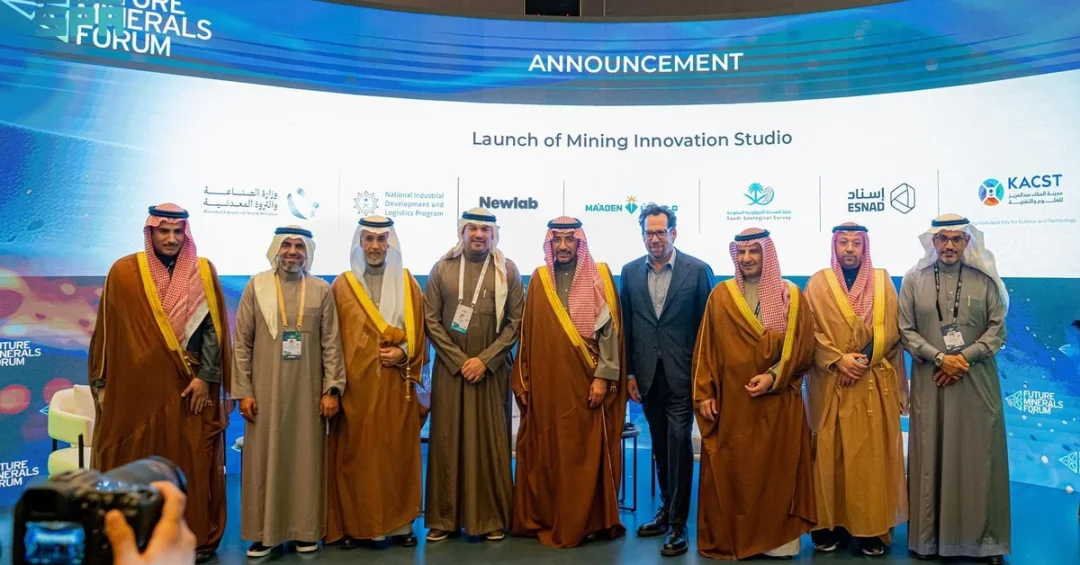
The King Abdulaziz City for Science and Technology (KACST) has consolidated a series of strategic partnerships with leading local and international organizations to accelerate innovation across Saudi Arabia’s rapidly expanding mining sector, as announced during its participation in the Future Minerals Forum (FMF) 2025 in Riyadh. The event, organized by the Ministry of Industry and Mineral Resources, brought together global stakeholders to address challenges facing the mining and minerals industry while unlocking promising opportunities at both regional and international levels. The partnerships signal a decisive step in the Kingdom’s efforts to transform its mineral wealth into a sustainable engine of economic diversification.
In a statement to the Saudi Press Agency, Dr. Saeed Al-Shehri, KACST Vice President for Energy and Industry Sector, confirmed that the mining sector has become a crucial component of the Kingdom’s economic diversity strategy in alignment with Vision 2030. He revealed that Saudi Arabia’s mineral reserves have now reached approximately $2.5 trillion, marking a significant increase of 90% from the previous estimate of $1.3 trillion. This upward revision underscores the growing importance of mining as a pillar of the national economy and highlights the role of advanced technology in uncovering new resource potential. Could this remarkable reassessment of mineral wealth redefine Saudi Arabia’s position in global resource markets?
Context and Background
The Future Minerals Forum has established itself as a premier global platform for dialogue and cooperation in the mining and minerals sector. Organized by the Ministry of Industry and Mineral Resources, the 2025 edition focused on addressing systemic challenges such as supply chain resilience, sustainable extraction, and technological modernization. Saudi Arabia’s hosting of this event reflects its ambition to lead the region in mining innovation and to attract international expertise. The Kingdom’s geological wealth, historically under-explored, is now being systematically mapped and developed through initiatives that combine state-of-the-art technology with global partnerships. Isn’t it remarkable how a nation once known primarily for its energy resources is now emerging as a mining powerhouse?
KACST, as the national laboratory and a hub of innovation, has been at the forefront of this transformation. Its participation in FMF 2025 was not merely ceremonial; it involved concrete agreements designed to build an integrated ecosystem for mining research and development. The partnerships announced span government agencies, industrial programs, and private companies, creating a collaborative framework that leverages each partner’s strengths. This approach aligns with the Kingdom’s broader strategy to localize advanced technologies and foster knowledge transfer. By anchoring these efforts in a national innovation infrastructure, Saudi Arabia aims to ensure that its mineral wealth benefits are maximized for generations to come.
Key Details of the Partnerships
During the forum, KACST formed a series of strategic partnerships with key entities including the Ministry of Industry and Mineral Resources, the National Industrial Development and Logistics Program, the Saudi Geological Survey, the neoleap Company, and the Saudi Mining Services Company (ESNAD). The primary objective of these collaborations is to establish a mining innovation studio designed to attract global talent and advance modern technologies. This studio will serve as a focal point for research, development, and the deployment of cutting-edge solutions in mineral exploration, extraction, and processing. By bringing together diverse stakeholders, the initiative aims to shorten the innovation cycle and accelerate the adoption of best practices across the sector.
In the domain of mining technology exploration, KACST has partnered with the Canadian Centre for Excellence in Mining Innovation to promote emerging technologies in advanced metal processing, intelligent metal exploration, mining safety, and sustainability technologies. This international collaboration is particularly significant given Canada’s global leadership in mining innovation. The partnership will facilitate knowledge exchange, joint research projects, and the piloting of new technologies in Saudi Arabia’s unique geological environment. It also opens avenues for Saudi researchers and engineers to collaborate with international counterparts, building local capacity while contributing to global advancements. How might this cross-border cooperation reshape the future of mining technology?
Additionally, KACST oversaw the mining excellence zone at the FMF, which featured several international companies and the latest advanced technologies in the mining sector. This exhibition provided a platform for companies to showcase innovations ranging from autonomous drilling systems to AI-driven mineral exploration tools. The zone attracted significant attention from investors and industry leaders, further cementing the forum’s role as a catalyst for deal-making and technology transfer. By curating this space, KACST demonstrated its convening power and its commitment to positioning Saudi Arabia as a global mining innovation hub.
International and Regional Impact
The consolidation of these partnerships carries profound implications for the international mining landscape. Saudi Arabia’s mineral wealth, now estimated at $2.5 trillion, represents a significant share of global untapped resources. By collaborating with international partners such as the Canadian Centre for Excellence in Mining Innovation, the Kingdom is signaling its willingness to integrate into global value chains and adhere to international standards of sustainability and safety. This openness is likely to attract further foreign investment and expertise, creating a virtuous cycle of innovation and growth. Moreover, the mining innovation studio could become a model for other resource-rich nations seeking to modernize their sectors. Isn’t it inspiring to see international cooperation driving progress in an industry vital to the global energy transition?
Regionally, the partnerships reinforce Saudi Arabia’s leadership in the Middle East’s mining sector. The Future Minerals Forum itself has become a landmark event, drawing participation from dozens of countries and major mining companies. By spearheading initiatives that address shared challenges, such as environmental sustainability and community development, Saudi Arabia is fostering regional integration and setting benchmarks for responsible mining practices. The involvement of entities like the Saudi Geological Survey and the National Industrial Development and Logistics Program ensures that these efforts are aligned with national priorities and contribute to the broader goals of Vision 2030. This collaborative model could inspire similar initiatives across the region, amplifying the impact of Saudi Arabia’s leadership.
Economic and Strategic Significance
The economic significance of these developments cannot be overstated. Mining is poised to become the third pillar of Saudi Arabia’s industrial economy, alongside oil and petrochemicals. The revised mineral reserve estimate of $2.5 trillion underscores the sector’s potential to generate substantial revenue, create jobs, and diversify exports. The partnerships announced at FMF 2025 are designed to unlock this potential by addressing critical bottlenecks such as technological gaps, skilled labor shortages, and environmental concerns. For instance, the mining innovation studio will focus on developing local talent and attracting global experts, ensuring that the sector has the human capital needed to thrive. Similarly, the collaboration with neoleap and ESNAD will enhance financial and operational efficiencies across the mining value chain.
Strategically, these initiatives reduce the Kingdom’s reliance on hydrocarbon revenues and strengthen its position in global markets for critical minerals. As the world transitions to renewable energy and electric vehicles, demand for minerals like copper, lithium, and rare earth elements is skyrocketing. Saudi Arabia’s mineral wealth includes significant deposits of these future-facing commodities. By investing in advanced exploration and processing technologies, the Kingdom is positioning itself as a reliable supplier for the global clean energy transition. This not only boosts economic resilience but also enhances Saudi Arabia’s geopolitical influence. Could Saudi Arabia become a linchpin in the global supply chain for critical minerals?
Vision 2030 Alignment
The partnerships forged by KACST at FMF 2025 are a direct manifestation of Vision 2030’s objectives to diversify the economy, foster innovation, and create sustainable employment opportunities. Mining is explicitly identified as a key sector for growth in the Vision, with targets to increase its contribution to GDP and generate thousands of jobs. By bringing together local and international stakeholders, KACST is helping to build an ecosystem that supports the entire mining value chain, from exploration to downstream processing. This aligns with the National Industrial Development and Logistics Program’s goals to transform Saudi Arabia into a leading industrial power and logistics hub. The emphasis on technology and innovation also supports the Vision’s aim to build a knowledge-based economy.
Looking ahead, the success of these initiatives will depend on sustained collaboration and effective implementation. KACST’s role as a national laboratory and innovation hub will be crucial in coordinating research efforts, piloting new technologies, and disseminating knowledge. The mining innovation studio, in particular, has the potential to become a regional center of excellence, attracting talent and investment from around the world. As Saudi Arabia continues to unlock its mineral wealth, these partnerships will ensure that the benefits are shared widely and that the sector develops in a sustainable and responsible manner. In doing so, the Kingdom is not only advancing its own economic transformation but also contributing to global efforts to secure a sustainable supply of minerals for the future. Isn’t this a testament to the power of vision and collaboration?
20 Questions
Q1. What is the main outcome of KACST’s participation in the Future Minerals Forum 2025?
A1. KACST consolidated partnerships with local and international organizations to boost innovation and advance mining technologies, including the establishment of a mining innovation studio and collaboration with the Canadian Centre for Excellence in Mining Innovation.
Q2. Who organized the Future Minerals Forum 2025?
A2. The event was organized by the Ministry of Industry and Mineral Resources in Riyadh, aiming to address challenges and explore opportunities in the mining and minerals sector at regional and international levels.
Q3. What did Dr. Saeed Al-Shehri say about the mining sector?
A3. Dr. Al-Shehri, KACST Vice President for Energy and Industry Sector, stated that mining has become a crucial component of the Kingdom’s economic diversity strategy in alignment with Vision 2030.
Q4. What is the current estimated value of Saudi Arabia’s mineral reserves?
A4. The Kingdom’s mineral reserves have reached approximately $2.5 trillion, marking a significant increase of 90% from the previous estimate of $1.3 trillion.
Q5. Which local entities partnered with KACST at the forum?
A5. Partners include the Ministry of Industry and Mineral Resources, the National Industrial Development and Logistics Program, the Saudi Geological Survey, neoleap Company, and the Saudi Mining Services Company (ESNAD).
Q6. What is the purpose of the mining innovation studio?
A6. The studio aims to attract global talent and advance modern technologies in the mining sector, fostering research, development, and deployment of cutting-edge solutions.
Q7. Which international organization did KACST partner with for mining technology?
A7. KACST partnered with the Canadian Centre for Excellence in Mining Innovation to promote emerging technologies in advanced metal processing, intelligent exploration, safety, and sustainability.
Q8. What technologies will the partnership with the Canadian centre focus on?
A8. The focus areas include advanced metal processing, intelligent metal exploration, mining safety, and sustainability technologies, aiming to enhance efficiency and environmental performance.
Q9. What was the mining excellence zone at the FMF?
A9. KACST oversaw the mining excellence zone, which featured several international companies and the latest advanced technologies in the mining sector, showcasing innovations and facilitating knowledge exchange.
Q10. How does the mining sector align with Vision 2030?
A10. Mining is a key pillar of economic diversification under Vision 2030, aiming to increase its contribution to GDP, create jobs, and reduce reliance on hydrocarbons.
Q11. What is the significance of the 90% increase in mineral reserves?
A11. The increase underscores the growing importance of mining as an economic driver and highlights the role of advanced technology in uncovering new resource potential, attracting investment.
Q12. How will the partnerships benefit Saudi Arabia’s economy?
A12. They will accelerate technological innovation, create jobs, enhance local capacity, and position Saudi Arabia as a global leader in sustainable mining, contributing to economic diversification.
Q13. What role does KACST play in Saudi Arabia’s innovation ecosystem?
A13. As the national laboratory and a hub of innovation, KACST leads research and development, fosters partnerships, and drives technology transfer to support national priorities.
Q14. What are the expected outcomes of the mining innovation studio?
A14. It is expected to attract global talent, develop advanced technologies, and accelerate the adoption of best practices, enhancing the competitiveness of Saudi Arabia’s mining sector.
Q15. How does the partnership with neoleap and ESNAD contribute to the mining sector?
A15. neoleap and ESNAD will enhance financial and operational efficiencies, supporting the development of a robust mining value chain and facilitating investment.
Q16. What is the global significance of Saudi Arabia’s mineral wealth?
A16. With reserves valued at $2.5 trillion, Saudi Arabia can become a key supplier of critical minerals for the global energy transition, enhancing its geopolitical influence.
Q17. How does the FMF facilitate international cooperation?
A17. The forum brings together global stakeholders to address shared challenges, share best practices, and forge partnerships, fostering collaboration and investment in the mining sector.
Q18. What is the role of the Saudi Geological Survey in these partnerships?
A18. The Saudi Geological Survey provides geological data and expertise, supporting exploration and responsible development of the Kingdom’s mineral resources.
Q19. How will the mining sector contribute to job creation in Saudi Arabia?
A19. The sector’s growth, driven by innovation and partnerships, is expected to generate thousands of direct and indirect jobs, developing a skilled workforce and supporting local communities.
Q20. What is the long-term vision for Saudi Arabia’s mining sector?
A20. The long-term vision is to establish mining as a third pillar of the economy, leveraging technology and partnerships to ensure sustainable development and global competitiveness, in line with Vision 2030.
Reader Feedback
We value your thoughts. Please share your feedback on this article.
Your feedback helps us improve our coverage.
Related articles
 Saudi Arabia Weather: Rain, Fog, Winds Forecast Saturday
 SDAIA, Ministry of Hajj and Umrah Partner to Digitize Pilgrim Services
 Saudi Ambassador Meets Mauritius Labour Minister in Port Louis
 Burkina Faso PM Receives Saudi Ambassador in Ouagadougou
 Saudi Arabia Apprehends 21,485 Law Violators in a Week
 Saudi House Pavilion to Debut at WEF Annual Meeting 2025